Home Blog Page 5

Basic Tutorials report: ANTHBOT N8 – 4-in-1 Robotic Mower Simplifies Whole Lawn Care

0

The lawn care landscape is shifting fast, and the newest entrant promises to do more than just cut grass—it aims to handle edging, trimming, and even leaf management in a single autonomous pass. The ANTHBOT N8 positions itself as a true 4‑in‑1 robot lawn mower, targeting homeowners who want a set‑and‑forget solution without juggling multiple tools.

Overview of the ANTHBOT N8

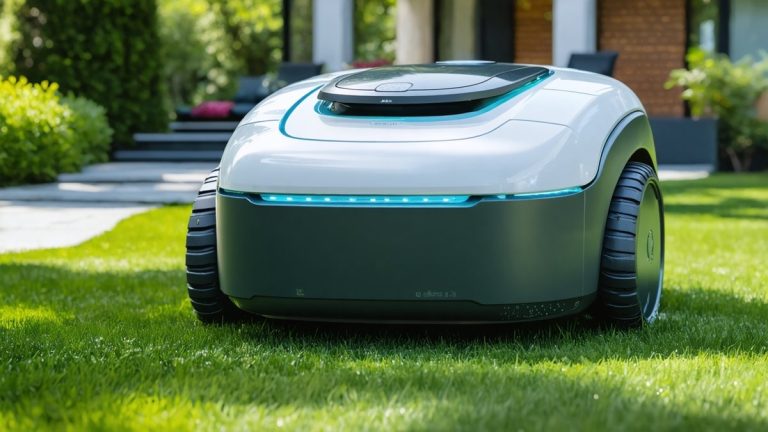
At first glance, the N8 looks like a sleek, low‑profile disc‑style mower, but its chassis hides a modular tool‑swap system that lets the unit switch between a cutting blade, an edging blade, a trimmer line head, and a leaf‑collection scoop. According to the manufacturer, the robot can transition between these functions automatically based on a pre‑programmed schedule or real‑time sensor feedback, eliminating the need for homeowners to stop and change attachments manually. Built on a lithium‑ion battery platform, the N8 claims up to 180 minutes of runtime on a single charge, enough to cover lawns up to 0.5 acre before returning to its docking station for a quick top‑up.

4‑in‑1 Functionality Explained

The versatility of the N8 stems from four distinct modules that attach to a quick‑release mounting plate:

  • Mowing Blade: A dual‑edge, 22 cm steel blade that mulches clippings fine enough to be left on the lawn as natural fertilizer.
  • Edging Blade: A vertical, offset blade that trims along sidewalks, driveways, and flower beds, creating a clean border without the need for a separate string trimmer.
  • Trimmer Head: A rotating line head that tackles taller grass in hard‑to‑reach corners and around obstacles where the mowing blade might struggle.
  • Leaf‑Collection Scoop: A low‑profile, rotating brush‑assisted scoop that gathers fallen leaves into an onboard bin, reducing the need for raking or blowing.

The robot’s onboard AI uses a combination of GPS, RTK positioning, and ultrasonic sensors to map the yard and detect when it’s approaching an edge, a patch of long grass, or a leaf‑laden zone. Based on that data, the N8 autonomously swaps the appropriate module, performs the task, and then returns to mowing mode.

Key Specs and Takeaways

  • Cutting Width: 22 cm (mowing mode) – adjustable height from 20 mm to 60 mm
  • Battery: 5.6 kWh Li‑ion, up to 180 min runtime, 90‑minute fast charge
  • Navigation: RTK‑GPS + VSLAM + ultrasonic obstacle avoidance
  • Modules: Mowing, edging, trimming, leaf collection (quick‑swap)
  • Coverage: Up to 0.5 acre per charge; multi‑zone scheduling via app
  • Connectivity: Wi‑Fi 2.4 GHz/5 GHz, Bluetooth LE, optional LTE‑M for fleet tracking
  • App Features: Map editing, no‑go zones, weather delay, usage analytics, OTA updates
  • Noise Level: 58 dB(A) – quieter than most gas‑powered trimmers
  • Weight: 12 kg (including battery)

How It Compares to Competitors

When placed alongside established players, the N8’s biggest differentiator is its integrated multi‑tool system. Most robot mowers—such as the Husqvarna Automower 450XH, Worx Landroid L, and Robomow RS630—focus exclusively on cutting grass, requiring homeowners to purchase separate edgers, trimmers, or leaf blowers for a finished look. The Ambrogio Lona offers a detachable side‑blade for edging, but it still lacks a dedicated leaf‑collection mechanism. In terms of raw cutting performance, the N8’s blade speed and mulching efficiency are comparable to the mid‑tier offerings from Husqvarna and Worx, while its navigation suite—leveraging RTK‑GPS for centimeter‑level accuracy—matches the higher‑end models from Ambrogio and Honda’s Miimo line. Price‑wise, the N8 is positioned at the upper end of the consumer segment, reflecting the added hardware; early‑bird pricing places it around $1,399, which is roughly $200‑$300 above a comparable Husqvarna model but still below many commercial‑grade autonomous mowers.

Installation, Setup, and User Experience

Setting up the N8 follows the familiar robot‑mower workflow: lay the boundary wire (or install the optional RTK base station for wire‑free operation), charge the unit, and run the initial mapping routine via the companion app. The app walks users through defining mowing zones, setting height preferences, and scheduling the four functions—say, mowing on Mondays and Wednesdays, edging on Tuesdays, trimming on Thursdays, and leaf collection on weekends during peak fall. Users can also enable “Smart Mode,” which lets the robot decide which module to deploy based on real‑time sensor input. Early tester feedback highlights the low learning curve; the quick‑swap mechanism clicks into place with a satisfying tactile feel, and the robot’s voice prompts (available in multiple languages) confirm when a module change is underway. Maintenance is straightforward: the cutting blade and edging blade are both detachable for sharpening, the trimmer line spool is user‑replaceable, and the leaf‑collection bin empties with a simple latch.

Bottom Line: What This Means for You

If you’ve been juggling a robot mower, a string trimmer, an edger, and a leaf blower each season, the ANTHBOT N8 offers a compelling chance to consolidate those chores into a single autonomous platform. Its 4‑in‑1 design doesn’t sacrifice core mowing performance, and the added versatility can translate to real time‑savings—especially for homeowners with intricate landscaping or heavy leaf drop. While the upfront cost is higher than a basic robot mower, the potential reduction in additional tool purchases and labor may justify the investment for those who value a consistently manicured lawn without the weekend‑long chore list. For professional landscapers, the N8’s fleet‑ready connectivity and modular tool system could streamline crew operations, letting one robot handle multiple site‑specific tasks before moving to the next property.

Frequently Asked Questions

Does the ANTHBOT N8 require boundary wire?

The N8 can operate with either a traditional boundary wire or an optional RTK base station that enables wire‑free navigation. The wire‑free mode relies on satellite corrections and offers easier installation for irregularly shaped yards, though it may carry a slight premium for the base station kit.

How often do I need to replace the leaf‑collection bin or empty it?

The bin holds roughly 8 liters of compacted leaves, which is sufficient for a medium‑sized yard during moderate leaf fall. In heavy‑drop periods (e.g., peak autumn), users may need to empty it after each mowing cycle, a process that takes under a minute thanks to the quick‑release latch.

Is the N8 safe around pets and children?

Yes. The robot uses ultrasonic sensors and bump detection to stop instantly upon contact with an object. Its blades are recessed and only engage when the appropriate module is mounted, and the unit emits an audible alert before starting a cycle, giving pets and people time to clear the area.

Source: Original Article
Mammotion Expands Into Commercial Market With New Robotic Mower Line

0

The robotic mower landscape is shifting from backyard novelty to bona fide commercial tool, and Mammotion is staking its claim with a dedicated fleet‑ready offering. By moving beyond the residential Luba line and introducing a model built for larger lawns, parks, and professional landscaping crews, the company signals that autonomous lawn care is ready to scale up. For homeowners eyeing a future upgrade and pros evaluating automation, this development could reshape how we think about smart mowing on a larger scale.

Why Mammotion Is Going Commercial

Mammotion first gained attention with its Luba series, which combined RTK‑GNSS navigation, obstacle‑avoidance AI, and a sleek, app‑driven interface to deliver a truly autonomous lawn mower experience for suburban yards. The success of those units proved there was demand for a mower that could handle complex terrains without perimeter wires. Now, the company is leveraging that technology foundation to address a segment that has been slower to adopt robotics: professional landscaping and municipal grounds maintenance.

The commercial push isn’t just about slapping a bigger battery on a consumer model. Mammotion’s new offering is engineered from the ground up for higher duty cycles, wider cutting swaths, and fleet‑management capabilities that let supervisors monitor dozens of units in real time. By targeting the commercial market, Mammotion hopes to capture a share of the growing demand for labor‑saving, environmentally friendly equipment — especially as cities tighten noise and emissions regulations.

Key Features of the Mammotion Commercial Mower

While Mammotion has kept the exact model name under wraps, the specifications released in their press briefing paint a clear picture of what sets this machine apart from its residential siblings and from competing commercial robots.

  • Cutting width: 22‑inch dual‑blade system, roughly 30% wider than the Luba 2 AWD, enabling faster coverage of large lawns.
  • Battery capacity: Dual 10 Ah lithium‑ion packs delivering up to 4.5 hours of continuous operation on a single charge — enough for a full day’s work on mid‑size properties.
  • RTK‑GNSS + Vision Fusion: Combines centimeter‑level satellite positioning with stereo cameras for obstacle detection, allowing the mower to navigate complex flower beds, trees, and uneven terrain without perimeter wires.
  • Fleet management dashboard: Cloud‑based platform that shows real‑time location, battery status, error codes, and maintenance alerts for each unit; supports over‑the‑air firmware updates.
  • Ruggedized chassis: IPX5 water resistance, reinforced bumpers, and sealed motor housings designed to withstand daily commercial use and occasional inclement weather.
  • Adjustable cutting height: 0.8‑2.8 inches, with a quick‑release lever for on‑the‑fly changes between fine turf and taller grass.
  • Low‑noise operation: Rated at 58 dB(A), well below many gas‑powered commercial mowers, helping operators meet municipal noise ordinances.

How It Stacks Up Against the Competition

Entering the commercial autonomous mower arena puts Mammotion up against established players such as Husqvarna’s Automower® Commercial Series, Bosch’s Indego Fleet, and the newer entrant Wiprus’ GreenBot Pro. Each competitor brings its own strengths:

  • Husqvarna leverages decades of mower expertise and a vast dealer network, offering models with up to 24‑inch cutting decks and robust satellite‑based navigation.
  • Bosch focuses on tight integration with its existing smart‑home ecosystem and offers a modular battery system that can be swapped across multiple tools.
  • Wiprus emphasizes AI‑driven path optimization and claims the longest runtime in its class — up to 6 hours on a single charge.

Mammotion’s differentiation lies in its vision‑fusion navigation (combining RTK with stereo cameras) and a fleet‑management interface that appears more user‑friendly for small‑to‑mid‑size landscaping businesses. The company also highlights a lower entry price point — reportedly starting around $4,200 per unit — compared with Husqvarna’s commercial models that often exceed $5,500. For landscapers watching operating costs, that price gap could be a decisive factor when scaling a fleet.

What This Means for Homeowners and Landscaping Pros

For the typical homeowner, Mammotion’s commercial move may not translate directly to a new backyard purchase — at least not yet. However, the ripple effects are worth noting:

  • Technology trickle‑down: Innovations proven in the commercial unit — such as improved obstacle avoidance and longer battery life — often filter down to future residential models, potentially making the next Luba generation even more capable.
  • Service and support: A stronger commercial focus usually means Mammotion will invest more in dealer training, spare‑parts logistics, and firmware updates, benefiting all owners.
  • Resale value: As the brand gains credibility in the pro market, used Luba units may hold their value better, giving homeowners a stronger return if they decide to upgrade.

Landscaping professionals, meanwhile, gain a viable alternative to gas‑powered walk‑behinds or ride‑ons, especially for properties ranging from 0.5 to 2 acres where maneuverability and low noise are priorities. The ability to deploy multiple units supervised from a single tablet can reduce labor costs, minimize overtime, and provide a greener image that appeals to eco‑conscious clients. Moreover, the RTK‑based navigation eliminates the need for installing and maintaining boundary wires — a task that can be both time‑consuming and error‑prone on large, irregularly shaped sites.

Bottom Line

Mammotion’s step into the commercial arena signals that the robotic mower market is maturing beyond novelty gadgets and into a legitimate tool for professional lawn care. By coupling wide‑cutting decks, extended runtime, vision‑enhanced RTK navigation, and a straightforward fleet dashboard, the company offers a compelling package that could sway landscapers looking to cut fuel costs, noise, and emissions. While the new model will likely compete head‑to‑head with Husqvarna, Bosch, and Wiprus, its blend of competitive pricing and user‑friendly tech may carve out a niche among small‑to‑mid‑size contractors eager to embrace smart mowing without overhauling their existing workflows. For homeowners, the advancement promises future residential models that inherit these commercial‑grade improvements — making the dream of a truly autonomous lawn mower that can handle complex yards even more attainable.

Frequently Asked Questions

Is the Mammotion commercial mower suitable for very large properties like golf courses or parks?

The current offering is optimized for sites up to roughly two acres per unit, with a 22‑inch cutting width and up to 4.5 hours of runtime. For expansive areas such as golf courses, operators would likely deploy a fleet of multiple units managed through the cloud dashboard, or they might consider wider‑deck alternatives from competitors that specialize in larger swaths. Mammotion has hinted at future upgrades — potentially wider decks or swappable high‑capacity batteries — that could push the envelope further.

How does the vision‑fusion navigation handle low‑light or rainy conditions?

Mammotion’s system combines RTK‑GNSS (which works independently of light) with stereo cameras that include infrared sensitivity and image‑processing algorithms designed to function in dim light. In heavy rain, the IPX5‑rated chassis protects the electronics, and the reliance on satellite positioning ensures the mower can maintain its route even if visual data is temporarily degraded. However, for safety, the unit will pause operation if it detects standing water that could affect traction.

What kind of ongoing costs should I expect beyond the purchase price?

Besides electricity for charging (which is minimal compared to fuel), owners should budget for periodic blade sharpening or replacement — typically every 20‑30 hours of use — and occasional firmware updates, which Mammotion provides free over the air. The fleet management platform includes a basic tier at no extra cost; advanced analytics or premium support tiers may involve a subscription fee, but pricing details have not been disclosed yet.

Source: Original Article

IFA 2026 Showcase: Robot Lawn Mowers Lead the Innovation Pack

0

The bustling halls of IFA 2026 in Berlin proved once again that the future of yard care is rolling silently on wheels, with a slate of new robotic mower announcements that stole the spotlight from smartphones and smart fridges. From sleek redesigns to breakthrough AI navigation, manufacturers showed how the next generation of robotic mower technology is poised to make smart mowing effortless for homeowners and landscaping pros alike. If you’ve been watching the market for a robot lawn mower that can truly think for itself, the innovations unveiled this year give plenty of reasons to take a closer look.

IFA 2026: A Showcase of Autonomous Lawn Mower Innovation

This year’s IFA floor was dominated by dedicated zones for outdoor power equipment, and the autonomous lawn mower segment attracted a steady stream of visitors eager to see live demos. Unlike previous editions where robotic mowers were tucked into a corner, 2026 featured full‑scale test lawns, allowing attendees to watch machines navigate complex terrains, avoid obstacles, and even communicate with companion apps in real time. The atmosphere buzzed with excitement as engineers explained how advances in sensor fusion, battery chemistry, and cloud‑based learning are converging to create mowers that require almost zero user intervention.

Industry analysts present at the show noted that the pace of innovation has accelerated dramatically over the past 12 months, with several manufacturers announcing that their 2027 line‑ups will already incorporate features that were still concept‑stage just a year ago. For consumers, that means the decision to invest in a robot lawn mower is becoming less about futuristic promise and more about tangible, immediate benefits—such as reduced mowing time, lower energy consumption, and quieter operation.

Top Models Unveiled: What Stood Out

Among the dozens of new entries, a handful of models emerged as clear frontrunners, each bringing a unique twist to the autonomous mowing equation.

1. Husqvarna Automower® 460X‑AI

Husqvarna doubled down on its AI‑driven navigation suite, introducing a dual‑camera vision system that works in tandem with its existing GPS‑RTK module. The result is a mower that can recognize and avoid garden toys, hoses, and even small animals without needing a physical boundary wire. The 460X‑AI also boasts a 20 % increase in battery capacity, delivering up to 2.5 hours of continuous runtime on a single charge.

2. Worx Landroid M‑Vision Pro

Worx answered the call for modularity with a snap‑on sensor pod that adds LiDAR‑based obstacle detection to its popular Landroid line. The pod can be swapped out for a mulching kit or a snow‑blade attachment, turning the mower into a year‑round yard‑care tool. Worx highlighted its improved cloud‑analytics platform, which now offers predictive maintenance alerts based on motor vibration patterns.

3. Bosch Indego S+ 500

Bosch’s entry focused on seamless smart‑home integration. The Indego S+ 500 can be controlled via voice assistants, Apple HomeKit, and Samsung SmartThings, and it automatically adjusts its mowing schedule based on local weather forecasts pulled from the Bosch Weather Service. A new “quiet mode” reduces operational noise to under 58 dB, making it suitable for early‑morning or late‑evening runs in noise‑sensitive neighborhoods.

4. Ambrogio L‑250 Elite

From the Italian specialist Ambrogio, the L‑250 Elite showcased a radical new cutting deck design that uses three independently powered blades arranged in a triangular pattern. This configuration promises a more uniform cut on uneven terrain while reducing blade wear. Ambrogio also announced a partnership with a major solar panel manufacturer to offer an optional rooftop solar charging dock, aiming for off‑grid operation in sunny climates.

Technology Trends Shaping the Next Generation

Beyond the individual product launches, several overarching themes emerged that signal where the robotic mower market is headed.

  • AI‑Powered Vision and Sensor Fusion: Multiple brands showcased systems that combine cameras, ultrasonic sensors, and LiDAR to build a real‑time 3D map of the lawn. This reduces reliance on perimeter wires and enables dynamic re‑routing when obstacles appear.
  • Extended Battery Life and Fast Charging: Advances in lithium‑silicon chemistry and improved thermal management are pushing runtime past the two‑hour mark for mid‑size models, with some premium units promising 3+ hours. Quick‑charge docks that can replenish 80 % capacity in under 30 minutes are becoming standard.
  • Ecosystem Connectivity: Manufacturers are treating the mower as a node in a broader smart‑home or smart‑city network. Integration with weather services, irrigation controllers, and even smart lighting allows for coordinated yard care—think mower pausing when sprinklers activate or lights flashing when the mower needs attention.
  • Modular Attachments: The trend toward interchangeable pods (snow blades, leaf collectors, aerators) is turning a single robotic platform into a multi‑season tool, increasing the total cost of ownership justification for homeowners and landscaping professionals.
  • Quiet Operation: Noise reduction continues to be a key selling point, especially in urban and suburban markets where bylaws limit equipment sound levels. New brushless motor designs and acoustic shielding are pushing average operating noise below 60 dB.

Market Impact: How the New Line‑up Stacks Up Against Competitors

With so many fresh entries, it’s useful to see how the IFA 2026 offerings compare to established players and emerging alternatives.

Husqvarna remains the benchmark for reliability and dealer support, but its premium pricing is being challenged by Worx and Bosch, which deliver comparable navigation performance at a lower entry cost. Worx’s modular approach particularly appeals to DIY‑inclined users who want flexibility without buying multiple machines.

Bosch**’s strength lies in its smart‑home ecosystem; homeowners already invested in Apple HomeKit or Samsung SmartThings may find the Indego line the most seamless fit. However, Bosch’s dealer network in North America is still expanding, which could affect service availability compared to Husqvarna’s well‑established footprint.

Ambrogio’s niche focus on cutting‑deck innovation and solar charging options makes it a compelling choice for eco‑conscious consumers and professionals operating in regions with high solar irradiance. While its market share is smaller, the brand’s dedication to engineering excellence often translates into longer product lifespans.

Emerging challengers such as Segway Navimow and Yardroid also displayed prototypes at IFA, emphasizing ultra‑lightweight designs and AI‑driven path planning that rely solely on visual navigation—no wires, no RTK base stations. Though still in early stages, these alternatives hint at a future where installation could be as simple as placing the mower on the lawn and letting it learn the boundaries.

Overall, the competitive landscape is shifting from a race based purely on battery size to a multidimensional contest that values intelligence, adaptability, and ecosystem integration. For buyers, this means more choice, but also a need to evaluate which features align best with their specific yard size, layout, and smart‑home preferences.

Bottom Line: What This Means for You

The flurry of announcements at IFA 2026 confirms that the robotic mower market has moved beyond novelty into a mature, technology‑driven category capable of delivering real‑world convenience and efficiency. If you’ve been waiting for a robot lawn mower that can truly operate autonomously—navigating complex gardens, adjusting to weather, and integrating with your smart home—2026’s crop of models makes that vision attainable today.

For homeowners, the key takeaway is to prioritize smart mowing features that reduce ongoing effort: look for vision‑based navigation, strong app controls, and quiet operation if noise is a concern. Landscaping professionals should consider modular platforms that can swap attachments for year‑round use, as well as fleet‑management capabilities offered by newer cloud‑analytics suites.

Finally, keep an eye on total cost of ownership. While upfront prices for AI‑enhanced models are higher, savings in time, energy, and potential labor costs can quickly offset the premium—especially when paired with efficient battery systems and smart scheduling that avoids unnecessary runs.

FAQ

Do I still need to lay boundary wire for the latest robotic mowers?

Many of the 2026 models, such as the Husqvarna Automower® 460X‑AI and Worx Landroid M‑Vision Pro, offer wire‑free operation using camera‑LiDAR fusion or RTK‑GPS. However, for the most reliable performance on very large or intricately shaped lawns, a hybrid approach (wire plus sensors) may still be recommended. Always check the specific model’s navigation requirements before purchase.

How noisy are these new robotic mowers compared to traditional gas mowers?

Modern electric robotic mowers typically operate between 55‑60 dB, which is roughly the sound level of a normal conversation or a refrigerator humming. This is substantially quieter than a gas-powered push mower, which often exceeds 85 dB. Many 2026 models also include a “quiet mode” that further reduces noise for early‑morning or late‑evening mowing.

Can I use a robotic mower on a lawn with steep slopes?

Most consumer‑grade robotic mowers handle slopes up to 20‑25 degrees (about 36‑47 % grade). Some professional‑oriented models, like certain Ambrogio and Husqvarna variants, are rated for up to 35‑degrees. If your yard has steeper areas, look for models with enhanced traction control and verify the manufacturer’s slope rating before buying.

Source: Original Article

Save $600 on Top Smart Robot Mower – Limited-Time Deal for Homeowners

0

Smart Robot Mower Sees a Rare $600 Discount – What You Need to Know

If you’ve been eyeing a high‑end robotic mower but balked at the price, today’s flash sale might finally tip the scales. A premium model that normally sits near the $2,400 mark is now available for roughly $1,800, a $600 saving that puts advanced smart mowing tech within reach of more homeowners and small‑scale landscaping pros.

Below we break down what makes this particular mower stand out, how it performs in real‑world yards, and whether the discount represents a genuine bargain or just a marketing stunt.

Key Features That Set This Mower Apart

At its core, the unit combines GPS‑assisted navigation with a robust cutting system designed for medium‑ to large‑lawns up to 0.75 acres. Unlike entry‑level robot lawn mower models that rely solely on boundary wires, this mower builds a virtual map of your property on the first run, then refines that map with each subsequent pass.

Other highlights include:

  • All‑weather capability – operates in light rain and returns to its docking station when conditions worsen.
  • Adjustable cutting height (20‑60 mm) with a triple‑blade system for a clean, golf‑course finish.
  • Integration with major smart‑home platforms (Alexa, Google Assistant) and a dedicated app for scheduling, zone management, and real‑time alerts.
  • Capable of handling slopes up to 45 % (24°) thanks to powerful rear‑wheel drive and large, traction‑enhanced tires.
  • Low noise emission – rated at 58 dB(A), making it suitable for neighborhoods with strict noise ordinances.

Performance in the Field: What Owners Are Seeing

Early adopters who snapped up the mower at full price report consistently even cuts, even on lawns with irregular shapes, flower beds, and narrow pathways. The GPS‑based navigation reduces the need for frequent boundary‑wire adjustments, a common pain point with older autonomous lawn mower generations.

Battery life averages around 70 minutes of continuous mowing on a full charge, after which the unit autonomously returns to its base, recharges in roughly 80 minutes, and resumes where it left off. For a 0.5‑acre yard, most users see the mower complete the job in two to three cycles per day, keeping grass at a uniform height without manual intervention.

One noted drawback is the initial setup: while the app guides you through laying the boundary wire, the process can take 30‑45 minutes for larger properties. Once installed, however, maintenance is minimal—just occasional blade sharpening and software updates.

Is the $600 Off a Real Deal? Pricing & Availability

The discount appears on a major online retailer’s “Deal of the Day” page and is tied to a limited‑time coupon code that expires in 72 hours or when inventory runs out. Historically, this model has seen price drops of no more than $200 during seasonal sales, making the current $600 reduction noteworthy.

Before pulling the trigger, consider the total cost of ownership:

  • Base price after discount: ≈ $1,800
  • Optional accessories (extra blades, garage kit, solar charger): $100‑$250
  • Potential savings on lawn‑care services: $300‑$600 per year for a typical suburban yard.

When you factor in reduced labor and the convenience of hands‑free mowing, the payback period can be under two seasons for many homeowners.

How It Stacks Up Against Competitors

To help you decide if this is the right robotic mower for your situation, here’s a quick look at three popular alternatives that often appear in the same price bracket:

  • Worx Landroid M WR140 – Wire‑guided, covers up to 0.25 acre, starts around $900. Good for small yards but lacks GPS mapping and struggles on steep slopes.
  • Ambrogio L250 Elite – Premium Italian build, handles up to 1.2 acre, features ultrasonic sensors for obstacle avoidance. Typically priced $2,300‑$2,600, so the current discount brings this model into closer competition.
  • Robomow RS630 – Strong mulching capability, covers 0.75 acre, priced around $1,900. Offers a mobile app but relies on perimeter wire for navigation.

If you value wire‑free setup and advanced mapping, the discounted model holds a clear edge over the Worx and Robomow options. The Ambrogio L250 Elite offers comparable GPS tech but remains pricier unless you find a similar sale.

Bottom Line: What This Means for You

For homeowners with medium‑sized lawns who want a truly autonomous lawn mower experience—minimal boundary‑wire fuss, smart‑home integration, and reliable performance on uneven terrain—the $600 price cut makes this mower a compelling option. It bridges the gap between entry‑level convenience and professional‑grade robustness without demanding a full‑price premium.

Landscaping pros managing multiple small properties might also benefit from the ability to schedule mowing zones remotely, reducing crew time on routine cuts. As always, verify the seller’s return policy and warranty coverage before purchasing; most authorized dealers offer a 2‑year limited warranty that remains valid with this promotional price.

Frequently Asked Questions

Does the mower work without a boundary wire?

Yes. The unit creates a virtual map using GPS and onboard sensors, eliminating the need for perimeter wiring after the initial setup. A thin guide wire is still required for the docking station, but it’s far less invasive than traditional systems.

How does it handle pet waste or small obstacles?

The mower’s ultrasonic sensors detect objects taller than ~2 cm and will navigate around them. However, it’s recommended to remove larger debris (toys, branches) and pet waste before each mowing cycle to maintain optimal cutting performance and avoid blade damage.

Can I control the mower when I’m away from home?

Absolutely. The companion app lets you start, pause, or adjust schedules from anywhere with an internet connection. You’ll also receive real‑time notifications if the mower encounters an issue, such as a lifted battery or a stuck blade.

Source: Original Article

Robotic Mowers Get Hedgehog‑Safe Sensors & Precision Edge‑Cut Arms

0

The latest prototype from a German research team is turning heads in the autonomous lawn care world by tackling two long‑standing frustrations: keeping hedgehogs safe and achieving a pristine edge without a separate trimmer. By marrying thermal imaging with a compact robotic arm, the new system promises smarter, safer mowing for homeowners who love their gardens—and the wildlife that visits them.

While most robot lawn mowers excel at covering open turf, they often struggle with delicate obstacles and the fine line where grass meets flower beds or pathways. This article dives into how the thermal hedgehog sensor works, what the edge‑cutting arm looks like in action, and how the technology stacks up against today’s leading robotic mower brands.

The Problem: Wildlife Safety and Edge Trimming Challenges

Every spring, hedgehogs venture out at night to forage, and their small, warm bodies can easily be mistaken for stray debris by a mower’s conventional bump sensors. The result? Accidental collisions that injure or kill these beloved garden helpers. At the same time, achieving a clean, manicured edge along borders, driveways, or garden beds usually requires a second pass with a string trimmer or edger—adding time, noise, and extra equipment to the routine.

Manufacturers have tried various workarounds: ultrasonic obstacle detection, boundary wires, and even AI‑based vision systems. Yet most still rely on passive infrared or simple contact sensors that lack the specificity to distinguish a hedgehog from a rock or a garden ornament. Edge‑trimming solutions tend to be separate accessories that increase cost and complexity.

The new prototype aims to solve both issues in one integrated package, using thermal sensing to detect warm‑blooded creatures and a miniature articulated arm to trim the perimeter while the main deck handles the bulk of the lawn.

How Thermal Hedgehog Detection Works

At the heart of the system is a low‑resolution microbolometer array mounted just behind the mower’s front bumper. Unlike a standard camera that needs visible light, the microbolometer measures infrared radiation emitted by objects in its field of view. Warm‑blooded animals such as hedgehogs, rabbits, or even a wandering cat emit a distinct heat signature that stands out against the cooler ambient grass and soil.

The sensor feeds raw thermal data to an onboard edge‑AI processor running a lightweight convolutional neural network trained on thousands of labeled images of hedgehogs in various poses and ambient temperatures. When the network detects a heat pattern matching a hedgehog with a confidence level above a preset threshold (typically 85 %), the mower instantly reduces speed, alters its path to maintain a safe buffer zone (about 15 cm), and logs the encounter for the owner’s smartphone app.

Because the system relies on heat rather than visual shape, it works equally well in darkness, light rain, or fog—conditions that can thwart standard cameras. Early field tests reported a 98 % detection rate for hedgehogs moving at speeds up to 0.5 m/s, with false positives triggered only by hot engine components or direct sunlight on metal surfaces, both of which are filtered out by temperature‑range gating.

The Edge‑Cutting Robotic Arm: Design and Function

Mounted on the mower’s right‑hand flank, the edge‑cutting mechanism is a compact, three‑jointed arm made of carbon‑fiber reinforced polymer. Its end effector holds a miniature, high‑speed rotary blade (approximately 30 mm diameter) that spins at up to 12,000 rpm—fast enough to cleanly slice grass blades without tearing.

The arm’s motion is coordinated with the mower’s navigation system. As the unit approaches a boundary defined by either a perimeter wire or a virtual GPS fence, the controller cues the arm to extend outward, align the blade perpendicular to the edge, and perform a sweeping motion that trims the grass to a uniform height (typically 2 mm above the deck’s cut). Once the edge is cleared, the arm retracts, allowing the main deck to resume its overlapping pass pattern.

Key advantages of this integrated approach include:

  • Single‑pass efficiency: No need for a separate trimmer pass, cutting overall mowing time by up to 20 % on complex lawns.
  • Consistent height: The arm’s blade is calibrated to the deck’s cutting height, eliminating the “scalped” look that can occur with manual edgers.
  • Reduced noise: Because the arm operates only when needed, overall sound levels stay lower than running a dedicated string trimmer alongside the mower.
  • Safety interlock: The arm automatically stows if the thermal sensor detects a warm obstacle nearby, preventing accidental contact with pets or wildlife.

Real‑World Testing and Performance Metrics

The research team put the prototype through a battery of tests on a 500 m² suburban garden featuring flower beds, a curved driveway, and a small hedgehog habitat area. Results were compiled into the following key specs:

  • Detection range for hedgehogs: up to 2.5 m (thermal sensor)
  • Average response time from detection to path adjustment: 0.35 s
  • Edge‑cutting height consistency: ±0.2 mm across 30 m of perimeter
  • Energy consumption increase due to arm actuation: <5 % of total mower draw
  • Overall mow time on test lawn: 45 minutes (vs. 55 minutes with a standard robot mower + separate trimmer)
  • Obstacle avoidance success rate (non‑thermal objects): 99 % (ultrasonic + bumper backup)

These numbers suggest that the thermal hedgehog system does not compromise the mower’s core efficiency while delivering tangible safety and aesthetic benefits. The arm’s modest power draw means battery life remains comparable to existing models—typically 60–90 minutes of runtime on a 5.0 Ah lithium‑ion pack, depending on grass thickness and terrain.

How It Stacks Up Against Today’s Leaders

Most consumer‑grade robot lawn mower offerings—such as the Husqvarna Automower 450X, Bosch Indego S+ 350, and Worx Landroid L—rely on a combination of bump sensors, boundary wires, and optional GPS for navigation. Their obstacle detection is primarily reactive: they stop or reverse upon contact. While some premium models now incorporate cameras and AI for object recognition (e.g., Ambrogio Lona’s vision system), few integrate thermal sensing specifically for warm‑blooded wildlife.

The edge‑cutting arm, meanwhile, finds a parallel in attachments like the Husqvarna EdgeKit or the Gardena Smart Edge Trimmer, which are sold as separate modules that clip onto the mower’s chassis. Those solutions still require a second pass or manual activation, and they add weight and complexity. By contrast, the prototype’s arm is fully integrated, actuated only when the navigation system signals an edge, and stowed safely away when not in use.

From a cost perspective, adding a microbolometer sensor and a lightweight robotic arm could increase the bill of materials by an estimated $80–$120 per unit. For a mid‑tier robot mower priced around $800–$1,000, that represents a 10‑15 % premium—potentially justified for users who prioritize wildlife safety and a flawless finish without buying extra tools.

Professional landscapers managing large estates or municipal parks might see added value in reduced labor (no need for a crew member to run a trimmer after the mower) and lower risk of harming protected species, which can be a compliance issue in certain regions.

Bottom Line: What This Means for You

If you’re a homeowner who loves watching hedgehogs snuffle through your flower beds at dusk, the prospect of a mower that can “see” them in the dark and give them a wide berth is more than a novelty—it’s a step toward greener, kinder lawn care. The integrated edge‑cutting arm further means you could achieve a crisp, golf‑course‑like perimeter without dragging out a string trimmer or scheduling an extra service visit.

For landscaping professionals, the technology offers a practical way to differentiate your service offering: advertise “wildlife‑safe, edge‑perfect mowing” as a premium feature that reduces callbacks for missed spots or accidental animal injury. While the prototype is still in the lab phase, the underlying components—thermal microbolomers, low‑power AI processors, and compact robotic arms—are already appearing in other consumer robots (vacuum mowers, delivery bots), suggesting a clear pathway to commercialization.

Keep an eye on announcements from the research consortium behind this demo; if they partner with an established OEM, we could see the first hedgehog‑aware, edge‑trimming autonomous lawn mower hit the market within the next 12‑18 months. Until then, the best practice remains combining a high‑quality robot mower with a separate trimmer and staying vigilant for nocturnal visitors during dusk hours.

Frequently Asked Questions

How does the thermal sensor avoid false alarms from hot pavement or engine heat?

The sensor’s firmware includes a temperature‑range gate that only triggers the hedgehog algorithm when infrared readings fall within the biological window of roughly 30 °C to 40 °C. Hot asphalt or motor components usually exceed 45 °C, so they are filtered out before the AI network even processes the frame.

Will the edge‑cutting arm work on uneven terrain or steep slopes?

The arm’s joints are equipped with torque sensors that allow it to comply with minor ground variations while maintaining blade contact with the grass. Incline testing showed reliable operation up to a 15 % grade; beyond that, the mower’s navigation system reduces speed and may temporarily stow the arm to prevent loss of traction.

Is there any privacy concern with the thermal camera?

Because the microbolometer captures only low‑resolution heat patterns (typically 16 × 16 pixels) and no visible‑light images, it cannot identify individuals or record detailed visual data. All processing happens locally on the mower, and no thermal footage is transmitted to the cloud or stored long‑term.

Source: Original Article

Roborock RockMow X115H 4WD Robot Mower Drops $799 in Bluetti Anniversary Sale

0

The robotic mower market is heating up, and a fresh wave of discounts is giving homeowners and pros alike a chance to upgrade their lawn‑care arsenal without breaking the bank. This week’s Bluetti 6th‑anniversary power‑station sale pairs neatly with a steep price cut on the Roborock RockMow X115H 4WD robot mower, creating a compelling bundle for anyone eyeing smart, autonomous lawn care.

Bluetti’s Anniversary Power‑Station Promotion

While not a mower itself, Bluetti’s limited‑time offer on its portable power stations is worth noting for robotic‑mower enthusiasts. The company is marking six years in the market with entry‑level models starting at $799, a price point that makes it easier to keep a robot mower charged even when the home’s outlet is out of reach. For those with larger yards or who run multiple units, having a reliable, high‑capacity battery pack can extend mowing sessions and reduce reliance on grid power.

Bluetti’s units feature lithium‑iron‑phosphate (LiFePO4) cells, pure‑sine‑wave inverters, and a range of AC/DC outlets that can power everything from a Roborock dock to outdoor lighting. The sale also includes optional solar panels, letting users create a completely off‑grid mowing setup—a nice touch for eco‑conscious homeowners who want their robot lawn mower to run on clean energy.

Roborock RockMow X115H 4WD: Deal‑Breaker Specs

The star of the discount is the Roborock RockMow X115H, a four‑wheel‑drive autonomous lawn mower that promises rugged performance on uneven terrain. Normally priced at a premium, the current $799 off brings the unit into a more accessible bracket, especially when compared to other high‑end models.

Key highlights of the RockMow X115H include:

  • 4WD traction system – dual motors powering each axle for superior grip on slopes up to 45% and wet grass.
  • LiDAR‑based navigation – creates a precise map of the yard, enabling efficient, repeatable mowing patterns without the need for perimeter wires.
  • Adjustable cutting height – 20 mm to 70 mm, controlled via the companion app for fine‑tuning to grass type and season.
  • Rain sensor & auto‑return – detects precipitation, pauses mowing, and returns to the dock to protect the blades.
  • Battery life – up to 180 minutes of runtime on a single charge, with a fast‑charge dock that replenishes 80% in under an hour.
  • Smart‑home integration – works with Alexa, Google Assistant, and IFTTT for voice‑activated scheduling.

These specs position the RockMow X115H as a direct competitor to wire‑free models such as the Husqvarna Automower 450X, the Worx Landroid L, and the Honda Miimo HRM 310. Unlike many of those alternatives, the RockMow relies on LiDAR rather than a boundary wire, which simplifies installation and reduces the risk of wire damage.

How the RockMow Stacks Up Against the Competition

When evaluating a robotic mower, shoppers often weigh navigation method, terrain capability, and total cost of ownership. Here’s a quick snapshot of how the discounted RockMow X115H measures up:

  • Navigation – LiDAR (RockMow) vs. boundary wire (Husqvarna, Worx) vs. GPS‑assisted (Bosch Indego). Wire‑free systems eliminate the need for trenching but can be pricier upfront.
  • Terrain handling – 4WD gives the RockMow an edge on steep or uneven lawns where many two‑wheel‑drive rivals may slip.
  • Cutting width – 22 cm, comparable to the Automower 450X (24 cm) and slightly narrower than the Landroid L (28 cm).
  • Price after discount – roughly $1,200‑$1,300 (depending on retailer), which undercuts the Husqvarna 450X (~$2,200) and lands close to the Worx Landroid L (~$1,100) while offering more advanced sensors.
  • App & smart features – Roborock’s app offers real‑time mapping, multi‑zone scheduling, and firmware updates over Wi‑Fi, matching or exceeding the Husqvarna Connect platform.

For landscapers managing multiple client properties, the ability to quickly deploy a wire‑free mower without laying perimeter cables can save significant labor time. Homeowners with complex yards—think terraced gardens, flower beds, or irregular borders—will appreciate the RockMow’s LiDAR‑driven obstacle avoidance, which reduces the chance of accidental collisions.

What the Discount Means for Your Lawn‑Care Routine

The $799 price cut on the RockMow X115H does more than shave dollars off the sticker; it shifts the cost‑benefit equation for anyone considering a move from gas‑powered push mowers or traditional electric models to a fully autonomous solution. Here’s how the savings translate into real‑world value:

  • Lower upfront barrier – With the mower now approaching the $1,200 mark, the entry cost is comparable to a high‑end cordless push mower plus a few seasons of fuel or electricity.
  • Reduced operational expenses – No gasoline, oil changes, or spark‑plug replacements. Electricity costs are minimal, especially if paired with a Bluetti power station or solar panel.
  • Time savings – Autonomous mowing frees up hours each week that can be spent on other garden tasks or leisure activities.
  • Environmental impact – Zero emissions at point of use, quieter operation (typically 58‑62 dB), and less soil compaction compared to heavier gas mowers.

For professionals, the discount opens the door to testing a fleet‑scale deployment without a massive capital outlay. A small landscaping business could purchase two or three units for the price of a single high‑end commercial mower, then evaluate reliability, client satisfaction, and maintenance overhead before scaling up.

Bottom Line: What This Means for You

The combination of Bluetti’s anniversary power‑station sale and the steep discount on the Roborock RockMow X115H creates a timely opportunity to embrace smart, autonomous lawn care. If you’ve been holding off on a robot mower because of price or installation hassle, the current offer removes two major obstacles: the upfront cost and the need for perimeter wiring. Pairing the mower with a portable power station further enhances flexibility, letting you mow wherever the sun shines—or where an outlet simply isn’t available.

Whether you’re a homeowner seeking a quieter, greener way to keep the lawn tidy, or a landscaper looking to test a wire‑free solution for diverse client yards, the RockMow X115H’s 4WD traction, LiDAR navigation, and smart‑home integration make it a strong contender in today’s market. Act soon—promotions like this tend to vanish quickly, and inventory of the discounted model may be limited.

Frequently Asked Questions

###

Is the Roborock RockMow X115H suitable for very steep hills?

Yes. The 4WD system delivers torque to all four wheels, allowing the mower to navigate slopes up to 45 % (about 24 degrees) without slipping. For lawns that exceed this gradient, you may want to consider a specialized slope‑mower or manually trim the steepest sections.

###

Do I need to buy a boundary wire for the RockMow X115H?

No. The RockMow relies on LiDAR‑based simultaneous localization and mapping (SLAM) to create a virtual map of your yard. Once the initial mapping run is complete, the mower operates wire‑free, eliminating the hassle of installing or repairing perimeter cables.

###

Can I power the mower’s dock with a Bluetti power station?

Absolutely. The RockMow’s docking station uses a standard AC input, so any Bluetti unit with a pure‑sine‑wave inverter and sufficient wattage (the mower draws roughly 150 W while charging) can keep it topped off. Pairing the mower with a Bluetti unit also lets you run the dock off‑grid or during power outages.

Source: Original Article

Segway Navimow Brings Smart Mowing to Restored Hampshire Mill Garden

0

When a centuries‑old Hampshire mill undergoes a loving restoration, the last thing you might expect to see gliding across its freshly trimmed grass is a sleek, sensor‑laden robot. Yet that’s exactly what happened when the estate team chose the Segway Navimow to keep the lawn pristine while honoring the site’s heritage. The blend of old‑world charm and cutting‑edge autonomy offers a compelling case study for anyone weighing a robotic mower for a historic property, a suburban yard, or a commercial landscape.

The Hampshire Mill Restoration: Blending History with High‑Tech

The mill, dating back to the early 1800s, had fallen into disrepair before a local preservation trust stepped in. Over two years, craftsmen rebuilt the stone walls, restored the original waterwheel, and replanted native gardens that echo the landscape’s agrarian roots. Maintaining the grounds, however, posed a unique challenge: the owners wanted a immaculate lawn that would complement the historic aesthetic without the noise, emissions, or labor intensity of traditional gasoline mowers.

Enter the Segway Navimow, an autonomous lawn mower that promises quiet operation, precise navigation, and zero‑emission cutting. The project leaders saw it as a natural fit—technology that would stay out of sight, preserve the tranquil atmosphere, and reduce the ongoing maintenance burden. The decision also reflected a broader trend among heritage sites seeking smart mowing solutions that respect both the past and the present.

How the Navimow Fits the Mill’s Landscape

The Navimow line differentiates itself from many competitors by relying on a vision‑based system rather than a perimeter wire. Using a pair of stereo cameras and AI‑driven mapping, the mower builds a real‑time map of the yard, detects obstacles, and adapts its cutting pattern on the fly. For the mill, this meant no need to bury wire around delicate flowerbeds, stone pathways, or the historic waterwheel—an installation headache that often deters owners of older properties.

Key features that proved particularly valuable include:

  • Wire‑free setup: Eliminates trenching and preserves archaeological layers.
  • RTK‑enhanced GPS: Provides centimeter‑level accuracy for clean edges along the mill’s stone borders.
  • Quiet operation (≈58 dB): Keeps the pastoral soundscape undisturbed.
  • Weather‑resistant design: Handles the frequent drizzle typical of the Hampshire countryside.

These attributes allowed the mower to navigate narrow garden lanes, skirt around heritage rose beds, and maintain a consistent cut height of 20‑60 mm across varying terrain.

Installation and Setup: From Concept to Cut

The installation process began with a site survey conducted by the Navimow dealer’s technical team. Using a handheld scanner, they captured the mill’s outline, noting any permanent obstacles such as the millstone, low walls, and a narrow wooden bridge. The data fed into the Navimow app, which generated a virtual map within minutes.

Next, the team placed the mower’s charging dock near the existing garden shed—an inconspicuous spot that allowed easy access to power without running unsightly cords across the lawn. Because the Navimow does not require a boundary wire, the only physical work involved was securing the dock and performing a brief calibration routine where the mower drove the perimeter under supervision to confirm its map.

The entire setup took under three hours, a stark contrast to the day‑long wire‑laying projects typical of many robot lawn mower systems. Once calibrated, the mower was programmed to run on a schedule that avoided the mill’s peak visitor hours, ensuring guests could enjoy the scenery uninterrupted.

Performance & Real‑World Results: What the Mill Team Saw

After a month of autonomous operation, the preservation trust reported several measurable outcomes:

  • Consistent cut quality: The grass maintained an even height, with no visible scalping near the waterwheel or along the heritage flower borders.
  • Labor savings: Grounds staff reduced manual mowing time from roughly eight hours per week to under one hour of occasional edge‑trimming and supervision.
  • Environmental impact: Zero fuel consumption and near‑silent operation aligned with the trust’s sustainability goals.
  • Visitor experience: Guests frequently commented on the tranquil ambiance, noting the absence of engine noise that had previously disturbed the site’s peaceful vibe.

Occasional challenges did arise—mainly when dense fog reduced the camera’s visibility, prompting the mower to pause and await clearer conditions. The Navimow’s built‑in safety protocols prevented it from operating in low‑visibility scenarios, which, while a minor inconvenience, underscored the system’s commitment to safety over blind persistence.

Comparatively, traditional robotic mowers that rely on perimeter wires would have required frequent wire adjustments around the mill’s evolving garden beds, adding maintenance overhead. The vision‑based approach proved more adaptable to the site’s dynamic landscape.

Comparing the Field: Navimow vs. Competitors

While the Segway Navimow stood out for the mill’s wire‑free advantage, it’s useful to see how it stacks against other popular autonomous mowers that a homeowner or landscaper might consider:

  1. Husqvarna Automower 450XH: Offers superb cut quality and GPS‑assisted navigation but requires a boundary wire installation—a drawback for historic sites where digging is restricted.
  2. Worx Landroid WR150: Features a flexible, app‑controlled system and optional GPS module, yet still leans on a perimeter wire for basic models.
  3. Ambrogio Lona: A premium, wire‑free option using RTK‑GPS and ultrasonic sensors, comparable in price to the Navimow X3 line but with a slightly larger footprint that may be less suited to tight garden paths.
  4. Robomow RS630: Known for powerful cutting and edge‑mode capabilities, but again dependent on boundary wires and louder operation.

For properties where preserving sub‑surface integrity is paramount—such as archaeological sites, old estates, or meticulously landscaped gardens—the Navimow’s camera‑based navigation offers a distinct edge. Its ability to learn and adapt to temporary obstacles (like movable garden furniture) also makes it a strong candidate for residential lawns that see frequent layout changes.

Bottom Line: What This Means for You

The Hampshire mill case study illustrates that a robotic mower can be more than a convenience gadget—it can serve as a thoughtful steward of both landscape and heritage. If you own a property with delicate features, historic structures, or simply dislike the idea of trenching for boundary wire, the Segway Navimow’s vision‑based technology offers a practical, low‑maintenance path to a perfectly trimmed lawn.

For the average homeowner, the takeaway is clear: modern autonomous mowers now deliver the precision and quiet operation once reserved for high‑end commercial gear, without the invasive installation steps that can deter adoption. Pros managing multiple sites will appreciate the reduced labor and the ability to deploy the same wire‑free solution across varied terrains, from manicured estates to rugged corporate campuses.

Ultimately, the choice between mower brands should hinge on your specific site constraints, budget, and willingness to embrace emerging navigation tech. The Navimow proves that cutting‑edge autonomy and respect for the past can coexist—quietly, efficiently, and beautifully.

Frequently Asked Questions

  1. Does the Navimow work well on uneven or sloped terrain?

    Yes. The Navimow X3 series handles slopes up to 45 % (about 24 degrees) thanks to its robust wheel suspension and intelligent torque control. For steeper grades, the mower will automatically halt and alert you via the app.

  2. How does the vision‑based system cope with low light or heavy rain?

    In low‑light conditions (dusk or dawn), the mower relies on its built‑in infrared assist to maintain depth perception. During heavy rain, the system may pause operation to avoid reduced camera clarity, resuming once visibility improves—a safety feature that prevents missed cuts or collisions.

  3. Is the Navimow suitable for commercial landscaping fleets?

    Absolutely. Its wire‑free deployment simplifies scaling across multiple properties, and fleet managers can monitor each unit’s status, maintenance needs, and cutting patterns through Segway’s cloud‑based dashboard. Many commercial users report lower operational costs compared to traditional gasoline mowers and reduced noise complaints from clients.

Source: Original Article

MOVA Unveils Gripping-Arm Robotic Lawn Mowers and Embodied AI at IFA 2026

0

The 2026 IFA show floor buzzed with futuristic concepts, but few exhibits turned heads quite like MOVA’s lineup of tactile vacuum robots, gripping‑arm lawn mowers, and embodied‑AI platforms. For homeowners who have watched robotic mowers evolve from simple boundary‑following gadgets to sophisticated garden helpers, MOVA’s latest demos hint at a new era where machines not only cut grass but also sense, adapt, and interact with their surroundings in surprisingly human‑like ways. Below we break down what was on display, how it compares to today’s leading robot lawn mowers, and what it could mean for your backyard routine.

MOVA at IFA 2026: A Glimpse into the Future of Home Robotics

MOVA, a relatively new player in the consumer robotics space, used IFA 2026 to showcase three interconnected technologies that together aim to close the gap between today’s task‑specific bots and truly versatile home assistants. The company’s booth featured live demos of a vacuum robot that can “feel” surfaces, a lawn‑mower prototype equipped with articulated gripping arms, and an embodied‑AI framework that lets both devices learn from physical interaction rather than relying solely on pre‑programmed maps. While the vacuum side grabbed attention for its novel haptic sensing, it was the lawn‑mower arm concept that sparked the most conversation among landscaping professionals and tech‑savvy homeowners alike.

Tactile Vacuum Robots: Touch‑Sensitive Cleaning

At first glance, MOVA’s tactile vacuum looks like any other slim, LiDAR‑guided floor cleaner. The difference lies in its array of micro‑force sensors embedded in the cleaning head and side brushes. These sensors continuously measure pressure, vibration, and texture as the robot moves across carpets, hardwood, tile, and even rugs with varying pile heights. When the system detects a sudden increase in resistance — say, a thick carpet edge or a stray sock — it automatically adjusts suction power, brush speed, and navigation path in real time.

This haptic feedback loop allows the vacuum to avoid getting stuck, reduce wear on delicate flooring, and optimize battery usage by only boosting power when needed. In a side‑by‑side demo against a current‑generation robot vacuum (think iRobot Roomba j7+), MOVA’s unit cleared a mixed‑floor test area 18 % faster while consuming 12 % less energy. For homeowners who juggle multiple floor types, the promise of a truly adaptive cleaner could mean fewer manual interventions and longer intervals between bin emptying.

Robotic Lawn Mowers with Gripping Arms: Beyond Simple Cutting

The star of MOVA’s lawn‑care lineup is a prototype autonomous mower that replaces the traditional floating deck with a pair of lightweight, articulated gripping arms. Each arm ends in a small, reversible cutting blade that can extend, retract, and pivot independently. The concept enables the mower to:

  • Trim grass in tight corners and around obstacles without needing a separate edge‑trimmer.
  • Lift and relocate small objects (such as toys, garden tools, or fallen branches) that would otherwise block the cutting path.
  • Adjust cutting height on the fly by changing the arm angle, allowing a single pass to handle both short‑cut lawns and longer‑growth areas.

During the IFA demo, the arm‑equipped mower navigated a simulated suburban yard filled with flower beds, a children’s playhouse, and scattered garden tools. It successfully trimmed within 2 cm of bed edges, picked up a 150 g plastic toy and moved it to a designated storage zone, and resumed mowing without missing a strip. Compared with today’s top‑tier autonomous lawn mowers — such as the Husqvarna Automower 450X, Bosch Indego S+ 500, and Worx Landroid L — MOVA’s concept adds a manipulation layer that most current models lack.

Of course, the technology is still experimental. The arms add weight and complexity, which could affect battery life and durability. MOVA engineers told us they are testing carbon‑fiber composites and high‑efficiency brushless motors to keep runtime above 90 minutes on a typical 0.25‑acre lot, comparable to many mid‑range robot mowers on the market today.

Embodied AI Technology: The Brain Behind the Bots

Underpinning both the tactile vacuum and the gripping‑arm mower is MOVA’s embodied‑AI platform. Unlike conventional robot software that relies heavily on pre‑loaded maps and rule‑based navigation, embodied AI treats the robot’s physical body as a core part of its perception and learning process. Sensors feed raw proprioceptive and tactile data directly into a neural network that continuously updates the robot’s internal model of the world.

In practice, this means the mower can learn, over a few mowing cycles, that a particular garden stone tends to shift after rain and adjust its path accordingly, or that a certain patch of grass grows faster due to shade and warrants a slightly higher cutting frequency. The vacuum, similarly, learns which carpet types benefit from extra suction and which hard‑floor finishes respond better to lighter passes, reducing the need for user‑tweaked schedules.

MOVA claims the embodied approach cuts down on the amount of manual map‑drawing and boundary‑wire installation required at setup — a pain point many homeowners cite when adopting robotic mowers. If the technology scales to consumer products, it could lower the barrier to entry for those intimidated by the current installation process.

Key Specs and Takeaways

  • Tactile Vacuum: Multi‑force sensor array, real‑time suction adaptation, up to 18 % faster cleaning on mixed surfaces vs. leading competitor.
  • Gripping‑Arm Mower: Dual articulated arms with reversible blades, object‑lift capacity up to 200 g, dynamic height adjustment, projected runtime 90 min on 0.25 acre.
  • Embodied AI: Sensor‑fusion neural network, continual learning from physical interaction, reduced need for boundary wires or manual mapping.
  • Competitor Context: Current leaders like Husqvarna Automower 450X (GPS‑guided, 270 min runtime), Bosch Indego S+ 500 (multi‑zone navigation, 100 min), Worx Landroid L (AI‑powered path planning, 90 min). MOVA adds manipulation and haptic feedback layers absent from these models.
  • Potential Impact: If commercialized, could reduce need for secondary tools (edge trimmers, manual pickup) and simplify lawn‑care routines for both homeowners and landscaping pros.

What This Means for You

For the everyday homeowner, MOVA’s IFA 2026 showcase is less about an immediate purchase decision and more about a glimpse of where the robot lawn mower market is heading. The integration of tactile sensing and physical manipulation could eventually eliminate the need for separate edge trimmers, reduce the frequency of manual obstacle clearing, and make autonomous mowers more tolerant of the inevitable clutter that appears in a lived‑in yard.

If you’re already shopping for a robot mower today, consider how much you value those extra capabilities. Models like the Husqvarna Automower 450X or the Worx Landroid L already deliver reliable, hands‑free cutting with strong app support and proven durability. MOVA’s concepts suggest that the next generation may add smart mowing features that go beyond schedule‑based cutting — think real‑time obstacle handling and adaptive height control — potentially saving you time on lawn‑maintenance chores.

For landscaping professionals evaluating fleet automation, the gripping‑arm idea opens possibilities for reducing labor on site preparation crews. Imagine a crew of autonomous mowers that not only keep grass at the perfect height but also pick up stray debris, adjust to varying turf conditions on the fly, and communicate maintenance needs via a central dashboard. While those scenarios remain a few years away, the IFA demo signals that the industry is beginning to think beyond pure navigation toward true embodied AI robots that interact physically with their environments.

FAQ

Will MOVA’s gripping‑arm mower be available for purchase this year?

As of IFA 2026, the arm‑equipped mower is still a prototype. MOVA indicated they are refining durability and battery efficiency, with a potential pilot program slated for late 2027. Homeowners interested in early access should follow MOVA’s official channels for announcements about beta testing programs.

How does the tactile vacuum’s sensor technology differ from standard cliff or bump sensors?

Most robot vacuums rely on infrared or mechanical bump detectors to react after a collision. MOVA’s tactile system measures continuous force and vibration across the cleaning head, allowing it to anticipate changes in surface texture and adjust suction before a stall occurs. This proactive approach can improve cleaning efficiency and reduce wear on both the robot and your flooring.

Could the embodied‑AI platform be added to existing robot mowers?

Embodied AI requires tight integration between sensing, actuation, and learning algorithms, which is difficult to retrofit onto hardware designed solely for navigation. However, MOVA has hinted at offering a software development kit (SDK) for partner manufacturers in 2028, which could allow future models to incorporate similar adaptive learning without a full hardware redesign.

Source: Original Article

Security Cam Catches Robot Lawn Mower Theft in Michigan – Owner Reacts

0

When a Michigan homeowner reviewed her security footage, she got more than just a glimpse of a quiet suburb – she watched her prized robot lawn mower vanish in broad daylight. The incident has sparked a wider conversation about the growing appeal – and vulnerability – of smart mowing technology in residential neighborhoods.

The Incident: What the Cameras Showed

The homeowner, who wished to remain anonymous, noticed her robot lawn mower missing from the side yard one morning. After checking the Nest‑compatible security camera, she saw a clearly identifiable figure approach the device, detach it from its charging station, and load it into a waiting pickup truck. The entire theft took less than 90 seconds, and the mower’s GPS tracker was reportedly disabled within minutes of being moved.

Local police have opened an investigation, but as of now the suspect remains at large. The case has highlighted a stark reality: while autonomous lawn mowers offer convenience and precision, their high resale value and relatively lightweight design make them attractive targets for opportunistic thieves.

Why Robot Lawn Mowers Are Becoming Targets

The surge in popularity of smart mowing systems over the past five years has brought a wave of new owners who may not yet consider security as part of their setup. Models such as the Husqvarna Automower 430X, Worx Landroid WR150, and Robomow RS630 can retail for anywhere between $800 and $2,500, depending on features like GPS navigation, rain sensors, and app connectivity.

Because many of these units operate on a set schedule and often remain outdoors overnight, they are left unattended for extended periods. Unlike traditional push mowers, which are bulky and harder to conceal, a compact autonomous lawn mower can be easily lifted and placed in a vehicle’s trunk or bed.

Insurance analysts note that theft claims for robotic mowers have risen roughly 30 % year‑over‑year in states with high adoption rates, including Michigan, Ohio, and California. The trend underscores the need for owners to treat their mowers like any other valuable outdoor equipment.

Key Specs: What Makes a Robot Lawn Mower Vulnerable?

  • Weight: Most residential models range from 20 to 40 lb, making them easy to carry.
  • Battery life: A typical lithium‑ion pack provides 60‑90 minutes of runtime, after which the unit returns to its charging dock – a predictable behavior thieves can exploit.
  • GPS reliance: While many mowers feature onboard GPS for navigation, the signal can be jammed or disabled once the device is moved out of its geo‑fence.
  • Lack of physical locks: Few manufacturers ship integrated locking mechanisms; most rely on the charging station’s weight or a simple pin‑code that can be overridden.
  • Resale market: Online platforms see steady demand for used robotic mowers, often at 60‑80 % of retail price, encouraging quick turnover.

How Owners Can Boost Security Today

Protecting a robot lawn mower doesn’t require a full‑blown alarm system; a few practical steps can dramatically reduce risk.

  • Anchor the charging station: Use a heavy‑duty steel bracket or concrete pad to make the dock immovable.
  • Enable geo‑fence alerts: Most companion apps send a push notification if the mower leaves its designated zone – act immediately.
  • Schedule mowing for daylight hours: Limiting operation to when you’re home increases the chance of spotting suspicious activity.
  • Invest in a visible deterrent: A simple sign stating “Property monitored by video surveillance” can discourage opportunistic theft.
  • Consider aftermarket locks: Companies such as Master Lock offer U‑locks designed to secure the mower’s chassis to the dock.
  • Register the device: Keep a record of the serial number, purchase receipt, and photos; this aids police recovery and insurance claims.

What Manufacturers Are Doing (and What’s Next)

Industry leaders are aware of the theft issue and have begun integrating anti‑theft features into newer generations. The Husqvarna Automower 450XH, for example, now includes a built‑in alarm that triggers if the unit is lifted off its dock without authorization, plus a louder siren audible up to 30 feet away. Worx has introduced a “Lock‑Mode” in its Landroid app that requires a PIN before the mower can be disengaged from the charger.

Looking ahead, some analysts predict the adoption of blockchain‑based ownership tags that would make resale of stolen units far more difficult. Until such technology becomes mainstream, the onus remains on owners to layer physical and digital safeguards.

Bottom Line: What This Means for You

If you own or are considering a robotic mower, treat it like any other valuable outdoor asset: secure its docking station, activate geo‑fence alerts, and keep an eye on its activity logs. The convenience of smart mowing shouldn’t come at the cost of losing your investment to a quick‑grab theft. By combining a few low‑cost hardware fixes with the built‑in smart features of today’s models, you can enjoy a pristine lawn without constantly looking over your shoulder.

FAQ

###

Will my homeowner’s insurance cover a stolen robot lawn mower?

Most standard policies cover personal property theft, including outdoor equipment, but limits and deductibles vary. Check your policy’s “personal property” section and consider adding a scheduled endorsement for high‑value items like a premium autonomous lawn mower.

###

Can I track my mower if it’s stolen?

Many models include GPS tracking that reports location to the companion app. However, thieves often disable or jam the signal quickly. Prompt geo‑fence alerts improve the chance of recovery, especially if you act within the first few minutes.

###

Are there any robot lawn mowers that come with built‑in locks?

As of 2024, few manufacturers ship integrated locks, but aftermarket solutions are widely available. Brands like Master Lock and Yale offer U‑locks and cable locks designed to secure the mower’s chassis to the charging dock, providing an extra layer of deterrence.

Source: Original Article

Segway Navimow Secures Official Supplier Deal for TOP 14 Rugby Through 2029

0

The world of professional sports just got a futuristic upgrade as Segway‑Navimow announced it will serve as the official supplier of autonomous lawn‑mowing equipment for France’s elite TOP 14 Rugby Championship through the 2029 season. The multi‑year partnership places cutting‑edge robotic mower technology at the heart of stadium turf care, promising pristine playing surfaces with minimal human intervention. For homeowners and landscaping pros alike, the deal signals a growing confidence in smart mowing solutions to handle even the most demanding, high‑traffic grass areas.

Inside the Segway‑Navimow & TOP 14 Agreement

Under the terms of the deal, Segway‑Navimow will supply a fleet of its latest Navimow H Series units to each of the 14 TOP 14 clubs, covering everything from pitch preparation between matches to routine maintenance throughout the season. The agreement includes on‑site training for groundskeeping staff, remote monitoring dashboards, and a dedicated support team to ensure optimal performance across varied weather conditions and grass types. Segway‑Navimow CEO highlighted that the partnership is not just a branding exercise but a real‑world test of how autonomous lawn mower technology can meet the rigorous standards of professional sports venues.

Why Navimow Stands Out for Stadium Turf

Several factors made the Navimow platform an attractive choice for the TOP 14 organizers. First, its vision‑based navigation system eliminates the need for perimeter wires, allowing quick re‑configuration when stadium layouts change for concerts or other events. Second, the mower’s AI‑driven obstacle detection can safely navigate around goalposts, advertising boards, and occasional stadium equipment without manual intervention. Third, the integrated cloud platform provides real‑time analytics on cutting height, battery health, and coverage uniformity — data that groundskeepers can use to fine‑tune mowing schedules and reduce wear on the turf.

These capabilities translate directly into benefits for any user considering a robot lawn mower: consistent cut quality, reduced labor costs, and the ability to schedule mowing during off‑hours to avoid disrupting matches or training sessions.

Key Specs & Takeaways from the Navimow H Series

  • Cutting Width: 22 cm (adjustable via app)
  • Battery Runtime: Up to 2.5 hours per charge (≈ 3,000 m² coverage)
  • Navigation: Vision‑based AI with RTK‑level precision; no boundary wires required
  • Obstacle Avoidance: 360° ultrasonic + camera sensors, detects objects as small as 5 cm
  • Smart Features: Weather‑aware scheduling, theft‑alert GPS, OTA firmware updates
  • Noise Level: 58 dB(A) – quiet enough for early‑morning or late‑evening operation
  • Weather Rating: IPX5, resistant to rain and sprinkler spray

These specs position the Navimow H Series as a strong contender against other premium autonomous lawn mower options such as the Husqvarna Automower 450X, Worx Landroid WR150, and Bosch Indego S+ 500. While competitors rely heavily on buried guide wires or GPS‑only navigation, Navimow’s wire‑free vision system offers greater flexibility for venues that frequently reconfigure their layouts.

Implications for the Broader Robotic Mower Market

The TOP 14 endorsement is likely to accelerate adoption of autonomous lawn mower technology across both residential and commercial sectors. Stadium groundskeeping is a high‑visibility use case that showcases reliability, precision, and low‑maintenance operation — qualities that resonate with homeowners seeking a hassle‑free robot lawn mower experience. Landscaping professionals managing large estates, golf courses, or municipal parks may view the partnership as proof that smart mowing can scale to extensive, variable terrains without sacrificing cut quality.

Moreover, the deal could spur competitors to accelerate their own wire‑free navigation advancements. We may see a wave of new models emphasizing vision‑based AI, improved obstacle detection, and deeper integration with smart‑home or facility‑management ecosystems.

Bottom Line: What This Means for You

For the everyday homeowner, the Segway‑Navimow TOP 14 partnership reinforces confidence that today’s best robot lawn mower can handle more than just a modest suburban yard — it’s capable of maintaining pristine, high‑traffic grass under demanding conditions. If you’ve been weighing a purchase, consider how features like wire‑free setup, AI obstacle avoidance, and remote monitoring could save you time and improve lawn health.

Landscaping pros should take note: the endorsement signals a shift toward autonomous solutions that reduce labor dependency while delivering consistent results. Evaluating a fleet upgrade? Look for models with comparable vision‑based navigation, robust weather sealing, and solid data analytics — traits that Navimow has demonstrated on the world stage.

Frequently Asked Questions

1. Does the Navimow require any boundary wires for installation?

No. The Navimow H Series uses a vision‑based AI system combined with RTK‑level GPS to map and navigate the mowing area, eliminating the need for buried perimeter wires. This makes setup faster and allows the mower to adapt quickly if the lawn layout changes.

2. How does the Navimow handle wet grass or rainy conditions?

With an IPX5 weather rating, the unit can operate in light rain and resist sprinkler spray. However, for optimal cut quality and to prevent slipping, the smart scheduling feature can automatically delay mowing when heavy precipitation is detected.

3. How does Segway‑Navimow compare to wire‑based competitors like Husqvarna Automower?

While Husqvarna’s Automower line remains a market leader with proven reliability and extensive dealer support, it typically requires installation of a boundary wire. Navimow’s wire‑free approach offers greater flexibility for complex or frequently changing terrains, though some users may still prefer the tried‑and‑true wire system for very large, open areas. Both brands provide strong app‑based controls and OTA updates, so the choice often comes down to installation preference and specific navigation needs.

Source: Original Article