


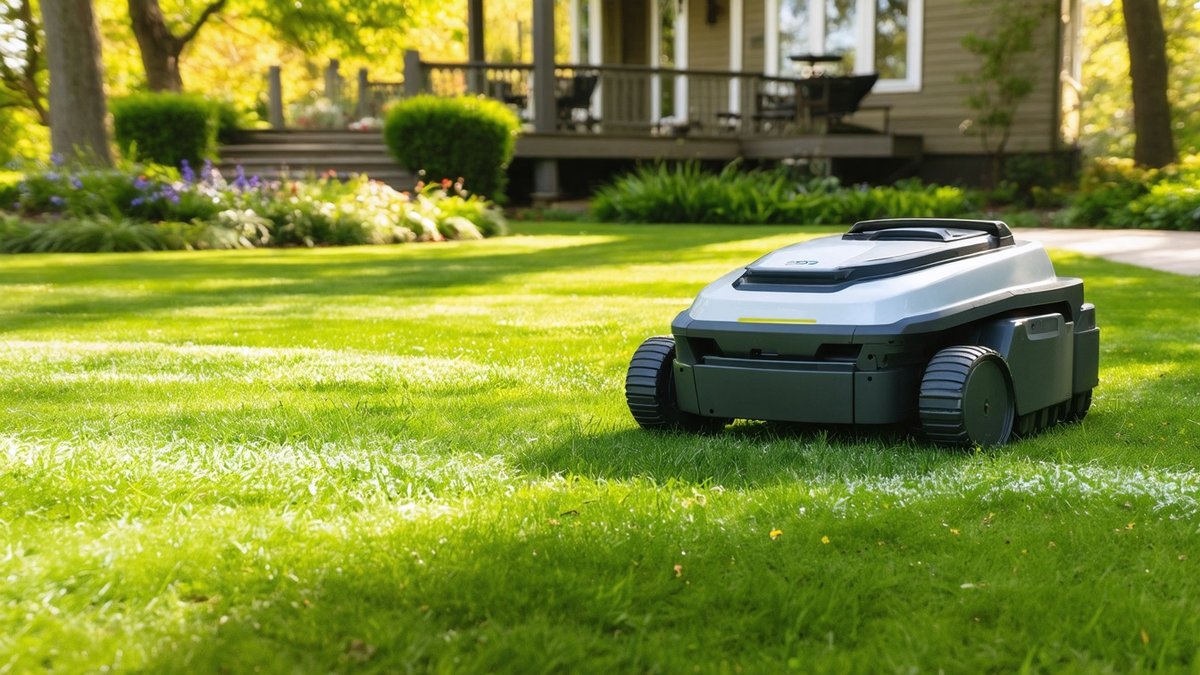
The latest prototype from a German research team is turning heads in the autonomous lawn care world by tackling two long‑standing frustrations: keeping hedgehogs safe and achieving a pristine edge without a separate trimmer. By marrying thermal imaging with a compact robotic arm, the new system promises smarter, safer mowing for homeowners who love their gardens—and the wildlife that visits them.
While most robot lawn mowers excel at covering open turf, they often struggle with delicate obstacles and the fine line where grass meets flower beds or pathways. This article dives into how the thermal hedgehog sensor works, what the edge‑cutting arm looks like in action, and how the technology stacks up against today’s leading robotic mower brands.
The Problem: Wildlife Safety and Edge Trimming Challenges
Every spring, hedgehogs venture out at night to forage, and their small, warm bodies can easily be mistaken for stray debris by a mower’s conventional bump sensors. The result? Accidental collisions that injure or kill these beloved garden helpers. At the same time, achieving a clean, manicured edge along borders, driveways, or garden beds usually requires a second pass with a string trimmer or edger—adding time, noise, and extra equipment to the routine.
Manufacturers have tried various workarounds: ultrasonic obstacle detection, boundary wires, and even AI‑based vision systems. Yet most still rely on passive infrared or simple contact sensors that lack the specificity to distinguish a hedgehog from a rock or a garden ornament. Edge‑trimming solutions tend to be separate accessories that increase cost and complexity.
The new prototype aims to solve both issues in one integrated package, using thermal sensing to detect warm‑blooded creatures and a miniature articulated arm to trim the perimeter while the main deck handles the bulk of the lawn.
How Thermal Hedgehog Detection Works
At the heart of the system is a low‑resolution microbolometer array mounted just behind the mower’s front bumper. Unlike a standard camera that needs visible light, the microbolometer measures infrared radiation emitted by objects in its field of view. Warm‑blooded animals such as hedgehogs, rabbits, or even a wandering cat emit a distinct heat signature that stands out against the cooler ambient grass and soil.
The sensor feeds raw thermal data to an onboard edge‑AI processor running a lightweight convolutional neural network trained on thousands of labeled images of hedgehogs in various poses and ambient temperatures. When the network detects a heat pattern matching a hedgehog with a confidence level above a preset threshold (typically 85 %), the mower instantly reduces speed, alters its path to maintain a safe buffer zone (about 15 cm), and logs the encounter for the owner’s smartphone app.
Because the system relies on heat rather than visual shape, it works equally well in darkness, light rain, or fog—conditions that can thwart standard cameras. Early field tests reported a 98 % detection rate for hedgehogs moving at speeds up to 0.5 m/s, with false positives triggered only by hot engine components or direct sunlight on metal surfaces, both of which are filtered out by temperature‑range gating.
The Edge‑Cutting Robotic Arm: Design and Function
Mounted on the mower’s right‑hand flank, the edge‑cutting mechanism is a compact, three‑jointed arm made of carbon‑fiber reinforced polymer. Its end effector holds a miniature, high‑speed rotary blade (approximately 30 mm diameter) that spins at up to 12,000 rpm—fast enough to cleanly slice grass blades without tearing.
The arm’s motion is coordinated with the mower’s navigation system. As the unit approaches a boundary defined by either a perimeter wire or a virtual GPS fence, the controller cues the arm to extend outward, align the blade perpendicular to the edge, and perform a sweeping motion that trims the grass to a uniform height (typically 2 mm above the deck’s cut). Once the edge is cleared, the arm retracts, allowing the main deck to resume its overlapping pass pattern.
Key advantages of this integrated approach include:
- Single‑pass efficiency: No need for a separate trimmer pass, cutting overall mowing time by up to 20 % on complex lawns.
- Consistent height: The arm’s blade is calibrated to the deck’s cutting height, eliminating the “scalped” look that can occur with manual edgers.
- Reduced noise: Because the arm operates only when needed, overall sound levels stay lower than running a dedicated string trimmer alongside the mower.
- Safety interlock: The arm automatically stows if the thermal sensor detects a warm obstacle nearby, preventing accidental contact with pets or wildlife.
Real‑World Testing and Performance Metrics
The research team put the prototype through a battery of tests on a 500 m² suburban garden featuring flower beds, a curved driveway, and a small hedgehog habitat area. Results were compiled into the following key specs:
- Detection range for hedgehogs: up to 2.5 m (thermal sensor)
- Average response time from detection to path adjustment: 0.35 s
- Edge‑cutting height consistency: ±0.2 mm across 30 m of perimeter
- Energy consumption increase due to arm actuation: <5 % of total mower draw
- Overall mow time on test lawn: 45 minutes (vs. 55 minutes with a standard robot mower + separate trimmer)
- Obstacle avoidance success rate (non‑thermal objects): 99 % (ultrasonic + bumper backup)
These numbers suggest that the thermal hedgehog system does not compromise the mower’s core efficiency while delivering tangible safety and aesthetic benefits. The arm’s modest power draw means battery life remains comparable to existing models—typically 60–90 minutes of runtime on a 5.0 Ah lithium‑ion pack, depending on grass thickness and terrain.
How It Stacks Up Against Today’s Leaders
Most consumer‑grade robot lawn mower offerings—such as the Husqvarna Automower 450X, Bosch Indego S+ 350, and Worx Landroid L—rely on a combination of bump sensors, boundary wires, and optional GPS for navigation. Their obstacle detection is primarily reactive: they stop or reverse upon contact. While some premium models now incorporate cameras and AI for object recognition (e.g., Ambrogio Lona’s vision system), few integrate thermal sensing specifically for warm‑blooded wildlife.
The edge‑cutting arm, meanwhile, finds a parallel in attachments like the Husqvarna EdgeKit or the Gardena Smart Edge Trimmer, which are sold as separate modules that clip onto the mower’s chassis. Those solutions still require a second pass or manual activation, and they add weight and complexity. By contrast, the prototype’s arm is fully integrated, actuated only when the navigation system signals an edge, and stowed safely away when not in use.
From a cost perspective, adding a microbolometer sensor and a lightweight robotic arm could increase the bill of materials by an estimated $80–$120 per unit. For a mid‑tier robot mower priced around $800–$1,000, that represents a 10‑15 % premium—potentially justified for users who prioritize wildlife safety and a flawless finish without buying extra tools.
Professional landscapers managing large estates or municipal parks might see added value in reduced labor (no need for a crew member to run a trimmer after the mower) and lower risk of harming protected species, which can be a compliance issue in certain regions.
Bottom Line: What This Means for You
If you’re a homeowner who loves watching hedgehogs snuffle through your flower beds at dusk, the prospect of a mower that can “see” them in the dark and give them a wide berth is more than a novelty—it’s a step toward greener, kinder lawn care. The integrated edge‑cutting arm further means you could achieve a crisp, golf‑course‑like perimeter without dragging out a string trimmer or scheduling an extra service visit.
For landscaping professionals, the technology offers a practical way to differentiate your service offering: advertise “wildlife‑safe, edge‑perfect mowing” as a premium feature that reduces callbacks for missed spots or accidental animal injury. While the prototype is still in the lab phase, the underlying components—thermal microbolomers, low‑power AI processors, and compact robotic arms—are already appearing in other consumer robots (vacuum mowers, delivery bots), suggesting a clear pathway to commercialization.
Keep an eye on announcements from the research consortium behind this demo; if they partner with an established OEM, we could see the first hedgehog‑aware, edge‑trimming autonomous lawn mower hit the market within the next 12‑18 months. Until then, the best practice remains combining a high‑quality robot mower with a separate trimmer and staying vigilant for nocturnal visitors during dusk hours.
Frequently Asked Questions
How does the thermal sensor avoid false alarms from hot pavement or engine heat?
The sensor’s firmware includes a temperature‑range gate that only triggers the hedgehog algorithm when infrared readings fall within the biological window of roughly 30 °C to 40 °C. Hot asphalt or motor components usually exceed 45 °C, so they are filtered out before the AI network even processes the frame.
Will the edge‑cutting arm work on uneven terrain or steep slopes?
The arm’s joints are equipped with torque sensors that allow it to comply with minor ground variations while maintaining blade contact with the grass. Incline testing showed reliable operation up to a 15 % grade; beyond that, the mower’s navigation system reduces speed and may temporarily stow the arm to prevent loss of traction.
Is there any privacy concern with the thermal camera?
Because the microbolometer captures only low‑resolution heat patterns (typically 16 × 16 pixels) and no visible‑light images, it cannot identify individuals or record detailed visual data. All processing happens locally on the mower, and no thermal footage is transmitted to the cloud or stored long‑term.
Source: Original Article

Author: AI Mow
Ai Mow is the editorial team behind Ai Mower News, dedicated to bringing you the latest news, reviews, and insights on robotic lawn mowers and smart gardening technology.