


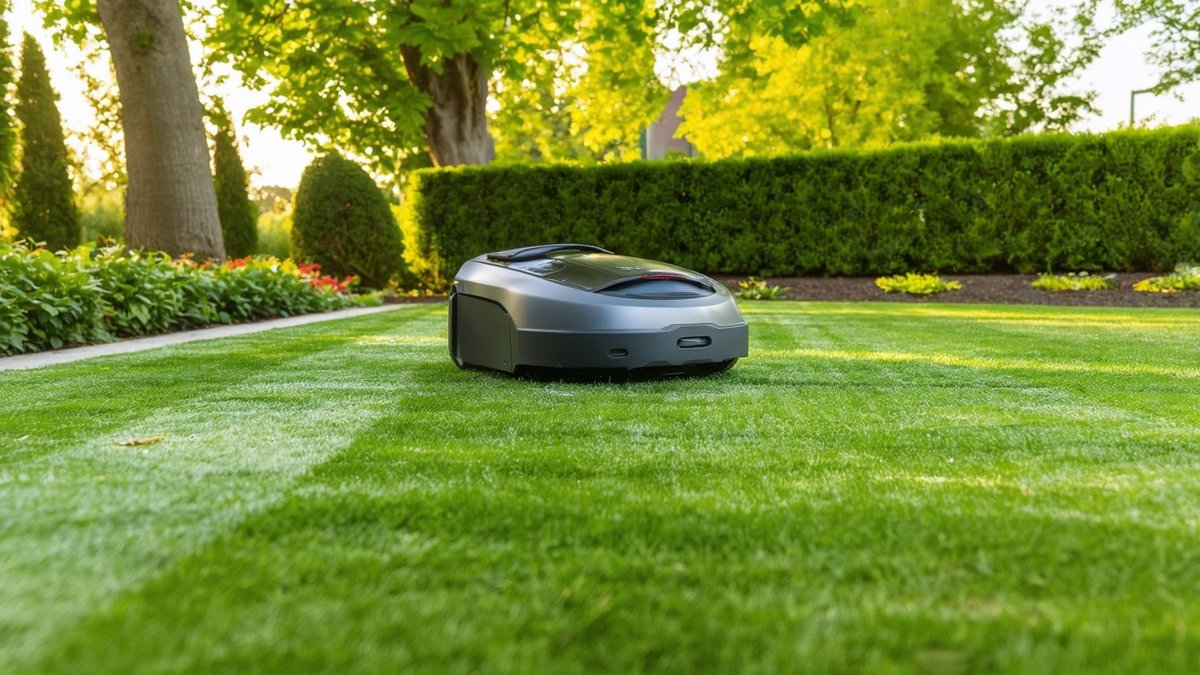
The robotic mower landscape is shifting from backyard novelty to bona fide commercial tool, and Mammotion is staking its claim with a dedicated fleet‑ready offering. By moving beyond the residential Luba line and introducing a model built for larger lawns, parks, and professional landscaping crews, the company signals that autonomous lawn care is ready to scale up. For homeowners eyeing a future upgrade and pros evaluating automation, this development could reshape how we think about smart mowing on a larger scale.
Why Mammotion Is Going Commercial
Mammotion first gained attention with its Luba series, which combined RTK‑GNSS navigation, obstacle‑avoidance AI, and a sleek, app‑driven interface to deliver a truly autonomous lawn mower experience for suburban yards. The success of those units proved there was demand for a mower that could handle complex terrains without perimeter wires. Now, the company is leveraging that technology foundation to address a segment that has been slower to adopt robotics: professional landscaping and municipal grounds maintenance.
The commercial push isn’t just about slapping a bigger battery on a consumer model. Mammotion’s new offering is engineered from the ground up for higher duty cycles, wider cutting swaths, and fleet‑management capabilities that let supervisors monitor dozens of units in real time. By targeting the commercial market, Mammotion hopes to capture a share of the growing demand for labor‑saving, environmentally friendly equipment — especially as cities tighten noise and emissions regulations.
Key Features of the Mammotion Commercial Mower
While Mammotion has kept the exact model name under wraps, the specifications released in their press briefing paint a clear picture of what sets this machine apart from its residential siblings and from competing commercial robots.
- Cutting width: 22‑inch dual‑blade system, roughly 30% wider than the Luba 2 AWD, enabling faster coverage of large lawns.
- Battery capacity: Dual 10 Ah lithium‑ion packs delivering up to 4.5 hours of continuous operation on a single charge — enough for a full day’s work on mid‑size properties.
- RTK‑GNSS + Vision Fusion: Combines centimeter‑level satellite positioning with stereo cameras for obstacle detection, allowing the mower to navigate complex flower beds, trees, and uneven terrain without perimeter wires.
- Fleet management dashboard: Cloud‑based platform that shows real‑time location, battery status, error codes, and maintenance alerts for each unit; supports over‑the‑air firmware updates.
- Ruggedized chassis: IPX5 water resistance, reinforced bumpers, and sealed motor housings designed to withstand daily commercial use and occasional inclement weather.
- Adjustable cutting height: 0.8‑2.8 inches, with a quick‑release lever for on‑the‑fly changes between fine turf and taller grass.
- Low‑noise operation: Rated at 58 dB(A), well below many gas‑powered commercial mowers, helping operators meet municipal noise ordinances.
How It Stacks Up Against the Competition
Entering the commercial autonomous mower arena puts Mammotion up against established players such as Husqvarna’s Automower® Commercial Series, Bosch’s Indego Fleet, and the newer entrant Wiprus’ GreenBot Pro. Each competitor brings its own strengths:
- Husqvarna leverages decades of mower expertise and a vast dealer network, offering models with up to 24‑inch cutting decks and robust satellite‑based navigation.
- Bosch focuses on tight integration with its existing smart‑home ecosystem and offers a modular battery system that can be swapped across multiple tools.
- Wiprus emphasizes AI‑driven path optimization and claims the longest runtime in its class — up to 6 hours on a single charge.
Mammotion’s differentiation lies in its vision‑fusion navigation (combining RTK with stereo cameras) and a fleet‑management interface that appears more user‑friendly for small‑to‑mid‑size landscaping businesses. The company also highlights a lower entry price point — reportedly starting around $4,200 per unit — compared with Husqvarna’s commercial models that often exceed $5,500. For landscapers watching operating costs, that price gap could be a decisive factor when scaling a fleet.
What This Means for Homeowners and Landscaping Pros
For the typical homeowner, Mammotion’s commercial move may not translate directly to a new backyard purchase — at least not yet. However, the ripple effects are worth noting:
- Technology trickle‑down: Innovations proven in the commercial unit — such as improved obstacle avoidance and longer battery life — often filter down to future residential models, potentially making the next Luba generation even more capable.
- Service and support: A stronger commercial focus usually means Mammotion will invest more in dealer training, spare‑parts logistics, and firmware updates, benefiting all owners.
- Resale value: As the brand gains credibility in the pro market, used Luba units may hold their value better, giving homeowners a stronger return if they decide to upgrade.
Landscaping professionals, meanwhile, gain a viable alternative to gas‑powered walk‑behinds or ride‑ons, especially for properties ranging from 0.5 to 2 acres where maneuverability and low noise are priorities. The ability to deploy multiple units supervised from a single tablet can reduce labor costs, minimize overtime, and provide a greener image that appeals to eco‑conscious clients. Moreover, the RTK‑based navigation eliminates the need for installing and maintaining boundary wires — a task that can be both time‑consuming and error‑prone on large, irregularly shaped sites.
Bottom Line
Mammotion’s step into the commercial arena signals that the robotic mower market is maturing beyond novelty gadgets and into a legitimate tool for professional lawn care. By coupling wide‑cutting decks, extended runtime, vision‑enhanced RTK navigation, and a straightforward fleet dashboard, the company offers a compelling package that could sway landscapers looking to cut fuel costs, noise, and emissions. While the new model will likely compete head‑to‑head with Husqvarna, Bosch, and Wiprus, its blend of competitive pricing and user‑friendly tech may carve out a niche among small‑to‑mid‑size contractors eager to embrace smart mowing without overhauling their existing workflows. For homeowners, the advancement promises future residential models that inherit these commercial‑grade improvements — making the dream of a truly autonomous lawn mower that can handle complex yards even more attainable.
Frequently Asked Questions
Is the Mammotion commercial mower suitable for very large properties like golf courses or parks?
The current offering is optimized for sites up to roughly two acres per unit, with a 22‑inch cutting width and up to 4.5 hours of runtime. For expansive areas such as golf courses, operators would likely deploy a fleet of multiple units managed through the cloud dashboard, or they might consider wider‑deck alternatives from competitors that specialize in larger swaths. Mammotion has hinted at future upgrades — potentially wider decks or swappable high‑capacity batteries — that could push the envelope further.
How does the vision‑fusion navigation handle low‑light or rainy conditions?
Mammotion’s system combines RTK‑GNSS (which works independently of light) with stereo cameras that include infrared sensitivity and image‑processing algorithms designed to function in dim light. In heavy rain, the IPX5‑rated chassis protects the electronics, and the reliance on satellite positioning ensures the mower can maintain its route even if visual data is temporarily degraded. However, for safety, the unit will pause operation if it detects standing water that could affect traction.
What kind of ongoing costs should I expect beyond the purchase price?
Besides electricity for charging (which is minimal compared to fuel), owners should budget for periodic blade sharpening or replacement — typically every 20‑30 hours of use — and occasional firmware updates, which Mammotion provides free over the air. The fleet management platform includes a basic tier at no extra cost; advanced analytics or premium support tiers may involve a subscription fee, but pricing details have not been disclosed yet.
Source: Original Article

Author: AI Mow
Ai Mow is the editorial team behind Ai Mower News, dedicated to bringing you the latest news, reviews, and insights on robotic lawn mowers and smart gardening technology.