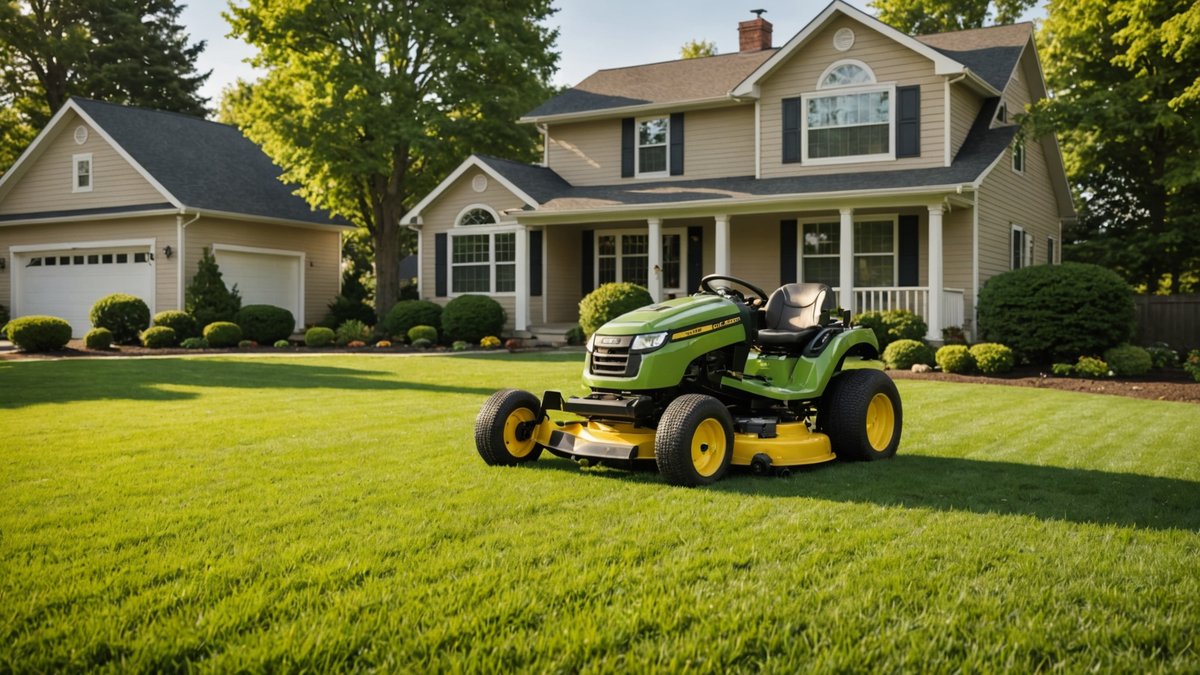
Maintaining a healthy, lush lawn requires more than just Mowing. Fertilization plays a critical role in ensuring your grass grows strong and vibrant. If you’re using an ai robotic mower or ai robotic lawn mower to mow your lawn, you’re already on the path to an easier, more efficient way of caring for your yard.
Why Does Fertilization Matter for a Robot-Mowed Lawn?
You might think that a ai robotic mower can take care of the mowing, so you don’t need to worry about your lawn’s health. But a Robotic mower can’t provide the nutrients your lawn needs to thrive. Proper fertilization is essential for:
- Promoting healthy grass growth: Fertilizer helps provide the nutrients grass needs to grow strong and dense.
- Improving color and appearance: A well-fed lawn looks green and lush, making your yard stand out.
- Strengthening roots: Fertilizing improves root development, helping grass survive harsher weather conditions and resist pests.
- Maximizing the benefits of regular mowing: A robot mower works best when your lawn is healthy and free of weeds. Fertilization supports overall lawn health, giving the mower a clean area to work on.
What Type of Fertilizer Should I Use for a Robot-Mowed Lawn?
Choosing the right fertilizer is essential for a robot-mowed lawn. Here’s a breakdown of the different types of fertilizers to consider:
1. Slow-Release Fertilizers
Slow-release fertilizers gradually release nutrients into the soil, ensuring that your lawn gets a steady supply of nutrients over time. This is a great option for robot-mowed lawns, as it reduces the frequency of application and prevents nutrient overload, which can damage your grass.
- Benefits:
- Provides consistent nourishment over weeks or months
- Less likely to burn grass or create excessive growth
- Works well for lawns that are mowed regularly by a robotic mower
- Provides consistent nourishment over weeks or months
- Example: A slow-release nitrogen fertilizer is commonly used to keep your lawn green for an extended period.
2. Liquid Fertilizers
Liquid fertilizers are fast-acting and can quickly deliver nutrients to your lawn. However, they need to be applied more frequently than slow-release fertilizers. While these are effective for quick greening, they may not be as sustainable for long-term care unless applied consistently.
- Benefits:
- Quick results, with visible improvements in a short period
- Easily absorbed by grass
- Good for correcting nutrient deficiencies
- Quick results, with visible improvements in a short period
- Example: Liquid nitrogen or a complete liquid fertilizer that contains nitrogen, phosphorus, and potassium.
3. Organic Fertilizers
Organic fertilizers are derived from natural sources like compost, manure, and plant-based materials. They improve soil health over time by enriching the soil with beneficial microbes and nutrients. Organic options can be an excellent choice if you’re looking for a more environmentally friendly option.
- Benefits:
- Supports soil health and sustainability
- Provides long-term, slow-release nutrients
- Improves grass root systems and reduces chemical runoff
- Supports soil health and sustainability
- Example: Organic compost or seaweed-based fertilizers can be great choices.
When Should I Fertilize My Robot-Mowed Lawn?
Fertilization timing is key to maintaining a healthy lawn. Here’s a general guide for when to fertilize based on your region and lawn type:
1. Spring Fertilization
In early spring, your lawn is coming out of dormancy, and it needs a boost to start growing strong. This is the time to apply a balanced fertilizer with a high nitrogen content to promote early growth and green-up.
- Best Fertilizer Type: Slow-release fertilizer with high nitrogen content.
- Timing: Apply when your grass starts growing, typically in late March to early April (depending on your climate).
2. Summer Fertilization
During the summer months, your grass needs consistent nutrients to maintain its health, especially in areas that experience heat. However, avoid over-fertilizing in the summer, as it can cause excessive growth and stress your lawn. Opt for lighter applications of fertilizer.
- Best Fertilizer Type: Balanced, slow-release fertilizers with micronutrients.
- Timing: Apply around mid-summer (June to July) to maintain steady growth.
3. Fall Fertilization
Fall is one of the most important times to fertilize your lawn, especially for cool-season grasses. This is when grass begins to prepare for the colder months, and a good fertilization will help strengthen roots and improve lawn health going into winter.
- Best Fertilizer Type: High potassium content to promote root growth and lawn strength.
- Timing: Apply in late September to early October.
4. Winter Care (Optional)
In regions where grass continues to grow in the winter, you can apply a light fertilizer. However, for most lawns, especially cool-season grasses, fertilization isn’t necessary in the winter unless you’re preparing for early spring growth.
- Best Fertilizer Type: Avoid heavy applications in winter.
- Timing: Only apply if necessary and after the first frost.
How Can I Integrate Fertilization into a Robot-Mowed Lawn Care Routine?
Since ai robotic mowers handle mowing and are typically scheduled to mow frequently, integrating fertilization with your mowing routine can help keep your lawn in top condition. Here’s how to do it:
1. Use Fertilizer with Mulching Capability
Many ai robotic lawn mowers come with mulching features, which means they chop grass clippings into fine pieces and redistribute them onto the lawn. When you fertilize, using a mower with a mulching function can help spread the nutrients evenly and naturally fertilize your lawn with each mowing.
- Tip: Make sure your robotic mower has an adjustable cutting height and mulching capabilities to ensure even coverage of the fertilizer.
2. Set Up a Regular Mowing Schedule
Robotic mowers are great for keeping your grass at the optimal height, but remember that they only work with regular mowing. Stick to a consistent schedule that matches your fertilization program — for example, fertilize every six to eight weeks during the growing season while ensuring your mower stays on track for weekly or bi-weekly mowing.
FAQ: Common Questions About Fertilizing a Robot-Mowed Lawn
1. Can I use the same fertilizer for a robot-mowed lawn as a traditional lawn?
Yes, the same types of fertilizers can be used, but make sure to choose one that works well with regular mowing and has a good balance of nutrients.
2. How often should I fertilize my lawn if I use a robot mower?
Fertilize your lawn about four times a year: in early spring, mid-summer, early fall, and optionally in winter for mild climates.
3. Can I fertilize and mow on the same day?
It’s best to mow first, and then fertilize afterward. Mowing before applying fertilizer allows the nutrients to reach the soil more effectively, as the clippings won’t block the nutrients.
4. Does fertilizing make my lawn harder to mow with a robot mower?
No, a well-fed lawn is still easy for a ai robotic mower to handle. In fact, a healthy lawn with strong grass is often easier to mow because the grass won’t be overly tall or thick.
5. Are organic fertilizers better for a robot-mowed lawn?
Organic fertilizers can be a good choice, as they provide a slow-release option that is gentle on the lawn and better for the environment. However, both organic and synthetic fertilizers work well with ai robotic mowers.
Conclusion
The best fertilizer program for a robot-mowed lawn involves using the right type of fertilizer at the right times of the year. Whether you’re using a slow-release fertilizer, organic options, or liquid fertilizers, the key is to match your fertilizer schedule with your ai robotic mower’s mowing schedule to keep your grass healthy and green.
📰 Related Articles
🔗 Essential Resources
- 📖 Manual Finder — 51 brands, 195+ models
- 🤖 AI Support Assistant — instant troubleshooting
- 📐 Complete Guide to Robotic Mowers 2026
- 🏆 Independent Rankings 2026
- ⚠️ Buyer’s Guide: What Dealers Won’t Tell You

Author: Muazma Saeed
Muazma Saeed is a content creator at AI Mower News, writing about robotic lawn mowers, smart gardening, and outdoor tech. Muazma focuses on practical, how‑to content that helps readers with installation, maintenance, and best practices for robotic mower ownership. With a growing portfolio of articles that answer common questions and provide useful advice for both home users and commercial operators, Muazma aims to support the community of mower owners and tech‑curious gardeners.