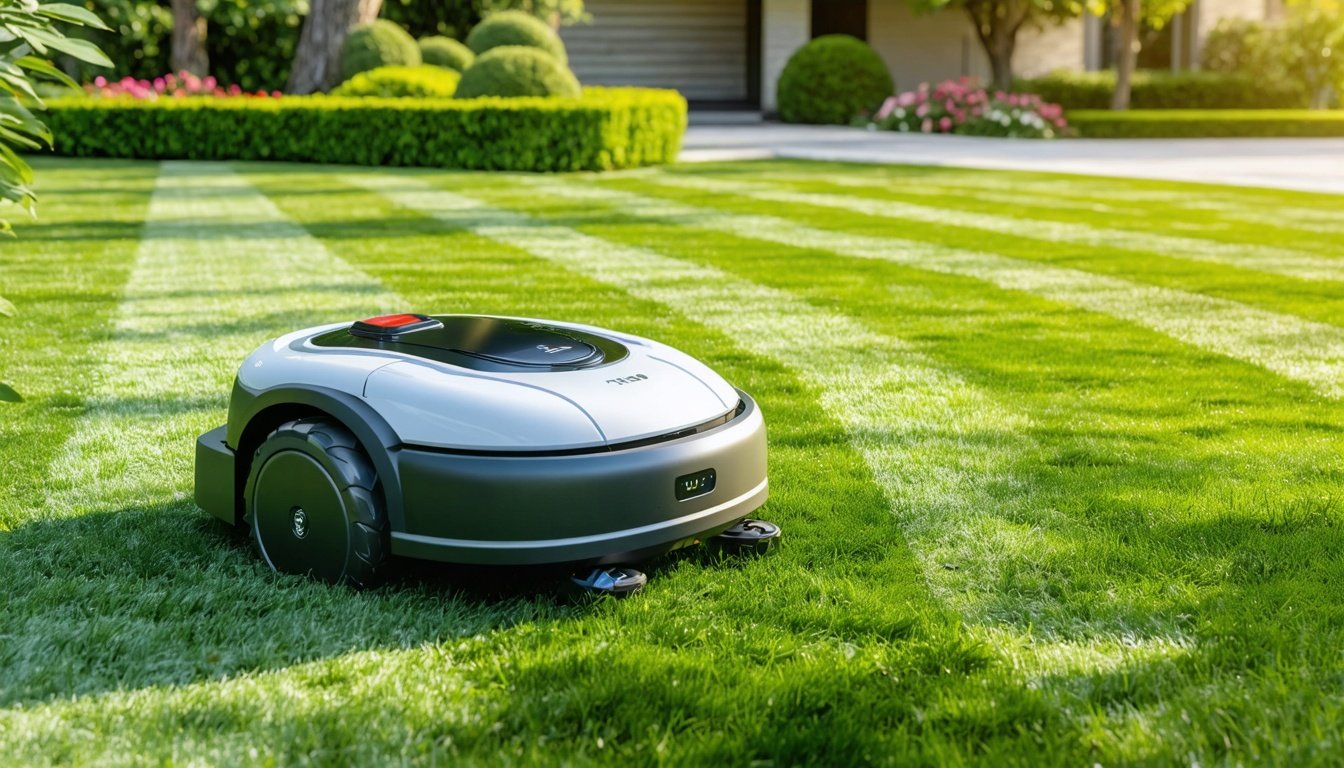
Robotic Mower Showdown: Mammotion Luba 3 vs. Worx Landroid Vision 4WD
In the rapidly evolving world of robotic lawn mowers, two new contenders are turning heads: the Mammotion Luba 3 and the Worx Landroid Vision 4WD. While both promise smart mowing solutions for homeowners and professionals, their approaches differ significantly. This head-to-head comparison breaks down their strengths, weaknesses, and what each means for users seeking autonomous lawn mower efficiency. Whether you’re a homeowner tired of manual mowing or a landscaper looking to automate your fleet, this analysis will help you decide which machine is right for you.
## Key Specifications and Features Compared
Before diving into performance, let’s outline the core specs of both models to set the stage:
- Mammotion Luba 3
- Cutting width: 200mm (7.9″)
- Battery life: 90 minutes (2.5-hour charge time)
- Max slope capacity: 35% (16.8°)
- Obstacle detection: Ultrasonic sensors + GPS
- Connectivity: Wi-Fi + mobile app control
- Price: ~$2,300
- Worx Landroid Vision 4WD
- Cutting width: 180mm (7.1″)
- Battery life: 70 minutes (2 hours charge time)
- Max slope capacity: 30% (16.7°)
- Obstacle detection: Camera-based + infrared
- Connectivity: Wi-Fi + app control + voice integration
- Price: ~$2,600
Both models sit in the premium tier of robot lawn mowers, but their designs cater to slightly different priorities. The Luba 3 emphasizes slope handling and battery longevity, while the Landroid Vision 4WD focuses on smart integration and obstacle avoidance.
## Performance: Cutting Quality and Terrain Handling
For many users, the ultimate test is how well a mower handles real-world lawns. The Mammotion Luba 3 shines on uneven or sloped terrain, leveraging its 35% slope capacity and grippy rubber tires to maintain traction where competitors might slip. Its dual-blade system delivers a clean, even cut, even in tall grass. The Worx Landroid Vision 4WD, despite slightly lower slope specs, compensates with its “Vision” system—a camera that maps obstacles in real time, avoiding garden chairs, pets, or toys with surprising accuracy.
Where the Landroid falls short is battery life. At 70 minutes per charge, it may struggle with larger lawns (over 0.5 acres) compared to the Luba 3’s 90-minute runtime. However, the Worx model’s faster recharging (2 hours vs. 2.5) helps mitigate downtime. For commercial users managing multiple lawns, this could mean less idle time between jobs.
## Smart Features and Automation
Smart mowing isn’t just about autonomy—it’s about adaptability. The Luba 3 uses GPS to map your lawn and optimize mowing paths, reducing overlap and ensuring full coverage. Its app allows customizable schedules and remote starts, ideal for busy professionals. Meanwhile, the Landroid Vision 4WD takes connectivity further with voice assistant compatibility (Alexa/Google Assistant) and a more intuitive app interface for tweaking settings on the fly.
Worx’s camera-based obstacle detection is a standout feature, particularly for homeowners with dynamic outdoor spaces. Instead of relying solely on infrared, the camera “learns” the yard over time, reducing false positives. Mammotion’s ultrasonic sensors are effective but may occasionally misfire near reflective surfaces like ponds or dark foliage.
## Real-World Use: Homeowners vs. Landscapers
For homeowners, the choice hinges on lawn size and complexity. The Luba 3’s longer battery and superior slope handling make it better for acreage properties or yards with steep sections. Its lower price point also appeals to budget-conscious buyers. The Landroid Vision 4WD suits tech-savvy users who value seamless integration with smart home ecosystems and higher precision in obstacle avoidance.
Professional landscapers, on the other hand, may find the Worx model’s faster charging and lighter weight advantageous when deploying multiple units. However, Mammotion’s modular design allows easier maintenance—a boon for companies servicing fleets. Competitors like Husqvarna’s Automower series offer similar commercial-grade durability, but both the Luba 3 and Landroid Vision 4WD hold their own in niche areas.
## Bottom Line: Which Robotic Mower is Right for You?
Neither the Mammotion Luba 3 nor the Worx Landroid Vision 4WD is a clear-cut winner—they excel in different domains. Here’s how to decide:
- Choose Mammotion Luba 3 if:
- You have a large or sloped yard.
- You prioritize battery longevity.
- You want a more affordable premium option.
- Choose Worx Landroid Vision 4WD if:
- You value advanced obstacle detection.
- You’re invested in a smart home ecosystem.
- You need faster recharging for commercial use.
Ultimately, both represent significant leaps in autonomous lawn mower technology, pushing the industry toward smarter, more efficient solutions.
### Frequently Asked Questions
### Do I need professional installation for either model?
No—both mowers are designed for DIY setup. However, lawns with complex boundaries or multiple zones may benefit from a professional install to ensure optimal performance.
### How do these mowers handle rainy conditions?
Both models have rain sensors that send them back to the charging station during downpours. They can resume mowing once conditions dry up. Avoid using them in standing water to prevent damage.
### Can these mowers be used on lawns with pets?
Absolutely! Pet owners should ensure waste is cleaned up before mowing (like with any robot lawn mower). The Landroid Vision’s camera detection is particularly adept at avoiding pets or toys left in the yard.
Source: Original Article

Author: AI Mow
AI Mow is the AI-assisted news desk of AI Mower News. It monitors manufacturer announcements, trade shows and industry sources, and drafts stories in our editorial voice. Every article is checked against its original source before publication — our fact gate holds anything that claims testing we did not do or specs the source does not support — and is published under this byline for transparency. How we work: https://aimowernews.com/editorial-guidelines/ · The people behind it: https://aimowernews.com/our-team/