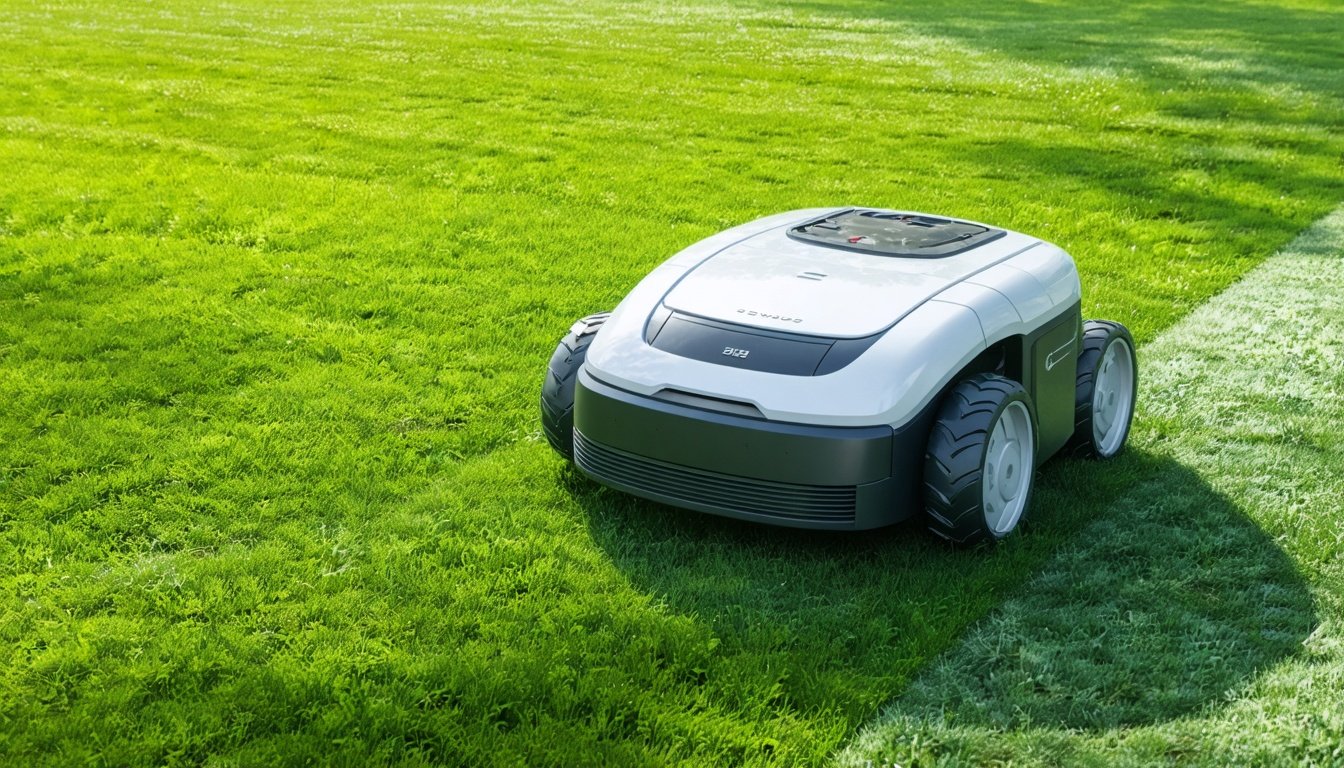
In an era where smart gadgets promise to simplify our lives, it’s easy to wonder: Do I really need a robot lawn mower? The answer depends on your priorities, lawn size, and willingness to embrace automation. While heated steering wheels and electric vacuums cater to niche comforts, robotic mowers offer tangible benefits for homeowners and professionals tired of manual upkeep. Let’s explore whether this tech is a luxury or a game-changer.
## Robotic Mowers 101: What They Are and Why They’re Gaining Ground
A robot lawn mower is an autonomous lawn mower designed to cut grass without human intervention. These devices use sensors, GPS, or boundary wires to navigate lawns, and they’re equipped with safety features like obstacle detection and slope management. Unlike traditional push mowers or ride-ons, they operate quietly, often on eco-friendly electric power, and return to their charging stations automatically.
The technology has evolved rapidly. Early models were limited to small, flat lawns, but modern versions handle complex terrains, varying grass types, and even connect to smart-home systems. Competitors like Husqvarna Automower, Worx Landroid, and EGO SmartMow have pushed innovation, making these devices more accessible and reliable.
## Key Benefits of Going Robotic: Beyond Just Convenience
While convenience is a major draw, robotic mowers offer practical advantages that justify their cost for many users:
– **Time Savings:** Automate a task that can take hours weekly, freeing up time for hobbies, family, or business.
– **Eco-Friendly Operation:** Electric motors produce zero emissions, appealing to environmentally conscious users.
– **Consistent Care:** Regular mowing keeps lawns healthier by promoting even growth and reducing thatch buildup.
– **Cost Efficiency (Long-Term):** Lower maintenance costs compared to gas mowers, which require fuel, oil, and regular servicing.
– **Smart Integration:** Schedule mows via apps, receive alerts, and adjust cutting heights remotely.
For professional landscapers, integrating a robotic mower fleet can reduce labor costs and improve scalability. Some models can be managed remotely, allowing teams to focus on higher-value tasks like hardscaping or irrigation.
## What to Look for in a Robot Mower: Key Specs and Features
When comparing models, focus on these critical factors:
– **Cutting Deck Size:** Larger decks cut faster but may struggle in tight spaces.
– **Battery Life:** Longer runtime ensures fewer recharges, ideal for larger lawns.
– **Navigation System:** Advanced models use AI or GPS for efficient, obstacle-aware mowing.
– **Mowing Range:** Check the maximum acreage the unit can handle (typically 0.5–2 acres for most consumer models).
– **Weather Resistance:** Look for IP54 or higher ratings to ensure operation in rain or humidity.
– **Safety Features:** Blade stop on lift, anti-theft alarms, and collision detection are must-haves.
For instance, the Husqvarna Automower 470 handles up to 4,000 square meters and boasts a 5,500-square-foot cutting width, while the more budget-friendly Worx Landroid 320 takes on lawns up to 1/4 acre.
## Robot Mower vs. Traditional Options: Where Do Competitors Fall Short?
The original article questions whether gadgets like heated steering wheels or electric vacuums are necessary. Similarly, robotic mowers compete with:
– **Gas-Powered Mowers:** Reliable but noisy, polluting, and requiring frequent maintenance.
– **Electric Corded Mowers:** Affordable but limited by cord length and accessibility.
– **Manual Push Mowers:** Eco-friendly but labor-intensive.
– **Hiring a Pro:** Convenient but costly long-term.
While a heated steering wheel might be a nice-to-have, a robotic mower solves a tangible problem for many: the weekly chore of lawn maintenance. Unlike a vacuum, which only matters indoors, a robot mower impacts outdoor living space—a significant area for home value and personal enjoyment.
## Bottom Line: What This Means for You
For homeowners, robotic mowers are a smart investment if you value time, sustainability, and a pristine lawn. They’re ideal for those with moderate to large yards who dislike manual mowing but want reliability without hiring help.
For landscaping professionals, integrating robotic mowers can reduce labor costs and client expenses, especially for maintenance contracts. However, they’re best suited for repetitive, predictable lawns rather than complex jobs requiring manual artistry.
Before buying, ask: Do you have the budget? (Prices start around $1,500.) Is your lawn setup compatible? (Small, irregularly shaped yards may need older generations to adjust boundaries.) But for the right user, the benefits quickly outweigh the upfront cost.
## FAQs: Common Questions About Robot Mowers
### Are robot mowers safe?
Yes. All reputable models feature automatic blade stops when lifted or tipped, along with obstacle detection. They’re designed to navigate around pets and people.
### Do robot mowers work in the rain?
Most models are weather-resistant and continue mowing in light to moderate rain. However, heavy storms may trigger a return-to-charger safety mode.
### Can I use a robot mower on a sloped lawn?
Modern units handle slopes up to 35% incline (check your model’s specs). Steep or uneven terrain may require boundary wire adjustments for reliability.
In a world full of tech solutions, robotic mowers stand out as a practical, impactful tool. Whether you’re a time-strapped homeowner or a forward-thinking landscaper, the future of lawn care is here—and it’s autonomous.
Source: Original Article

Author: AI Mow
AI Mow is the AI-assisted news desk of AI Mower News. It monitors manufacturer announcements, trade shows and industry sources, and drafts stories in our editorial voice. Every article is checked against its original source before publication — our fact gate holds anything that claims testing we did not do or specs the source does not support — and is published under this byline for transparency. How we work: https://aimowernews.com/editorial-guidelines/ · The people behind it: https://aimowernews.com/our-team/