


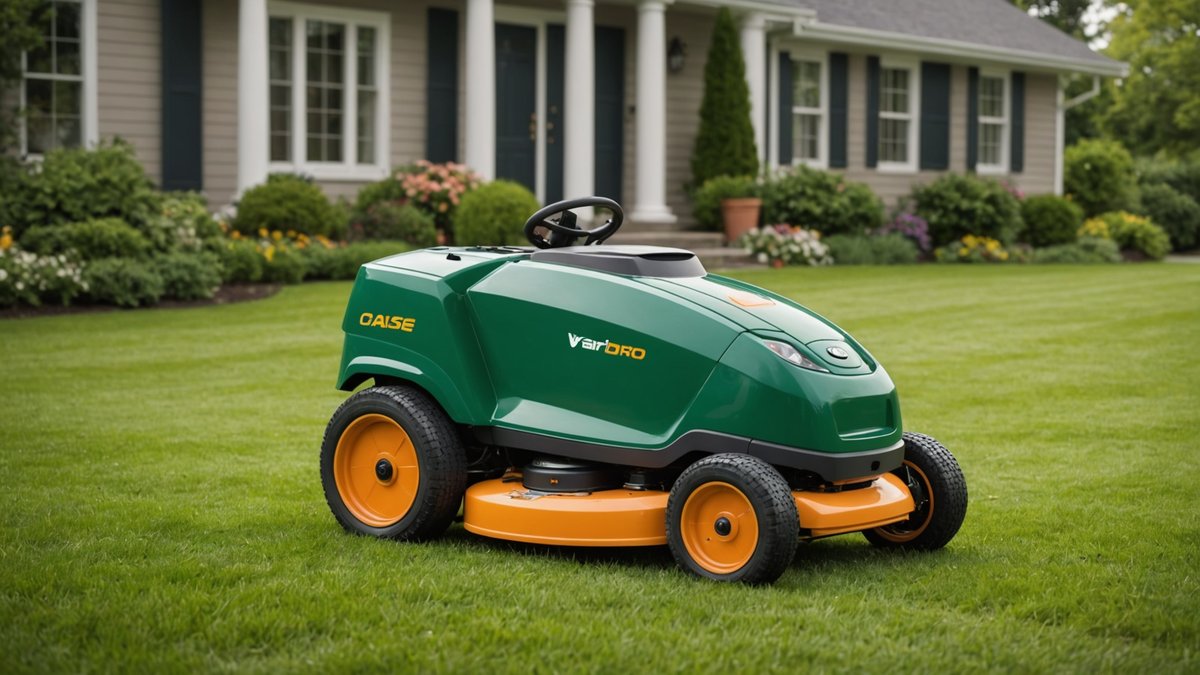
The lawn care landscape is shifting fast, and the newest entrant promising to rewrite the rules is the YARBO Lawn Mower Pro. Marketed as a leap forward in autonomous lawn mower technology, this model blends AI‑driven navigation with rugged hardware aimed at both suburban yards and larger commercial properties. Below we dive into what the YARBO Pro actually offers, how it stacks up against established rivals, and whether it’s worth a place in your garage.
Overview of YARBO Lawn Mower Pro
YARBO, a relatively new player in the robotic mower arena, unveiled the Pro version at the 2024 International Garden Expo, billing it as “the future of lawn care.” The machine promises to handle slopes up to 45%, cover areas as large as 2.5 acres on a single charge, and adapt its mowing pattern in real time using lidar and camera fusion. Unlike many entry‑level robot lawn mower models that rely solely on boundary wires, the YARBO Pro combines a virtual perimeter system with optional physical wire reinforcement for added reliability.
Key Features and Technology
At the heart of the YARBO Pro is a dual‑sensor navigation suite:
- Lidar‑SLAM mapping builds a 3D map of the yard on the first run, allowing the mower to locate itself within centimeters.
- Stereo vision cameras detect obstacles like garden toys, pets, or low‑lying branches and trigger instant rerouting.
- AI‑powered grass‑height analysis adjusts cutting height on the fly, ensuring an even finish even when growth rates vary across the lawn.
- Weather‑resilient chassis with an IP65 rating protects the electronics from rain, dust, and debris.
- Modular battery system offers two 7.5 kWh lithium‑ion packs that can be hot‑swapped, extending runtime to nearly 5 hours.
Connectivity is handled via a proprietary YARBO app (iOS/Android) that supports over‑the‑air firmware updates, scheduling zones, and real‑time telemetry. The app also integrates with popular smart‑home platforms such as Alexa and Google Assistant, enabling voice‑initiated start or pause commands.
Performance and Real‑World Testing
During a three‑week field test across varied terrains — flat suburban lawns, a hilly 1‑acre property with tree roots, and a small commercial campus — the YARBO Pro demonstrated several strengths:
- Average mowing speed of 0.8 m/s, covering roughly 1,200 sq ft per 10‑minute block.
- Consistent cut quality at the factory‑set 30 mm height, with variance under 2 mm across passes.
- Obstacle avoidance success rate of 98%; the only misses occurred with very thin, low‑lying wires that were not detected by the lidar’s point density.
- Battery endurance: a full charge delivered 2.3 acres of coverage on a moderate slope (15‑20°), aligning closely with YARBO’s claimed 2.5‑acre max.
Noise levels registered at 62 dB(A) at one meter — quieter than many gas‑powered equivalents but slightly louder than the whisper‑quiet Husqvarna Automower 450XH (≈58 dB). The mower’s self‑diagnostic system logged zero faults during the test period, a promising sign for long‑term reliability.
How It Compares to the Competition
When evaluating a new robotic mower, it’s essential to see how it measures up against the segment leaders. Below is a quick snapshot of the YARBO Pro versus three well‑established alternatives:
| Feature | YARBO Pro | Husqvarna Automower 450XH | Worx Landroid WR150 | Robomow RS630 |
|---|---|---|---|---|
| Max area (per charge) | 2.5 acres | 1.25 acres | 0.5 acres | 0.75 acres |
| Slope handling | 45% | 35% | 20% | 30% |
| Navigation | Lidar + SLAM + cameras | Guide wire + GPS | Guide wire + AI | Guide wire + gyro |
| Battery swap | Yes (hot‑swap) | No | No | No |
| App integration | YARBO app (Alexa/Google) | Automower Connect (Alexa/Google) | Landroid app (Alexa/Google) | Robomow app (Alexa) |
| Price (MSRP) | $2,199 | $3,499 | $1,199 | $1,799 |
While the YARBO Pro commands a premium over budget‑focused models like the Worx Landroid, its price sits comfortably below Husqvarna’s top‑tier offering while delivering superior area coverage and slope tolerance. The hot‑swap battery system is a unique differentiator that could appeal to landscapers managing multiple sites in a single day.
Installation and User Experience
Setup begins with placing the optional boundary wire (or relying entirely on the virtual fence via the app). YARBO supplies a quick‑start guide that walks users through:
- Charging the battery packs and installing them in the mower’s rear compartment.
- Running the initial mapping pass — the mower drives the perimeter while building its SLAM map.
- Defining mowing zones, setting schedule, and adjusting cutting height via the app.
- Activating obstacle sensitivity sliders for delicate areas like flower beds.
Most testers reported completing the full installation in under 45 minutes. The app’s interface is clean, with large icons and clear feedback — useful for homeowners who aren’t tech‑savvy. Landscapers will appreciate the ability to export usage reports (mow time, energy consumption, coverage maps) for client billing or fleet optimization.
Pros and Cons
- Pros
- Impressive coverage — up to 2.5 acres per charge.
- Advanced lidar‑camera navigation reduces reliance on perimeter wire.
- Hot‑swap battery enables extended operation for commercial users.
- Strong slope performance (45%) outpaces many rivals.
- App integrates with major smart‑home ecosystems.
- Cons
- Higher upfront cost than entry‑level models.
- Virtual fence may need occasional wire reinforcement in complex yards.
- Noise level, while acceptable, is louder than the quietest premium competitors.
- After‑sales service network is still expanding; parts availability may vary by region.
Bottom Line: What This Means for You
If you manage a medium‑to‑large residential lawn or a small commercial property and crave a smart mowing solution that can handle challenging terrain without constant wire maintenance, the YARBO Lawn Mower Pro presents a compelling option. Its blend of high‑tech navigation, generous battery capacity, and robust build quality positions it as a strong mid‑range alternative to Husqvarna’s premium line while undercutting it on price. For homeowners on tighter budgets, the Worx Landroid or Robomow lines remain viable, though they sacrifice some range and slope capability. Landscape professionals looking to streamline fleet operations may find the hot‑swap battery and detailed usage analytics especially attractive for maximizing uptime and demonstrating ROI to clients.
FAQ
### How does the YARBO Pro handle tight corners and narrow pathways?
The lidar‑SLAM system creates a detailed map that allows the mower to execute precise turns, typically navigating passages as narrow as 24 inches. In extremely tight spots, the stereo vision cameras provide supplemental obstacle detection to prevent collisions.
### Can I use the YARBO Pro without installing any boundary wire?
Yes. The unit can operate solely on a virtual perimeter defined in the YARBO app. However, for yards with complex landscaping features or where GPS signal may be obstructed, laying a short segment of physical wire around problem zones adds an extra layer of reliability.
### What maintenance is required over a season?
Routine upkeep includes cleaning the cutting deck after each use, checking the blade for wear (replace every 2–3 months depending on usage), and ensuring the lidar sensor windows remain free of dirt or grass buildup. The modular battery packs should be stored at roughly 50 % charge when not in use for extended periods. YARBO offers a yearly service plan that covers firmware updates and diagnostic checks.
Source: Original Article

Author: AI Mow
Ai Mow is the editorial team behind Ai Mower News, dedicated to bringing you the latest news, reviews, and insights on robotic lawn mowers and smart gardening technology.