

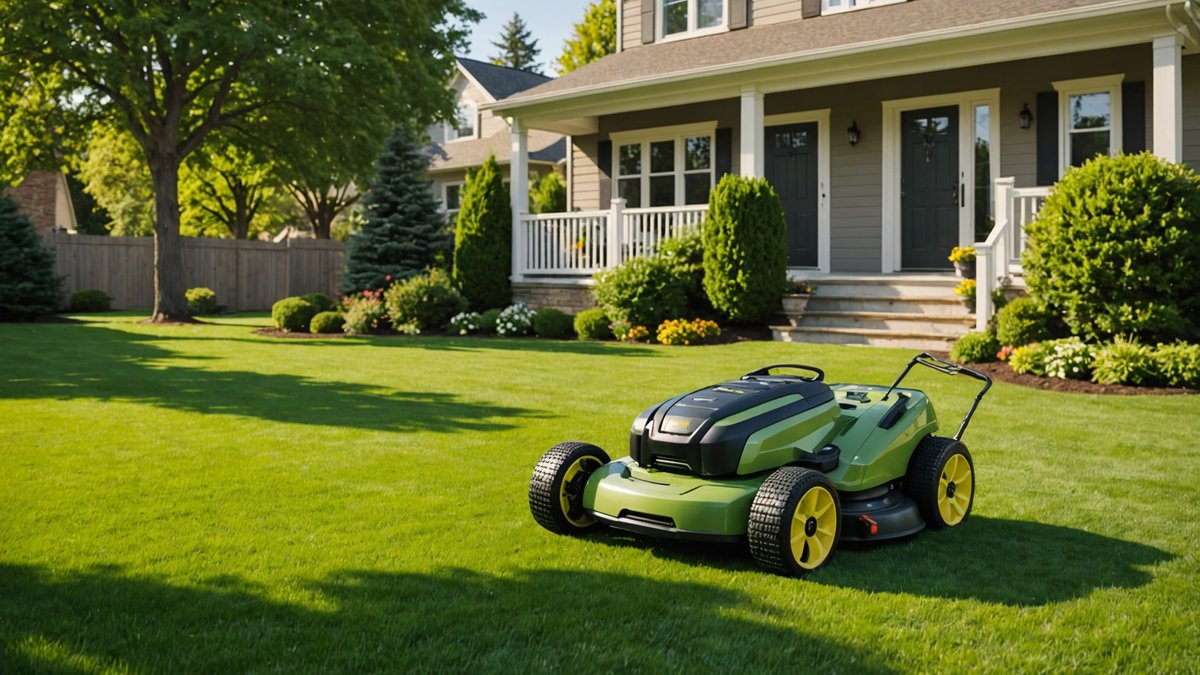
Imagine never having to break a sweat mowing your lawn again—no pushing a heavy machine, no loud engines, and no weekend time wasted. The future of lawn care is here, and it’s autonomous. Robotic mowers have evolved from niche gadgets to must-have tools for homeowners and pros alike, offering precision, convenience, and even eco-friendly benefits. If you’re ready to upgrade your yard game, here are four standout robot lawn mowers that deserve a spot in your garage (or, let’s be honest, out on your lawn doing the work for you).
Why Robotic Mowers Are a Game-Changer
The shift to smart mowing isn’t just about laziness—it’s about efficiency. These machines cut grass with surgical precision, often more frequently than you would manually, which promotes healthier lawns. They’re quiet, so they won’t disturb your neighbors (or your Sunday nap), and many models are battery-powered, reducing reliance on gas. For homeowners with busy schedules or large yards, an autonomous lawn mower isn’t just a luxury—it’s a time-saving investment.
Professional landscapers are also taking note. Fleet automation with robotic mowers can reduce labor costs and allow teams to focus on higher-value tasks like landscaping design or tree care. And with advancements in AI and GPS, these mowers are smarter than ever, navigating complex yards with ease.
Top 4 Robotic Mowers to Consider in 2024
Not all robotic mowers are created equal. Here are four of the best models on the market, each excelling in different categories to suit a variety of needs and budgets.
1. Husqvarna Automower 450X
The Husqvarna Automower 450X is a powerhouse designed for large yards up to 1.25 acres. It’s part of Husqvarna’s premium line, known for its durability and smart features. This model supports smart home integration via the Husqvarna Connect app, allowing you to control it from your phone, adjust schedules, and even get weather-based mowing recommendations. Its rugged design handles slopes up to 45%, and the GPS-assisted navigation ensures it covers every inch of your lawn efficiently.
Best for: Large properties, tech-savvy users, and those who want a premium, feature-rich mower.
2. Worx Landroid M WR155
If you’re looking for a more budget-friendly option without sacrificing performance, the Worx Landroid M WR155 is a fantastic choice. This robot lawn mower is ideal for medium-sized yards (up to 0.5 acres) and offers a great balance of affordability and functionality. It uses a random cutting pattern to ensure even coverage and includes features like rain sensors and lift/tilt sensors for safety. The Landroid also supports voice control via Alexa and Google Assistant, making it a great entry point into smart mowing.
Best for: Mid-sized lawns, budget-conscious buyers, and those new to robotic mowers.
3. Robomow RS630
The Robomow RS630 stands out for its ability to handle complex lawns with multiple zones and obstacles. It’s a great option for yards with intricate landscapes, thanks to its advanced navigation system and the ability to create up to 4 separate mowing zones. This model also features a robust brushless motor for quiet, efficient operation and can tackle slopes up to 20%. The Robomow app lets you customize mowing schedules and monitor progress remotely.
Best for: Complex or multi-zone lawns, users who need precise control over mowing areas.
4. Gardena Sileno Life 1500
For smaller yards (up to 0.4 acres), the Gardena Sileno Life 1500 is a compact and efficient choice. This autonomous lawn mower is known for its whisper-quiet operation—perfect for urban or suburban areas where noise is a concern. It features a simple, user-friendly interface and offers reliable performance with minimal maintenance. The Sileno Life also includes a frost sensor to protect your lawn during colder months.
Best for: Small to medium lawns, noise-sensitive areas, and users who prioritize simplicity.
Key Features to Compare
When evaluating these models, consider the following specs and features to find the best fit for your lawn:
- Yard Size Capacity: Ensure the mower can handle your lawn’s size. Models like the Husqvarna 450X are built for large areas, while the Gardena Sileno Life is better suited for smaller yards.
- Slope Handling: If your lawn has steep inclines, look for mowers with strong slope capabilities (e.g., Husqvarna’s 45% vs. Robomow’s 20%).
- Smart Features: App connectivity, voice control, and weather-based mowing are becoming standard in higher-end models.
- Navigation: GPS-assisted mowers (like the Husqvarna) offer more precise coverage, while random-pattern mowers (like the Worx Landroid) are simpler but still effective.
- Battery Life: Larger yards may require models with longer battery life or quick-charging capabilities.
- Safety Features: Lift and tilt sensors, rain sensors, and PIN-code locks are important for households with kids or pets.
- Price: Robotic mowers range from around $800 to over $3,000. Set a budget and prioritize the features that matter most to you.
How Robotic Mowers Stack Up Against Traditional Options
If you’re still on the fence about switching from a traditional mower, here’s how robotic models compare:
- Time Savings: Robotic mowers operate autonomously, freeing up your weekends. Traditional mowers require manual effort every time your lawn needs cutting.
- Lawn Health: Robotic mowers cut grass more frequently, which encourages healthier growth and a manicured look. Traditional mowers often cut less frequently, leading to uneven growth.
- Cost: While the upfront cost of a robotic mower is higher, you’ll save on gas, maintenance, and potentially even lawn care services over time.
- Ease of Use: Once installed, robotic mowers require minimal intervention. Traditional mowers demand physical labor, storage space, and regular upkeep.
- Environmental Impact: Most robotic mowers are electric, reducing emissions compared to gas-powered traditional mowers.
That said, robotic mowers aren’t perfect for everyone. They require an initial setup (like installing boundary wires for most models), and they may struggle with very uneven terrain or yards with lots of obstacles. For professional landscapers, integrating robotic mowers into a fleet requires careful planning to ensure they complement (rather than replace) human labor where needed.
What This Means for You
So, which robotic mower is right for you? It depends on your lawn’s size, complexity, and your budget. Here’s a quick cheat sheet:
- Big lawn, big budget? Go for the Husqvarna Automower 450X for its premium features and large capacity.
- Mid-sized lawn, mid-range budget? The Worx Landroid M WR155 offers great value and smart features without breaking the bank.
- Complex lawn with multiple zones? The Robomow RS630 is your best bet for precision and customization.
- Small lawn, quiet operation? The Gardena Sileno Life 1500 is compact, quiet, and easy to use.
For landscaping pros, now is the time to experiment with autonomous lawn mowers as part of your service offerings. Clients are increasingly looking for low-maintenance, high-tech solutions, and early adopters will have a competitive edge. Start with a pilot program on a few properties to test efficiency and client satisfaction before scaling up.
And if you’re still unsure, consider renting or testing a model before committing. Many dealers offer demo programs, and some companies (like Husqvarna) even provide professional installation services to ensure your mower is set up correctly.
FAQ
Are robotic mowers safe for pets and kids?
Yes, most modern robot lawn mowers are designed with safety in mind. They include features like lift and tilt sensors that stop the blades immediately if the mower is picked up or tipped over. Many also have PIN-code locks to prevent unauthorized use. However, it’s always a good idea to supervise pets and children around any lawn equipment, especially during the initial setup phase.
Do robotic mowers work on all types of grass?
Robotic mowers work well on most common grass types, including Kentucky bluegrass, Bermuda, fescue, and ryegrass. However, they may struggle with very tall or thick grass, so it’s important to start with a well-maintained lawn and mow regularly. If your yard has a lot of weeds or uneven patches, you may need to address those issues before switching to a robotic mower.
How do I maintain my robotic mower?
Maintenance for autonomous lawn mowers is generally minimal but important for longevity. Regular tasks include cleaning the underside of the mower to remove grass clippings, checking and replacing blades as needed (typically every few months), and ensuring the boundary wires (if applicable) are intact. Some models also require periodic software updates to access the latest features. Always refer to your manufacturer’s guidelines for specific maintenance recommendations.
Source: Original Article

Author: AI Mow
Ai Mow is the editorial team behind Ai Mower News, dedicated to bringing you the latest news, reviews, and insights on robotic lawn mowers and smart gardening technology.