

Quick Verdict
If you’re comparing a robot mower vs riding mower, the winner depends on how you value time, labor, and lawn size. A robot mower is usually the better long-term fit for homeowners who want hands-off, frequent mowing and lower day-to-day effort, while a riding mower still wins for very large properties, uneven terrain, and people who prefer one-pass control.
For most suburban homeowners, the question isn’t just which mower cuts grass better — it’s whether an autonomous mower worth it for the convenience alone. If your yard is moderately sized and you want to switch to robot mower for automation, quiet operation, and less weekend work, the robot mower has a strong case.
At a Glance: Key Specs
| Spec | Robot Mower (Autonomous) | Traditional Riding Mower |
|---|---|---|
| Price | $800–$5,000+ depending on features and yard size | $1,500–$8,000+ depending on deck size and engine |
| Coverage Area | Best for small to medium lawns; some models handle large properties | Excellent for medium to very large lawns |
| Navigation Type | GPS, RTK, cameras, sensors, or boundary wire systems | Human-driven steering and control |
| Slope Handling | Good to excellent, model-dependent | Usually strong, but varies by traction and terrain |
| App Quality | Often central to operation; varies widely by brand | Usually limited or not app-based |
| Obstacle Avoidance | Good on premium models; basic models may rely on bump detection | Operator-controlled, so avoidance is immediate and flexible |
| Setup Time | Moderate to high initially; then low ongoing effort | Low initial setup; ongoing mowing requires your time |
| Warranty | Typically 2–4 years | Typically 2–5 years, often longer on commercial-grade units |
robot mower (autonomous): What It Does Best
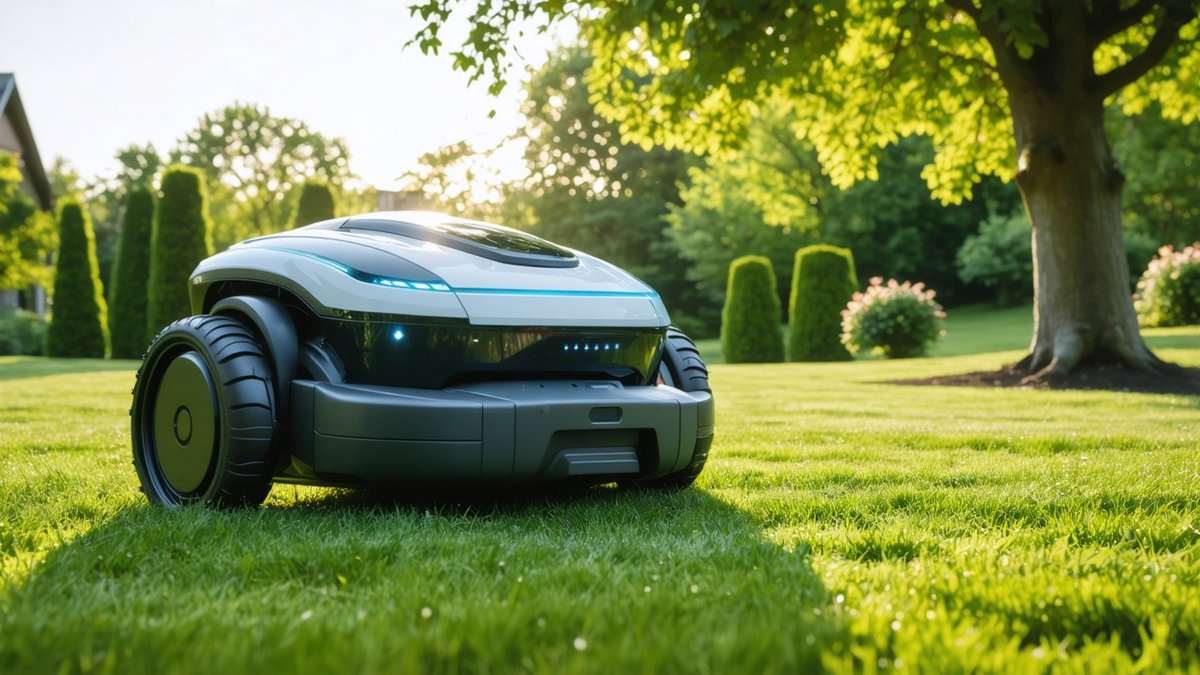
The biggest advantage of a robot mower is simple: it gives you time back. Instead of blocking out a Saturday afternoon to mow, you set the schedule and let the machine maintain the lawn in small, frequent passes. That means less clumping, a cleaner finish, and a lawn that often looks better week to week because it’s being trimmed consistently rather than cut all at once.
Robot mowers shine in suburban yards with relatively predictable layouts, moderate slopes, and a clear mowing boundary. They’re especially attractive for homeowners who travel often, work long hours, or just don’t want to spend their free time behind a mower. Quiet operation is another major plus. In many neighborhoods, a robot mower can run during the day or even at times that would be annoying for a gas riding mower.
Modern autonomous models are also improving fast. Better navigation, app controls, multi-zone mapping, and obstacle detection are making the category much more practical. For homeowners evaluating whether to switch to robot mower, the real value is not just automation — it’s routine lawn maintenance with far less effort. If your lawn is under roughly an acre, or split into manageable sections, a robot mower can be a very compelling upgrade.
That said, robot mowers are best for owners who are comfortable with some upfront setup and occasional troubleshooting. They are not the easiest choice for highly irregular properties, lots of garden beds, or yards with frequent debris. But for the right home, the convenience is hard to beat.
traditional riding mower: What It Does Best
A traditional riding mower still holds a major advantage in raw efficiency for larger properties. If you have several acres, wide open turf, or a lawn that needs to be cut quickly after a rainy stretch, a riding mower can cover ground far faster than most autonomous machines. The operator is in full control, which makes it easier to handle unexpected terrain, temporary obstacles, and changing conditions without relying on sensors or software.
Riding mowers are also a better fit for lawns with mixed conditions. Steeper banks, rough patches, thick weeds, and areas that are not ideal for autonomous navigation are often easier to manage from the seat of a conventional mower. That flexibility matters for homeowners with rural properties, older landscaping, or lawns that are more functional than manicured.
Another strength is familiarity. Many homeowners already know how to use a riding mower, and maintenance is straightforward compared with some robot mower ecosystems. There’s no mapping process, no app dependency for basic operation, and no concern about signal loss or software quirks interrupting the job. If you want a mower that behaves like a tool rather than a connected device, the riding mower still makes sense.
For homeowners who mow less often, prefer a single weekly cut, or need to manage a large expanse quickly, the riding mower remains the practical choice. It may not offer the same hands-off convenience, but it delivers dependable, high-capacity cutting with fewer technology considerations.
Head-to-Head: The Key Differences
- Time vs control: A robot mower saves labor by mowing automatically, while a riding mower gives you immediate manual control and faster one-time cutting.
- Best yard size: Robot mowers are strongest on small to medium lawns; riding mowers are better for large or acreage properties.
- Maintenance style: Robot mowers work best with frequent, light trims. Riding mowers are better for less frequent, heavier mowing sessions.
- Setup and learning curve: Robot mowers require mapping, app setup, and sometimes boundary planning. Riding mowers are usually simpler to start using right away.
- Noise and convenience: Robot mowers are quieter and more automated, making them ideal for homeowners who want a low-effort routine.
Which Should You Buy?
Buy a robot mower if your top priority is convenience and your yard is reasonably compatible with automation. This is the better choice for busy homeowners, frequent travelers, tech-friendly users, and anyone who wants a consistently neat lawn without spending hours mowing. If you have a suburban lot, multiple mowing days are annoying, or you simply want to reduce physical work, the autonomous option is often worth it.
Buy a traditional riding mower if you have a large property, a complex landscape, or terrain that makes automation less practical. It’s also the safer choice if you prefer a straightforward machine, don’t want to rely on app controls, or only mow occasionally and want maximum cutting speed when you do.
If you’re on the fence, ask yourself three questions: How big is the lawn? How often do I want to mow? And do I value saved time more than hands-on control? If the answer points toward automation, the switch to robot mower makes sense. If the answer points toward speed and flexibility on a bigger property, stick with the riding mower.
Bottom Line
When it comes to robot mower vs riding mower, there’s no universal winner — but there is a clear best fit for different homeowners. The robot mower is the smarter long-term choice for convenience, quiet operation, and frequent lawn maintenance, while the riding mower remains the better tool for larger, tougher, or more traditional mowing jobs. If your goal is to reduce weekend chores and embrace automation, the autonomous mower is increasingly worth the switch.
Frequently Asked Questions
Is an autonomous mower worth it for a small yard?
Yes, especially if you value convenience and want a consistently tidy lawn with minimal effort. For small yards, a robot mower can be a great fit because it avoids the hassle of pushing or riding equipment for a job that may only take a small amount of cutting time each week.
Can a robot mower replace a riding mower completely?
For some homeowners, yes. If your property is within the mower’s coverage range and the terrain is suitable, a robot mower can handle routine maintenance on its own. But for larger acreage, rough terrain, or properties with many obstacles, a riding mower may still be necessary as the primary machine.
What should I consider before I switch to robot mower?
Check your lawn size, slope, boundary complexity, and connectivity needs. You should also think about setup time and whether you’re comfortable using an app to manage schedules and zones. If your yard is compatible, the switch to robot mower can pay off quickly in saved time and lower mowing effort.
Source: Original Article

Author: AI Mow
Ai Mow is the editorial team behind Ai Mower News, dedicated to bringing you the latest news, reviews, and insights on robotic lawn mowers and smart gardening technology.