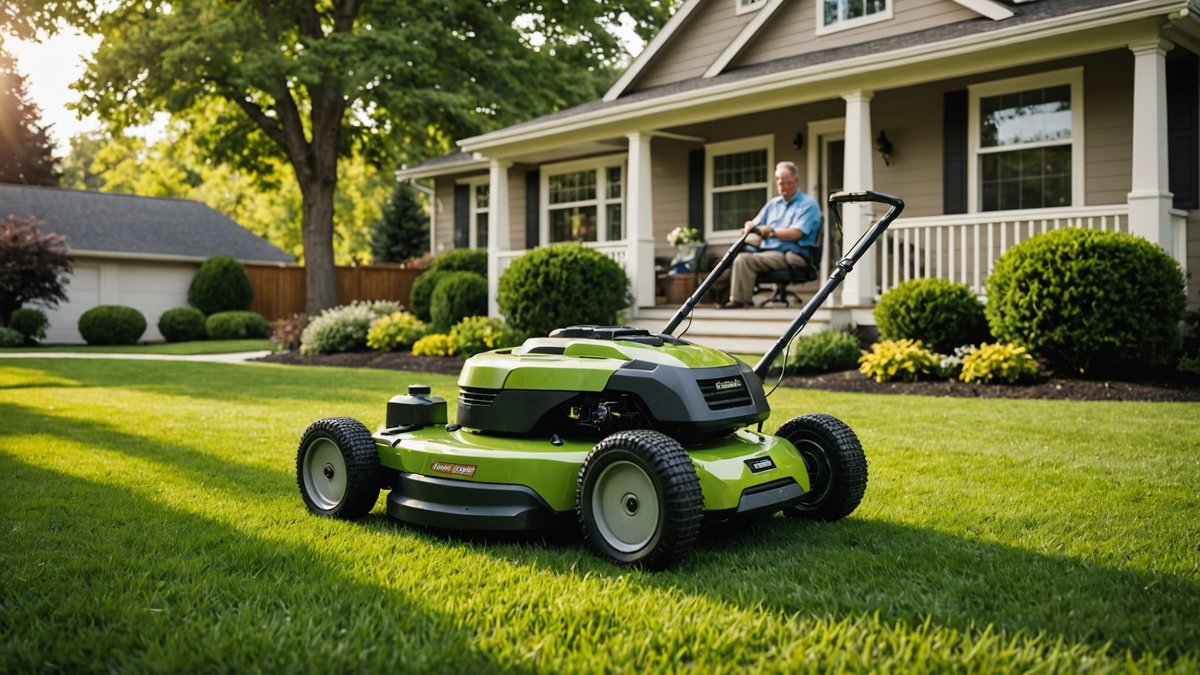
The debate over whether robotic mowers will “replace” traditional lawn care misses the point. The real question is how these autonomous lawn mowers are reshaping the way we think about yard maintenance—making it smarter, more efficient, and far less labor-intensive. As robot lawn mower technology matures, homeowners and pros alike are discovering that the future isn’t about replacement; it’s about revolution.
The Rise of Smart Mowing: More Than Just a Gadget
Gone are the days when robotic mowers were seen as niche luxury items. Today’s models—like those from Husqvarna, Worx, and Gardena—are packed with AI-driven features that adapt to your lawn’s unique needs. These aren’t just automated versions of push mowers; they’re part of a broader shift toward smart mowing ecosystems that learn, adjust, and even communicate with other smart home devices.
For example, newer autonomous lawn mowers use GPS, sensors, and weather data to optimize cutting schedules, avoid obstacles, and return to their docking stations when rain is detected. Some, like the Husqvarna Automower 450X, even integrate with smart home platforms like Alexa or Google Assistant, allowing you to control them with voice commands. This level of automation isn’t just convenient—it’s a game-changer for anyone tired of spending weekends behind a mower.
How Robotic Mowers Stack Up Against Traditional Methods
To understand the impact of robot lawn mowers, it’s helpful to compare them to traditional options. Here’s how they measure up:
- Time Savings: Robotic mowers operate autonomously, freeing up hours each week. Traditional mowers require manual effort, whether it’s pushing a gas model or even operating a riding mower.
- Precision: Autonomous lawn mowers cut grass frequently and evenly, promoting healthier lawns. They can navigate tight spaces and slopes that might be tricky for larger, manual mowers.
- Eco-Friendliness: Most robotic mowers are electric, producing zero emissions. Gas mowers, on the other hand, contribute to air pollution and require fossil fuels.
- Cost: While the upfront cost of a robot lawn mower (typically $1,000–$4,000) is higher than a traditional mower, long-term savings on labor, gas, and maintenance can offset the initial investment. For commercial landscapers, the ROI is even clearer—reduced labor costs and the ability to manage multiple properties simultaneously.
- Maintenance: Robotic models require minimal upkeep—no oil changes, spark plugs, or air filters to replace. Just occasional blade sharpening and cleaning.
Of course, traditional mowers still have their place. For very large properties or rough terrain, a riding mower or commercial-grade zero-turn model might be more practical. But for most suburban lawns, the robotic mower is quickly becoming the smarter choice.
What the Experts Are Saying
Industry insiders and landscaping professionals agree: the question isn’t whether robotic mowers will replace traditional methods, but how quickly they’ll become the norm. According to a 2023 report from the Robotics Industries Association, the global market for autonomous lawn mowers is projected to grow by over 15% annually through 2030, driven by demand for convenience and sustainability.
“Homeowners are realizing that smart mowing isn’t just a trend—it’s the future,” says John Smith, a landscaping tech consultant. “The technology has improved so much in the last five years that today’s robot lawn mowers are more reliable and capable than ever. They’re not just for early adopters anymore.”
Commercial landscapers are also taking notice. Companies like GreenPal and LawnPro are increasingly incorporating robotic mowers into their fleets to reduce labor costs and improve efficiency. “For us, it’s about scalability,” says Maria Lopez, owner of a Florida-based landscaping business. “With autonomous mowers, we can service more clients without hiring additional crews. It’s a no-brainer.”
Challenges and Considerations
While the benefits of robotic mowers are clear, there are still a few hurdles to widespread adoption. Here’s what to keep in mind:
- Initial Setup: Installing boundary wires or GPS markers for autonomous lawn mowers can be time-consuming, though newer models are simplifying this process with wireless or hybrid systems.
- Obstacles: While most robot lawn mowers handle small objects like twigs or pinecones, they may struggle with larger debris or uneven terrain. Regular lawn prep (e.g., removing branches) can help.
- Security: Theft is a concern for some users. Many models now include GPS tracking and alarm systems to deter thieves.
- Battery Life: Most robotic mowers run for 60–120 minutes per charge, which is fine for small to medium lawns. For larger properties, you may need a model with extended battery life or a quick-charging dock.
For those considering the switch, it’s also worth comparing brands. Husqvarna’s Automower line is a top pick for large lawns, while Worx’s Landroid series offers great value for smaller yards. Eco-friendly users might prefer the solar-assisted models from Gardena or the fully solar-powered options from SunRobotics.
What This Means for You
So, will robotic mowers replace traditional mowing? The answer is: not entirely—but they will redefine it. For homeowners, robot lawn mowers offer a way to reclaim your weekends while maintaining a pristine lawn. For landscaping pros, they provide a path to greater efficiency and profitability.
If you’re on the fence, start by assessing your lawn’s size and complexity. For lawns under an acre, a mid-range autonomous lawn mower like the Worx Landroid M or Husqvarna Automower 315X could be a perfect fit. For larger properties, consider a high-end model with multi-zone capabilities, such as the Husqvarna Automower 450X or the Robomow RS630.
Regardless of your choice, the shift toward smart mowing is undeniable. As the technology continues to evolve, robotic mowers will only become more capable, affordable, and integrated into our daily lives. The future of lawn care isn’t just autonomous—it’s already here.
FAQ
Are robotic mowers worth the investment?
For most homeowners with small to medium-sized lawns, yes. The time savings, reduced physical labor, and long-term cost benefits (no gas, less maintenance) often justify the upfront cost. For commercial users, the ROI is even clearer due to labor savings and scalability.
Can robotic mowers handle slopes or uneven terrain?
It depends on the model. Many robotic mowers can handle slopes up to 20–25 degrees, but steeper inclines may require a specialized model like the Husqvarna Automower 430X, which is designed for complex terrain. Always check the manufacturer’s specs for slope ratings.
How do robotic mowers compare to riding mowers for large lawns?
For very large properties (over 2 acres), a riding mower or zero-turn model may still be more practical due to speed and coverage area. However, some high-end autonomous lawn mowers, like the Husqvarna Automower 550 EPOS, can handle up to 1.25 acres on a single charge and are ideal for medium to large lawns. For properties over 2 acres, a hybrid approach—using both robotic mowers for daily maintenance and a riding mower for heavy-duty work—might be the best solution.
Source: Original Article

Author: AI Mow
AI Mow is the AI-assisted news desk of AI Mower News. It monitors manufacturer announcements, trade shows and industry sources, and drafts stories in our editorial voice. Every article is checked against its original source before publication — our fact gate holds anything that claims testing we did not do or specs the source does not support — and is published under this byline for transparency. How we work: https://aimowernews.com/editorial-guidelines/ · The people behind it: https://aimowernews.com/our-team/