


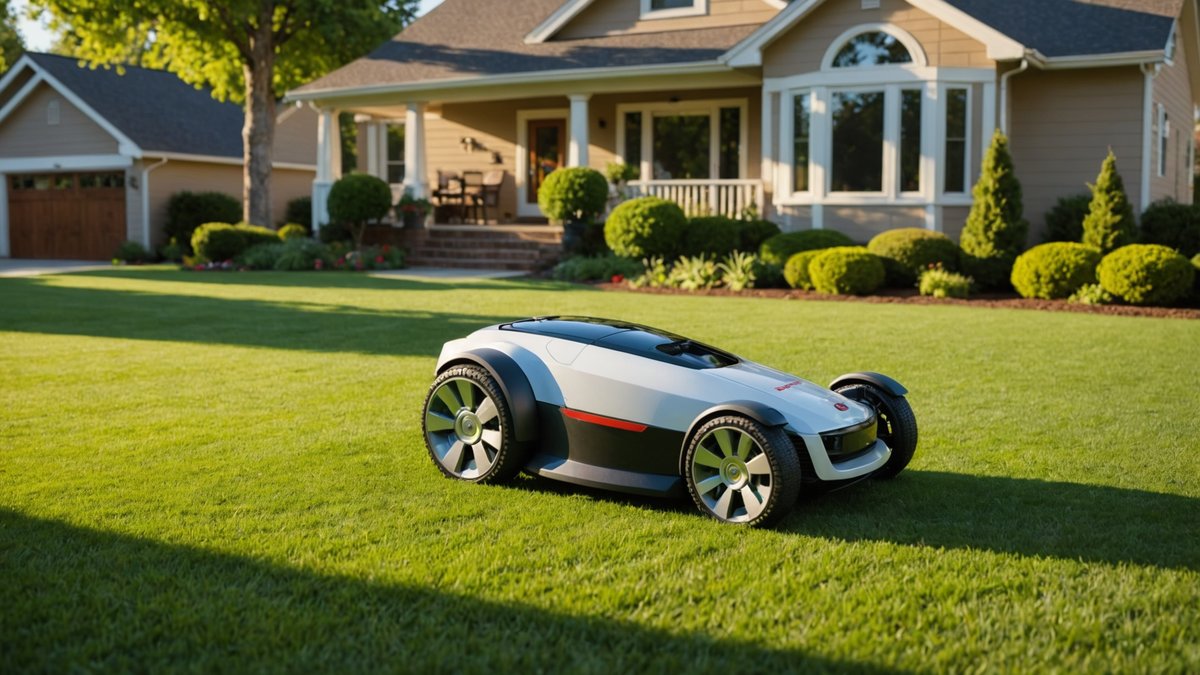
Imagine a robotic mower that doesn’t just randomly bounce around your yard—it maps every blade of grass with laser precision, then mows with the efficiency of a seasoned pro. That’s the promise of Roborock’s new LiDAR-equipped robot lawn mower, and the best part? It’s already seeing a massive price drop, making high-tech autonomous lawn mowing more accessible than ever. If you’ve been waiting for a smarter, more precise way to automate your lawn care, this could be the game-changer you’ve been looking for.
Roborock Enters the Robotic Mower Market with a Bang
Roborock, a brand best known for its premium robot vacuums, is making a bold move into outdoor automation with its first robot lawn mower. Unlike many entry-level models that rely on simple bump-and-turn navigation, this mower uses advanced LiDAR (Light Detection and Ranging) technology to create a detailed 3D map of your yard. This isn’t just a gimmick—it’s the same tech that powers self-driving cars and high-end robot vacuums, ensuring your mower works with surgical precision.
The timing couldn’t be better. As homeowners increasingly seek ways to reduce manual labor and embrace smart mowing solutions, Roborock is positioning itself as a serious contender in a market dominated by brands like Husqvarna, Worx, and Gardena. And with an early discount of $700, it’s clear the company is aggressive about winning over customers.
Why LiDAR Matters for Your Lawn
If you’ve ever watched a basic autonomous lawn mower struggle with complex yard layouts—getting stuck in tight corners, missing patches of grass, or inefficiently crisscrossing the same areas—you’ll appreciate the upgrade LiDAR brings. Here’s what sets it apart:
- Precision Mapping: LiDAR scans your yard in real-time, creating a highly accurate digital map. This allows the mower to follow optimized paths, reducing wasted time and ensuring even coverage.
- Obstacle Avoidance: Unlike models that rely on basic sensors, LiDAR can detect and navigate around obstacles like garden decorations, trees, or even pets with far greater reliability.
- Multi-Zone Management: Got a front yard, back yard, and side lawn? LiDAR-enabled mowers can handle multiple zones efficiently, switching between them without getting confused.
- Night Mowing: Some LiDAR mowers can operate in low-light conditions, giving you flexibility to schedule mowing sessions at any time.
For professional landscapers, this level of precision could mean fewer call-backs for missed spots and more efficient fleet management. For homeowners, it translates to a lawn that looks professionally manicured with minimal effort.
Key Specs and Features of Roborock’s Robotic Mower
While Roborock hasn’t released the full spec sheet yet, early details and comparisons to similar models suggest this robotic mower is packed with cutting-edge features. Here’s what we know so far:
- LiDAR Navigation: The standout feature, offering centimeter-level accuracy for mapping and obstacle detection.
- App Control: Like most modern robot lawn mowers, it can be controlled via a smartphone app, allowing you to set schedules, adjust cutting heights, and monitor progress remotely.
- Weather Resistance: Built to handle rain and varying temperatures, so it can keep mowing even when the weather isn’t perfect.
- Automatic Charging: Returns to its docking station to recharge when the battery runs low, then resumes mowing where it left off.
- Customizable Cutting: Adjustable cutting heights and patterns to suit different grass types and seasonal needs.
- Theft Protection: Features like GPS tracking and alarm systems help deter theft—a growing concern as autonomous lawn mowers become more popular.
If these specs hold up, Roborock’s mower could give established brands a run for their money, especially at a discounted price point.
How It Stacks Up Against the Competition
The robotic mower market is crowded, but not all models are created equal. Here’s how Roborock’s offering compares to some of the top alternatives:
- Husqvarna Automower: A premium choice with GPS and advanced app features, but typically priced at the higher end of the market. Husqvarna’s models are known for their durability and precision, but they don’t always include LiDAR.
- Worx Landroid: A more budget-friendly option with solid performance, but it lacks LiDAR and relies on simpler navigation. Great for smaller, simpler yards.
- Gardena Sileno: Offers smart features and reliable performance but doesn’t have the same level of obstacle avoidance as LiDAR-equipped models.
- Ecovacs Goat G1: Another LiDAR-based robot lawn mower, but with a focus on larger properties. Roborock’s entry could be a more accessible alternative for average-sized yards.
Roborock’s biggest advantage here may be its brand reputation for smart home tech. If it delivers the same level of polish and user-friendly design as its robot vacuums, it could quickly become a fan favorite in the smart mowing space.
What This Means for You
So, should you jump on this deal? If you’re in the market for a robotic mower and want cutting-edge navigation without the premium price tag, Roborock’s LiDAR model is worth serious consideration. The $700 discount makes it a compelling option, especially for homeowners with complex yards or those who want the peace of mind that comes with precise, reliable automation.
For landscaping pros, this could be a great way to test the waters of fleet automation. LiDAR’s precision could reduce labor costs and improve efficiency, especially for residential clients with intricate lawn layouts.
Of course, there are a few things to keep in mind:
- Installation: LiDAR mowers still require boundary wire installation for most models. Make sure you’re prepared for the setup process.
- Yard Size: Check the mower’s maximum coverage area to ensure it’s a good fit for your property.
- Long-Term Costs: While the upfront price is attractive, consider maintenance costs like blade replacements and battery life.
FAQ
Does this robotic mower require a boundary wire?
Most LiDAR-equipped robot lawn mowers still use a boundary wire to define the mowing area, even though they rely on LiDAR for navigation within that space. However, some newer models are experimenting with wire-free setups using GPS and virtual boundaries. We’ll need to see Roborock’s final specs to confirm, but it’s safe to assume a boundary wire will be part of the package.
How does LiDAR improve mowing efficiency?
LiDAR allows the mower to create a precise map of your yard, which means it can follow the most efficient paths to cover the entire area without redundant passes. This not only saves time but also ensures a more even cut, as the mower won’t miss spots or overlap excessively. It’s a significant upgrade over random or pattern-based navigation systems.
Is a $700 discount a good deal for a robotic mower?
Absolutely. High-end autonomous lawn mowers can cost anywhere from $1,500 to $4,000, so a $700 discount is substantial. If Roborock’s model delivers on its promises of LiDAR precision and smart features, this could be one of the best value propositions in the market right now. Just be sure to compare it to other discounted models to ensure you’re getting the best fit for your needs.
Source: Original Article

Author: AI Mow
Ai Mow is the editorial team behind Ai Mower News, dedicated to bringing you the latest news, reviews, and insights on robotic lawn mowers and smart gardening technology.