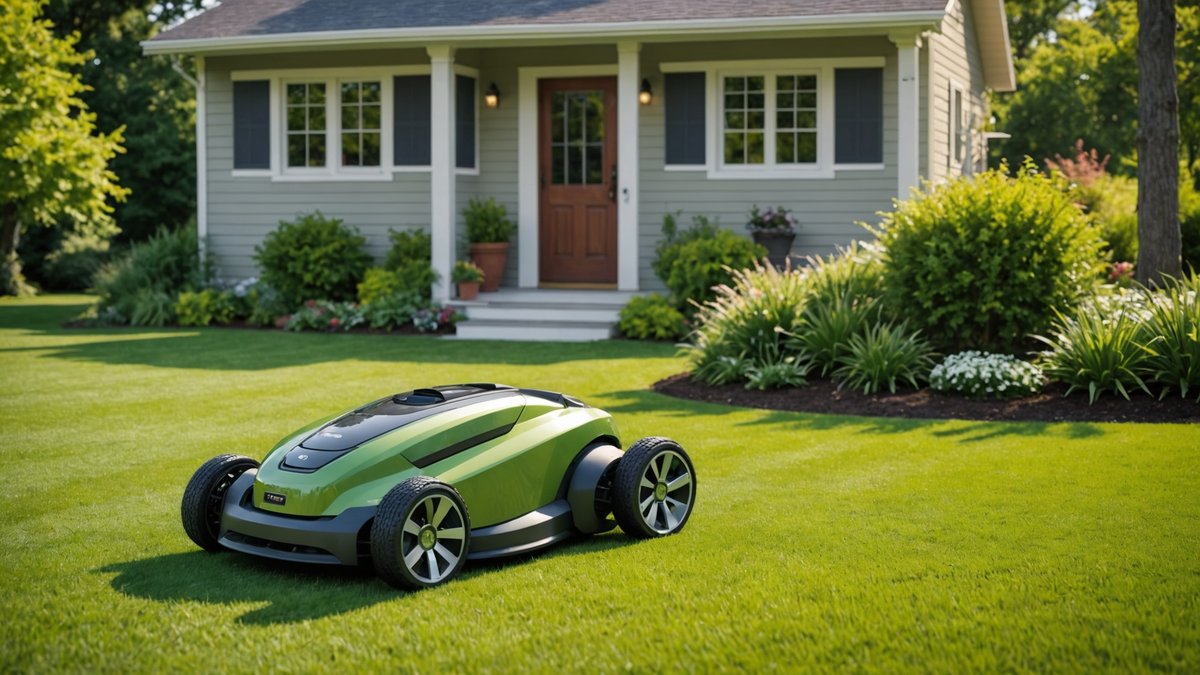
Imagine a world where the same intelligence that navigates your Roborock vacuum through a cluttered living room now tackles your overgrown backyard with equal precision. That world just became a reality. Roborock, the brand synonymous with smart home cleaning, has officially stepped into the robotic mower arena with a model that promises to redefine autonomous lawn mower technology. If you’ve ever dreamed of a robot lawn mower that integrates as seamlessly with your smart home as your indoor robots, this is the game-changer you’ve been waiting for.
Roborock Enters the Robotic Mowing Space: A Bold Move
Roborock’s foray into outdoor automation isn’t just a natural expansion—it’s a strategic one. The company has built a reputation for creating some of the most advanced robot vacuums and mops on the market, thanks to its LiDAR navigation, multi-room mapping, and smart home integrations. Now, they’re applying that same expertise to the great outdoors. For homeowners already invested in the Roborock ecosystem, this new robotic mower offers a familiar, user-friendly experience with a few outdoor-specific twists.
This isn’t Roborock’s first venture into new territory. They’ve previously expanded from vacuums to mops, and now to lawn care, proving their ability to adapt core technologies to new challenges. Competitors like Husqvarna, Worx, and Gardena have long dominated the robot lawn mower market, but Roborock’s entry signals a shift: the era of the smart mowing system, fully integrated with your home’s tech ecosystem, is here.
What Sets the Roborock Robotic Mower Apart?
So, what makes this autonomous lawn mower different from the rest? For starters, it leverages Roborock’s signature LiDAR-based navigation, which is a rarity in the robotic mowing world. Most robotic mowers rely on boundary wires or GPS, but LiDAR allows for more precise obstacle avoidance and adaptability to complex yard layouts—no wires required. This means it can handle tight spaces, slopes, and even dynamically adjust its path if it encounters unexpected obstacles like toys, pet bowls, or garden decor.
Another standout feature is its smart home integration. The Roborock mower syncs with the company’s existing app, allowing you to control it alongside your other Roborock devices. Scheduling, zone management, and real-time monitoring are all accessible from your smartphone. And yes, it works with voice assistants like Alexa and Google Assistant, so you can send it out to mow with a simple voice command.
Under the hood, the mower is powered by a high-efficiency brushless motor, which delivers quiet yet powerful performance. It’s also equipped with a rain sensor, so it will automatically return to its docking station if the weather turns, protecting both the mower and your lawn. Battery life is another highlight, with a runtime that can cover up to 1,000 square meters (about 0.25 acres) on a single charge—ideal for small to medium-sized yards.
Key Specs and Features at a Glance
Here’s a quick breakdown of what you can expect from Roborock’s first robot lawn mower:
- Navigation: LiDAR-based, wire-free operation with advanced obstacle detection.
- Cutting Width: 22 cm (8.66 inches), suitable for efficient coverage of small to medium lawns.
- Battery: 29V lithium-ion, supporting up to 1,000 square meters per charge.
- Cutting Height: Adjustable from 20 mm to 60 mm (0.79 to 2.36 inches) in 5 mm increments.
- Smart Features: App control, voice assistant compatibility, multi-zone management, and real-time monitoring.
- Weather Resistance: IPX6 waterproof rating and rain sensor for automatic docking during precipitation.
- Slope Handling: Capable of navigating inclines up to 30% (approximately 17 degrees).
- Security: PIN code protection and anti-theft alarm to deter tampering.
How It Compares to the Competition
Roborock’s entry into the robotic mower market is impressive, but how does it stack up against established players? Let’s take a look at a few key competitors:
- Husqvarna Automower: A pioneer in the autonomous lawn mower space, Husqvarna’s models are known for their reliability and advanced features like GPS-assisted navigation and automatic charging. However, they typically require boundary wires, which can be a hassle to install. Husqvarna also offers models for larger yards, making them a better fit for expansive properties.
- Worx Landroid: Worx’s Landroid series is popular for its affordability and ease of use. Like Husqvarna, most Landroid models use boundary wires, but they offer a good balance of performance and price. Worx also has a wire-free option, the Landroid Vision, which uses a camera-based navigation system.
- Gardena Sileno: Gardena’s Sileno series is another strong contender, with models that use boundary wires for precise lawn coverage. They’re known for their quiet operation and smart features, but again, the wire dependency may be a drawback for some users.
Where Roborock shines is in its wire-free LiDAR navigation and seamless smart home integration. If you’re already a Roborock user or prioritize a tech-forward, connected experience, this mower is a no-brainer. However, if you have a very large yard or need the robustness of a brand with decades of outdoor experience, Husqvarna or Gardena might still be the better choice.
What This Means for You
The arrival of Roborock’s robot lawn mower is a big deal for several reasons. For starters, it signals a new wave of smart mowing technology that prioritizes convenience, connectivity, and ease of use. If you’ve been holding off on buying a robotic mower because the existing options seemed too complicated or disconnected from your smart home, this could be the model that changes your mind.
For current Roborock owners, the benefits are even clearer. You can now manage your indoor and outdoor cleaning from a single app, creating a unified smart home experience. And because Roborock’s mower uses LiDAR, it’s likely to be more adaptable to complex yards than traditional wire-based models.
That said, it’s worth noting that Roborock’s mower is currently best suited for small to medium-sized lawns. If you have a sprawling property, you might need to wait for a larger model or consider a commercial-grade autonomous lawn mower from a brand like Husqvarna.
Finally, for landscaping professionals, this is a sign that the robotic mower market is evolving rapidly. As more tech-savvy brands enter the space, we can expect to see even more innovative features—like fleet management for multiple mowers, AI-driven lawn analysis, and deeper integrations with other smart home systems. Keep an eye on this space; it’s only going to get more exciting.
FAQ
Does the Roborock robotic mower require boundary wires?
No, Roborock’s robot lawn mower uses LiDAR-based navigation, which eliminates the need for boundary wires. This makes installation simpler and allows the mower to adapt to changes in your yard layout.
How does the Roborock mower handle obstacles?
Thanks to its LiDAR system, the Roborock mower can detect and avoid obstacles with high precision. This includes everything from garden decorations to pet toys, ensuring a smooth and efficient mowing experience without getting stuck.
Can I control the Roborock mower with my smart home system?
Yes! The Roborock mower integrates seamlessly with the company’s existing app, which means you can control it alongside your other Roborock devices. It also supports voice commands via Alexa and Google Assistant, so you can start or stop mowing with a simple voice prompt.
Source: Original Article

Author: AI Mow
AI Mow is the AI-assisted news desk of AI Mower News. It monitors manufacturer announcements, trade shows and industry sources, and drafts stories in our editorial voice. Every article is checked against its original source before publication — our fact gate holds anything that claims testing we did not do or specs the source does not support — and is published under this byline for transparency. How we work: https://aimowernews.com/editorial-guidelines/ · The people behind it: https://aimowernews.com/our-team/