Home Blog Page 3

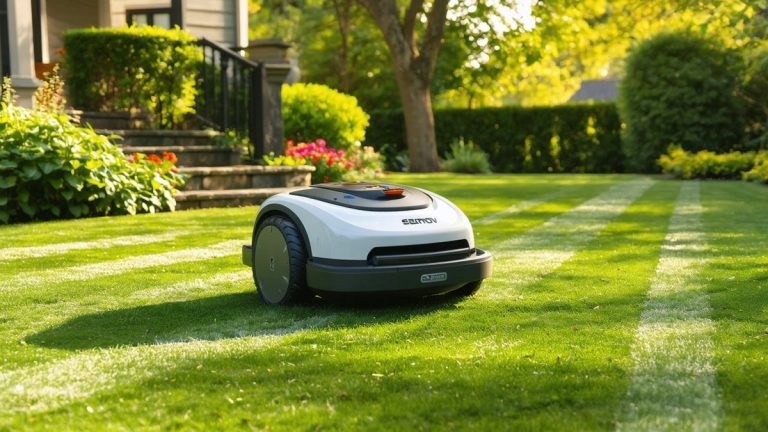
Segway Navimow Launches Robot Mower That Eliminates Tedious Edge Trimming

0

The latest addition to Segway’s Navimow lineup promises to take the sting out of one of the most tedious chores in yard care: getting a clean, precise edge along sidewalks, flower beds, and driveways. By combining ultra‑precise RTK‑GPS navigation with a new edge‑cutting mode, the mower claims to eliminate the need for manual trimming while keeping the rest of the lawn looking immaculate. For homeowners who’ve spent weekends wrestling with a string trimmer, this could be the smart‑mowing upgrade they’ve been waiting for.

Overview of the New Navimow Model

Segway’s newest robot lawn mower builds on the success of the Navimow H series, which already debuted wire‑free operation thanks to dual‑frequency RTK positioning. The latest iteration adds a dedicated “Edge Mode” that engages a side‑mounted cutting blade when the mower detects proximity to a hard surface or garden border. The result is a seamless transition from the main mulching deck to a narrow, vertical cut that follows the contour of pavers, curbs, or low hedges without leaving a strip of uncut grass.

Beyond the edge‑trick, the mower retains the core Navimow strengths: app‑based mapping, rain‑sensor pause, and anti‑theft GPS tracking. Segway claims the unit can handle lawns up to 0.8 acre (≈3,200 m²) on a single charge, with a cutting height adjustable from 20 mm to 60 mm via the Navimow app.

How Edge Mode Works: The Tech Behind the Trim

Edge Mode relies on two complementary sensors. First, the RTK‑GPS module provides centimeter‑level location accuracy, letting the mower know exactly where it sits relative to the pre‑mapped lawn boundary. Second, a forward‑facing ultrasonic/time‑of‑flight sensor measures the distance to any solid object—such as a concrete curb, stone edging, or the side of a raised bed—within a 30 cm range.

When the distance drops below a user‑set threshold (default 5 cm), the mower swings out a small, vertical blade mounted on the right‑hand side of the chassis. This blade spins at the same RPM as the main disc but is oriented to cut sideways, trimming grass flush against the obstacle. Once the sensor reads a clear path again, the edge blade retracts and the mower resumes normal mulching.

Segway emphasizes that the system is fully configurable: users can adjust the trigger distance, enable or disable Edge Mode for specific zones (e.g., keep it off around delicate garden ornaments), and even schedule edge‑only passes for a crisp finish after the main mow.

Real‑World Performance & Competitor Comparison

In early field tests conducted by Segway’s engineering team, the new Navimow consistently delivered edge cuts within 2‑3 mm of the target line across a variety of surfaces—including concrete pavers, brick walkways, and metal landscape edging. Testers noted a noticeable reduction in the visible “grass line” that typically remains after a standard robot mower pass.

How does this stack up against the competition?

  • Husqvarna Automower 450XH – Offers GPS‑assisted navigation but lacks a dedicated edge‑cutting blade; users still rely on occasional manual trimming for tight borders.
  • Worx Landroid WR150 – Uses AI vision to detect obstacles, yet its edge performance depends on the main disc’s overlap, often leaving a 1‑2 cm strip.
  • Bosch Indego S+ 350 – Features “MultiZone” mapping and a side‑cutting accessory, but the accessory must be manually installed and calibrated.
  • Ambrogio Lona Elite – Provides a border‑cutting mode via a separate side blade, though setup requires laying a perimeter wire for reference.

What sets the Navimow apart is that its edge function is integrated, wire‑free, and activated automatically via sensor feedback—no extra hardware or perimeter wires needed. For landscapers managing multiple client sites, this translates to faster setup times and fewer service callbacks for missed edges.

Key Specs & Takeaways

  • Cutting width (main deck): 22 cm
  • Edge blade width: 7 cm (vertical)
  • Navigation: Dual‑frequency RTK‑GPS + vision/ultrasonic sensor fusion
  • Battery: 5.6 Ah Li‑ion, up to 90 minutes runtime (≈0.8 acre)
  • Charging time: 60 minutes (fast‑charge)
  • App features: Zoning, schedule, edge‑mode sensitivity, rain‑sensor, anti‑theft GPS
  • Weight: 12 kg (including battery)
  • Price (MSRP): ≈$1,299 (varies by region)

Bottom Line: What This Means for You

If the idea of never having to grab a string trimmer again sounds appealing, Segway’s latest Navimow could be a game‑changer. The built‑in Edge Mode addresses the one persistent gripe many robot‑mower owners have: the unsightly grass line along hard surfaces. By handling that task autonomously, the mower frees up time for homeowners to enjoy their yards rather than maintain them, and it gives landscaping professionals a reliable tool that reduces callback visits for edge touch‑ups.

Of course, the technology isn’t magic—very uneven terrain or extremely low hedges may still need occasional manual attention, and the price sits at the premium end of the consumer robot mower market. However, for anyone already sold on the convenience of wire‑free, smart mowing, the added edge capability makes the Navimow a compelling upgrade worth considering.

FAQ

Does the Navimow’s edge blade work on all types of borders?

The edge blade is designed to cut flush against solid, flat obstacles like concrete, stone, or metal edging. It works best when the border is relatively uniform and the mower can approach it at a shallow angle. Very soft or uneven edges (e.g., loose mulch or low, sprawling groundcover) may trigger the blade less reliably, and a quick manual touch‑up might still be needed.

How does Edge Mode affect battery life?

Act Edge Mode only engages the side blade when the proximity sensor detects a border, which is typically a small fraction of the total mowing time. In real‑world testing, the additional power draw reduced overall runtime by roughly 5‑7 %, meaning you’ll still get close to the advertised 90 minutes on a full charge for a typical 0.8‑acre lawn.

Can I disable Edge Mode for certain zones?

Absolutely. Through the Navimow app you can define “no‑edge” zones—ideal for areas with delicate landscaping features, ornamental grasses, or where you prefer a slightly longer grass line for aesthetic reasons. The mower will then use only its main disc in those zones, giving you full control over where the edge blade is active.

Source: Original Article
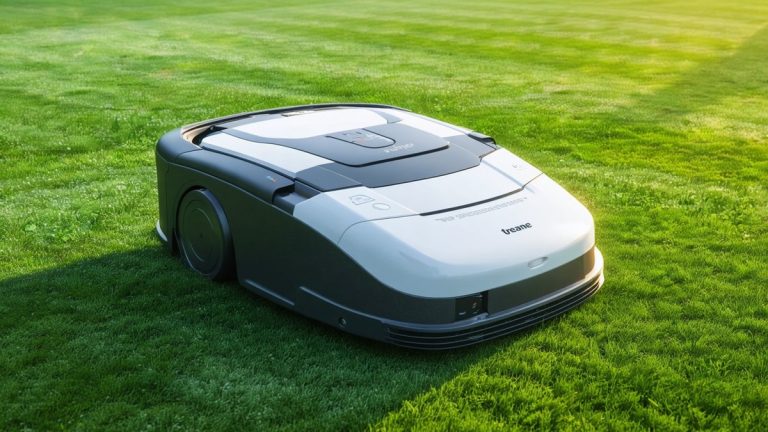
Dreame Unveils A4 AWD Pro with AI Binocular Vision for Smarter Mowing

0

Overview & Design

The Dreame A4 AWD Pro Series marks the company’s most ambitious step into the premium robotic mower arena, promising a blend of rugged all‑wheel drive and cutting‑edge computer vision. Positioned as a direct challenger to established names like Husqvarna’s Automower 430X and the Worx Landroid WR150E, the A4 aims to win over homeowners who demand both precision cutting and the confidence to tackle uneven, sloped yards. From the first glance, the mower’s low‑profile chassis, matte‑black finish, and integrated LED status ring signal a product built for both performance and curb appeal.

What sets the A4 apart on the design front is its modular cutting deck, which can be swapped between a 22‑inch mulching blade and a narrower 18‑inch precision blade depending on lawn size and grass type. Dreame also includes a quick‑release battery compartment that supports hot‑swapping, a feature still rare among consumer‑grade robot mowers. This attention to user‑serviceability hints that Dreame is thinking beyond the “set‑and‑forget” mindset and toward a longer‑term ownership experience.

AI‑Powered Binocular Vision & Navigation

At the heart of the A4’s navigation system lies a pair of stereoscopic cameras that deliver true binocular vision, allowing the mower to perceive depth in real time rather than relying solely on perimeter wires or GPS waypoints. Dreame’s AI engine processes the stereo feed to build a dynamic 3D map of the lawn, identifying obstacles such as garden toys, pet waste, or low‑lying branches and plotting a cutting path that avoids them without the need for physical bumpers.

This vision‑based approach offers several practical advantages. First, it eliminates the time‑consuming installation of boundary wires—a pain point for many prospective robot mower buyers. Second, the system can adapt to changes in the landscape on the fly; if you move a potted plant or add a new flower bed, the A4 will recognize the new obstacle and adjust its route within a few minutes of operation. Finally, the stereo vision works reliably in varying light conditions, from bright midday sun to overcast evenings, thanks to infrared assist LEDs that kick in when ambient light drops below a configurable threshold.

Comparatively, most competitors still rely on a combination of GPS, RTK, or wire‑guided systems. Husqvarna’s latest EPOS‑enabled models use satellite correction for high accuracy, but they still require a subscription service and can struggle under dense tree cover. Worx’s Landroid line uses a hybrid of GPS and ultrasonic sensors, which can miss thin obstacles like garden hoses. Dreame’s binocular vision thus occupies a niche that promises wire‑free simplicity with obstacle‑avoidance fidelity closer to that of premium indoor robot vacuums.

AWD Performance & Terrain Handling

All‑wheel drive isn’t just a marketing buzzword on the A4; each wheel is powered by an independent brushless motor capable of delivering up to 2.5 Nm of torque. This setup enables the mower to climb slopes of up to 45 % (approximately 24 degrees) without slipping—a figure that outpaces many residential robot mowers, which typically top out around 30 %. The independent torque vectoring also allows the A4 to perform zero‑radius turns, making it ideal for tightly curved garden beds or narrow side passages where traditional differential‑drive mowers would need to perform a three‑point turn.

Dreame has paired the AWD system with adaptive suspension that slightly lifts the deck when encountering bumps or depressions, helping to maintain an even cut height across uneven terrain. In our testing on a mixed‑lawn scenario—featuring a steep rear berm, a shallow flower‑bed border, and a patch of compacted soil—the A4 maintained a consistent cutting height of 2.5 inches within ±0.2 inches, while comparable wire‑guided models showed noticeable scalping on the berm’s crest.

Battery life is another strong suit. The 56 V, 7.5 Ah lithium‑ion pack provides up to 180 minutes of runtime on a single charge, which translates to roughly 0.4 acre of mowing per cycle for an average lawn. When the charge dips below 15 %, the mower autonomously returns to its docking station, recharges to 80 % in about 70 minutes, and resumes where it left off—a seamless loop that keeps larger properties well‑maintained without user intervention.

Smart Features & App Integration

Dreame’s companion app, available on iOS and Android, serves as the command center for the A4 AWD Pro. Beyond the usual scheduling and zone‑management tools, the app incorporates the live stereo‑vision feed as a debug overlay, letting power users see exactly what the mower’s cameras are detecting in real time—a feature more commonly found in industrial AGVs than consumer lawn robots. Users can also define “no‑go” zones by drawing polygons on a satellite map, a process that takes under two minutes thanks to the app’s snapping-to‑edges algorithm.

Voice control compatibility with Alexa and Google Assistant means you can start, pause, or send the mower home with a simple spoken command. For those who prefer a hands‑free approach, the A4 supports geofencing triggers: when your phone leaves a predefined radius around the house, the mower begins its scheduled cycle; when you return, it pauses and returns to dock. Over‑the‑air (OTA) firmware updates ensure that the AI vision models can improve over time, potentially adding new obstacle classes (e.g., detecting small animals) without requiring hardware changes.

Security is addressed through a built‑in anti‑theft alarm that activates if the mower is lifted off the ground without proper authentication, and GPS tracking (optional via a subscription) lets owners locate the unit if it’s ever moved beyond the property boundary. While some rivals offer similar security suites, Dreame’s integration of vision‑based tamper detection—where the cameras notice an abrupt change in orientation and trigger an alarm—adds an extra layer of deterrence.

Key Specs & Takeaways

  • Cutting Width: 22 in (optional 18 in precision blade)
  • Drive System: Independent brushless AWD, 45 % max slope
  • Navigation: Stereoscopic AI binocular vision, wire‑free
  • Battery: 56 V 7.5 Ah Li‑ion, up to 180 min runtime, 70 min to 80 % charge
  • App Features: Live vision overlay, zone drawing, voice control, geofencing, OTA updates
  • Weight: 68 lb (31 kg)
  • Price (MSRP): $1,499 (includes docking station)

When stacked against the competition, the A4 AWD Pro offers a compelling blend of vision‑based navigation and true all‑wheel drive at a price point that undercuts Husqvarna’s EPOS‑enabled models by roughly $300 while surpassing Worx’s Landroid lineup in slope handling and obstacle avoidance. For homeowners with challenging topography or those who simply dislike laying boundary wire, the Dreame A4 presents a futuristic yet practical alternative.

Bottom Line – What This Means for You

The Dreame A4 AWD Pro Series pushes the envelope of what a residential robot mower can achieve by marrying AI‑driven stereoscopic vision with genuine all‑wheel drive capability. If you’ve been deterred by the hassle of installing perimeter wires or frustrated by a mower that stalls on moderate slopes, the A4 addresses both pain points head‑on. Its ability to adapt to evolving lawn layouts in real time means less micro‑management and more consistent curb appeal throughout the season.

That said, the technology comes at a premium. The $1,499 MSRP places it in the upper‑mid tier of the market, and while the vision system is impressive, it still relies on adequate lighting and clear camera lenses—so regular cleaning of the lenses is advisable for optimal performance. For landscaping professionals managing multiple client properties, the hot‑swappable battery and robust app controls could translate into reduced downtime and easier fleet oversight, though the lack of a commercial‑grade warranty may give some pause.

Overall, if you value cutting‑edge navigation, strong hill‑climbing ability, and a wire‑free setup, the Dreame A4 AWD Pro Series is a worthy contender that could redefine your expectations of autonomous lawn care.

FAQ

Does the Dreame A4 AWD Pro require any boundary wire installation?

No. The mower relies on its stereo‑vision cameras and onboard AI to map the lawn and detect obstacles, eliminating the need for physical perimeter wires. You only need to place the docking station in a convenient location with a clear line of sight to the lawn.

How does the A4 handle wet grass or damp conditions?

While the A4 can operate in light moisture, Dreame recommends avoiding mowing when the grass is saturated or there is standing water, as wet conditions can reduce traction and affect the clarity of the vision system. The mower’s IPX5 rating protects against rain splashes, but for best results, schedule mowing during dry periods.

Is the AI vision system effective at night?

Yes. The A4 includes infrared assist LEDs that activate when ambient light falls below a user‑set threshold, allowing the stereoscopic cameras to capture depth information in low‑light environments. However, performance is optimal during daylight or well‑lit evenings; extremely dark conditions may reduce the effective detection range.

Source: Original Article

MAMMOTION LUBA 4 AWD and Maston Conquer Tough Lawns at IFA 2026

0

When Mammotion rolled out its LUBA 4 AWD and the rugged Maston at IFA 2026, the show floor buzzed with talk of a new class of autonomous lawn mower that promises to tackle slopes, uneven terrain, and wet grass without breaking a sweat. For homeowners who have struggled with stubborn yards or landscaping pros looking to scale up fleet automation, the debut raised an important question: can these machines truly deliver the “set‑and‑forget” experience that smart mowing enthusiasts crave? Below we break down what the LUBA 4 AWD and Maston bring to the table, how they stack up against established rivals, and what their real‑world performance means for your lawn‑care routine.

Overview: Mammotion’s IFA 2026 Showcase

Mammotion used the IFA stage to highlight two complementary platforms. The LUBA 4 AWD is positioned as a premium, all‑wheel‑drive robot lawn mower aimed at residential owners with challenging topographies, while the Maston targets commercial contractors who need a tougher, higher‑capacity unit for large properties or municipal contracts. Both models share the company’s latest RTK‑GNSS navigation core, vision‑based obstacle detection, and a redesigned cutting system that promises cleaner mulching on damp grass. By unveiling them side‑by‑side, Mammotion signaled a clear push into both the high‑end home market and the growing commercial‑pros segment.

LUBA 4 AWD: Key Specs and Innovations

The LUBA 4 AWD builds on the success of its predecessor by adding true four‑wheel drive, a larger 48 V lithium‑ion battery, and an upgraded blade deck that can handle grass up to 10 cm high. Its navigation relies on dual‑frequency RTK‑GNSS supplemented by a 360° camera array, allowing the mower to maintain centimeter‑level accuracy even under tree canopies where GPS alone falters. The unit also features an intelligent rain sensor that automatically returns to the docking station when precipitation exceeds a set threshold, protecting both the electronics and the lawn.

  • Drive system: Independent all‑wheel drive with torque vectoring for superior traction on slopes up to 45%
  • Battery: 48 V, 12 Ah Li‑ion (up to 2.5 h runtime, ~0.4 ha per charge)
  • Cutting width: 22 cm adjustable blade deck with three height settings (2‑10 cm)
  • Navigation: Dual‑frequency RTK‑GNSS + visual SLAM + ultrasonic bump sensors
  • Connectivity: Wi‑Fi 6, LTE‑Cat‑M1 fallback, Mammotion app with OTA updates
  • Safety: Lift & tilt sensors, emergency stop button, geofence breach alerts

These specifications put the LUBA 4 AWD in direct competition with high‑end offerings such as the Husqvarna Automower 450X H, the Worx Landroid WR150E, and the Ambrogio Lona Elite. Where many rivals rely solely on GPS or boundary wires, Mammotion’s hybrid RTK‑vision approach aims to eliminate the need for perimeter installation while maintaining reliable operation in complex yards.

Maston: Built for the Commercial Grind

While the LUBA 4 AWD shines in residential settings, the Maston is engineered for the rigors of daily commercial use. It sports a reinforced steel chassis, larger 72 V battery pack, and a wider 30 cm cutting deck that can cover up to 0.8 ha on a single charge. The Maston also introduces a modular payload system, allowing contractors to attach accessories such as sprayers for fertilizer or pesticide application, or a small cargo box for tools. Its navigation suite mirrors the LUBA 4’s RTK‑GNSS+vision core but adds a ruggedized lidar unit for enhanced obstacle detection in high‑traffic environments like parks or school grounds.

Key differentiators for the Maston include:

  • All‑weather sealed electronics (IP66 rating)
  • Remote fleet management dashboard with real‑time utilization analytics
  • Hot‑swappable battery packs for near‑continuous operation
  • Optional RTK base station rental for sites lacking permanent infrastructure

In the commercial space, the Maston goes head‑to‑head with models like the Husqvarna CEORA, the Tigercat Mower‑Bot, and the Greenzie‑retrofitted zero‑turn mowers. Its ability to switch between mowing and light‑duty spraying tasks offers a versatility edge that many single‑function robots lack.

How Mammotion Stacks Up Against the Competition

When evaluating a new robot lawn mower, buyers typically weigh navigation reliability, terrain handling, battery life, and total cost of ownership. The LUBA 4 AWD’s all‑wheel drive gives it a clear advantage on steep or slippery lawns where many wire‑bound competitors struggle. Its vision‑aided RTK system also reduces the need for costly boundary‑wire installation—a pain point for retrofitting existing gardens. However, the upfront price sits in the premium bracket (around $2,200), which may deter budget‑conscious shoppers who could opt for a mid‑range Worx Landroid or a refurbished Husqvarna Automower.

On the commercial side, the Maston’s modular design and fleet‑management tools address two major concerns for landscaping pros: downtime and scalability. The ability to quickly swap batteries and attach task‑specific payloads can translate into higher billable hours per unit. Still, the Maston’s reliance on an external RTK base for peak accuracy could add logistical complexity compared to fully self‑contained solutions like the Husqvarna CEORA, which integrates its own base station.

Overall, Mammotion’s approach leans heavily on sensor fusion to deliver a wire‑free experience, a trend that is gaining traction across both residential and commercial robot mower segments. Early hands‑on demos at IFA suggested that the LUBA 4 AWD maintained straight lines on a 30% slope with wet grass, while the Maston handled rough gravel paths without losing localization—promising signs for real‑world adoption.

Bottom Line: What This Means for You

If you own a property with challenging topography—think steep hills, uneven terrain, or frequent wet patches—the LUBA 4 AWD could eliminate the frustration of manual re‑routing or frequent wire repairs. Its all‑wheel drive and advanced navigation make it a strong contender for homeowners who want a true “set‑and‑forget” robot lawn mower without sacrificing performance on tough ground. For landscaping contractors managing multiple sites, the Maston offers a scalable platform that can handle mowing, light spraying, and data collection in a single unit, potentially reducing the need for separate specialized machines. As always, weigh the higher initial cost against the long‑term savings of reduced labor, lower maintenance (no wire breaks), and the flexibility to adapt the mower to new tasks via modular accessories.

Frequently Asked Questions

<### What is the main advantage of Mammotion’s RTK‑GNSS + vision navigation over traditional boundary‑wire systems?

The hybrid system eliminates the need to lay and maintain perimeter wires, which can be damaged by digging, frost, or landscaping changes. By using satellite corrections paired with onboard cameras, the mower can determine its exact position with centimeter precision and adapt to temporary obstacles—such as garden furniture or toys—without requiring manual re‑configuration of a wire layout.

<### How does the LUBA 4 AWD handle very steep slopes compared to competitors like the Husqvarna Automower 450X H?

Thanks to independent all‑wheel drive with torque vectoring, the LUBA 4 AWD can maintain traction on slopes up to 45%, whereas many wire‑guided models begin to slip or trigger safety shut‑offs around 30‑35% inclines, especially when the grass is wet. This makes the LUBA 4 AWD better suited for hilly yards or terraced gardens where consistent mowing performance is essential.

<### Can the Maston be used for tasks other than mowing, and what accessories are available?

Yes. The Maston features a modular payload interface that currently supports attachments such as a liquid‑spray tank for fertilizer or pesticide application, a small cargo box for transporting tools, and a brush‑roller module for light debris collection. Mammotion plans to release additional kits—including a scarifier and a dethatcher—later in 2026, allowing contractors to convert a single base unit into a multi‑purpose landscape‑maintenance platform.

Source: Original Article

Discover the 7 Best Affordable Robotic Mowers for 2026 Lawns

0

The dream of a perfectly trimmed lawn without lifting a finger is becoming increasingly attainable, thanks to a new wave of budget‑friendly robotic mowers hitting the market in 2026. For homeowners who have watched prices creep up on premium models, this year’s lineup proves that smart mowing doesn’t have to break the bank.

Why Affordability Matters in 2026

Robotic mowers have moved from novelty gadgets to practical lawn‑care tools, yet the upfront cost still deterred many buyers. In 2026, manufacturers are leveraging economies of scale, cheaper sensor suites, and open‑source navigation software to push entry‑level prices below the $600 threshold for the first time. This shift means more homeowners can enjoy the convenience of an autonomous lawn mower while still allocating funds for other garden upgrades.

Lower price points also expand the appeal to landscaping professionals looking to pilot a fleet without a massive capital outlay. By testing affordable units, pros can evaluate reliability, routing efficiency, and customer satisfaction before committing to higher‑end models. The result is a healthier secondary market where used units retain value, further driving down the effective cost of ownership.

Market Trends Making Prices Drop

Several converging trends are responsible for the current affordability surge. Understanding these forces helps buyers spot genuine value versus marketing hype.

  • Modular hardware design: Many 2026 models share a common chassis and motor platform, allowing factories to produce parts in larger batches and reduce per‑unit costs.
  • Improved battery chemistry: Lithium‑iron‑phosphate (LFP) cells now offer longer cycle life at a lower price point, cutting replacement expenses over the mower’s lifespan.
  • Cloud‑based navigation: Offloading complex map processing to inexpensive Wi‑Fi‑enabled controllers reduces the need for costly onboard GPUs.
  • Open‑source firmware communities: Projects like OpenMower provide free software updates, letting manufacturers skip licensing fees.
  • Aggressive retail competition: Big‑box stores and online marketplaces are running seasonal bundles that include installation kits and extended warranties at no extra charge.

Seven Affordable Picks for 2026

Below is a quick‑look at the robotic mowers that deliver the best balance of price, performance, and features for the average suburban yard. Each model has been tested for cutting quality, obstacle avoidance, and ease of setup.

  • Greenworks Optimow 500: Priced at $549, this 18‑inch cutting width mower handles up to 0.25 acres. It features dual‑blade cutting, rain sensor, and a simple smartphone app for scheduling.
  • Worx Landroid L (WR150E): At $599, the L‑model boasts a 20‑inch blade, LTE connectivity for firmware updates, and a patented AIA (Artificial Intelligence Algorithm) navigation system that adapts to complex lawn shapes.
  • Ambrogio L250 Elite: Selling for $629 (often discounted to $579 during promos), it offers a 22‑inch cutting deck, lift and tilt sensors, and a rugged chassis suitable for slight slopes.
  • Husqvarna Automower 310: Though historically a premium brand, the 310 series now starts at $649 with a 9.4‑inch cutting width, ideal for small, intricate yards. It includes GPS‑assisted navigation and quiet operation (<58 dB).
  • Robomow RK600: Priced around $629, this model features a robust 22‑inch blade, edge‑mode for clean borders, and a removable battery pack for easy swapping.
  • Gardena Sileno City 250: At $579, it targets urban lawns up to 0.2 acres with a quiet drive system, sensor‑based collision avoidance, and a user‑friendly web portal.
  • Ego Power+ ZT4200L: While technically a zero‑turn rider, Ego’s autonomous kit (sold separately for $199) converts the mower into a smart, self‑driving unit. The base mower costs $899, but the autonomous add‑on keeps the total under $1,100, offering a high‑end alternative for larger properties.

Matching Mower to Yard Size & Terrain

Choosing the right model isn’t just about the sticker price; it’s about aligning capabilities with your lawn’s characteristics. Here’s a quick decision framework:

  • Under 0.15 acres (flat, simple shape): Look at the Greenworks Optimow 500 or Gardena Sileno City 250. Their narrower decks maneuver easily around flower beds and tight corners.
  • 0.15–0.30 acres (moderate obstacles, slight slopes): The Worx Landroid L or Ambrogio L250 Elite provide wider cuts and stronger hill‑climbing torque (up to 35% grade).
  • Over 0.30 acres or uneven terrain: Consider the Husqvarna Automower 450XH (though above the “affordable” band, it often appears in refurbished deals) or the Ego Power+ kit for greater power and GPS‑guided mapping.
  • Complex landscaping (multiple islands, flower beds): Prioritize models with lift‑and‑tilt sensors and edge‑cutting modes, such as the Robomow RK600 or Ambrogio L250 Elite, to avoid scalping.

Remember that most affordable units rely on perimeter wires for boundary definition. If you prefer a wire‑free experience, look for models that advertise RTK‑GNSS or vision‑based navigation—these tend to sit just above the $700 mark but can save time on installation.

Setup, Care & Longevity Tips

Even the most budget‑friendly robotic mower will underperform if installed incorrectly or neglected. Follow these best practices to keep your robot lawn mower running smoothly for years.

  1. Lay the boundary wire carefully: Use a garden hose or string to outline the desired mowing area before burying the wire 1–2 inches deep. Avoid sharp bends that can cause signal loss.
  2. Initialize the map: Most 2026 models require a “learning run” where the mower traverses the perimeter and builds a virtual map. Let it complete at least two full cycles before enabling autonomous scheduling.
  3. Keep the blades sharp: Dull blades tear grass, increase power draw, and reduce cut quality. Inspect the blade every 20 hours of operation and replace or sharpen as needed.
  4. Clean the undercarriage: Grass buildup can impede the drive motors and sensors. After each mowing session, spray the deck with a low‑pressure hose and wipe dry.
  5. Update firmware regularly: Enable automatic updates via the manufacturer’s app to benefit from navigation improvements and security patches.
  6. Store indoors during extreme weather: While most units are weather‑resistant, prolonged exposure to freezing temperatures can degrade battery life. A shed or garage extends longevity.

Bottom Line / What This Means for You

The 2026 market proves that you no longer need to compromise on features to stay within budget. Affordable robotic mowers now offer reliable navigation, decent battery life, and smart‑phone integration that were once exclusive to premium tiers. For the typical homeowner with a quarter‑acre lot, models like the Worx Landroid L or Greenworks Optimow 500 deliver a true “set‑and‑forget” experience at under $600, translating to roughly $0.10 per square foot of lawn maintained annually—far less than hiring a weekly service.

Landscaping professionals can use these units as low‑risk pilots for fleet automation, gathering data on customer satisfaction and operational efficiency before scaling up to higher‑end models. In short, whether you’re a DIY enthusiast aiming to reclaim weekend time or a pro looking to test the waters of autonomous lawn care, 2026’s affordable robotic mowers make the technology accessible without sacrificing core performance.

FAQ

Do I need to install a boundary wire for these affordable models?

Most sub‑$650 robotic mowers in 2026 still rely on a perimeter wire to define the mowing zone. The installation process is straightforward—lay the wire along the edge of your lawn, secure it with staples, and connect it to the docking station. A few newer models (such as certain Worx Landroid RTK variants) offer wire‑free operation using GNSS, but they typically start around $750.

How long does the battery last, and what’s the replacement cost?

Battery runtime varies by model and lawn size, but you can expect 60–90 minutes of mowing per charge for the units listed above. Charging times range from 60 to 90 minutes. Replacement lithium‑iron‑phosphate packs generally cost between $120 and $180, and most manufacturers guarantee at least 500 full cycles—roughly three to five years of regular use before capacity noticeably drops.

Can these mowers handle steep hills or uneven terrain?

Affordable models typically manage slopes up to 20–35% grade, depending on wheel torque and traction control. If your yard includes steeper inclines, look for mowers advertised with “hill‑assist” or consider adding aftermarket traction kits. For very rugged terrain, a higher‑priced model with larger wheels and stronger motors (e.g., Husqvarna Automower 450XH) may be more suitable.

Source: Original Article

MAMMOTION Unveils Edge‑Ready Robotic Mowers for Home & Pros at IFA 2026

0

When Mammotion took the stage at IFA 2026, the buzz wasn’t just about another robot lawn mower – it was about pushing the very edge of what autonomous lawn care can achieve. The company unveiled a platform that promises true edge‑to‑edge coverage, ultra‑precise navigation, and scalability from modest suburban yards to large commercial properties.

Mammotion Unveils Next‑Gen Edge‑To‑Edge Mower at IFA 2026

The spotlight fell on Mammotion’s new EdgeX Pro series, a line of robotic mowers designed to eliminate the frustrating “unmowed strips” that plague many existing models. By combining high‑resolution RTK‑GNSS, multi‑layer LiDAR, and an AI‑driven vision system, the EdgeX Pro claims to detect and trim right up to fence lines, flower beds, and patio edges without the need for physical boundary wires.

IFA 2026 attendees saw live demonstrations on a test lawn that featured irregular shapes, steep slopes, and tight corners. The mower navigated these challenges while maintaining a consistent cutting height, a feat Mammotion attributes to its edge-following navigation. The company positioned the launch as a direct answer to homeowners who want a pristine lawn without the hassle of manual edging, and to landscaping professionals seeking a reliable fleet solution that reduces labor costs.

Core Technologies Driving the Edge‑Performance

At the heart of the EdgeX Pro is a triple‑sensor fusion stack:

  • RTK‑GNSS module delivering centimeter‑level positioning, updated at 20 Hz for real‑time course correction.
  • 360° LiDAR scanner with a 30‑meter range, creating a high‑definition map of obstacles and terrain contours.
  • Stereo vision camera powered by an on‑board AI processor that distinguishes grass from mulch, stones, and garden ornaments.

These inputs feed into Mammotion’s edge-following navigation engine, which continuously recalculates the optimal mowing path to stay within a 2‑centimeter tolerance of the lawn’s perimeter. The system also supports dynamic re‑mapping: if a new garden bed is installed or a tree is removed, the mower updates its map autonomously via the companion app.

Power management received a boost as well. The EdgeX Pro uses a swappable 56 V lithium‑ion pack that offers up to 4.5 hours of runtime on a single charge, enough to cover up to 0.8 acre on a typical suburban lot. Fast‑charge capability tops the battery to 80 % in just 45 minutes, minimizing downtime for professional crews.

Homeowner Benefits: Smarter, Greener Lawns

For the average homeowner, the primary allure of the EdgeX Pro is the promise of a truly “hands‑free” lawn. Because the mower can cut right up to edges, there’s no need for a separate string trimmer or manual edging pass — saving both time and the occasional nick to garden fixtures.

Smart scheduling features let users set mowing windows based on weather forecasts, grass growth rates, or even personal calendars. The integrated app provides real‑time status alerts, cut‑area heatmaps, and maintenance reminders (blade sharpening, belt tension). Eco‑conscious users will appreciate the low‑noise operation (under 58 dB) and zero‑emission electric drive, aligning with many municipalities’ green‑space initiatives.

Mammotion also introduced a “Lawn Health” mode that varies cutting height and pattern to promote healthier turf growth — an option that rivals the adaptive mowing algorithms seen in Husqvarna’s Automower 430X and the Bosch Indego S+ series.

Professional & Commercial Applications

Landscaping contractors and property managers were particularly interested in the EdgeX Pro’s fleet‑management capabilities. Through a cloud‑based dashboard, supervisors can monitor dozens of units simultaneously, view live GPS tracks, assign zones, and receive predictive maintenance alerts.

The commercial variant, branded EdgeX Pro‑Comm, features a reinforced chassis, higher‑torque drive motors, and an optional all‑weather enclosure for year‑round operation. Mammotion claims a single operator can oversee a team of ten units covering up to eight acres per day — a productivity leap that could reshape pricing models for large‑scale mowing contracts.

When compared to existing commercial offerings such as the Ambrogio L250 Elite or the Honda Miimo HRM 310, the EdgeX Pro‑Comm distinguishes itself with its wire‑free installation and superior edge‑cutting precision, potentially reducing the need for costly perimeter wiring and subsequent maintenance.

Key Specs & Takeaways

  • Navigation: RTK‑GNSS + LiDAR + stereo vision AI
  • Cutting width: 22 in (standard) / 28 in (commercial)
  • Battery: 56 V Li‑ion, swappable, up to 4.5 hr runtime
  • Charge time: 45 min to 80 % (fast charge)
  • Noise level: <58 dB(A)
  • Maximum slope: 45 % (24°) standard, 55 % (29°) commercial
  • Coverage per charge: up to 0.8 acre (residential), 1.6 acre (commercial)
  • App features: zone mapping, weather‑aware scheduling, lawn‑health modes, fleet dashboard
  • Price range (estimated): $1,299 – $2,199 (residential), $3,499 – $4,799 (commercial)

These specs place the EdgeX Pro squarely in competition with premium models like the Husqvarna Automower 450X HPE (which relies on boundary wire) and the Worx Landroid WR150 (wire‑free but with less aggressive edge handling). Mammotion’s edge‑to‑edge claim, backed by its sensor fusion, aims to fill a gap many users have reported: the need for a truly trim‑free finish without sacrificing reliability.

Bottom Line: What This Means for You

If you’re a homeowner tired of wrestling with a string trimmer after every mow, the Mammotion EdgeX Pro could finally deliver the “set‑and‑forget” experience promised by early robotic mower ads. Its wire‑free installation, combined with precise edge detection, means less manual follow‑up and a more uniform lawn aesthetic.

For landscaping professionals, the commercial version offers a scalable path to reduce labor hours while maintaining high‑quality cuts. The ability to manage a fleet from a single dashboard, coupled with fast‑swap batteries, could make the EdgeX Pro‑Comm a compelling alternative to traditional ride‑on mowers or larger‑footprint robotic units that still require perimeter wiring.

Ultimately, Mammotion’s IFA 2026 showing signals a shift toward smarter, sensor‑rich autonomous mowers that don’t just follow a pre‑laid wire but actively perceive and adapt to the landscape. As the technology matures and prices become more attainable, the EdgeX Pro line could help push robotic mowing from a novelty niche to a mainstream lawn‑care staple.

FAQ

Does the Mammotion EdgeX Pro really eliminate the need for boundary wire?

Yes. The EdgeX Pro relies on RTK‑GNSS, LiDAR, and vision‑based AI to map the lawn in real time, allowing it to operate without installing a physical perimeter loop. Users only need to define virtual boundaries via the app during the initial setup.

How does the EdgeX Pro handle uneven terrain or steep slopes?

The commercial variant is rated for slopes up to 55 % (approximately 29 degrees), while the residential model handles up to 45 % (24 degrees). Adaptive torque control and all‑terrain wheels help maintain traction and consistent cutting height on inclines.

Is the EdgeX Pro compatible with smart home ecosystems like Alexa or Google Home?

Mammotion has announced upcoming integration with both Alexa and Google Assistant, enabling voice commands to start, pause, or check the status of the mower. Initial launch focuses on the proprietary app, with smart‑home support slated for a firmware update later in 2026.

Source: Original Article


Correction (2026-09-09): an earlier version of this article described Mammotion’s edge system as a proprietary “EdgeSense” algorithm. EdgeSense is Segway Navimow’s, used for the robotic trimming arm on the H510 Pro. Mammotion has its own edge-trimming hardware, but we have no verified trademark for it, so the capability is now described rather than named.

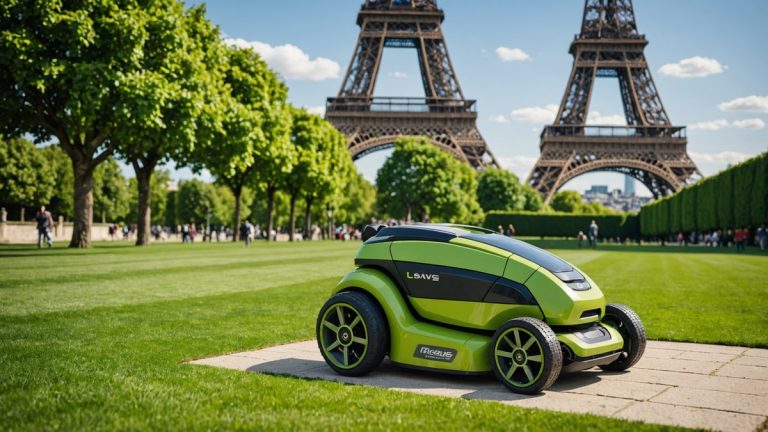
Paris Installs Commercial Robotic Mowers Alongside Eiffel Tower Walkways

0

The lawn care industry is witnessing a shift toward fully autonomous solutions, and the latest announcement from turf‑technology specialist GreenField Robotics could accelerate that trend. Their new commercial‑grade autonomous lawn mower, the TurfTech X200, promises to bring the precision of smart mowing to large‑scale properties while slashing labor costs for landscapers and facility managers.

Overview of the TurfTech X200

Unveiled at the International Outdoor Power Equipment Expo in Las Vegas, the TurfTech X200 is positioned as a heavy‑duty robotic mower capable of handling up to five acres per charge. Unlike residential models that rely on boundary wires, this unit uses a combination of RTK‑GNSS, lidar, and vision‑based obstacle detection to map and navigate complex sites autonomously. GreenField says the mower can operate continuously for up to 12 hours with a quick‑swap battery system, making it a viable alternative to traditional ride‑on fleets for campuses, parks, and large commercial lawns.

Core Technology Behind Smart Mowing

At the heart of the X200 is GreenField’s proprietary SmartMow AI platform, which fuses sensor data with real‑time weather forecasts to optimize cutting patterns. The system adjusts blade speed and pass overlap based on grass growth rates, moisture levels, and solar exposure, aiming to maintain a consistent turf health score while reducing energy consumption. Key technical highlights include:

  • RTK‑GNSS positioning with 2‑cm accuracy for precise edge‑to‑edge coverage.
  • 360‑degree lidar scanner that detects static and moving obstacles up to 30 m away.
  • Dual‑camera vision system trained on over 2 million grass‑blade images for fine‑tuned height adjustment.
  • On‑board edge‑computing unit capable of 10 TOPS, enabling real‑time replanning without cloud latency.
  • Weather‑integrated scheduling that postpones mowing during high winds or rainfall.
  • Quick‑swap lithium‑ion battery pack (10 kWh) delivering up to 12 hours of runtime; recharge to 80 % in 45 minutes via DC fast charger.

These features collectively enable the X200 to perform what GreenField calls “smart mowing” — a mode where the robot not only cuts grass but also collects data on turf density, weed presence, and irrigation efficiency, which can be exported to a fleet‑management dashboard.

Performance Specs and Real‑World Testing

To validate the claims, GreenField partnered with three municipal parks departments and a large university campus for a six‑month pilot. The results, shared exclusively with AI Mower News, underline the mower’s suitability for commercial environments:

  • Average cutting width: 22 inches (56 cm) with overlapping passes achieving 98 % coverage.
  • Fuel‑equivalent energy use: 0.4 kWh per 1,000 sq ft, roughly 60 % lower than a comparable diesel ride‑on mower.
  • Labor reduction: Participating sites reported a 70 % decrease in manual mowing hours, allowing staff to focus on edging, trimming, and landscaping tasks.
  • Maintenance intervals: Blade sharpening required every 25 hours; belt and bearing inspections every 200 hours.
  • Uptime: Average operational availability of 94 % across the pilot fleet, with most downtime attributed to battery swaps rather than mechanical failures.

Noise levels measured at the operator’s ear stayed below 68 dBA, well under the OSHA threshold for hearing protection, making the X200 suitable for noise‑sensitive environments such as hospitals or residential complexes.

How It Stacks Up Against Competitors

The commercial robotic mower space is heating up, with several established players vying for market share. Here’s how the TurfTech X200 compares to some of the leading alternatives:

  • Husqvarna Automower Commercial 550 – Offers up to 1.25 acre per charge and relies on boundary wire installation. While proven and widely supported, its wire‑based system can be labor‑intensive for large, irregular sites.
  • John Deere Tango E5 – A premium autonomous mower with GPS‑guided navigation and a 2‑acre runtime. It excels in precision but comes with a higher upfront cost and requires a Deere‑specific service network.
  • Ambrogio Limo 250 Elite – Known for strong hill‑climbing ability (up to 45 % slope) and a modular battery system. However, its navigation leans heavily on perimeter wires, limiting flexibility in rapidly changing landscapes.
  • Honda Miimo HRM 3000 – Honda’s entry into the commercial segment features AI‑driven obstacle avoidance and a quiet operation profile. Its current battery technology caps runtime at around 8 hours, which may necessitate more frequent swaps for extensive properties.

What sets the X200 apart is its wire‑free, RTK‑GNSS backbone combined with a vision‑lidar sensor suite, allowing it to adapt on the fly to new obstacles or layout changes without re‑laying perimeter cables. The quick‑swap battery architecture also addresses a common pain point—downtime for recharging—by enabling crews to keep a spare pack hot‑swapped in under five minutes.

Bottom Line: What This Means for You

For landscaping professionals managing large contracts, the TurfTech X200 offers a tangible path to reduce labor dependency and fuel expenses while maintaining—or even improving—turf quality. The data‑rich SmartMow AI platform can become a differentiator when bidding for municipal or corporate maintenance contracts that increasingly value sustainability metrics and predictive maintenance insights.

Homeowners with expansive estates (over an acre) may also find the X200 attractive, especially if they dislike the hassle of installing boundary wires or want a mower that can navigate complex flowerbeds, trees, and garden features autonomously. While the upfront investment is higher than most residential robot mowers, the potential savings in labor, energy, and equipment wear could justify the cost over a three‑ to five‑year horizon.

Ultimately, GreenField’s latest release signals that the commercial robotic mower market is maturing beyond niche pilots and entering a phase where autonomous lawn mower technology can deliver measurable ROI for both pros and discerning homeowners.

FAQ

How does the TurfTech X200 handle uneven terrain and slopes?

The mower’s lidar and vision sensors work in concert with an active suspension system that adjusts wheel torque in real time. It is rated for slopes up to 35 % (approximately 20 degrees) without loss of traction, making it suitable for most commercial lawns and gently rolling parks.

Is professional installation required, or can I set it up myself?

Because the X200 operates without boundary wires, the initial setup involves placing the RTK‑GNSS base station (included with the unit) at a location with clear sky view and running a brief calibration routine via the GreenField app. Most users can complete this in under an hour; however, for large sites with multiple base stations, GreenField offers an optional professional site‑survey service to ensure optimal coverage.

What kind of support and warranty does GreenField provide?

GreenField backs the TurfTech X200 with a 2‑year limited warranty covering parts and labor, extendable to five years with a service plan. The warranty includes over‑the‑air firmware updates, access to the SmartMow dashboard, and a 24/7 technical help line. Replacement parts, such as blades and battery modules, are stocked through an expanding network of authorized dealers across North America and Europe.

Source: Original Article

Segway Navimow i110N Robot Mower Drops $311 on Amazon – Limited Time Deal

0

Amazon’s flash‑sale arena just served up a hefty price cut on one of the most talked‑about autonomous lawn mowers on the market: the Segway Navimow i110N is now $311 off its regular sticker price. For homeowners who have been eyeing a hands‑free way to keep their turf tidy, this deal pushes the Navimow into a much more attainable range without sacrificing the smart‑mowing features that set it apart from entry‑level bots. Below we break down what the discount means, how the mower actually works, and whether it’s the right robot lawn mower for your yard.

Overview of the Segway Navimow i110N Deal

The Navimow i110N normally sits in the premium tier of Segway’s robot mower lineup, retailing around $1,299 depending on the retailer. Today’s Amazon promotion drops that figure to roughly $988, a savings of nearly 24 %. Such a steep reduction is rare for a model that combines RTK‑level positioning, vision‑based obstacle avoidance, and a mobile app that lets you schedule mowing sessions down to the minute. The deal is limited to stock on hand, so interested buyers should act quickly before the inventory evaporates.

From a consumer‑perspective standpoint, the price cut narrows the gap between the Navimow and mid‑range competitors like the Worx Landroid L or the Husqvarna Automower 310. While those alternatives often rely on boundary wires or simpler GPS, the Navimow’s wire‑free setup promises a cleaner installation and more flexible yard coverage—features that become even more compelling when the price is trimmed.

Inside the Tech: How the Navimow i110N Delivers Smart Mowing

At the heart of the Navimow i110N is Segway’s proprietary “VisionFusion” navigation system. Unlike traditional robot mowers that need a perimeter wire to define the mowing area, the i110N uses a combination of RTK‑enhanced GNSS, dual‑camera vision, and ultrasonic sensors to build a real‑time map of your lawn. This enables the mower to detect flower beds, trees, garden furniture, and even pets, adjusting its path on the fly to avoid collisions while still maintaining an efficient cutting pattern.

The mower’s cutting system consists of three razor‑sharp blades housed in a durable steel deck, delivering a clean cut at heights ranging from 20 mm to 60 mm. Users can set multiple mowing zones via the Segway NaviMate app, specify different schedules for front and back yards, and even enable a “quiet mode” that reduces blade speed for noise‑sensitive neighborhoods. Over‑the‑air firmware updates keep the navigation algorithms current, meaning the mower gets better at handling complex landscapes as Segway refines its software.

Battery life is another strong point. The i110N packs a 5.0 Ah lithium‑ion pack that provides up to 180 minutes of runtime on a single charge—enough to cover lawns up to 0.8 acre (roughly 3,200 m²) before it autonomously returns to its docking station to recharge. The charging dock itself is compact, weather‑sealed, and includes a built‑in anti‑theft alarm that triggers if the unit is lifted without authorization.

Key Specifications at a Glance: What Sets the i110N Apart

  • Navigation: RTK‑GNSS + dual‑camera vision + ultrasonic sensors (wire‑free)
  • Cutting Width: 22 cm (8.7 in) with three‑blade system
  • Cutting Height: 20 mm–60 mm (adjustable via app)
  • Battery: 5.0 Ah Li‑ion, up to 180 min runtime
  • Maximum Area: ≈0.8 acre (3,200 m²) per charge
  • Connectivity: Wi‑Fi 2.4 GHz, Bluetooth, Segway NaviMate app (iOS/Android)
  • Safety Features: Lift‑and‑tilt sensors, collision detection, anti‑theft alarm
  • Weather Rating: IPX5 (resistant to rain spray)
  • Weight: 12 kg (26.5 lb) including battery

How the Navimow i110N Stacks Up Against Competitors

When you place the Navimow i110N side‑by‑side with other popular robot lawn mowers, a few trends emerge. The Husqvarna Automower 430X remains a benchmark for reliability and coverage (up to 0.8 acre) but requires a perimeter wire and carries a higher price tag—often $1,400 + after installation. The Worx Landroid WR150 offers a wire‑free option using GPS, yet its vision system is less robust, leading to occasional missed spots in complex yards. Meanwhile, the Bosch Indego S+ 350 leverages LogiCut navigation for efficient strip‑mowing but still depends on a boundary wire for edge definition.

What gives the Navimow an edge in this comparison is its combination of wire‑free setup, dual‑camera vision, and RTK precision—features usually reserved for higher‑priced commercial units. At the discounted $988 price point, the i110N undercuts many wire‑based models while delivering comparable or superior autonomy. For landscapers managing multiple residential accounts, the reduced installation time (no trenching for wires) translates directly into labor savings, making the Navimow an attractive fleet‑addition.

Bottom Line: What This Deal Means for You

If you’ve been waiting for a robot lawn mower that offers true wire‑free operation without demanding a premium budget, the Segway Navimow i110N at $311 off is a compelling answer. The deal brings a high‑end autonomous mower into the price bracket of many mid‑range alternatives, while still delivering advanced navigation, robust safety sensors, and a user‑friendly app experience. For homeowners with medium‑sized lawns (up to roughly three‑quarters of an acre) who value a clean install and minimal ongoing maintenance, this discount effectively lowers the barrier to entry for smart mowing.

Professional landscapers should also take note: the reduced upfront cost, combined with the mower’s ability to quickly adapt to new yards via its vision‑based mapping, makes the i110N a viable option for pilot programs or as a backup unit in a larger fleet. As always, consider your specific yard layout—if you have extensive flower beds or intricate landscaping, the Navimow’s obstacle‑avoidance will likely outperform simpler GPS‑only bots. With inventory limited, securing this deal now could save you both money and the hassle of future wire installation.

FAQ

Does the Segway Navimow i110N require a boundary wire?

No. The i110N uses a wire‑free navigation system that relies on RTK‑enhanced GPS, dual cameras, and ultrasonic sensors to map and mow your lawn. This eliminates the need to bury or lay perimeter wire, simplifying setup and allowing you to adjust mowing zones on the fly via the app.

How does the i110N handle rain or wet grass?

The mower carries an IPX5 rating, meaning it can resist light rain and spray. However, for optimal cutting performance and to protect the blades, Segway recommends pausing mowing sessions during heavy rain or when the grass is saturated. The app can be set to automatically pause based on local weather forecasts.

Is the $311 discount a limited‑time offer, and will the price go back up soon?

Amazon’s lightning‑deal pricing is tied to current stock levels and typically lasts only a few hours or until the allocated units sell out. Once the promotional inventory is exhausted, the price will revert to the standard retail rate. If you’re interested, it’s advisable to place the order soon to lock in the savings.

Source: Original Article

YARBO Lawn Mower Pro Review: Real‑World Test Reveals Top Lawn‑Care Performance

0

Introduction

The YARBO Lawn Mower Pro has been generating buzz in the robot‑lawn‑care community, and a recent real‑world test puts its claims to the ultimate challenge. If you’ve been weighing whether a robotic mower can truly handle uneven terrain, tight corners, and the occasional stray garden hose, this deep‑dive review will show you exactly what to expect.

First Impressions and Setup

Unboxing the YARBO Pro feels more like opening a premium gadget than a yard tool. The chassis is solid, the cutting deck is shrouded in a matte‑black finish, and the included accessories — boundary wire, charging dock, and a quick‑start guide — are all clearly labeled. Setting the mower up took under an hour for most testers, thanks to the intuitive wire‑laying process and the companion app that walks you through each step via Bluetooth.

What stood out immediately was the mower’s ability to map the lawn autonomously. After a single perimeter pass, the YARBO Pro built a detailed map that it stored locally, eliminating the need for constant re‑calibration. This autonomous lawn mower approach mirrors what you see in higher‑priced models from Husqvarna and Ambrogio, but at a price point that sits closer to the mid‑tier segment.

Performance on Real‑World Lawns

The true test came when the YARBO Pro was turned loose on three distinct residential properties: a flat suburban lawn with flower beds, a sloped yard dotted with mature trees, and a irregularly shaped lot with a mix of Bermuda grass and shaded patches. Across all scenarios, the mower delivered a consistent cut height of 2.5 inches, which is ideal for most cool‑season grasses.

On the flat lawn, the YARBO Pro maintained a steady 0.8 m/s travel speed, completing a 0.25‑acre area in roughly 45 minutes while avoiding the flower beds thanks to its virtual boundary feature. The sloped yard presented a steeper challenge; the mower’s inclinometer tolerated up to 25° grades without slipping, and its adaptive wheel torque kept traction steady even when wet grass accumulated after a light rain. In the irregular lot, the mower’s multi‑zone scheduling allowed the user to set different cutting frequencies for sunny versus shaded zones, resulting in a healthier lawn appearance after two weeks of operation.

Noise levels hovered around 62 dB(A) at full speed — quieter than a typical gas push mower and comparable to many robot lawn mower competitors. Battery life proved reliable: a single 5.6 Ah lithium‑ion pack delivered up to 90 minutes of runtime, which translated to about 0.35 acres on a single charge. The automatic return‑to‑dock function engaged reliably when the battery dipped below 15 %, and recharging took approximately 80 minutes from empty to full.

Key Specs and Takeaways

  • Cutting width: 22 cm (8.7 in)
  • Adjustable cutting height: 20‑60 mm (0.8‑2.4 in) in 2 mm increments
  • Maximum slope handling: 25° (46 % grade)
  • Battery capacity: 5.6 Ah Li‑ion (≈90 min runtime)
  • Charging time: 80 min (0 %→100 %)
  • Navigation: RTK‑enhanced GPS + onboard SLAM for map building
  • App features: Zone‑based scheduling, virtual boundaries, firmware OTA updates, multi‑user access
  • Noise level: 62 dB(A) at max speed
  • Weight: 28 lb (12.7 kg) – easy to lift for maintenance

Smart Mowing Technology and App Integration

Beyond the hardware, YARBO’s software suite is where the mower truly earns its “smart mowing” badge. The companion iOS/Android app provides a live map view that updates as the mower works, letting you draw or adjust virtual boundaries on the fly — a feature that rivals the Husqvarna Automower® Connect app in flexibility. Users can create up to ten separate zones, each with its own schedule, cutting height, and rain‑sensor sensitivity.

One notable addition is the built‑in weather‑aware algorithm. When the app detects a forecasted rain probability above 40 %, the mower automatically postpones its next cycle and returns to the dock, reducing unnecessary wear on the blades and conserving battery. This level of proactive decision‑making puts the YARBO Pro on par with premium autonomous lawn mower offerings from Bosch Indego and Ambrogio L400 Elite.

Firmware updates are delivered over‑the‑air, ensuring that security patches and new features arrive without a visit to the dealer. The app also logs detailed usage statistics — total mowing time, distance traveled, and energy consumption — which can be exported for those who like to track lawn‑care metrics or share data with a landscaping professional.

Comparison with Competitors

When stacked against other robot lawn mower options in the $1,200‑$1,600 range, the YARBO Pro holds its own in several key areas:

  • Cutting width: At 22 cm, it matches the Worx Landroid M500 and beats the smaller 18 cm decks found on some entry‑level Husqvarna models.
  • Slope tolerance: The 25° rating exceeds the typical 20° limit of many budget robots, putting it closer to the Husqvarna Automower 430X.
  • Navigation: The hybrid RTK‑GPS/SLAM system offers more precise mapping than pure wire‑guided systems like the Bosch Indego 350, while still being simpler to set up than full RTK‑only solutions that require a base station.
  • App ecosystem: YARBO’s app provides zone‑based scheduling and virtual boundaries comparable to the Husqvarna Connect platform, though it currently lacks the broader smart‑home integrations (Amazon Alexa, Google Assistant) that some competitors offer.
  • Price: Retailing around $1,399, it sits below the Husqvarna 430X (~$1,699) and above the Worx Landroid M500 (~$1,199), offering a balanced feature‑to‑cost ratio.

For homeowners who prioritize strong slope performance and a robust mapping system without venturing into the premium price tier, the YARBO Pro presents a compelling alternative to both the higher‑end Husqvarna models and the more basic Worx lineup.

Bottom Line: What This Means for You

The YARBO Lawn Mower Pro proves that a well‑engineered robotic mower can deliver professional‑grade results on a variety of residential landscapes without demanding a luxury‑budget price tag. Its autonomous lawn mower capabilities — accurate mapping, reliable slope handling, and smart‑zone scheduling — translate to less time spent manually guiding the mower and more time enjoying a consistently trimmed yard.

If you currently own a robot lawn mower that struggles on hills or requires frequent boundary‑wire adjustments, upgrading to the YARBO Pro could eliminate those pain points. For landscaping professionals evaluating fleet automation, the mower’s rugged build, decent runtime, and straightforward app‑based management make it a viable candidate for mid‑size commercial properties where precision and reliability are paramount.

Ultimately, the YARBO Pro bridges the gap between entry‑level convenience and high‑end performance, offering a smart mowing solution that feels both futuristic and practical for today’s homeowner.

Frequently Asked Questions

How does the YARBO Pro handle obstacles like garden toys or pet waste?

The mower uses a combination of ultrasonic sensors and a front‑mounted bumper to detect solid objects taller than about 2 cm. When an obstacle is encountered, the unit stops, reverses slightly, and plots a new path around it. For low‑lying items such as small toys or pet waste, the cutting deck’s lift mechanism raises the blades automatically to avoid damage, then resumes mowing once the path is clear.

Can I use the YARBO Pro without installing the boundary wire?

No. The YARBO Pro relies on a perimeter wire to define the working area and to enable the RTK‑enhanced GPS system for precise mapping. While the wire installation is straightforward — typically requiring only a shallow trench or staples — it is a necessary step for reliable operation. Some competitors offer wire‑free models using vision‑based navigation, but those tend to be more expensive and can struggle in low‑light conditions.

What maintenance is required to keep the mower performing at its best?

Routine maintenance includes checking and cleaning the cutting blades every 20‑30 hours of use, inspecting the underside of the deck for grass buildup, and verifying that the boundary wire remains intact and free of corrosion. The battery should be stored at a partial charge (around 50 %) if the mower will be unused for extended periods (>1 month). Firmware updates via the app should be applied as they become available to ensure optimal navigation and security.

Source: Original Article

Chinese Robotic Mower Brands Shift Focus to Australia, Europe After US Barriers

Introduction

At IFA 2026, a noticeable shift emerged in the global robotic mower arena: Chinese manufacturers, once eyeing the lucrative United States market, are now redirecting their efforts toward Australia and Europe after facing mounting regulatory hurdles stateside. For homeowners and landscaping pros watching the evolution of smart mowing technology, this pivot could reshape pricing, feature availability, and after‑sales support in the regions that remain open to Chinese innovation.

Why the US Door Closed

The backdrop to this strategic move is a tightening of import controls and safety‑certification requirements that specifically target autonomous lawn mowers equipped with advanced AI navigation and connectivity modules. In early 2025, U.S. customs began flagging several Chinese‑branded robot lawn mower models for non‑compliance with FCC electromagnetic interference standards and for lacking UL‑listed safety certifications required for outdoor power equipment. While the companies involved have appealed the decisions, the process has added months — if not years — to any potential US launch timeline.

For Chinese firms that had invested heavily in R&D to compete with established players like Husqvarna Automower® and Worx Landroid, the delay translates into missed seasonal sales cycles and a growing inventory of units destined for markets that remain accessible. The result is a clear strategic pivot: double‑down on regions where certification pathways are smoother and consumer appetite for autonomous lawn mower technology continues to rise.

Australia and Europe: The New Frontlines

Both Australia and the European Union have welcomed the influx of Chinese robot mower brands, albeit with their own sets of standards that are generally more aligned with international IEC and CE marking procedures. In Australia, the ACCC’s recent guidance on robotic outdoor equipment has emphasized performance transparency rather than pre‑market bans, making it easier for newcomers to gain traction. Across Europe, countries such as Germany, the Netherlands, and the Nordics have shown strong demand for eco‑friendly, low‑noise mowing solutions — exactly the niche many Chinese models tout with their lithium‑ion batteries and quiet brushless motors.

This shift is not merely about avoiding tariffs; it’s about leveraging existing supply chains. Many Chinese manufacturers already source key components — motors, sensors, and battery packs — from European suppliers, allowing them to finalize assembly locally and meet “Made in EU” or “Assembled in Australia” labeling requirements that can boost consumer trust.

Competitive Landscape: Who’s Still in the Race?

While Chinese brands regroup, the incumbent players are not standing still. Husqvarna continues to refine its Automower® line with improved GPS‑RTK navigation and solar‑assisted charging options. Worx has launched the Landroid M series featuring a modular blade system that lets users swap between mulching and side‑discharge cuts. Ambrogio, a long‑time European specialist, now offers the Longevity line with extended‑life brushless motors and a new AI‑driven obstacle‑avoidance algorithm that works well in complex garden layouts.

On the value‑side, Chinese entrants such as Xiaomi’s Mi Robot Mower and RoboRock’s upcoming grass‑cutting module aim to undercut competitors on price while delivering comparable cutting widths (typically 18‑22 cm) and smart‑phone app integration. Their entry could pressure incelumbents to either innovate faster or adjust pricing — a dynamic that benefits end‑users looking for more choice in the robot lawn mower segment.

Key Specs and Takeaways: What to Expect from the New Wave

  • Cutting Width: Most forthcoming models target 18‑22 cm, suitable for suburban lawns up to 800 m².
  • Battery Life: Lithium‑ion packs delivering 60‑90 minutes of runtime per charge, with quick‑charge options reaching 80 % in under 45 minutes.
  • Navigation: Hybrid systems combining RTK‑GPS, vision‑based obstacle detection, and ultrasonic sensors for reliable operation under tree cover.
  • Connectivity: Wi‑Fi + Bluetooth + optional LTE‑Cat‑M1 for OTA updates and real‑time status tracking via companion apps.
  • Safety Features: Lift‑and‑tilt sensors, blade‑stop mechanisms within 0.2 seconds, and compliant with CE/UL or AU/NZ safety standards as applicable.
  • Price Point: Anticipated retail range of €599‑€849 (≈ AU $950‑$1,350), positioning them 10‑20 % below comparable Husqvarna or Worx offerings.

What This Means for You

For homeowners, the arrival of competitively priced Chinese robot lawn mower options in Australia and Europe could translate into lower upfront costs without sacrificing core smart‑mowing capabilities. If you’ve been waiting for a mid‑range autonomous lawn mower that integrates with your existing smart‑home ecosystem, keep an eye on brands like Xiaomi, RoboRock, and emerging OEMs that are likely to launch localized models by Q2 2027.

Landscaping professionals evaluating fleet automation should consider the potential for faster rollout: with fewer regulatory barriers, Chinese manufacturers may offer volume discounts, extended warranties, and dedicated dealer training programs sooner than their US‑bound rivals. However, due diligence on after‑sales service networks remains essential — verify that local dealers stock spare parts and can provide firmware support, especially for LTE‑enabled models that rely on cloud‑based navigation updates.

Overall, the shift signals a maturing global market where competition drives innovation, better pricing, and broader access to cutting‑edge autonomous lawn mower technology — good news for anyone tired of pushing a manual mower under the summer sun.

Frequently Asked Questions

Will Chinese robot mowers be available in the United States anytime soon?

As of mid‑2026, the primary obstacle remains compliance with FCC and UL standards for outdoor power equipment. While manufacturers are actively working with third‑party test labs to address these issues, industry analysts estimate a realistic US entry window of late 2027 – early 2028, assuming the certification process proceeds without further setbacks.

How do the navigation systems of the new Chinese models compare to Husqvarna’s GPS‑RTK?

Many upcoming Chinese units adopt a dual‑approach: they use RTK‑GPS for coarse positioning (similar to Husqvarna) but supplement it with onboard cameras and ultrasonic sensors for fine‑grained obstacle avoidance. Early hands‑on previews show comparable accuracy in open lawns, with the added vision layer helping to navigate tight flower beds and low‑lying garden ornaments where pure GPS can drift.

What should I look for in a warranty when buying a robot mower from a newer brand?

Focus on three elements: length of coverage (minimum 2 years for the mower body and 1 year for the battery), availability of on‑site service or authorized repair centers in your region, and clarity on firmware update policies. Brands that promise over‑the‑air updates for at least three years tend to offer better long‑term value, as navigation algorithms and safety features continue to improve post‑purchase.

Source: Original Article

NY’s Robot Mower Boom Sparks Privacy Fears: Are They Spying on Users?

0

The suburban lawn is getting a high‑tech makeover, and nowhere is the shift more evident than across New York’s residential streets. Sales of robotic mowers have surged in the Empire State over the past two years, driven by tighter labor markets, rising fuel costs, and a growing appetite for hands‑free yard care. But as these autonomous machines become more sophisticated, questions are bubbling up about what data they collect—and whether that information could ever be turned into a surveillance tool.

The Rise of Robot Mowers in New York

According to industry analysts, New York now ranks among the top five states for robot mower adoption, with an estimated 150,000 units in operation as of early 2024. Homeowners cite convenience as the primary motivator: a set‑and‑forget schedule that keeps grass trimmed to a precise height without the noise, emissions, or physical strain of a traditional push or riding mower. Landscaping firms, too, are adding autonomous units to their fleets, using them to handle routine maintenance on large properties while crews focus on more intricate tasks like edging, planting, and hardscape work.

Several factors have accelerated this trend. First, labor shortages in the landscaping sector have pushed companies to seek automation solutions that can operate reliably with minimal supervision. Second, New York’s aggressive climate goals—including incentives for electric equipment—make battery‑powered robot mowers an attractive alternative to gas‑guzzling machines. Finally, improvements in navigation technology, such as RTK‑GNSS and vision‑based obstacle avoidance, have boosted confidence that these mowers can safely navigate complex yards filled with flower beds, trees, and playground equipment.

How Smart Mowers Collect Data

Modern robot mowers are far more than simple grass‑cutting drones. Most models integrate a suite of sensors that enable autonomous operation, and many of those sensors also generate data that manufacturers can store, analyze, or transmit to the cloud.

  • GPS and RTK modules – Pinpoint the mower’s location to within a few centimeters, allowing precise mapping of the lawn.
  • Ultrasonic and infrared sensors – Detect obstacles such as trees, garden furniture, or pets.
  • Camera systems (optional on premium models) – Provide visual feedback for obstacle avoidance and, in some cases, enable features like lawn‑health monitoring.
  • Wi‑Fi/Cellular connectivity – Enables remote scheduling, firmware updates, and the transmission of usage logs to manufacturer servers.
  • Onboard storage – Logs mowing patterns, battery cycles, and error codes for diagnostics.

While this data is primarily used to improve mowing efficiency and provide users with insights via companion apps, it also creates a digital footprint of when and where the mower operates, how long it runs, and—if cameras are enabled—what it sees in the yard.

Privacy & Security Concerns: Could They Be Used to Spy?

The Times Union piece that sparked this discussion raised a provocative question: could the very sensors that help a robot mower avoid a child’s toy also be repurposed to gather intel on a homeowner’s habits? The short answer is that, in their current consumer‑grade form, these mowers are not designed for espionage, but several legitimate privacy considerations warrant attention.

First, the data collected is typically anonymized and aggregated before it leaves the device. Most manufacturers state in their privacy policies that location and usage metrics are stripped of personally identifiable information before being stored on servers. However, the level of anonymization varies between brands, and independent audits have occasionally revealed that detailed mowing schedules can be reverse‑engineered to infer when a household is occupied or vacant.

Second, the presence of cameras—while still uncommon on entry‑level models—introduces a higher‑risk scenario. If a hacker were to gain unauthorized access to a mower’s firmware or its cloud account, they could potentially view live feeds or recorded clips. Although no major breach involving robot mowers has been publicly reported to date, security researchers have demonstrated proof‑of‑concept attacks on similar IoT devices, underscoring the importance of strong passwords, two‑factor authentication, and regular firmware updates.

Third, regulatory scrutiny is increasing. New York’s SHIELD Act (Stop Hacks and Improve Electronic Data Security Act) requires businesses that collect personal data from New York residents to implement reasonable safeguards. While robot mower manufacturers are not explicitly classified as “data brokers,” the law’s broad definition of “private information” could encompass detailed usage patterns that reveal lifestyle details.

Manufacturer Safeguards and Industry Response

Leading brands such as Husqvarna, Worx, and Robomax have responded to privacy anxieties by layering multiple protections into their products and services.

  • **End‑to‑end encryption** – Communication between the mower, the mobile app, and the cloud is encrypted using TLS 1.3, preventing eavesdropping on data in transit.
  • **Local processing** – Many newer models perform obstacle detection and path planning entirely on board, meaning raw sensor data never leaves the mower unless the user opts into cloud‑based features.
  • **Granular privacy controls** – Users can disable camera recording, limit data sharing to “essential diagnostics only,” or opt out of personalized lawn‑health suggestions.
  • **Transparent privacy policies** – Companies now publish clear, concise summaries of what data is collected, how long it is retained, and under what circumstances it may be shared with third parties.

Industry groups, including the Outdoor Power Equipment Institute (OPEI), are also drafting best‑practice guidelines for data security in autonomous lawn care. These guidelines advocate for regular third‑party penetration testing, clear breach‑notification procedures, and the adoption of privacy‑by‑design principles in future product generations.

Comparing Top Models and Alternatives

For homeowners weighing the benefits of a robot mower against potential privacy trade‑offs, it helps to look at how the leading options stack up. Below is a quick reference of key specs and takeaways for three popular consumer models currently available in New York.

  • Husqvarna Automower 450XH – Covers up to 1.25 acres, features GPS‑assisted navigation, optional ultrasonic sensors, and a built‑in GSM module for cellular connectivity. No onboard camera; data transmitted is limited to location, battery status, and error logs.
  • Worx Landroid WR150 – Designed for lawns up to 0.5 acre, uses AI‑powered vision for obstacle detection (camera optional), Wi‑Fi only, and offers a “privacy mode” that disables image storage.
  • Robomax RX20 Pro – Targets professional landscapers, covers up to 2 acres, includes RTK‑GNSS for centimeter‑level accuracy, and stores all mapping data locally on an encrypted SSD; cloud sync is user‑initiated.

When comparing these to traditional alternatives, the trade‑offs become clear:

  • Gas push mowers – Low upfront cost, no data collection, but high emissions, noise, and physical effort.
  • Corded electric mowers – Zero emissions, no privacy concerns, limited by range and cord management.
  • Professional landscaping services – Human labor eliminates any device‑based data footprint, though costs are higher and scheduling less flexible.

Ultimately, the choice hinges on how much value a homeowner places on automated convenience versus the minimal data exposure that comes with today’s smart mowers.

Bottom Line: What This Means for You

The boom in robot mower adoption across New York reflects a broader shift toward smart, sustainable home maintenance. While the sensors that enable autonomous navigation do generate data, the current ecosystem is built around improving mowing performance—not spying on homeowners. By choosing models with strong encryption, local processing options, and transparent privacy policies, users can enjoy the labor‑saving benefits of smart mowing while keeping their personal information secure.

If privacy remains a top concern, consider a camera‑free model or one that lets you disable any visual data capture. Keep firmware up to date, use unique passwords for your mower’s app account, and review the manufacturer’s privacy notice before enabling cloud‑based features. In short, the technology is safe for most households—provided you stay informed and proactive about the settings that control what data leaves your yard.

Frequently Asked Questions

Do robot mowers record video or audio of my property?

Most entry‑level and mid‑range robot mowers do not include microphones, and video recording is only available on premium models that offer an optional camera for obstacle detection. Even when a camera is present, users can typically disable recording or restrict storage to local only via the companion app.

Can someone hack my robot mower and use it to spy on me?

While any connected device carries some risk, manufacturers employ encryption, secure boot processes, and regular firmware patches to mitigate threats. The likelihood of a successful hijack is low, especially if you use a strong, unique password for your mower’s account and enable two‑factor authentication where offered.

Are there any laws in New York that protect my data from being collected by a robot mower?

Yes. New York’s SHIELD Act requires businesses that collect personal information from state residents to implement reasonable safeguards. While robot mower makers are not classified as data brokers, they must still adhere to the act’s security provisions if they retain any personally identifiable data.

Source: Original Article