


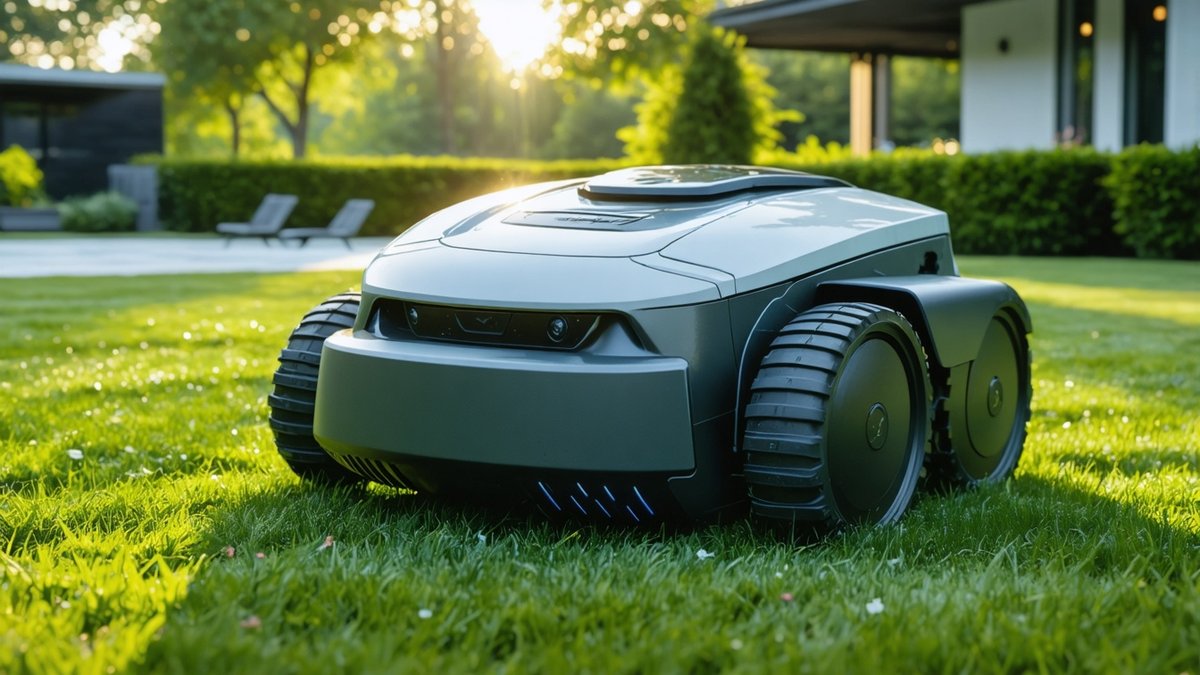
The suburban lawn is getting a high‑tech makeover, and nowhere is the shift more evident than across New York’s residential streets. Sales of robotic mowers have surged in the Empire State over the past two years, driven by tighter labor markets, rising fuel costs, and a growing appetite for hands‑free yard care. But as these autonomous machines become more sophisticated, questions are bubbling up about what data they collect—and whether that information could ever be turned into a surveillance tool.
The Rise of Robot Mowers in New York
According to industry analysts, New York now ranks among the top five states for robot mower adoption, with an estimated 150,000 units in operation as of early 2024. Homeowners cite convenience as the primary motivator: a set‑and‑forget schedule that keeps grass trimmed to a precise height without the noise, emissions, or physical strain of a traditional push or riding mower. Landscaping firms, too, are adding autonomous units to their fleets, using them to handle routine maintenance on large properties while crews focus on more intricate tasks like edging, planting, and hardscape work.
Several factors have accelerated this trend. First, labor shortages in the landscaping sector have pushed companies to seek automation solutions that can operate reliably with minimal supervision. Second, New York’s aggressive climate goals—including incentives for electric equipment—make battery‑powered robot mowers an attractive alternative to gas‑guzzling machines. Finally, improvements in navigation technology, such as RTK‑GNSS and vision‑based obstacle avoidance, have boosted confidence that these mowers can safely navigate complex yards filled with flower beds, trees, and playground equipment.
How Smart Mowers Collect Data
Modern robot mowers are far more than simple grass‑cutting drones. Most models integrate a suite of sensors that enable autonomous operation, and many of those sensors also generate data that manufacturers can store, analyze, or transmit to the cloud.
- GPS and RTK modules – Pinpoint the mower’s location to within a few centimeters, allowing precise mapping of the lawn.
- Ultrasonic and infrared sensors – Detect obstacles such as trees, garden furniture, or pets.
- Camera systems (optional on premium models) – Provide visual feedback for obstacle avoidance and, in some cases, enable features like lawn‑health monitoring.
- Wi‑Fi/Cellular connectivity – Enables remote scheduling, firmware updates, and the transmission of usage logs to manufacturer servers.
- Onboard storage – Logs mowing patterns, battery cycles, and error codes for diagnostics.
While this data is primarily used to improve mowing efficiency and provide users with insights via companion apps, it also creates a digital footprint of when and where the mower operates, how long it runs, and—if cameras are enabled—what it sees in the yard.
Privacy & Security Concerns: Could They Be Used to Spy?
The Times Union piece that sparked this discussion raised a provocative question: could the very sensors that help a robot mower avoid a child’s toy also be repurposed to gather intel on a homeowner’s habits? The short answer is that, in their current consumer‑grade form, these mowers are not designed for espionage, but several legitimate privacy considerations warrant attention.
First, the data collected is typically anonymized and aggregated before it leaves the device. Most manufacturers state in their privacy policies that location and usage metrics are stripped of personally identifiable information before being stored on servers. However, the level of anonymization varies between brands, and independent audits have occasionally revealed that detailed mowing schedules can be reverse‑engineered to infer when a household is occupied or vacant.
Second, the presence of cameras—while still uncommon on entry‑level models—introduces a higher‑risk scenario. If a hacker were to gain unauthorized access to a mower’s firmware or its cloud account, they could potentially view live feeds or recorded clips. Although no major breach involving robot mowers has been publicly reported to date, security researchers have demonstrated proof‑of‑concept attacks on similar IoT devices, underscoring the importance of strong passwords, two‑factor authentication, and regular firmware updates.
Third, regulatory scrutiny is increasing. New York’s SHIELD Act (Stop Hacks and Improve Electronic Data Security Act) requires businesses that collect personal data from New York residents to implement reasonable safeguards. While robot mower manufacturers are not explicitly classified as “data brokers,” the law’s broad definition of “private information” could encompass detailed usage patterns that reveal lifestyle details.
Manufacturer Safeguards and Industry Response
Leading brands such as Husqvarna, Worx, and Robomax have responded to privacy anxieties by layering multiple protections into their products and services.
- **End‑to‑end encryption** – Communication between the mower, the mobile app, and the cloud is encrypted using TLS 1.3, preventing eavesdropping on data in transit.
- **Local processing** – Many newer models perform obstacle detection and path planning entirely on board, meaning raw sensor data never leaves the mower unless the user opts into cloud‑based features.
- **Granular privacy controls** – Users can disable camera recording, limit data sharing to “essential diagnostics only,” or opt out of personalized lawn‑health suggestions.
- **Transparent privacy policies** – Companies now publish clear, concise summaries of what data is collected, how long it is retained, and under what circumstances it may be shared with third parties.
Industry groups, including the Outdoor Power Equipment Institute (OPEI), are also drafting best‑practice guidelines for data security in autonomous lawn care. These guidelines advocate for regular third‑party penetration testing, clear breach‑notification procedures, and the adoption of privacy‑by‑design principles in future product generations.
Comparing Top Models and Alternatives
For homeowners weighing the benefits of a robot mower against potential privacy trade‑offs, it helps to look at how the leading options stack up. Below is a quick reference of key specs and takeaways for three popular consumer models currently available in New York.
- Husqvarna Automower 450XH – Covers up to 1.25 acres, features GPS‑assisted navigation, optional ultrasonic sensors, and a built‑in GSM module for cellular connectivity. No onboard camera; data transmitted is limited to location, battery status, and error logs.
- Worx Landroid WR150 – Designed for lawns up to 0.5 acre, uses AI‑powered vision for obstacle detection (camera optional), Wi‑Fi only, and offers a “privacy mode” that disables image storage.
- Robomax RX20 Pro – Targets professional landscapers, covers up to 2 acres, includes RTK‑GNSS for centimeter‑level accuracy, and stores all mapping data locally on an encrypted SSD; cloud sync is user‑initiated.
When comparing these to traditional alternatives, the trade‑offs become clear:
- Gas push mowers – Low upfront cost, no data collection, but high emissions, noise, and physical effort.
- Corded electric mowers – Zero emissions, no privacy concerns, limited by range and cord management.
- Professional landscaping services – Human labor eliminates any device‑based data footprint, though costs are higher and scheduling less flexible.
Ultimately, the choice hinges on how much value a homeowner places on automated convenience versus the minimal data exposure that comes with today’s smart mowers.
Bottom Line: What This Means for You
The boom in robot mower adoption across New York reflects a broader shift toward smart, sustainable home maintenance. While the sensors that enable autonomous navigation do generate data, the current ecosystem is built around improving mowing performance—not spying on homeowners. By choosing models with strong encryption, local processing options, and transparent privacy policies, users can enjoy the labor‑saving benefits of smart mowing while keeping their personal information secure.
If privacy remains a top concern, consider a camera‑free model or one that lets you disable any visual data capture. Keep firmware up to date, use unique passwords for your mower’s app account, and review the manufacturer’s privacy notice before enabling cloud‑based features. In short, the technology is safe for most households—provided you stay informed and proactive about the settings that control what data leaves your yard.
Frequently Asked Questions
Do robot mowers record video or audio of my property?
Most entry‑level and mid‑range robot mowers do not include microphones, and video recording is only available on premium models that offer an optional camera for obstacle detection. Even when a camera is present, users can typically disable recording or restrict storage to local only via the companion app.
Can someone hack my robot mower and use it to spy on me?
While any connected device carries some risk, manufacturers employ encryption, secure boot processes, and regular firmware patches to mitigate threats. The likelihood of a successful hijack is low, especially if you use a strong, unique password for your mower’s account and enable two‑factor authentication where offered.
Are there any laws in New York that protect my data from being collected by a robot mower?
Yes. New York’s SHIELD Act requires businesses that collect personal information from state residents to implement reasonable safeguards. While robot mower makers are not classified as data brokers, they must still adhere to the act’s security provisions if they retain any personally identifiable data.
Source: Original Article

Author: AI Mow
Ai Mow is the editorial team behind Ai Mower News, dedicated to bringing you the latest news, reviews, and insights on robotic lawn mowers and smart gardening technology.