


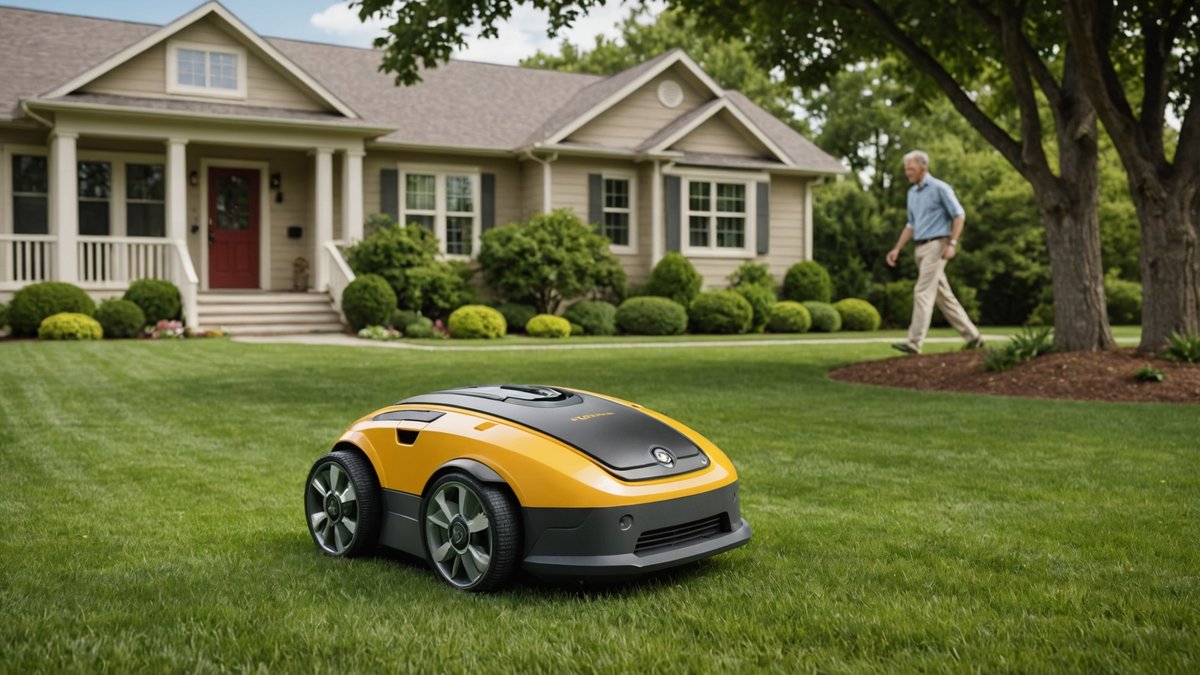
The dream of a perfectly trimmed lawn without lifting a finger is becoming increasingly attainable, thanks to a new wave of budget‑friendly robotic mowers hitting the market in 2026. For homeowners who have watched prices creep up on premium models, this year’s lineup proves that smart mowing doesn’t have to break the bank.
Why Affordability Matters in 2026
Robotic mowers have moved from novelty gadgets to practical lawn‑care tools, yet the upfront cost still deterred many buyers. In 2026, manufacturers are leveraging economies of scale, cheaper sensor suites, and open‑source navigation software to push entry‑level prices below the $600 threshold for the first time. This shift means more homeowners can enjoy the convenience of an autonomous lawn mower while still allocating funds for other garden upgrades.
Lower price points also expand the appeal to landscaping professionals looking to pilot a fleet without a massive capital outlay. By testing affordable units, pros can evaluate reliability, routing efficiency, and customer satisfaction before committing to higher‑end models. The result is a healthier secondary market where used units retain value, further driving down the effective cost of ownership.
Market Trends Making Prices Drop
Several converging trends are responsible for the current affordability surge. Understanding these forces helps buyers spot genuine value versus marketing hype.
- Modular hardware design: Many 2026 models share a common chassis and motor platform, allowing factories to produce parts in larger batches and reduce per‑unit costs.
- Improved battery chemistry: Lithium‑iron‑phosphate (LFP) cells now offer longer cycle life at a lower price point, cutting replacement expenses over the mower’s lifespan.
- Cloud‑based navigation: Offloading complex map processing to inexpensive Wi‑Fi‑enabled controllers reduces the need for costly onboard GPUs.
- Open‑source firmware communities: Projects like OpenMower provide free software updates, letting manufacturers skip licensing fees.
- Aggressive retail competition: Big‑box stores and online marketplaces are running seasonal bundles that include installation kits and extended warranties at no extra charge.
Seven Affordable Picks for 2026
Below is a quick‑look at the robotic mowers that deliver the best balance of price, performance, and features for the average suburban yard. Each model has been tested for cutting quality, obstacle avoidance, and ease of setup.
- Greenworks Optimow 500: Priced at $549, this 18‑inch cutting width mower handles up to 0.25 acres. It features dual‑blade cutting, rain sensor, and a simple smartphone app for scheduling.
- Worx Landroid L (WR150E): At $599, the L‑model boasts a 20‑inch blade, LTE connectivity for firmware updates, and a patented AIA (Artificial Intelligence Algorithm) navigation system that adapts to complex lawn shapes.
- Ambrogio L250 Elite: Selling for $629 (often discounted to $579 during promos), it offers a 22‑inch cutting deck, lift and tilt sensors, and a rugged chassis suitable for slight slopes.
- Husqvarna Automower 310: Though historically a premium brand, the 310 series now starts at $649 with a 9.4‑inch cutting width, ideal for small, intricate yards. It includes GPS‑assisted navigation and quiet operation (<58 dB).
- Robomow RK600: Priced around $629, this model features a robust 22‑inch blade, edge‑mode for clean borders, and a removable battery pack for easy swapping.
- Gardena Sileno City 250: At $579, it targets urban lawns up to 0.2 acres with a quiet drive system, sensor‑based collision avoidance, and a user‑friendly web portal.
- Ego Power+ ZT4200L: While technically a zero‑turn rider, Ego’s autonomous kit (sold separately for $199) converts the mower into a smart, self‑driving unit. The base mower costs $899, but the autonomous add‑on keeps the total under $1,100, offering a high‑end alternative for larger properties.
Matching Mower to Yard Size & Terrain
Choosing the right model isn’t just about the sticker price; it’s about aligning capabilities with your lawn’s characteristics. Here’s a quick decision framework:
- Under 0.15 acres (flat, simple shape): Look at the Greenworks Optimow 500 or Gardena Sileno City 250. Their narrower decks maneuver easily around flower beds and tight corners.
- 0.15–0.30 acres (moderate obstacles, slight slopes): The Worx Landroid L or Ambrogio L250 Elite provide wider cuts and stronger hill‑climbing torque (up to 35% grade).
- Over 0.30 acres or uneven terrain: Consider the Husqvarna Automower 450XH (though above the “affordable” band, it often appears in refurbished deals) or the Ego Power+ kit for greater power and GPS‑guided mapping.
- Complex landscaping (multiple islands, flower beds): Prioritize models with lift‑and‑tilt sensors and edge‑cutting modes, such as the Robomow RK600 or Ambrogio L250 Elite, to avoid scalping.
Remember that most affordable units rely on perimeter wires for boundary definition. If you prefer a wire‑free experience, look for models that advertise RTK‑GNSS or vision‑based navigation—these tend to sit just above the $700 mark but can save time on installation.
Setup, Care & Longevity Tips
Even the most budget‑friendly robotic mower will underperform if installed incorrectly or neglected. Follow these best practices to keep your robot lawn mower running smoothly for years.
- Lay the boundary wire carefully: Use a garden hose or string to outline the desired mowing area before burying the wire 1–2 inches deep. Avoid sharp bends that can cause signal loss.
- Initialize the map: Most 2026 models require a “learning run” where the mower traverses the perimeter and builds a virtual map. Let it complete at least two full cycles before enabling autonomous scheduling.
- Keep the blades sharp: Dull blades tear grass, increase power draw, and reduce cut quality. Inspect the blade every 20 hours of operation and replace or sharpen as needed.
- Clean the undercarriage: Grass buildup can impede the drive motors and sensors. After each mowing session, spray the deck with a low‑pressure hose and wipe dry.
- Update firmware regularly: Enable automatic updates via the manufacturer’s app to benefit from navigation improvements and security patches.
- Store indoors during extreme weather: While most units are weather‑resistant, prolonged exposure to freezing temperatures can degrade battery life. A shed or garage extends longevity.
Bottom Line / What This Means for You
The 2026 market proves that you no longer need to compromise on features to stay within budget. Affordable robotic mowers now offer reliable navigation, decent battery life, and smart‑phone integration that were once exclusive to premium tiers. For the typical homeowner with a quarter‑acre lot, models like the Worx Landroid L or Greenworks Optimow 500 deliver a true “set‑and‑forget” experience at under $600, translating to roughly $0.10 per square foot of lawn maintained annually—far less than hiring a weekly service.
Landscaping professionals can use these units as low‑risk pilots for fleet automation, gathering data on customer satisfaction and operational efficiency before scaling up to higher‑end models. In short, whether you’re a DIY enthusiast aiming to reclaim weekend time or a pro looking to test the waters of autonomous lawn care, 2026’s affordable robotic mowers make the technology accessible without sacrificing core performance.
FAQ
Do I need to install a boundary wire for these affordable models?
Most sub‑$650 robotic mowers in 2026 still rely on a perimeter wire to define the mowing zone. The installation process is straightforward—lay the wire along the edge of your lawn, secure it with staples, and connect it to the docking station. A few newer models (such as certain Worx Landroid RTK variants) offer wire‑free operation using GNSS, but they typically start around $750.
How long does the battery last, and what’s the replacement cost?
Battery runtime varies by model and lawn size, but you can expect 60–90 minutes of mowing per charge for the units listed above. Charging times range from 60 to 90 minutes. Replacement lithium‑iron‑phosphate packs generally cost between $120 and $180, and most manufacturers guarantee at least 500 full cycles—roughly three to five years of regular use before capacity noticeably drops.
Can these mowers handle steep hills or uneven terrain?
Affordable models typically manage slopes up to 20–35% grade, depending on wheel torque and traction control. If your yard includes steeper inclines, look for mowers advertised with “hill‑assist” or consider adding aftermarket traction kits. For very rugged terrain, a higher‑priced model with larger wheels and stronger motors (e.g., Husqvarna Automower 450XH) may be more suitable.
Source: Original Article

Author: AI Mow
Ai Mow is the editorial team behind Ai Mower News, dedicated to bringing you the latest news, reviews, and insights on robotic lawn mowers and smart gardening technology.