


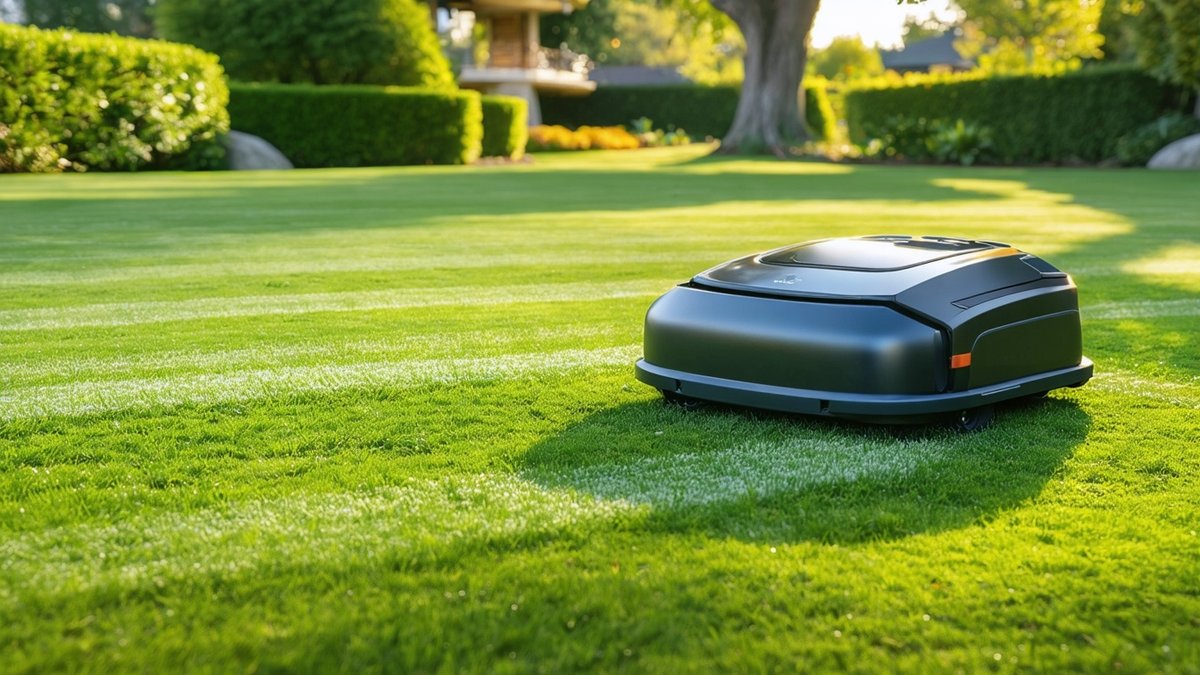
The robotic mower market just got a fresh jolt of innovation as Mammotion UK pulled back the curtain on its newest commercial offering, the Maston, at an exclusive preview event attended by landscape professionals and tech enthusiasts. Positioned as a rugged, high‑capacity answer to the growing demand for autonomous lawn care on large estates, sports fields, and municipal parks, the Maston promises to blend brute‑force cutting power with the refined smarts that have become synonymous with premium robot lawn mowers. If you’ve been watching the evolution of smart mowing solutions and wondering where the next breakthrough will come from, this launch gives a clear glimpse of Mammotion’s strategy to challenge the established players.
Unveiling the Mammotion Maston: A New Contender in Commercial Robotic Mowing
The preview event, held at a sprawling demonstration site in the Midlands, allowed attendees to see the Maston in action across varied terrains — from tightly manicured fairways to uneven, grass‑laden slopes. Mammotion’s UK team emphasized that the machine was engineered not just to mow, but to operate reliably under the rigorous schedules demanded by commercial contractors and grounds‑maintenance teams. With a focus on durability, extended run‑time, and intuitive fleet management, the Maston aims to fill a niche that many existing autonomous lawn mowers either overlook or address only partially.
Unlike many consumer‑focused robot lawn mowers that prioritize quiet operation and compact footprints, the Maston is built on a heavier chassis, features larger drive wheels, and houses a more robust cutting system. This positions it squarely against rivals such as the Husqvarna CEORA series, the Bosch Indego Commercial line, and the newer offerings from John Deere’s Tango autonomous platform. Mammotion’s pitch was clear: deliver commercial‑grade performance without sacrificing the ease‑of‑use and connectivity that modern landscaping professionals have come to expect.
What Sets the Maston Apart? Key Specs at a Glance
- Cutting Width: 22 inches (560 mm) – wider than most residential robots, enabling faster coverage of large areas.
- Maximum Slope Handling: Up to 45% (≈24°) gradient, thanks to high‑torque dual‑drive motors.
- Battery Capacity: 2 kWh lithium‑ion pack, delivering up to 4.5 hours of continuous operation on a single charge.
- Charging Time: Approximately 90 minutes to 80 % via fast‑charge docking station.
- Cutting Height Range: 0.8–4.0 in (20–100 mm) with 10‑step incremental adjustment.
- Navigation System: RTK‑GNSS combined with vision‑based obstacle detection and SLAM mapping for centimeter‑level accuracy.
- Connectivity: LTE‑Cat M1 module, Wi‑Fi fallback, and optional Ethernet for fleet‑management integration.
- Weather Rating: IP65 – dust‑tight and protected against low‑pressure water jets from any direction.
- Weight: Approximately 180 lb (82 kg), providing stability on uneven terrain while still being transportable by two operators.
These specifications highlight the Maston’s ambition to bridge the gap between high‑end residential robots and true industrial‑grade turf equipment. The RTK‑GNSS backbone, for example, is a feature usually reserved for precision agriculture or surveying equipment, giving the Maston a level of positional fidelity that most robot lawn mowers simply cannot match.
Performance and Terrain Capability
During the live demo, the Maston tackled a series of challenging zones that would stall many conventional autonomous mowers. A steep embankment simulating a golf‑course bunker edge was negotiated smoothly, with the machine maintaining consistent blade speed and avoiding slip‑induced drift. On a patch of uneven, previously unmowed grass interspersed with small rocks and hidden irrigation heads, the vision‑based obstacle detection system prompted the mower to slow, reroute, and resume cutting without operator intervention.
Battery endurance proved impressive as well. Even while operating at the maximum cutting width and a moderate height setting, the Maston logged just under four hours before prompting a return‑to‑base signal. Mammotion’s engineers noted that the energy management system dynamically adjusts motor draw based on load, preserving runtime when the grass is lighter and conserving power when encountering thicker growth.
Perhaps most telling for commercial users was the mower’s ability to create and store multiple work zones within a single map. Landscape contractors can delineate separate areas — such as a sports pitch, surrounding walkways, and a decorative flower bed — each with its own cutting schedule and height preferences. The Maston then autonomously switches between zones according to the programmed calendar, reducing the need for manual re‑configuration.
Smart Mowing Tech: Navigation and Connectivity
At the heart of the Maston’s intelligence lies a hybrid navigation architecture. RTK‑GNSS provides a global reference frame with sub‑inch accuracy, while an onboard stereo camera suite and lidar‑like sensors handle local obstacle detection and slip correction. This dual‑layer approach ensures that even if the GNSS signal experiences temporary degradation — say, under dense tree canopy — the mower can rely on its inertial and visual sensors to maintain positional integrity.
Connectivity options were a recurring theme throughout the event. The integrated LTE‑Cat M1 module enables over‑the‑air (OTA) firmware updates, remote diagnostics, and real‑time fleet tracking via Mammotion’s cloud portal. For sites with reliable Wi‑Fi, the mower can switch to that network to conserve cellular data, and an Ethernet port offers a hard‑wired alternative for installations for permanent depots or maintenance garages where wireless interference might be a concern.
User interaction is handled through a companion mobile app and a web‑based dashboard. The app offers intuitive drag‑and‑drop zone mapping, scheduling controls, and push notifications for events such as low battery, blade wear thresholds, or unexpected obstacles. The dashboard extends these capabilities to fleet managers, providing heat‑maps of coverage, utilization reports, and predictive maintenance alerts based on motor vibration and blade load metrics.
How It Stacks Up Against Competitors
When placed side‑by‑side with the current leaders in the commercial robot mower space, the Maston reveals both strengths and areas where it will need to prove itself over time.
- Husqvarna CEORA Series: Husqvarna’s offering leans heavily on a robust gasoline‑hybrid powerplant, granting virtually unlimited runtime but at the cost of higher emissions and noise. The Maston’s fully electric drivetrain delivers quieter operation and zero on‑site emissions — a selling point for municipalities with strict environmental policies — while still offering competitive runtime thanks to its large battery pack.
- Bosch Indego Commercial: Bosch’s platform excels in tight, urban environments thanks to its compact footprint and sophisticated multi‑zone mapping. The Maston, by contrast, sacrifices some maneuverability for wider swaths and steeper slope capability, making it better suited for expansive, open‑area contracts.
- John Deere Tango Autonomous: Deere’s solution integrates deeply with its broader precision‑ag ecosystem, offering seamless data flow between mowing, spraying, and planting equipment. Mammotion’s Maston currently focuses on the mowing function alone but provides an open API that allows third‑party integrations — an attractive feature for landscapers who already use mixed‑brand equipment suites.
- Emerging Entrants: Companies like Greenzie and Yarbo are also pushing AI‑driven vision navigation in the commercial sphere. The Maston’s RTK‑GNSS foundation may give it an edge in environments where visual features are sparse (e.g., newly laid sod or snow‑covered grass), whereas pure‑vision systems can struggle under low‑contrast conditions.
Overall, the Maston appears to carve out a distinct niche: high‑width, high‑slope, electrically powered autonomy with survey‑grade positioning. For contractors whose primary challenge is covering large, undulating tracts efficiently while meeting sustainability goals, the Maston presents a compelling alternative to the traditional gasoline‑powered riders that still dominate many fleets.
Bottom Line: What This Means for You
If you manage a large property, oversee a municipal parks department, or run a landscaping business that handles expansive lawns, the Mammotion Maston merits serious consideration. Its combination of wide cutting swath, strong hill‑climbing ability, and electric‑only operation addresses two of the most common pain points faced by commercial users: reducing fuel‑related operating costs and meeting tightening emissions regulations. The advanced RTK‑GNSS navigation promises reliable, repeatable coverage even in challenging landscapes, while the robust connectivity suite makes fleet oversight straightforward.
Of course, as with any new platform, early adopters will want to scrutinize long‑term durability, service network availability, and real‑world cost of ownership. Mammotion has indicated plans to expand its UK dealer network and offer tiered service contracts that include preventive maintenance, blade replacement, and remote diagnostics — factors that will be crucial for buyers weighing the Maston against established brands that already have entrenched support structures.
For those who prioritize silent, zero‑emission operation and need a machine that can tackle slopes that would stall many consumer robots, the Maston represents a step forward in the evolution of smart mowing. It may not replace every gasoline‑powered rider on the market today, but it offers a viable, increasingly competitive path toward fully autonomous, environmentally responsible lawn care on a commercial scale.
FAQ
Is the Mammotion Maston suitable for residential use?
While the Maston is engineered for commercial demands — wider cutting width, higher slope tolerance, and a more robust build — it can technically operate on large residential estates. However, its size, weight, and price point are generally overkill for typical suburban lawns. Homeowners with expansive properties (several acres) who value low noise and zero emissions might find it appealing, but most residential users will still be better served by mid‑tier robot lawn mowers such as the Husqvarna Automower 450X or the Worx Landroid M.
How does the Maston handle wet grass or rainy conditions?
The Maston carries an IP65 rating, meaning it is protected against dust and low‑pressure water jets from any direction. In light rain or damp grass, the mower’s sensors and motors continue to function normally. Mammotion recommends avoiding operation during heavy downpours or standing water to prevent potential slip hazards and to preserve blade longevity. The unit will automatically return to its dock if it detects excessive moisture that could affect traction or cutting quality.
What kind of maintenance does the Maston require?
Maintenance is relatively straightforward compared to gasoline‑powered equivalents. Key tasks include:
- Checking and sharpening or replacing the cutting blades every 20–30 hours of operation (depending on grass type and conditions).
- Inspecting the drive wheels and tracks for debris buildup after each use.
- Ensuring the docking station’s contacts remain clean for reliable charging.
- Periodic firmware updates via the app or over‑the‑air, which Mammotion pushes out to improve navigation algorithms and battery management.
- Annual inspection of the RTK‑GNSS antenna and vision sensors to confirm calibration integrity.
Because there are no oil changes, fuel filters, or spark plugs, the overall maintenance burden is significantly lower than that of traditional ride‑on mowers, translating to reduced downtime and lower service costs over the machine’s lifespan.
Source: Original Article

Author: AI Mow
Ai Mow is the editorial team behind Ai Mower News, dedicated to bringing you the latest news, reviews, and insights on robotic lawn mowers and smart gardening technology.