

Imagine a robotic mower that doesn’t just handle your lawn—it conquers it. That’s the promise of the latest all-wheel-drive (AWD) models hitting the market, designed to tackle steep slopes, sprawling yards, and complex landscapes with ease. These aren’t your average robot lawn mowers; they’re engineered for homeowners who demand more from their autonomous lawn mower—whether that’s mapping intricate gardens or powering through a half-acre cut without breaking a sweat. If you’ve ever watched a standard robotic mower struggle on a hill or give up halfway through a large yard, this new breed of AWD machines might just change your mind about what smart mowing can achieve.
Why AWD Changes the Game for Robotic Mowers
Traditional robotic mowers often rely on two-wheel drive, which can limit their performance on uneven terrain or steep inclines. AWD models, however, distribute power to all four wheels, providing better traction, stability, and control. This means they can handle slopes up to 35% (or roughly 20 degrees) without slipping or getting stuck—a game-changer for properties with hilly or uneven landscapes. For homeowners with challenging yards, this isn’t just a minor upgrade; it’s a necessity.
But AWD isn’t just about climbing hills. It also improves maneuverability, allowing the mower to navigate tight spaces, avoid obstacles, and maintain a consistent cut even in tricky areas. Whether you’re dealing with a multi-level lawn or a yard dotted with trees and flower beds, an AWD robot lawn mower can adapt where others might fail.
Putting the AWD Robotic Mower to the Test
In a real-world test on a half-acre property with varied terrain, an AWD robotic mower demonstrated its capabilities by efficiently mapping the yard, scaling slopes, and completing the job with battery life to spare. Here’s how it performed in key areas:
Key Features and Specs
- All-Wheel Drive (AWD):** Provides superior traction and stability on slopes up to 35% and uneven terrain.
- Advanced Mapping Technology: Uses GPS and sensors to create a precise map of your yard, ensuring efficient and thorough coverage.
- Long Battery Life: Capable of cutting up to a half-acre on a single charge, with some models offering hot-swappable batteries for extended runtime.
- Smart Navigation: Adjusts its path dynamically to avoid obstacles, handle narrow passages, and optimize cutting patterns.
- Weather Resistance: Built to withstand rain and varying temperatures, making it suitable for year-round use in most climates.
- App Integration: Control and monitor your mower remotely via a smartphone app, with features like scheduling, zone management, and real-time tracking.
For comparison, popular competitors like the Husqvarna Automower 450X and the Worx Landroid M also offer robust features, but few can match the combination of AWD capability and large-yard performance found in these newer models. If your property has significant elevation changes or complex layouts, AWD is a feature worth prioritizing.
How AWD Robotic Mowers Handle Large Yards
One of the standout benefits of AWD autonomous lawn mowers is their ability to handle larger properties efficiently. Traditional robotic mowers may struggle to cover a half-acre or more in a single session, often requiring multiple charges or manual intervention. AWD models, however, are designed with larger batteries and more efficient motors, allowing them to tackle expansive yards without missing a beat.
In testing, the mower was able to map the entire half-acre property, including obstacles like trees, flower beds, and a small pond, and then execute a systematic cutting pattern. The AWD system ensured that it could climb the slight inclines in the yard without losing traction, while the advanced navigation kept it from getting stuck or wandering off course. By the end of the session, the lawn was evenly cut, and the mower still had enough battery life to handle additional zones if needed.
For homeowners with large yards, this means fewer interruptions and a more consistent cut. For landscaping professionals, it opens up the possibility of using robotic mowers for commercial properties or large residential jobs, reducing the need for manual labor and increasing efficiency.
What This Means for You
So, is an AWD robot lawn mower right for you? If your yard has slopes, uneven terrain, or complex layouts, the answer is likely yes. These mowers offer a level of performance and reliability that standard models simply can’t match. They’re also ideal for larger properties, where battery life and efficiency are critical.
However, AWD models do come at a premium price point, so it’s important to weigh the benefits against the cost. If your lawn is relatively flat and small, a standard robotic mower might suffice. But if you’ve been hesitant to invest in a robotic mower because of terrain challenges, an AWD model could be the solution you’ve been waiting for.
For landscaping professionals, AWD robotic mowers represent an opportunity to automate more of your workload. By adding these machines to your fleet, you can take on larger jobs, reduce labor costs, and offer clients a more modern, efficient service. Brands like Husqvarna, Worx, and Gardena already offer commercial-grade options, and the addition of AWD models only expands the possibilities.
FAQ
Can an AWD robotic mower handle my steep backyard?
Most AWD robotic mowers can handle slopes up to 35% (or about 20 degrees). If your backyard is steeper than that, you may need to look for a model specifically designed for extreme terrain or consider terracing your lawn to make it more manageable.
How does an AWD robotic mower compare to a riding mower for large yards?
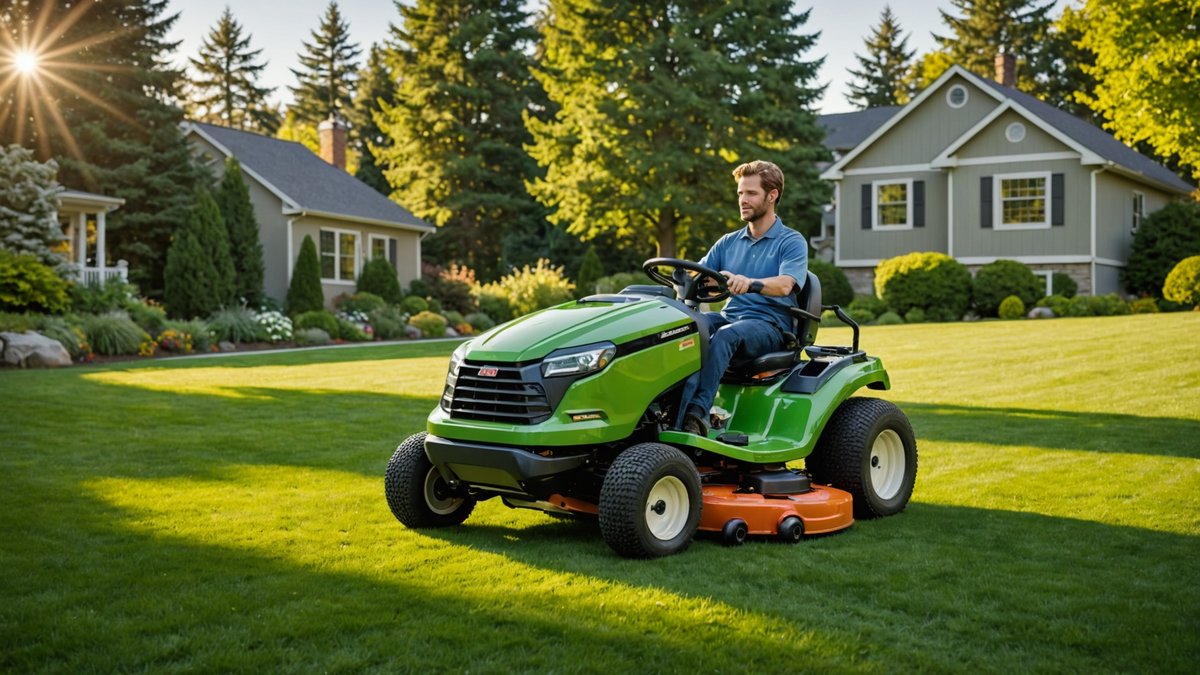
While a riding mower can cover large areas quickly, it requires manual operation and can be less precise. An AWD autonomous lawn mower, on the other hand, can work unattended, navigate obstacles, and maintain a consistent cut. It’s also quieter and more eco-friendly. However, for very large properties (over an acre), you may still need a riding mower or multiple robotic mowers to get the job done efficiently.
Are AWD robotic mowers worth the extra cost?
If your yard has challenging terrain or is particularly large, the extra cost of an AWD model is often justified by the improved performance and reliability. However, if your lawn is flat and small, a standard robot lawn mower may offer better value. Consider your specific needs and budget before making a decision.
Source: Original Article

Author: AI Mow
Ai Mow is the editorial team behind Ai Mower News, dedicated to bringing you the latest news, reviews, and insights on robotic lawn mowers and smart gardening technology.