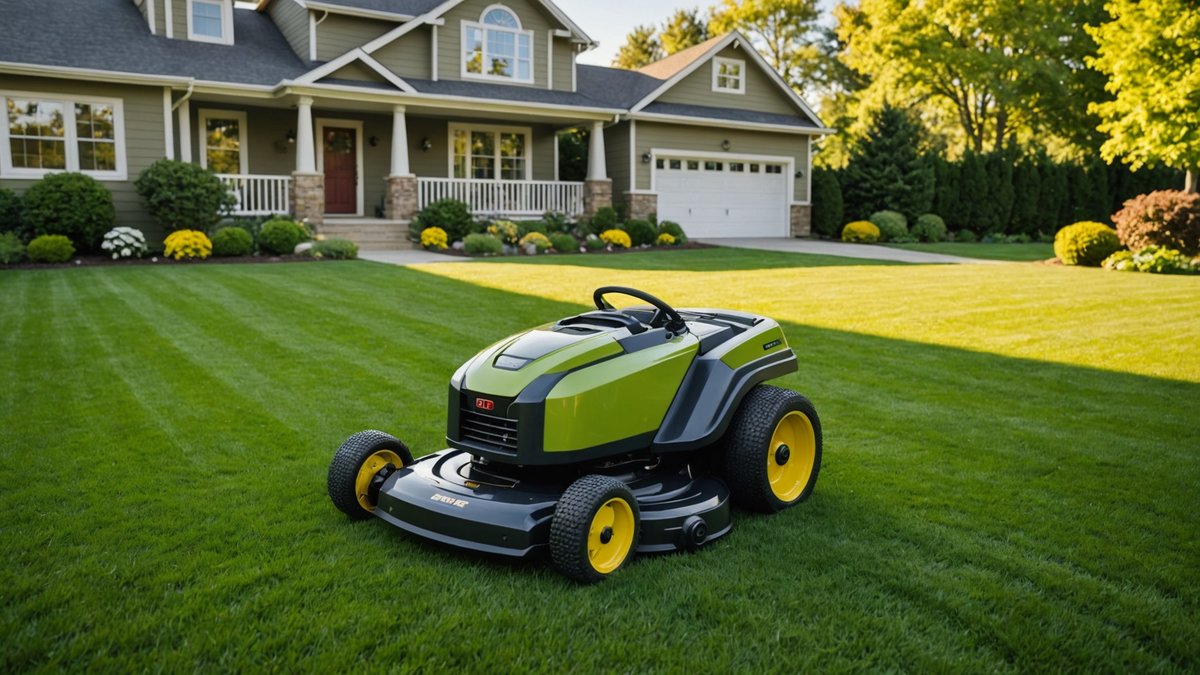
Imagine waking up to a perfectly manicured lawn—every day—without lifting a finger. That’s the promise of the latest generation of robotic mowers, which are smarter, more efficient, and more accessible than ever. As we look ahead to 2026, the competition in the autonomous lawn mower space is heating up, with brands like Husqvarna, Worx, and Gardena pushing the boundaries of what these high-tech helpers can do. Whether you’re a homeowner tired of weekend chores or a landscaping pro exploring fleet automation, here’s what you need to know about the best robot lawn mowers hitting the market.
Why 2026 Is a Turning Point for Robotic Mowers
The smart mowing industry has reached a tipping point. Advances in AI, battery technology, and connectivity are making robotic mowers more reliable, quieter, and capable of handling complex yards. Unlike early models that struggled with slopes, obstacles, or irregular lawn shapes, the 2026 lineup boasts improvements like:
- Multi-zone navigation: Some models can now manage multiple distinct areas of your yard, including front and back lawns, without manual intervention.
- Enhanced obstacle detection: AI-powered sensors and cameras help mowers avoid pets, toys, and even small garden features with greater precision.
- Longer runtime: Thanks to high-capacity lithium-ion batteries, many new autonomous lawn mowers can cover up to 1.5 acres on a single charge.
- Smart home integration: Voice control via Alexa or Google Assistant, along with app-based scheduling, is becoming standard.
These innovations mean that robotic mowers are no longer just a luxury for tech enthusiasts—they’re a practical solution for anyone looking to reclaim their weekends.
Top Contenders for 2026: What Sets Them Apart
While PCMag UK’s roundup highlights some standout models, we’ve dug deeper to bring you the key players shaping the 2026 landscape. Here’s how the leading robotic mowers stack up against one another:
Husqvarna Automower NERA: Husqvarna continues to dominate with its NERA series, which introduces a completely wire-free navigation system. Using a combination of GPS and AI, the NERA can map your lawn without the need for boundary wires—a game-changer for installation ease. It’s ideal for larger properties (up to 2.5 acres) and integrates seamlessly with smart home ecosystems. The trade-off? A premium price tag that may put it out of reach for budget-conscious buyers.
Worx Landroid Vision: Worx is making waves with its Vision series, which uses stereo vision technology to navigate and avoid obstacles. This model is particularly impressive for mid-sized lawns (up to 0.75 acres) and offers a more affordable entry point into smart mowing. It also features a modular design, allowing you to add accessories like a leaf mulching kit. While it lacks the wire-free convenience of the Husqvarna, its obstacle detection is among the best in class.
Gardena Sileno Life: Gardena’s Sileno Life is a strong contender for eco-conscious buyers. It’s one of the quietest robot lawn mowers on the market (just 57 dB), making it perfect for urban or suburban areas with noise restrictions. The Sileno Life also excels in narrow or complex lawns, thanks to its compact design and precise cutting. However, its battery life is slightly shorter than competitors, so it’s best suited for smaller yards (up to 0.5 acres).
Mammotion LUBA: A relative newcomer, Mammotion’s LUBA stands out for its all-terrain capabilities. With large, rugged wheels and a powerful motor, it can handle steep slopes (up to 35%) and uneven terrain that would challenge other models. It’s also one of the few robotic mowers that can tackle tall grass and weeds, making it a favorite among landscaping pros. The downside? Its bulkier design may not be ideal for tight spaces.
For those on a tighter budget, the ECOVACS GOAT G1 offers solid performance at a lower price point. While it lacks some of the advanced features of the Husqvarna or Worx, it’s a reliable option for small to medium lawns (up to 0.4 acres) and includes app-based controls and scheduling.
Key Features to Compare in 2026 Models
With so many options, how do you choose the right autonomous lawn mower for your needs? Here are the critical factors to consider, along with how the top models measure up:
- Lawn Size Capacity:
- Small (up to 0.4 acres): ECOVACS GOAT G1, Gardena Sileno Life
- Medium (0.4–1.5 acres): Worx Landroid Vision, Husqvarna Automower 430X
- Large (1.5+ acres): Husqvarna Automower NERA, Mammotion LUBA
- Navigation System:
- Boundary wire: Most models (e.g., Worx, Gardena)
- Wire-free (GPS/AI): Husqvarna NERA, Mammotion LUBA
- Battery Life:
- Short (1–1.5 hours): Gardena Sileno Life, ECOVACS GOAT G1
- Long (2+ hours): Husqvarna NERA, Worx Landroid Vision
- Obstacle Detection:
- Basic (bumper sensors): Entry-level models
- Advanced (cameras/AI): Worx Landroid Vision, Husqvarna NERA
- Smart Features:
- App control: All major models
- Voice assistant: Husqvarna, Worx, Gardena
- Multi-zone support: Husqvarna NERA, Mammotion LUBA
If you’re a landscaping pro, prioritize models with fleet management capabilities (like Husqvarna’s Automower Fleet Services) or rugged designs (Mammotion LUBA). Homeowners with simple, small lawns can save money with budget-friendly options like the ECOVACS GOAT G1.
What About Installation and Maintenance?
One of the biggest barriers to adopting a robotic mower is the perceived complexity of setup. The good news? It’s easier than ever. Most models require setting up a boundary wire around your lawn, which can be done in a weekend with the included stakes and connectors. Wire-free models like the Husqvarna NERA eliminate this step entirely, using GPS and AI to learn your lawn’s boundaries over time.
Maintenance is similarly straightforward. Here’s a quick checklist to keep your robot lawn mower running smoothly:
- Blade care: Most models use small, pivoting blades that need replacing every few months (or as needed based on wear). Some, like the Worx Landroid, offer self-sharpening blades.
- Cleaning: Regularly clean the undercarriage and wheels to prevent grass buildup. A hose and brush are usually all you need.
- Battery: Lithium-ion batteries typically last 2–4 years. To extend their lifespan, store your mower indoors during winter and avoid leaving it in extreme heat.
- Software updates: Many 2026 models receive over-the-air updates to improve navigation and features. Check the app regularly for updates.
For professional users, look for models with remote diagnostics (e.g., Husqvarna’s Fleet Services) to monitor and maintain a fleet of mowers across multiple job sites.
Bottom Line: What This Means for You
The robotic mower market in 2026 is all about choice. Whether you prioritize cutting-edge navigation, eco-friendliness, or budget-friendly performance, there’s a model to fit your needs. For homeowners, the Worx Landroid Vision and Gardena Sileno Life offer the best balance of features and affordability for most yards. If you’re willing to invest in a premium model, the Husqvarna NERA’s wire-free convenience and smart features are hard to beat.
For landscaping pros, the Mammotion LUBA and Husqvarna’s commercial-grade models provide the durability and scalability needed for fleet automation. Meanwhile, smaller operations or those testing the waters can start with a single unit like the Worx Landroid and expand as needed.
Ultimately, the biggest takeaway is that autonomous lawn mowers are no longer a niche product—they’re a mainstream solution for anyone tired of the hassle of traditional mowing. As prices continue to drop and features improve, 2026 might just be the year you let a robot take over your lawn care.
FAQ: Robotic Mowers in 2026
Are robotic mowers worth the investment?
For most homeowners, yes—especially if you value your time. A robot lawn mower can save you 5–10 hours per month during the growing season, and the cost (typically $800–$3,000) often pays for itself within 2–3 years compared to hiring a lawn service. Plus, the convenience of a always-manicured lawn is hard to put a price on.
Can a robotic mower handle slopes and uneven terrain?
It depends on the model. Most robotic mowers can handle gentle slopes (up to 20%), but for steeper or uneven terrain, look for models like the Mammotion LUBA (35% slope capacity) or Husqvarna Automower NERA, which are designed for challenging landscapes. Always check the manufacturer’s specs for maximum slope ratings.
Do I need a smart home setup to use a robotic mower?
No, but it enhances the experience. Most autonomous lawn mowers come with their own app for scheduling and control, which works independently of smart home systems. However, models like the Husqvarna Automower and Worx Landroid can integrate with Alexa, Google Assistant, or other platforms for voice control and automation, adding an extra layer of convenience.
Source: Original Article

Author: AI Mow
AI Mow is the AI-assisted news desk of AI Mower News. It monitors manufacturer announcements, trade shows and industry sources, and drafts stories in our editorial voice. Every article is checked against its original source before publication — our fact gate holds anything that claims testing we did not do or specs the source does not support — and is published under this byline for transparency. How we work: https://aimowernews.com/editorial-guidelines/ · The people behind it: https://aimowernews.com/our-team/