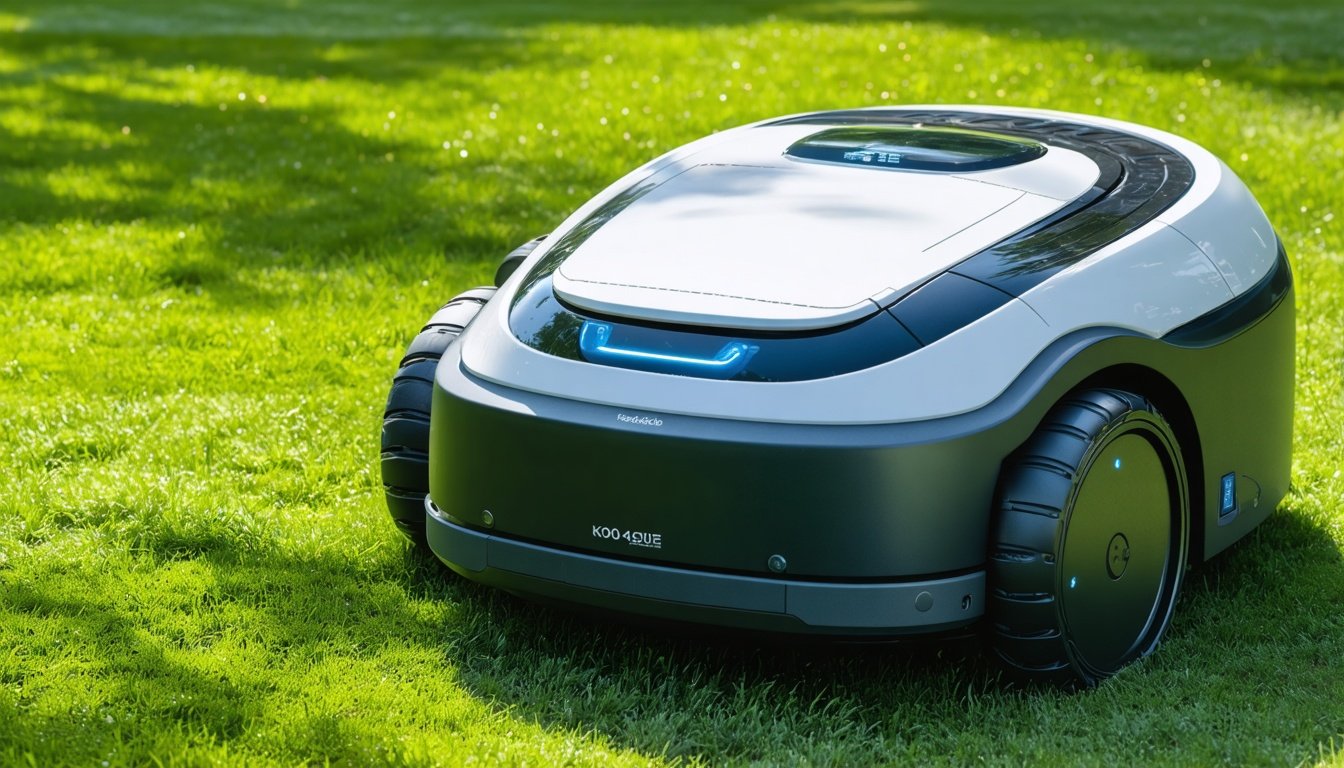
The robotic lawn mower revolution has officially gone mainstream. With over 3 million gardens now maintained autonomously worldwide, this isn’t just a niche tech trend anymore—it’s a permanent fixture in modern lawn care. As homeowners and professional landscapers embrace the efficiency of smart mowing, the question isn’t whether robotic mowers are here to stay, but how they’ll continue reshaping outdoor maintenance for the better.
## How These Machines Achieve Precision Without Human Help
Robotic mowers rely on a blend of smart technology and mechanical engineering to keep lawns pristine. Here’s how they work:
– **Boundary Wires or Virtual Perimeters**: Most systems use underground wires or GPS-based virtual lines to map the garden, ensuring the mower stays within designated areas. Newer models, like the Ecska RoboMower X900, offer wireless setup using app-based boundary mapping.
– **Advanced Sensors**: Obstacle detection, rain sensors, and slope management allow mowers like the Husqvarna Automower to adapt to diverse terrains and weather conditions.
– **AI-Driven Patterns**: Instead of random cutting, modern robotic mowers use algorithms to methodically cover lawns, minimizing overlap and maximizing efficiency.
– **Charging Automation**: When battery levels dip, mowers return to their charging stations, ensuring uninterrupted operation.
This combination of features explains why robotic mowers have become the go-to solution for busy homeowners and scalability-focused landscapers.
## Benefits Beyond Convenience: Why Homeowners Are Switching
The 3 million-garden milestone isn’t just a number—it reflects a growing trust in robotic mowers’ ability to deliver tangible benefits:
– **Time Savings**: Regain hours each week by automating lawn care. For professionals, this means servicing more clients without hiring additional staff.
– **Environmental Impact**: Electric robotic mowers eliminate gas emissions and reduce noise pollution compared to traditional equipment.
– **Cost Efficiency**: While upfront costs exist (ranging from $1,500 to $4,000 for high-end models), long-term savings on fuel, maintenance, and labor add up.
– **Consistent Results**: Unlike human error, robotic mowers maintain uniform cutting heights and patterns, keeping lawns healthier over time.
For example, the Worx Landroid L6 all-electric model has become a favorite among eco-conscious users, while the Husqvarna Automower Magnetic Series remains a gold standard for large properties.
## Key Market Players and Competitors Driving Adoption
Several brands are leading the charge in this booming market:
### Top Robotic Mower Brands in 2024
– **Husqvarna Automower**: Known for reliability and advanced AI, ideal for lawns up to 1 acre.
– **Ecska RoboMower**: Budget-friendly with wireless setup options.
– **Worx Landroid**: Excellent for complex terrains and tight spaces.
– **DeWalt DRC820**: A durable option for commercial use, favored by landscapers.
These brands aren’t just competing on features—they’re innovating to address pain points like installation complexity and security concerns. For instance, Husqvarna’s anti-theft GPS tracking and Ecska’s affordable entry-level models are widening accessibility.
## What This Means for You: Homeowners and Professionals
Whether you’re a homeowner or a landscaping pro, the rise of robotic mowers presents opportunities:
### For Homeowners:
– **Start Small**: Entry-level models like the Ecska X500 work well for yards under 0.5 acres.
– **Think Long-Term**: While installation requires effort, the ROI in time and money is significant over 3–5 years.
– **Check Compatibility**: Ensure your lawn’s layout and Wi-Fi coverage support autonomous operation.
### For Professionals:
– **Fleet Integration**: Models like the DeWalt DRC820 are designed for commercial use, reducing labor costs.
– **Upsell Opportunities**: Offer robotic mower installation and maintenance packages to clients.
As the market grows, expect more hybrid solutions (e.g., robotic mowers paired with leaf blowers) and tighter integration with smart home ecosystems.
## Frequently Asked Questions (FAQs)
### How Safe Are Robotic Mowers Around Pets and Children?
Modern models come with sharp blade guards, anti-collision sensors, and GPS tracking. While supervised use is recommended, they’re generally safe for family environments.
### Do Robotic Mowers Work on Slopes or Uneven Terrain?
Most high-end models handle slopes up to 35%, thanks to four-wheel drive systems. Check specs for gradient limits before purchasing.
### Can I Install a Robotic Mower Myself?
Basic installations (like boundary wire setup) can be DIY, but complex layouts or commercial systems may require professional help. Brands like Husqvarna offer certified installers through their networks.
The 3 million-garden milestone is more than a statistic—it’s proof that robotic mowers have transcended novelty to address real-world needs. As AI and smart mowing technology continue evolving, the focus will shift toward making these systems even more intuitive, affordable, and eco-friendly. For homeowners, it’s a chance to reclaim time; for pros, it’s a pathway to scaling operations without sacrificing quality. Either way, the future of lawn care is undeniably autonomous.
Source: Original Article

Author: AI Mow
AI Mow is the AI-assisted news desk of AI Mower News. It monitors manufacturer announcements, trade shows and industry sources, and drafts stories in our editorial voice. Every article is checked against its original source before publication — our fact gate holds anything that claims testing we did not do or specs the source does not support — and is published under this byline for transparency. How we work: https://aimowernews.com/editorial-guidelines/ · The people behind it: https://aimowernews.com/our-team/