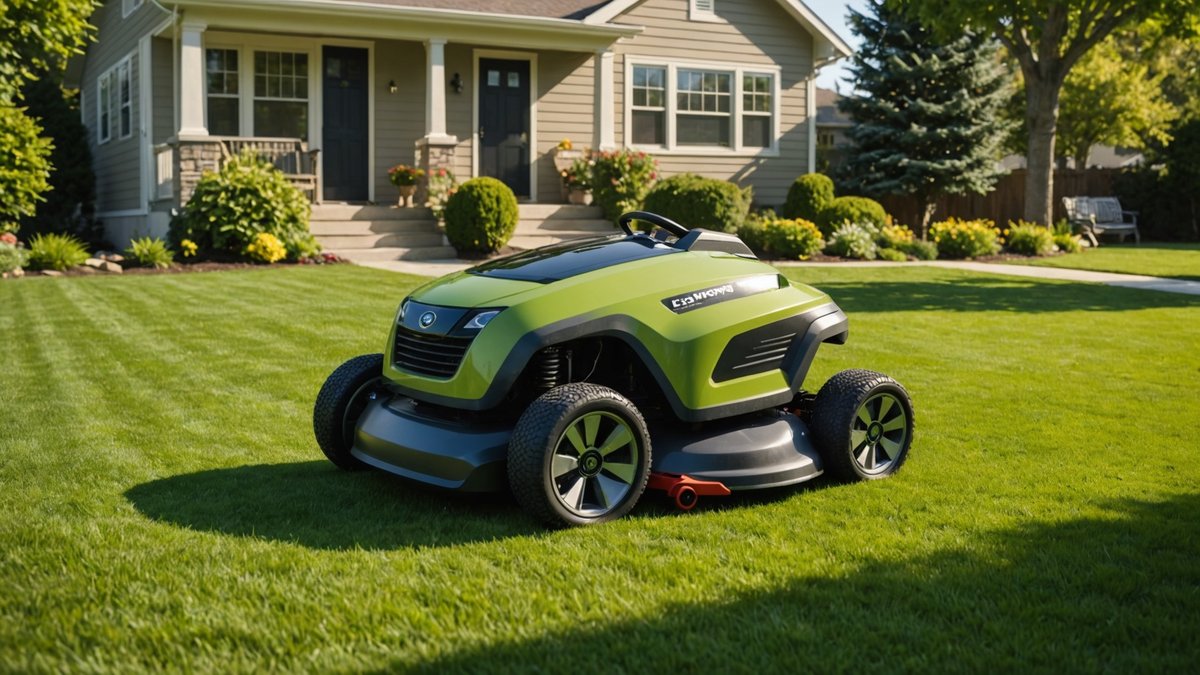
Imagine a robotic mower that doesn’t just follow a buried wire or rely on a meticulously mapped yard—it thinks for itself. Lawnova is turning this vision into reality with its second-generation autonomous lawn mower, unveiled at spoga+gafa 2024. This isn’t just another incremental upgrade; it’s a bold step toward truly smart mowing, where AI replaces boundary wires and manual setup with intuitive, obstacle-dodging autonomy. For homeowners tired of installation hassles and pros seeking scalable fleet solutions, this could be a game-changer.
The Evolution: From First Gen to AI-Powered Freedom
Lawnova first made waves with its debut robot lawn mower, which promised wireless convenience but still leaned on traditional perimeter definitions. The new model flips the script entirely. By leveraging advanced computer vision, ultrasonic sensors, and AI-driven path planning, it navigates yards without physical boundaries or pre-mapped zones. Think of it like a self-driving car for your lawn—scanning, learning, and adapting in real time.
This shift addresses one of the biggest pain points in robotic mower adoption: the tedious setup. Competitors like Husqvarna Automower and Worx Landroid still dominate with wire-based systems, while brands like Mammotion’s LUBA series offer wire-free alternatives using RTK-GPS. Lawnova’s approach, however, skips external signals entirely, relying on onboard intelligence. For landscaping pros managing multiple properties, this could slash deployment time and costs.
How It Works: The Tech Behind Boundary-Free Mowing
The second-gen Lawnova doesn’t just avoid wires—it redefines how a robot lawn mower interacts with its environment. Here’s the breakdown:
- AI Vision System: High-resolution cameras and machine learning identify lawn edges, obstacles (from pet toys to garden hoses), and even terrain changes like slopes or flower beds.
- Ultrasonic Sensors: These detect nearby objects in real time, allowing the mower to slow down, reroute, or stop entirely—critical for safety around kids or pets.
- Adaptive Cutting Patterns: The AI adjusts mowing paths based on grass growth, weather conditions, and yard layout, optimizing efficiency and battery life.
- No Base Station Required: Unlike many autonomous lawn mowers, Lawnova’s model can return to a designated charging spot (or even a portable dock) without needing a fixed installation.
- App Integration: Users can monitor progress, adjust schedules, or override settings via a smartphone app, with over-the-air updates to improve AI performance over time.
This level of autonomy puts Lawnova in direct competition with other wire-free innovators, like the Mammotion LUBA 2 (which uses RTK for precision) or the Segway Navimow (GPS + vision hybrid). The key difference? Lawnova’s reliance on pure onboard AI could make it more versatile in urban yards with signal interference or complex layouts.
Why This Matters for Homeowners and Pros
For the average homeowner, the appeal is obvious: smart mowing without the headache. No digging trenches for boundary wires. No fussing with GPS base stations. Just place the mower, define your lawn via the app, and let it learn the rest. It’s a compelling pitch for tech-savvy buyers who want a robotic mower that’s as plug-and-play as a Roomba.
For landscaping professionals, the implications are even bigger. Fleet automation is the holy grail of commercial lawn care, and wire-free, self-navigating mowers could unlock:
- Faster Deployments: No need to install perimeter wires at each client’s property—just drop the mower and go.
- Scalability: Manage dozens of mowers across multiple sites with minimal setup time.
- Reduced Theft Risk: Without a fixed base station, mowers can be moved or locked away more easily.
- Data-Driven Insights: AI-powered mowers can report on lawn health, coverage gaps, or even predict maintenance needs.
Of course, challenges remain. Battery life, precision in dense foliage, and initial cost are hurdles Lawnova will need to address. But if the tech delivers on its promises, it could accelerate the shift toward fully autonomous lawn mowers in both residential and commercial markets.
spoga+gafa Spotlight: What the Industry Is Saying
Lawnova’s return to spoga+gafa—the world’s leading garden trade fair—wasn’t just about showcasing a product. It was a statement. The show, held in Cologne, Germany, is where brands like Stihl, Gardena, and Honda debut their latest innovations. By presenting a wire-free, AI-driven mower, Lawnova is positioning itself as a disruptor in a space dominated by legacy players.
Early reactions from attendees suggest excitement, particularly around the mower’s ability to handle irregularly shaped yards—a common gripe with wire-based systems. Some pros, however, remain skeptical about AI’s reliability in all conditions, especially in large, open commercial spaces where GPS-based systems (like those from Stoelting or Mean Green) might still hold an edge.
Bottom Line: Should You Wait for Lawnova’s Next Move?
If you’re in the market for a robotic mower today, Lawnova’s second-gen model isn’t widely available yet—but it’s worth watching closely. For homeowners prioritizing ease of use, this could be the first truly hassle-free option. For pros, it’s a glimpse into the future of fleet automation, though early adopters may still prefer hybrid systems (like Segway’s Navimow H150E) that combine vision and GPS for maximum reliability.
One thing is clear: The bar for smart mowing just got higher. As AI continues to evolve, expect more brands to follow Lawnova’s lead, making boundary wires a relic of the past.
FAQ
How does Lawnova’s AI mower compare to wire-based robotic mowers?
Wire-based mowers (like Husqvarna Automower or Robomow) rely on buried perimeter wires to define mowing zones, which requires installation but offers precise control. Lawnova’s AI model eliminates wires entirely, using cameras and sensors to navigate dynamically. This makes setup easier but may require more processing power and battery life. For simple, open lawns, wire-based systems are still highly reliable. For complex or frequently changing yards, AI-driven mowers could be more flexible.
Is a wire-free robotic mower safe for pets and kids?
Yes—Lawnova’s ultrasonic sensors and AI are designed to detect and avoid obstacles, including pets and children. However, as with any autonomous lawn mower, it’s wise to supervise initial runs and keep small pets indoors during operation. The mower’s blades are also designed to stop immediately if lifted or tilted, adding an extra layer of safety.
When will Lawnova’s second-gen mower be available, and what’s the expected price?
Lawnova hasn’t announced a firm release date or pricing yet, but based on industry trends, expect it to hit the market in late 2024 or early 2025. Pricing for wire-free, AI-powered robot lawn mowers typically ranges from $2,000 to $4,000, depending on features and battery capacity. For comparison, the Mammotion LUBA 2 starts around $2,500, while commercial-grade models can exceed $5,000.
Source: Original Article

Author: AI Mow
AI Mow is the AI-assisted news desk of AI Mower News. It monitors manufacturer announcements, trade shows and industry sources, and drafts stories in our editorial voice. Every article is checked against its original source before publication — our fact gate holds anything that claims testing we did not do or specs the source does not support — and is published under this byline for transparency. How we work: https://aimowernews.com/editorial-guidelines/ · The people behind it: https://aimowernews.com/our-team/