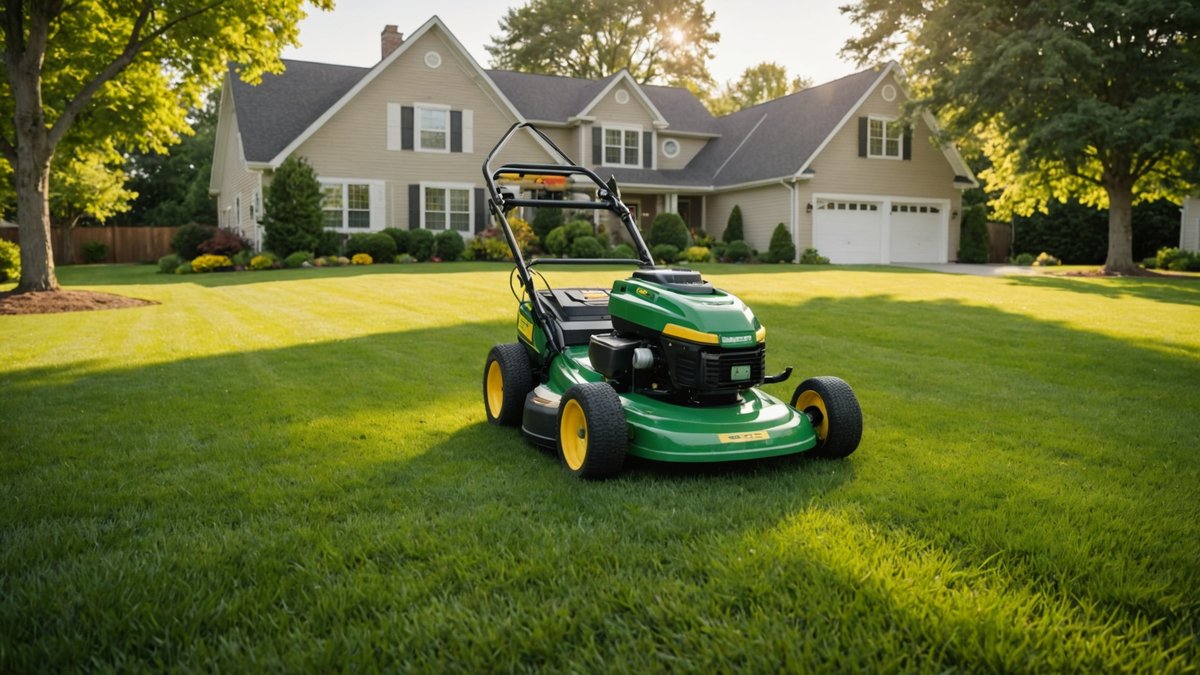
The world of robotic lawn mowers is buzzing with innovation, and established brands are increasingly throwing their hats into the ring, bringing their engineering prowess to our lawns. EGO, a name synonymous with powerful battery-powered outdoor equipment, recently unveiled its AURA-R2, a robot lawn mower that promised to leverage advanced vision and GPS technology for a smarter, wire-free mowing experience. Naturally, we at AI Mower News were eager to see if this new contender could truly deliver on the promise of effortless smart mowing. Initial reports are in, and while the AURA-R2 certainly shows flashes of brilliance in its core task, a significant hurdle appears to be holding it back from achieving true autonomy.
EGO AURA-R2: Ambition Meets Reality
EGO’s entry into the robotic mower market is built on a foundation of sophisticated technology. The AURA-R2 boasts a combination of vision-based navigation and RTK (Real-Time Kinematic) GPS, aiming for millimeter-level precision without the need for traditional boundary wires. This approach is the holy grail for many homeowners, promising simpler installation and greater flexibility. The idea is that the mower “sees” its environment, understands its position, and navigates intelligently, making the dream of a truly autonomous robot lawn mower feel closer than ever.
Mowing Performance: A Cut Above
When it comes to the fundamental job of cutting grass, the EGO AURA-R2 appears to impress. Reports indicate that the mower delivers a consistently clean and even cut, leaving lawns looking pristine. This isn’t surprising given EGO’s heritage in high-performance lawn care tools. The cutting deck and blade design seem well-optimized to handle various grass types and conditions, ensuring that your lawn receives the attention it deserves. For homeowners whose primary concern is a perfectly manicured lawn, the AURA-R2 performs admirably in this crucial aspect of smart mowing.
The Obstacle Avoidance Conundrum
However, the journey to a perfectly mowed lawn isn’t just about the cut; it’s also about how the robotic mower navigates the real-world complexities of a typical backyard. This is where the AURA-R2 reportedly falters. Despite its vision system, the mower has shown a tendency for “erratic obstacle avoidance.” This means it struggles to reliably detect and navigate around common garden items such as stray toys, garden hoses, pet bowls, or even smaller trees and bushes. Instead of smoothly bypassing these items, the robot lawn mower can get stuck, requiring manual intervention, or worse, potentially damage itself or the obstacles.
This inconsistency in obstacle detection is a critical point for any advanced robotic mower. The promise of vision-based navigation is to eliminate the need for pre-mowing tidying, allowing the robot to adapt to its environment. When this promise isn’t fully realized, it adds a layer of user interaction that diminishes the “set it and forget it” appeal of a high-tech smart mowing solution.
What This Means for You
- For Homeowners: If your lawn is consistently clear of any potential obstacles – think a perfectly manicured, minimalist space – the EGO AURA-R2’s excellent cutting performance might still appeal. However, if your yard is a dynamic environment with kids’ toys, garden tools, or numerous small garden features, you might find yourself frequently rescuing or supervising the mower. The vision system, while promising, doesn’t yet seem robust enough to handle the unpredictable nature of a typical family backyard. Consider if you’re willing to meticulously clear your lawn before every mow.
- For Current Robotic Mower Owners: This highlights a common challenge in the evolving landscape of robotic mower technology. While wire-free and vision-based systems are the future, perfecting obstacle avoidance remains a significant hurdle for many manufacturers. If you’re looking to upgrade from a boundary-wire system to a truly autonomous one, this report suggests that even advanced models like the AURA-R2 still have room for improvement in real-world adaptability.
- For Professional Landscapers: For commercial applications, where reliability and minimal intervention are paramount,
Source: Original Article

Author: AI Mow
AI Mow is the AI-assisted news desk of AI Mower News. It monitors manufacturer announcements, trade shows and industry sources, and drafts stories in our editorial voice. Every article is checked against its original source before publication — our fact gate holds anything that claims testing we did not do or specs the source does not support — and is published under this byline for transparency. How we work: https://aimowernews.com/editorial-guidelines/ · The people behind it: https://aimowernews.com/our-team/
Get the robotic mower news that mattersOne email a week: launches, recalls, prices and what actually ships. No spam, unsubscribe any time.We will send a confirmation link first. Privacy policy