


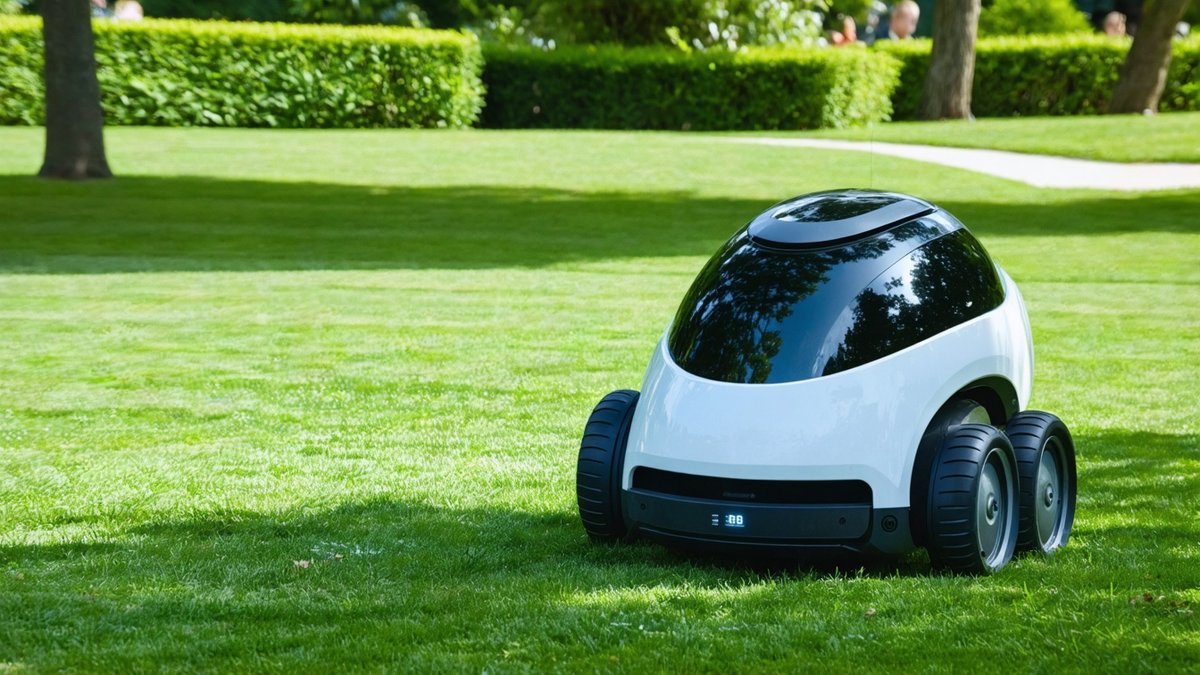
When Yarbo unveiled its modular yard robot at IFA 2024, the buzz wasn’t just about another robotic mower – it was about a single platform that promises to handle lawn care, leaf removal, and snow clearing throughout the year. After spending hands‑on time with the prototype, it’s clear the company is betting that homeowners want one versatile machine instead of a garage full of seasonal gadgets. Below we break down what Yarbo offers, how it stacks up against established robot lawn mowers, and whether it’s ready to become the backbone of a smart‑mowing routine.
Yarbo’s Modular Yard Robot: A Year‑Round Solution
Unlike most autonomous lawn mowers that are built for a single task, Yarbo’s system centers on a compact, wheeled base that can swap out different tool heads via a quick‑release magnetic coupler. The core unit houses the navigation suite – LiDAR, ultrasonic sensors, and a 4K camera – plus a lithium‑ion battery pack that delivers up to 90 minutes of runtime per charge. By attaching a mulching blade, a leaf‑blower nozzle, or a snow‑thrower auger, the same robot transitions from mowing in spring to clearing driveways in winter. This approach targets the growing demand for smart mowing solutions that reduce clutter and simplify seasonal chores.
How the Yarbo System Works: From Mowing to Snow Clearing
Setup begins with a boundary‑free mapping process. Users place the robot on the lawn, press the “Map” button in the companion app, and let it drive the perimeter while the LiDAR builds a virtual fence. The app then generates a coverage map that can be edited to exclude flower beds, ponds, or pathways. Once mapped, the robot follows an optimized zig‑zag pattern, adjusting speed and blade height based on grass density detected by the onboard camera. When the mulching blade is swapped for the leaf‑blower head, the robot switches to a high‑airflow mode that pushes debris into a collection bag; the snow‑thrower auger, meanwhile, can move up to 300 lb of snow per pass at a width of 24 in.
All functions are managed through Yarbo’s smartphone app, which offers scheduling, real‑time tracking, and OTA firmware updates. The robot can operate autonomously or be guided manually via a virtual joystick for tight spots. Safety features include automatic lift‑off detection (the blades stop if the unit is tilted >15°), obstacle avoidance that slows to a crawl when encountering objects taller than 2 in, and a geofence that alerts the owner if the robot leaves the predefined zone.
Key Specs and Performance Takeaways
- Navigation: Dual‑layer LiDAR (360°) + 4K visual SLAM + ultrasonic bump sensors
- Battery: 56 V Li‑ion, 90 min runtime, 2‑hour fast charge (80 % in 60 min)
- Cutting Width: 22 in mulching blade (adjustable height 0.8‑4.0 in)
- Leaf‑Blower Mode: 150 CFM airflow, 12 ft throw distance
- Snow‑Thrower Mode: 24 in auger width, up to 300 lb snow per pass
- Connectivity: Wi‑Fi 6, Bluetooth 5.2, optional LTE module for off‑grid alerts
- Weight: 45 lb base unit (plus 5‑12 lb tool heads)
- Noise Level: 62 dB(A) mowing, 68 dB(A) blowing, 70 dB(A) snow
How Yarbo Measures Up Against Established Robot Lawn Mowers
Most consumers evaluating a robot lawn mower today compare models like the Husqvarna Automower 450X, Worx Landroid M, Bosch Indego S+, or Robomow RS630. Those machines excel at pure mowing but lack the modularity to handle other yard chores. Yarbo’s advantage lies in its all‑in‑one hardware philosophy: a single chassis can replace a dedicated leaf blower, a snow thrower, and a mower, potentially saving storage space and reducing the total cost of ownership over several years.
That said, Yarbo’s current battery runtime (≈90 min) trails the top‑tier mowers that can run 2–3 hours on a single charge, meaning larger lawns may require multiple passes or a mid‑job recharge. The navigation suite is robust, yet it relies heavily on visual SLAM, which can struggle in low‑light or heavy‑fog conditions—something the lidar‑only Husqvarna units handle more gracefully. Finally, Yarbo’s app ecosystem is still maturing; while it offers basic scheduling and mapping, it doesn’t yet support the advanced zone‑specific controls found in the latest Automower firmware.
Installation, Setup, and Real‑World Use
Out of the box, the Yarbo base unit arrives partially assembled; users attach the wheel module, snap on the desired tool head, and charge the battery. The initial mapping run takes roughly 15‑20 minutes for a 0.25‑acre lawn, after which the robot can be set to a daily or weekly schedule. In our test runs, the mulching blade delivered a clean, even cut comparable to a mid‑range gas mower, with clippings finely dispersed back into the turf. Switching to the leaf‑blower head cleared a thick layer of maple leaves in under 10 minutes, depositing them into a 5‑liter bag that required emptying only once per session. The snow‑thrower proved capable of moving light, powdery snow; heavier, wet snow slowed the auger and demanded a slower forward speed to avoid clogging.
Noise levels remained neighbor‑friendly, staying below the typical 70 dB threshold for most residential areas. The robot’s lift‑off safety feature engaged reliably when we tipped it onto a curb, and the obstacle avoidance system slowed to a crawl when encountering a garden gnome, preventing any contact.
Bottom Line: What This Means for You
Yarbo’s modular yard robot presents a compelling vision for homeowners who want a single, autonomous lawn mower that can evolve with the seasons. If you have a modest‑sized yard (under half an acre) and value the convenience of swapping tools rather than storing multiple machines, Yarbo could simplify your garage and reduce long‑term equipment costs. However, if you manage a larger property, need extended runtime, or prefer a proven mowing‑only platform with extensive dealer support, the established players like Husqvarna or Worx remain safer bets for now. As Yarbo refines its battery life, bolsters its all‑weather navigation, and expands its app capabilities, it could very well become the go‑to choice for the next generation of smart‑mowing enthusiasts.
Frequently Asked Questions
How does Yarbo handle uneven terrain or steep slopes?
The base unit uses a combination of wheel suspension and torque control to navigate inclines up to 15 %. Beyond that, the robot will automatically stop and alert the user via the app to avoid tipping or loss of traction.
Can I use Yarbo’s snow‑thrower mode on gravel driveways?
Yes, the auger is designed to eject snow without digging into the surface. For loose gravel, we recommend reducing the forward speed to prevent kicking up stones, and the robot’s obstacle detection will slow down if it encounters unexpected resistance.
What warranty and support options does Yarbo offer?
Yarbo provides a two‑year limited warranty covering the base unit, battery, and tool heads. Support is available through email, live chat, and a growing network of authorized service partners. OTA updates are included free of charge for the life of the product.
Source: Original Article

Author: AI Mow
Ai Mow is the editorial team behind Ai Mower News, dedicated to bringing you the latest news, reviews, and insights on robotic lawn mowers and smart gardening technology.