


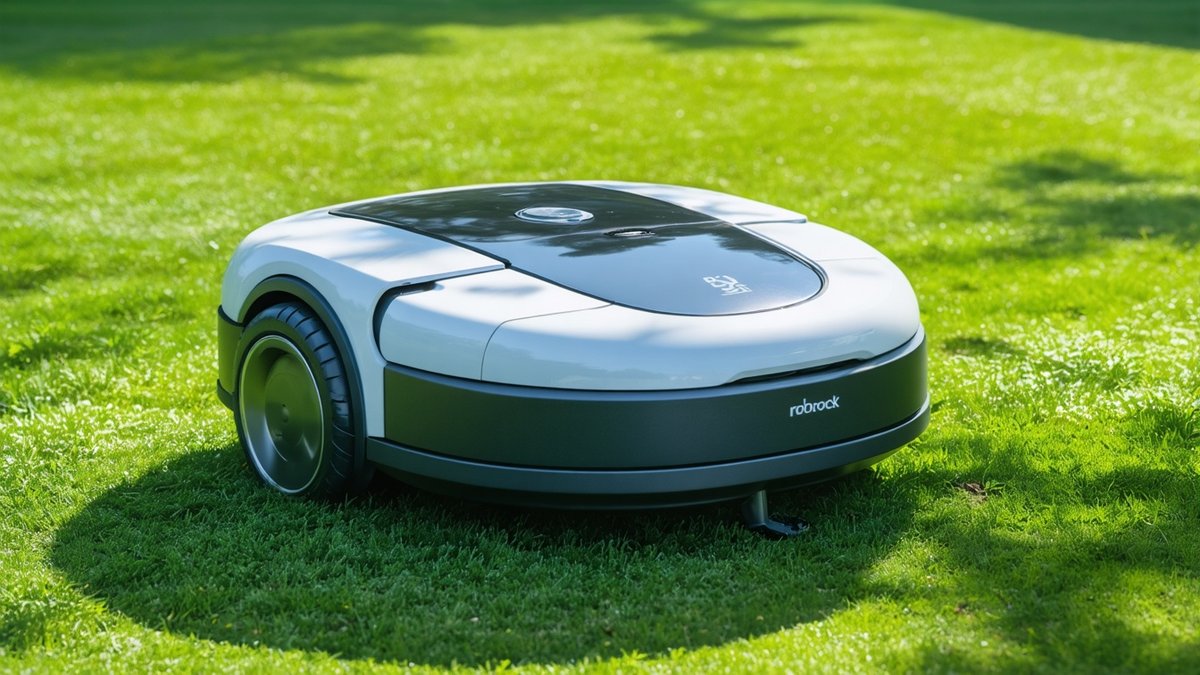
Roborock, best known for its high‑performance vacuum robots, is stepping into two new outdoor domains with the launch of its first-ever pool cleaner and a brand‑new robot lawn mower. The announcements signal the company’s ambition to become a one‑stop shop for smart home automation, extending its expertise in navigation and AI‑driven cleaning to the backyard and the poolside. For homeowners and landscaping professionals alike, the move raises interesting questions about performance, ease of use, and how Roborock’s offerings stack up against established players in the robotic mower and pool‑cleaning markets.
Why Roborock’s Move Matters
The robotic lawn mower market has been growing steadily, driven by consumer demand for hands‑free yard maintenance and advances in battery life, GPS‑based navigation, and obstacle avoidance. Roborock’s entry is notable because the company brings a proven track record of reliable SLAM (Simultaneous Localization and Mapping) technology from its indoor robots, which could translate into more precise mowing patterns and fewer missed spots. At the same time, its debut pool cleaner suggests a broader strategy: leveraging core competencies in water‑proof design, sensor fusion, and app‑based control to tackle another pain point for homeowners.
The New Roborock Pool Cleaner: First Look
Roborock’s inaugural pool cleaner is a cordless, battery‑powered unit designed for both in‑ground and above‑ground pools. Key highlights include:
- Hybrid suction‑brush system: A rotating brush loosens debris while a powerful pump draws it into a filter cartridge, aiming to handle everything from fine sand to leaves.
- Intelligent navigation: Utilizing a combination of inertial measurement units (IMU) and wall‑following sensors, the device maps the pool’s perimeter and adjusts its path to ensure full coverage.
- App‑integrated controls: Through the Roborock app, users can schedule cleaning cycles, select cleaning modes (quick, deep, or spot), and receive real‑time status updates.
- Battery life: Up to 150 minutes of continuous operation on a single charge, with automatic return‑to‑dock when power runs low.
Compared to established pool‑cleaning robots such as the Dolphin Nautilus CC Plus or the Polaris Vac‑Sweep 280, Roborock’s model emphasizes ease of setup (no hose connections) and a sleek, low‑profile design that stores vertically when docked. Early hands‑on previews note quieter operation—a welcome trait for poolside relaxation.
Introducing the Roborock Robot Lawn Mower
The star of the announcement is Roborock’s first autonomous lawn mower, positioned as a mid‑range option for suburban lawns up to roughly 0.5 acres. Here’s what sets it apart:
Key Specs and Features
- Cutting width: 20 cm (8 in) dual‑blade system.
- Battery: 5.0 Ah lithium‑ion, delivering up to 90 minutes of runtime.
- Navigation: Vision‑based SLAM combined with RTK‑enhanced GPS for centimeter‑level accuracy.
- Obstacle avoidance: 360° ultrasonic and infrared sensors plus a front‑facing camera to detect pets, toys, and garden furniture.
- Rain sensor: Automatically pauses mowing and returns to the dock when precipitation is detected.
- App and voice control: Full scheduling, zone management, and firmware updates via the Roborock app; compatible with Alexa and Google Assistant.
- Safety: Lift and tilt sensors that instantly stop the blades if the unit is tipped or picked up.
Roborock claims the mower’s AI can learn the layout of a yard over the first few runs, optimizing paths to reduce overlap and minimize energy consumption. The company also highlights a “quiet mode” that lowers blade speed for noise‑sensitive neighborhoods, targeting a sound level below 58 dB(A).
How It Stacks Up Against the Competition
Entering a crowded field, Roborock will need to differentiate itself from established brands such as:
- Husqvarna Automower 430X: A premium option known for rugged build, excellent hill handling (up to 45% slope), and extensive dealer network.
- Worx Landroid M: Popular for its modular DIY installation and affordable price point, though it relies on boundary wires.
- iRobot Terra: Leverages iRobot’s mapping expertise but requires a physical boundary wire for precise edge control.
- Gardena Sileno City: Offers strong smartphone integration and a reputation for quiet operation.
Roborock’s wire‑free RTK‑plus‑vision approach could appeal to users who dislike laying perimeter wire, a common pain point with many competitors. However, the reliance on vision and RTK may raise questions about performance in heavily shaded yards or under dense tree canopies where GPS signals degrade. Early tester feedback suggests the mower handles moderate shade well, but extreme conditions may still trigger a fallback to random‑pattern mowing.
Pricewise, Roborock has positioned its mower at roughly $799 (USD), placing it below the Husqvarna 430X (~$1,200) but above the Worx Landroid M (~$650). The value proposition hinges on the out‑of‑the‑box ease of setup and the added convenience of app‑driven zone cleaning—a feature still absent in several lower‑cost rivals.
Bottom Line: What This Means for You
For homeowners tired of dragging out a push mower or wrestling with boundary wires, Roborock’s new robot lawn mower offers a compelling blend of modern navigation tech and user‑friendly app controls. If your yard is relatively open, free of steep slopes, and you value a quick, wire‑free installation, the Roborock unit could simplify weekend chores while delivering a crisp, even cut.
Professional landscapers managing multiple client properties might appreciate the mower’s ability to store multiple maps in the cloud, enabling fast redeployment across different sites. However, for large commercial lots or properties with challenging terrain, the current battery runtime and slope limits may still make dedicated commercial‑grade units (like Husqvarna’s professional line) a safer bet.
On the pool side, Roborock’s cleaner enters a market where convenience and quiet operation are strong selling points. Its cordless design and intelligent navigation could reduce the hassle of handling hoses and tangled cables, especially for owners of smaller to medium‑sized pools. While it may not yet match the brute‑force suction of purpose‑built commercial pool robots, it addresses a growing consumer desire for “set‑and‑forget” backyard maintenance.
Overall, Roborock’s expansion underscores a trend: the same AI and sensor technologies that revolutionized indoor cleaning are now making their way outdoors. As the ecosystem matures, expect tighter integration between mowers, pool cleaners, irrigation controllers, and even smart lighting—all controllable from a single smartphone app.
FAQ
Does the Roborock robot mower require a boundary wire?
No. The mower uses a combination of RTK‑enhanced GPS and vision‑based SLAM to navigate, eliminating the need for physical perimeter wiring. Users simply place the docking station, run an initial mapping session via the app, and the device learns the yard’s layout.
How does the pool cleaner handle debris like leaves and twigs?
Its hybrid suction‑brush system first agitates debris with a rotating brush, then draws the loosened material into a filter cartridge. The filter is easy to remove and rinse, and the unit is designed to handle typical pool debris including leaves, small twigs, and sand.
Can I use the Roborock mower and pool cleaner together with the same app?
Yes. Both devices appear under the same Roborock account in the mobile app, allowing you to set schedules, monitor battery levels, and receive alerts for each unit from a single interface. Voice‑assistant commands (Alexa/Google Assistant) can also control both products.
Source: Original Article

Author: AI Mow
Ai Mow is the editorial team behind Ai Mower News, dedicated to bringing you the latest news, reviews, and insights on robotic lawn mowers and smart gardening technology.