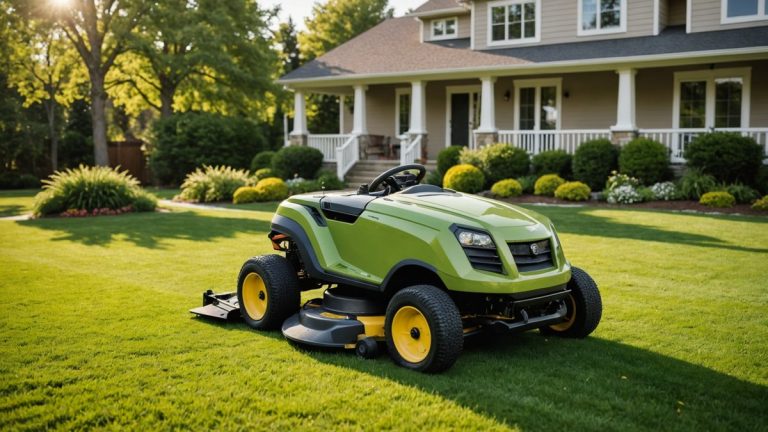
If you’ve ever wondered whether a robotic mower would send your electricity bill soaring—or if it’s actually more efficient than your old gas guzzler—you’re not alone. As autonomous lawn mowers become a staple in smart homes, energy consumption is a top concern for eco-conscious and budget-savvy homeowners alike. The good news? These high-tech helpers sip power compared to traditional mowers, but the real story lies in how they use it.
Understanding the Energy Appetite of Robotic Mowers
Unlike their gas-powered counterparts, robot lawn mowers run on rechargeable lithium-ion batteries, typically drawing power from a standard 100-240V household outlet. The energy they consume depends on several factors: the size of your lawn, the mower’s battery capacity, charging frequency, and even the terrain. Most models operate on a “mow-and-recharge” cycle, returning to their docking station automatically when the battery dips below a certain threshold.
On average, a mid-range robotic mower like the Husqvarna Automower or Worx Landroid consumes between 5 to 20 watts per hour while actively mowing. Over a full charge cycle (which may last 60-90 minutes for smaller models or up to 3 hours for commercial-grade units), the total energy draw is surprisingly modest—often less than a standard light bulb left on overnight.
Real-World Power Consumption: What to Expect
Let’s break down the numbers for a typical suburban lawn (around 5,000 sq. ft.). A well-configured autonomous lawn mower might:
- Mow for 1-2 hours per day during peak growing season, using 10-40Wh of electricity per session.
- Charge 2-3 times per day, adding another 50-150Wh depending on battery size (e.g., 18V vs. 56V systems).
- Consume ~1-2 kWh per week in total, translating to roughly $0.15–$0.30 in electricity costs (based on U.S. average rates of $0.15/kWh).
For comparison, a gas mower burns through 0.5–1 gallon of fuel per hour, costing $2–$4 per hour to operate—not to mention the environmental impact. Over a season, the savings (both financial and ecological) can be substantial.
Pro tip: Models like the Gardena Sileno or Stihl iMow offer energy-efficient modes for smaller lawns, further reducing consumption. Larger properties (10,000+ sq. ft.) may require a heavy-duty unit like the MamMotion Luba, which has a higher energy draw but still pales next to riding mowers.
Factors That Influence Energy Use
Not all smart mowing systems are created equal. Here’s what can push your robotic mower’s power usage up or down:
- Lawn Size and Complexity: Steep slopes, obstacles, or dense grass force the mower to work harder, increasing battery drain.
- Battery Capacity: Higher-voltage batteries (e.g., 40V or 56V) store more energy but take longer to charge. A Ryobi 40V model, for example, may need more frequent top-ups than a Echo 56V.
- Cutting Schedule: Frequent, short mowing sessions (recommended for robot lawn mowers) are more efficient than infrequent, long ones.
- Weather Conditions: Wet grass or extreme heat can reduce battery efficiency, requiring more charging cycles.
- Smart Features: GPS navigation, app connectivity, and rain sensors add minimal overhead but improve overall efficiency by optimizing mowing patterns.
How Robotic Mowers Stack Up Against the Competition
If energy efficiency is your priority, robotic mowers outperform nearly every alternative:
- Gas Mowers: No contest. Gas models emit CO2, require fuel, and need oil changes—all while guzzling energy at 10x the rate of a robotic mower.
- Electric Push/Corded Mowers: These use 500–1,500W per hour, far more than a robotic mower’s daily total. However, they don’t require charging infrastructure.
- Manual Reel Mowers: The most eco-friendly option (zero energy use!), but they’re labor-intensive and impractical for large lawns.
- Solar-Powered Robotic Mowers: A niche but growing category (e.g., Husqvarna’s solar-assisted models). These reduce grid reliance but may struggle in cloudy climates.
For professional landscapers, fleets of autonomous lawn mowers can cut fuel costs by up to 90% compared to traditional equipment, according to a 2023 study by the National Association of Landscape Professionals. Brands like Mean Green Mowers offer commercial-grade robotic solutions designed for all-day operation with minimal energy overhead.
What This Means for You
Bottom line: Robotic mowers are among the most energy-efficient lawn care tools on the market. For the average homeowner, the annual electricity cost of running one is less than $20—often offset by savings on gas, maintenance, and even fertilizer (since frequent, mulched clippings improve soil health).
If you’re on the fence, consider this:
- Eco-Friendly: Zero emissions and minimal energy use make robot lawn mowers a green choice.
- Cost-Effective: Lower operating costs than gas or electric push mowers over time.
- Low-Maintenance: No oil changes, spark plugs, or fuel stabilizers—just occasional blade sharpening and battery care.
- Time-Saving: Reclaim hours each week while your mower handles the work autonomously.
For landscaping pros, the math is even clearer. Switching to autonomous mowers can reduce overhead, improve scalability, and appeal to eco-conscious clients. Just be sure to calculate your property’s specific needs—larger areas may require multiple units or a model with extended runtime.
FAQ
How much does it cost to run a robotic mower per month?
For a typical 5,000 sq. ft. lawn, expect to spend $1–$5 per month on electricity, depending on your local rates and mowing frequency. Commercial users may see higher costs but still save significantly compared to gas-powered fleets.
Can I use a robotic mower if I have solar panels?
Absolutely! Pairing a smart mowing system with solar panels can make your lawn care nearly energy-neutral. Some models (like those from Husqvarna) even offer solar-assisted charging stations to further reduce grid reliance.
Are there any robotic mowers that don’t need electricity?
Not yet. While solar-powered options exist, they still require some grid electricity for consistent operation, especially in low-sunlight conditions. Fully off-grid autonomous lawn mowers are an emerging trend, but they’re not yet mainstream.
Source: Original Article

Author: AI Mow
Ai Mow is the editorial team behind Ai Mower News, dedicated to bringing you the latest news, reviews, and insights on robotic lawn mowers and smart gardening technology.