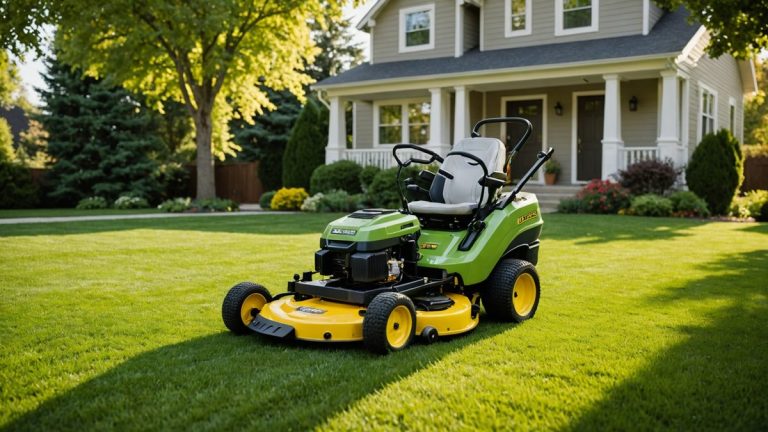
Imagine this: a crisp weekend morning, coffee in hand, the gentle sway of a hammock beneath you—while your lawn mows itself. No roar of an engine, no sweat, no wasted hours pushing a heavy machine. That’s the promise of the latest wave of robotic mowers, and after putting one to the test, it’s clear this isn’t just a futuristic fantasy. The era of autonomous lawn mowing is here, and it’s smarter, quieter, and more efficient than ever. But does it live up to the hype for everyday homeowners? Let’s dig in.
Why a Robotic Mower Might Be Your Next Yard Upgrade
The idea of a robot lawn mower isn’t new, but today’s models are a far cry from the clunky, unreliable prototypes of a decade ago. Modern smart mowing machines like the ones from Husqvarna, Worx, or Gardena are packed with GPS, AI-driven navigation, and weather sensors to keep your lawn pristine with minimal input. The model tested in the Wales Online review (likely a mid-range unit like the Husqvarna Automower 430X or similar) demonstrated just how seamless the experience can be—once it’s set up correctly.
For homeowners tired of the weekly chore or landscaping pros looking to automate routine maintenance, these machines offer a compelling alternative. They’re not just about convenience; they also promote healthier lawns by mowing frequently (often daily during peak growth) and mulching clippings back into the soil as natural fertilizer.
How It Works: The Tech Behind the Magic
At first glance, a robotic mower looks like a Roomba for your yard—but the technology under the hood is far more sophisticated. Here’s how it typically operates:
- Boundary Wires or GPS: Most models use a thin perimeter wire to define the mowing area, though newer high-end units (like the Husqvarna NERA or Mammotion Luba) leverage GPS and AI for wire-free navigation.
- Random or Systematic Patterns: Entry-level mowers often use a random bounce pattern, while advanced models (e.g., Worx Landroid) employ systematic, grid-like paths for more even coverage.
- Obstacle Detection: Bump sensors, ultrasonic detectors, or cameras help the mower avoid trees, rocks, or your kid’s forgotten toys.
- Weather Adaptability: Rain sensors or app-based weather integration pause mowing during downpours to avoid muddy ruts or damage.
- App Control: Most autonomous lawn mowers pair with a smartphone app (iOS/Android) to adjust schedules, check battery levels, or even start/stop the mower remotely—yes, from a hammock.
- Battery Life: Lithium-ion batteries typically last 60–120 minutes per charge, with the mower automatically returning to its dock to recharge.
The test model in the review likely handled a medium-sized lawn (up to 0.5 acres) with ease, though larger properties may require a higher-capacity unit like the Stihl iMow RMI 632.
Real-World Performance: Pros and Cons
So, how did it fare in practice? Based on the review’s enthusiasm, here’s what stood out:
✅ The Good
- Time Savings: The most obvious perk—no more dedicating weekend hours to mowing. The robot handles it all, even while you’re at work or asleep.
- Quiet Operation: Unlike gas mowers that can hit 90+ decibels, robotic mowers hum along at around 60 decibels (similar to a conversation), making them neighbor-friendly.
- Consistent Results: Frequent, small cuts (a technique called “frequent mulching”) lead to a lush, even lawn without the stress of missed patches.
- Eco-Friendly: No gas, no emissions, and reduced water usage (thanks to mulched clippings retaining moisture).
❌ The Trade-Offs
- Initial Setup: Installing the boundary wire can be a weekend project in itself, especially for complex yards with flower beds or slopes. Some pros offer installation services for an added cost.
- Upfront Cost: Entry-level models start around $800–$1,200, while premium units (like the Ambrogio L25 Elite) can exceed $3,000. That’s a big investment compared to a $300 push mower.
- Maintenance: Blades need replacing every few months, and the mower’s underside requires occasional cleaning to prevent grass buildup.
- Limitations: Steep slopes (over 20–25 degrees), very tall grass, or yards with frequent obstacles (e.g., dog toys, hoses) can challenge some models.
How It Compares to the Competition
The robot lawn mower market is heating up, with brands vying to out-innovate each other. Here’s how the tested model stacks up against popular alternatives:
- Husqvarna Automower 430X: A top pick for its reliability, GPS-assisted navigation, and app integration. Best for medium to large lawns (up to 0.8 acres).
- Worx Landroid M: Budget-friendly (under $1,000) with a user-friendly app and modular design. Great for small to medium yards.
- Gardena Sileno Life: Focuses on quiet operation and eco-credentials, with a battery made from recycled materials.
- Mammotion Luba: A newer wire-free option with AI-powered navigation, ideal for complex lawns with islands or obstacles.
For commercial landscapers, fleet options like the Husqvarna Automower Professional series or Belrobotics’ BigMow can automate large areas, reducing labor costs.
What This Means for You
Bottom Line: If you’re ready to reclaim your weekends and don’t mind the initial setup and cost, a robotic mower is a game-changer. It’s not a “set it and forget it” miracle—you’ll still need to monitor it, clear debris, and perform basic maintenance—but the payoff in time and lawn quality is undeniable.
For landscaping pros, integrating autonomous lawn mowers into your service offerings could be a major differentiator. Clients love the idea of a perfectly manicured lawn without the hassle, and it frees up your crew for higher-value tasks like landscaping or hardscaping.
If you’re on the fence, consider starting with a rental or a lower-cost model (like the Ryobi 40V HP) to test the waters before committing to a premium unit.
FAQ: Robotic Mowers Demystified
### Are robotic mowers safe for pets and kids?
Yes—most models are designed with safety in mind. They automatically stop if lifted or tilted, and their blades are small and spin at low speeds (unlike a traditional mower’s whirling blade). However, it’s still wise to supervise young children and pets until they’re accustomed to the mower’s movements.
### Can a robotic mower handle slopes or uneven terrain?
It depends on the model. Many robot lawn mowers can tackle slopes up to 20–25 degrees (about a 45% grade), but steeper hills may require a specialized unit like the Robomow RS630, which handles inclines up to 35 degrees. Always check the manufacturer’s specs for your yard’s terrain.
### How much does it cost to maintain a robotic mower?
Annual maintenance costs are relatively low—typically $50–$150 for replacement blades, brushes, and occasional battery checks. Some brands offer subscription services (e.g., Husqvarna’s Fleet Services) for automated software updates and diagnostics, which can add $10–$20/month for commercial users.
Source: Original Article

Author: AI Mow
Ai Mow is the editorial team behind Ai Mower News, dedicated to bringing you the latest news, reviews, and insights on robotic lawn mowers and smart gardening technology.