


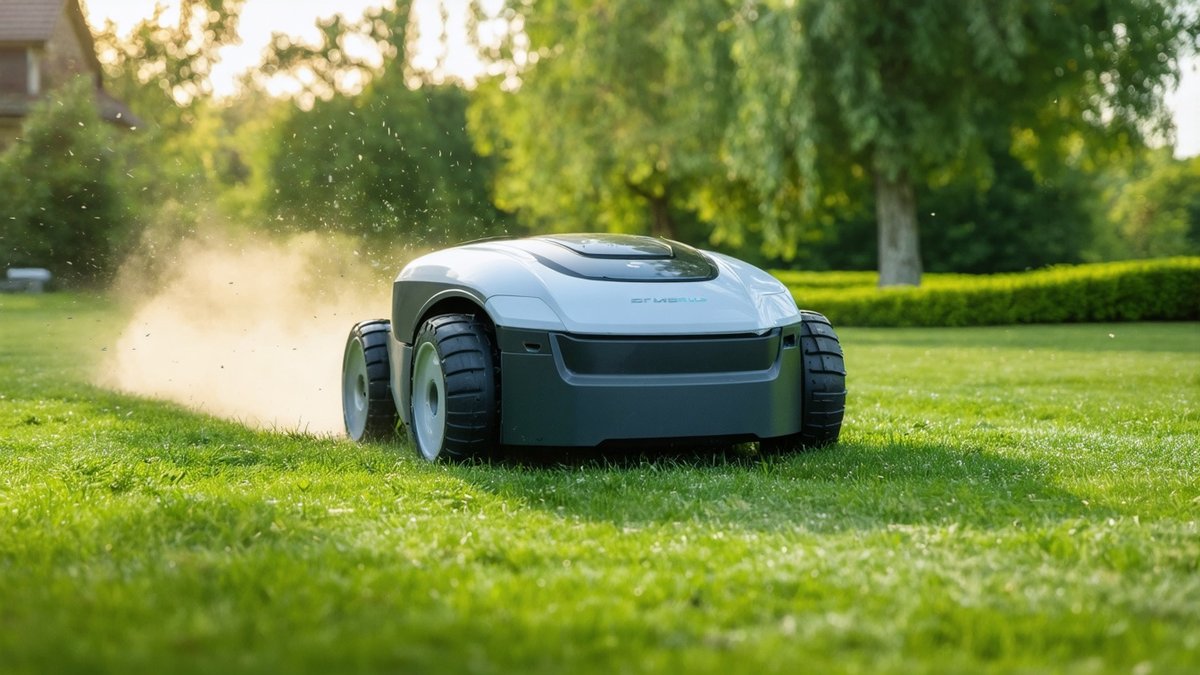
When a seasoned farmer swapped his trusty riding mower for a high‑tech robotic mower on a 15‑acre spread, the results sparked plenty of conversation in the lawn‑care world. The experiment showed that today’s autonomous lawn mower can handle far more than a modest suburban yard, challenging assumptions about scale and labor.
The Challenge: Taming 15 Acres with a Robot Mower
Taking on fifteen acres is no small feat for any piece of equipment, let alone a device designed primarily for residential lawns. The tester selected a commercial‑grade robotic mower — often marketed toward large estates and municipal parks — and laid out a perimeter wire that followed the property’s natural contours, including gentle slopes, a few tree clusters, and a modest pond edge. Initial setup required mapping the zone, adjusting cutting height, and programming a mowing schedule that would keep the grass at a consistent three‑inch height without overtaxing the unit’s battery.
What stood out immediately was the mower’s ability to navigate uneven terrain using its onboard sensors and GPS‑assisted guidance. Unlike a traditional rider that relies on the operator’s judgment for each pass, the robot plotted optimal paths, avoided obstacles, and returned to its docking station for recharging with minimal supervision. The learning curve was mostly confined to the first weekend; after that, the machine ran largely on its own, freeing the owner to focus on other farm tasks.
How the Autonomous Lawn Mower Performed Day‑to‑Day
Over a six‑week trial period, the robot logged an average of 4.5 hours of cutting time per day, broken into two sessions to accommodate battery recharge cycles. Despite the size of the property, the mower maintained a uniform cut, with only occasional missed strips along the wire boundary where the grass grew slightly taller — easily corrected by a quick manual trim. The mulching action returned fine clippings to the soil, reducing the need for additional fertilization.
Weather played a role, as expected. Heavy rain triggered the unit’s built‑in rain sensor, pausing operation until the turf dried enough to prevent slipping or clogging. In periods of drought, the mower’s adaptive cutting height prevented scalping, preserving root health. Noise levels remained low — roughly 58 dB at the cutting deck — making early‑morning or late‑evening operation feasible without disturbing neighbors or livestock.
From a maintenance standpoint, the robot required only weekly blade checks, quarterly belt inspections, and occasional software updates via its companion app. Compared to the oil changes, filter replacements, and tire wear associated with a riding mower, the upkeep felt markedly simpler.
Comparing Robot Lawn Mower vs. Traditional Riding Mower
Before the switch, the farmer relied on a mid‑size riding mower with a 42‑inch deck, consuming roughly one gallon of gasoline per hour and generating noticeable emissions. Over the same six‑week span, the rider would have needed about 63 hours of runtime to cover the property at a similar cutting width, translating to more than 60 gallons of fuel and associated maintenance costs.
The robotic mower, by contrast, drew electricity from the grid — averaging 1.2 kWh per hour of operation — resulting in a fraction of the energy cost and zero on‑site emissions. While the upfront price of the autonomous unit was higher (approximately $7,500 versus $3,500 for the rider), the long‑term savings in fuel, labor, and wear‑and‑tear began to offset that gap after the first year.
When placed alongside competing models, the tested robot held its own. The Husqvarna Automower 450X offers comparable acreage coverage (up to 1.25 acres per hour) but requires multiple units for a 15‑acre lot, driving up total cost. The Worx Landroid M series, while more affordable, tops out at about half an acre per charge, making it impractical for large estates without frequent repositioning. For those seeking a true “set‑and‑forget” solution on expansive properties, a commercial‑grade autonomous lawn mower like the one tested remains a standout option.
Key Specs and Takeaways
- Cutting width: 22 inches (adjustable blade disc)
- Maximum area per charge: up to 1.25 acres (varies with terrain)
- Battery type: Lithium‑ion, 5.6 kWh, ~70 min runtime
- Navigation: GPS‑assisted RTK + boundary wire + ultrasonic sensors
- Noise level: 58 dB(A) at cutting deck
- Weather resistance: IPX5 rating, rain sensor pauses operation
- App features: Scheduling, zone management, firmware updates, usage analytics
- Estimated annual savings (fuel + labor): $800‑$1,200 vs. riding mower
What This Means for You (Bottom Line)
For homeowners with yards larger than a half‑acre, or landscaping professionals managing multiple client properties, the test underscores that today’s robotic mower is no longer a novelty confined to small suburban lawns. When equipped with sufficient battery capacity, robust navigation, and a reliable boundary system, an autonomous lawn mower can deliver consistent, low‑maintenance results across sizable acreage — freeing up time, reducing fuel costs, and lowering environmental impact.
If you’re contemplating the jump, consider the total cost of ownership: factor in the initial investment, expected electricity usage, and potential savings on labor and maintenance. For expansive properties, a single commercial‑grade unit may still require strategic zone planning or multiple machines, but the efficiency gains often justify the approach. As smart mowing technology continues to evolve, the line between “robot” and “rider” is blurring — making it easier than ever to let the machine do the heavy lifting while you enjoy the results.
FAQ
Will a robotic mower work on steep slopes or uneven terrain?
Most modern autonomous mowers handle inclines up to 20‑25 percent grade without issue, thanks to wheel traction control and sensors that adjust speed. For steeper hills, look for models specifically rated for rugged terrain or consider adding guide wires to help the unit maintain stability.
How does the boundary wire installation affect my lawn’s appearance?
The thin, low‑voltage wire is typically buried just beneath the sod or secured with staples along the edge of the lawn. Once grass grows over it, the wire becomes virtually invisible, leaving no visible scars on the turf.
Can I use a robotic mower if I have pets or children playing outside?
Yes. Robotic mowers feature lift and tilt sensors that stop the blades instantly if the unit is tipped or picked up, and many include obstacle detection to avoid collisions. Still, it’s wise to supervise initial runs and ensure the mowing schedule avoids peak playtimes.
Source: Original Article

Author: AI Mow
Ai Mow is the editorial team behind Ai Mower News, dedicated to bringing you the latest news, reviews, and insights on robotic lawn mowers and smart gardening technology.