

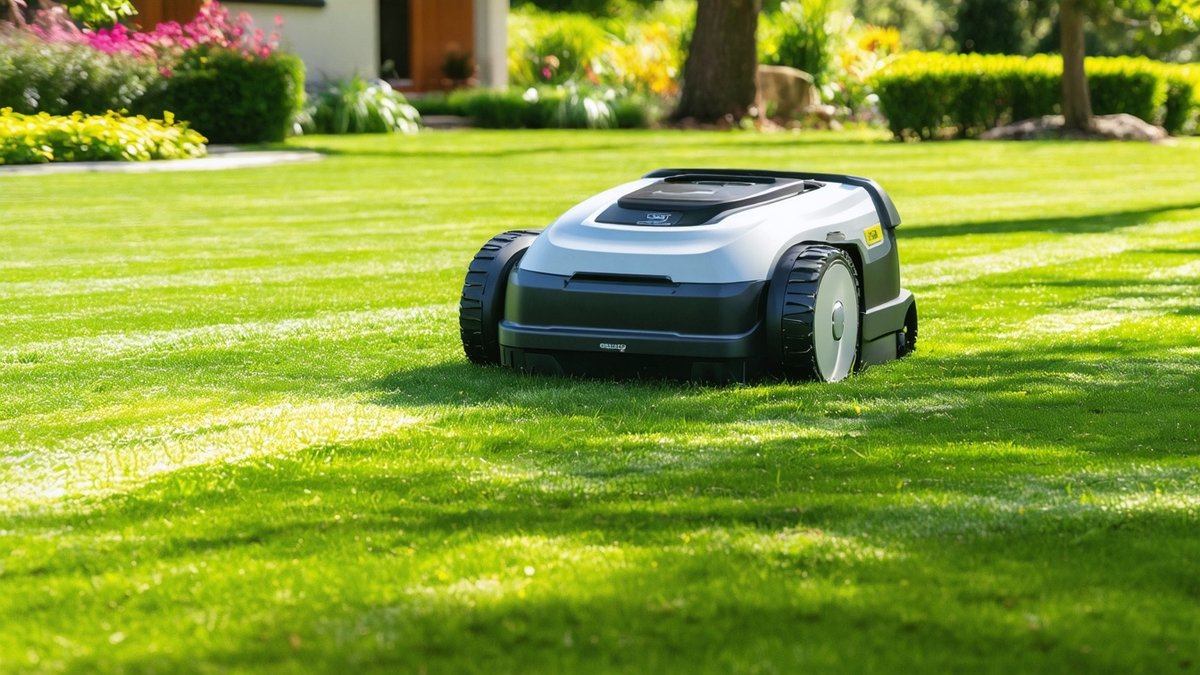
The latest regulatory nod from the Federal Communications Commission clears the way for Husqvarna to roll out a new generation of robotic mowers equipped with enhanced communication and navigation tech in the United States. This conditional FCC approval signals that the Swedish brand’s upcoming autonomous lawn mower models can operate on the frequencies needed for tighter fleet coordination, over‑the‑air updates, and richer smart‑home integration. For homeowners and landscaping pros alike, the move promises a step‑forward in reliability, safety, and the overall smart mowing experience.
What the FCC Conditional Approval Covers
The FCC’s decision isn’t a blanket green light; it’s a conditional clearance that allows Husqvarna to test and eventually sell specific radio‑frequency modules inside its next‑gen robotic mower platforms. Those modules enable the mowers to talk to Husqvarna’s cloud services, receive real‑time firmware upgrades, and communicate with boundary‑wire alternatives such as GPS‑RTK or vision‑based systems. By securing this approval early, Husqvarna can avoid costly redesigns later and accelerate the rollout of features that rely on reliable, low‑latency wireless links — something that has become a differentiator in the crowded robot lawn mower market.
Why This Matters for Husqvarna’s Product Roadmap
Husqvarna has long been a leader in the premium segment of robotic mowers, with its Automower® line setting benchmarks for cut quality and terrain handling. The FCC clearance paves the way for the company to introduce models that support:
- Dual‑band Wi‑Fi/Bluetooth for seamless smartphone app control
- Cellular LTE‑M/NB‑IoT modules for fleets operating beyond Wi‑Fi range
- Enhanced GPS‑RTK positioning for centimeter‑level accuracy without perimeter wire
- Over‑the‑air (OTA) firmware updates that can add new mowing patterns or safety features
- Integration with smart‑home ecosystems like Alexa, Google Assistant, and Apple HomeKit
These capabilities align with the broader industry shift toward smart mowing and autonomous lawn mower solutions that require constant data exchange. By locking in the necessary radio approvals now, Husqvarna can focus its engineering resources on refining cutting decks, battery efficiency, and obstacle‑avoidance algorithms rather than wrestling with certification hurdles later.
Key Specs and Takeaways from the Approved Platform
While Husqvarna hasn’t released the full spec sheet for the forthcoming models, the FCC filing gives us a clear glimpse of the hardware that will underpin the next wave of Automower® units. Below are the most salient points derived from the approval documents:
- Operating frequencies: 2.4 GHz ISM band (Wi‑Fi/Bluetooth) and 900 MHz ISM/sub‑GHz for long‑range telemetry
- Maximum transmitted power: 20 dBm on the sub‑GHz link, ensuring reliable communication up to several hundred feet in open yards
- Modulation schemes: OFDM for Wi‑Fi, GFSK for Bluetooth, and BPSK/QPSK for cellular IoT — chosen to balance bandwidth and power consumption
- Built‑in spectrum monitoring to avoid interference with other wireless devices, a requirement for FCC conditional approval
- Security: AES‑128 encryption on all over‑the‑air commands, protecting against unauthorized access or hijacking
These technical details suggest that the upcoming mowers will be capable of maintaining a steady connection even in larger properties or complexes where Wi‑Fi alone might falter — a clear advantage over many robot lawn mower competitors that rely solely on short‑range wireless.
How Husqvarna Stacks Up Against the Competition
The robot lawn mower arena is more crowded than ever, with several brands vying for the same tech‑savvy homeowner and professional landscaping segments. Here’s how Husqvarna’s FCC‑cleared platform compares to some of the main alternatives:
- Robomow RS Series – Offers strong cutting power and a rugged build, but its communication suite is limited to basic Wi‑Fi and lacks cellular fallback, making large‑area fleet management more cumbersome.
- Worx Landroid M/L – Known for modular accessories and a user‑friendly app, yet still depends primarily on Wi‑Fi; no announced LTE‑M/NB‑IoT options.
- Ambrogio Longevity Series – Excels in navigation with vision‑based obstacle avoidance, but its radio approvals are region‑specific, and U.S. rollout has lagged behind Europe.
- Honda Miimo HRM Series – Honda’s strength lies in reliability and dealer support, though its connectivity features remain relatively basic compared to the upcoming Husqvarna spec.
- Segway Navimow H Series – Recently launched with GPS‑RTK and no perimeter wire; its communication relies on a proprietary sub‑GHz link, but the FCC filing shows Husqvarna’s dual‑band approach may offer greater flexibility for OTA updates.
By securing approval for both short‑range (Wi‑Fi/Bluetooth) and long‑range (sub‑GHz/cellular) links, Husqvarna positions itself to offer a more versatile connectivity stack — an important factor for pros who manage multiple units across varied landscapes and for homeowners who want future‑proof smart mowing without worrying about signal drop‑outs.
Bottom Line: What This Means for You
For the everyday homeowner, the FCC clearance translates into a forthcoming generation of Husqvarna robotic mowers that should be easier to set up, more reliable in staying connected, and capable of receiving new features long after purchase. Expect smoother app interactions, quicker map updates, and the possibility to ditch the perimeter wire altogether if you opt for the GPS‑RTK‑enabled variants.
Landscaping professionals and commercial operators stand to gain even more. The ability to maintain a constant cellular link means fleet managers can monitor battery levels, adjust schedules, and push software patches to dozens of units in real time — reducing downtime and service calls. In a market where labor efficiency and predictive maintenance are becoming decisive, Husqvarna’s early FCC win could give it a noticeable edge over rivals still juggling fragmented wireless solutions.
In short, while the approval is conditional and the final products aren’t on shelves just yet, it’s a strong indicator that Husqvarna is doubling down on the smart mowing future. Keep an eye on official announcements later this year for pricing, availability, and the exact feature set of the new Automower® lineup.
Frequently Asked Questions
Will I need to buy a new mower to benefit from the FCC‑cleared technology?
Only the upcoming models that incorporate the approved radio modules will have the enhanced connectivity features. Existing Husqvarna Automower® units will continue to work as they do today, but they won’t receive the new cellular or dual‑band upgrades unless Husqvarna offers a retrofit kit — something the company has not announced at this time.
How does this affect the price of Husqvarna robotic mowers?
Adding LTE‑M/NB‑IoT chips and additional antennas typically raises the bill of materials by a modest amount. However, Husqvarna has historically absorbed such costs into its premium pricing tier, so any increase is likely to be reflected in the higher‑end models rather than triggering a broad price jump across the entire line.
Are there any safety or privacy concerns with the increased connectivity?
The FCC approval includes stipulations for spectrum monitoring and power limits to prevent interference. On the data side, Husqvarna states that all over‑the‑air commands are encrypted with AES‑128, and personal data such as mowing schedules are stored locally on the mower unless the user opts into cloud sync. As with any connected device, using a strong, unique password for your Husqvarna account and keeping the app updated are good practices to safeguard privacy.
Source: Original Article

Author: AI Mow
Ai Mow is the editorial team behind Ai Mower News, dedicated to bringing you the latest news, reviews, and insights on robotic lawn mowers and smart gardening technology.