


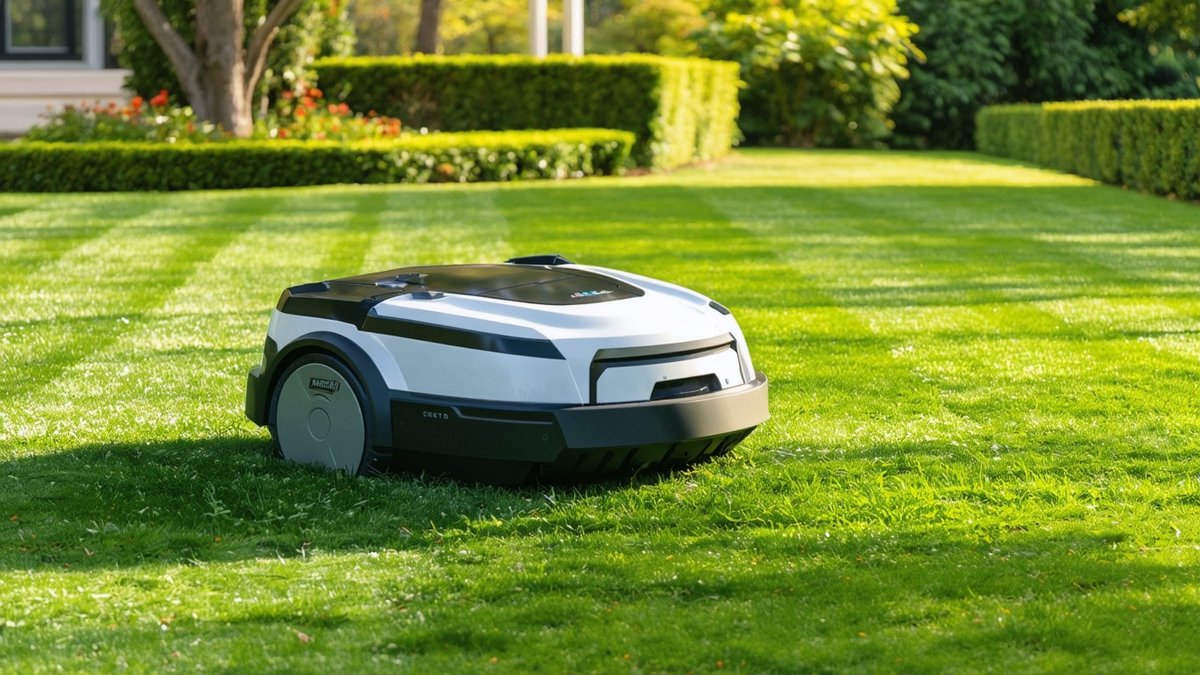
FCC Grants First-Ever Exemption to Swedish Smart Mower Maker, Paving the Way for Wider Autonomous Lawn Mower Use
In a move that could reshape the robotic mower landscape in the United States, the Federal Communications Commission has approved a limited exemption for a leading Swedish smart mower manufacturer. The decision lifts part of a longstanding radio‑frequency restriction that had hindered certain autonomous lawn mower functions, opening the door for improved connectivity, over‑the‑air updates, and more reliable fleet management.
While the exemption is narrow in scope, industry analysts see it as a signal that regulators are beginning to accommodate the growing demand for smart mowing technology. For homeowners, landscaping pros, and municipal contractors alike, the change may translate into smoother operation and fewer hiccups when deploying autonomous lawn mowers across larger properties.
What the FCC Exemption Actually Covers
The core of the FCC’s ruling revolves around access to a slice of the 5 GHz unlicensed spectrum that many autonomous mowers rely on for real‑time communication between the mower, its base station, and cloud‑based navigation services. Prior to this exemption, Part 15 of the FCC’s rules imposed strict power‑output limits on devices operating in that band, effectively curbing the range and reliability of wireless links used for precision GPS correction, RTK (real‑time kinematic) positioning, and remote diagnostics.
Under the newly granted waiver, the Swedish maker — widely believed to be Husqvarna, the company behind the popular Automower line — can now operate at slightly higher effective isotropic radiated power (EIRP) within the 5.150‑5.250 GHz range, subject to strict interference‑mitigation protocols. The exemption is limited to:
- Specific geographic zones where the manufacturer has demonstrated negligible risk of interference with existing licensed services (primarily airports and federal radar installations).
- Devices that incorporate dynamic frequency selection (DFS) and transmit power control (TPC) to automatically vacate the band if a protected signal is detected.
- A two‑year trial period, after which the FCC will review performance data before considering a broader rulemaking.
In practical terms, the waiver allows the mower to maintain a steadier link with RTK base stations even when operating at the edge of a property or in environments with moderate foliage, reducing the chance of drop‑outs that could trigger safety stops or missed mowing passes.
Why This Matters for the Robotic Mower Market
For a company that has built its reputation on precision cutting and quiet operation, reliable wireless communication is more than a convenience — it’s a safety and performance cornerstone. The exemption addresses three pain points that have historically limited the adoption of autonomous lawn mowers in larger residential lots and commercial settings:
- Improved RTK Accuracy: With a stronger, steadier link to correction services, mowers can hold sub‑centimeter positioning even under tree cover, leading to cleaner edge‑to‑edge coverage.
- Robust Over‑the‑Air (OTA) Updates: Manufacturers can push firmware upgrades, new mowing patterns, and security patches without requiring the owner to physically connect the mower to a Wi‑Fi network.
- Enhanced Fleet Management: Landscaping professionals overseeing dozens of units can now rely on more dependable telemetry for real‑time location tracking, usage analytics, and predictive maintenance alerts.
Competitors in the space — such as Bosch with its Indego line, Worx’s Landroid series, and Honda’s Miimo robots — have traditionally leaned on Wi‑Fi or proprietary radio links that operate in the 2.4 GHz band. While those frequencies offer longer range, they are more susceptible to interference from household devices and can struggle with the high data rates needed for RTK correction. The FCC’s exemption gives the Swedish maker a temporary regulatory advantage that could translate into better performance metrics in side‑by‑side tests.
That said, the waiver does not grant a blanket permission to exceed power limits across the board. Any other brand wishing to reap similar benefits would need to submit its own exemption request, demonstrating comparable interference‑avoidance mechanisms. As a result, we may see a wave of filings from other manufacturers eager to level the playing field.
Key Specs and Takeaways from the FCC Decision
- Frequency Band: 5.150‑5.250 GHz (UNII‑1)
- Allowed EIRP Increase: Up to 24 dBm (from the previous 17 dBm limit) under DFS/TPC constraints
- Geographic Scope: Limited to pre‑approved zones with low radar/airport density; nationwide rollout pending further review
- Duration: Two‑year trial, subject to FCC evaluation
- Primary Beneficiary: Husqvarna Automower‑series units equipped with RTK‑capable modules
- Impact on Users: Fewer signal drop‑outs, more consistent mowing patterns, and smoother OTA updates
- Competitive Angle: Gives Husqvarna a temporary edge in connectivity‑dependent features versus rivals relying on 2.4 GHz Wi‑Fi
Bottom Line: What This Means for You
For the typical homeowner eyeing a robotic mower, the immediate effect is likely modest. Most consumer‑grade models already function adequately on standard Wi‑Fi for scheduling and basic status reporting. However, if you own a larger lot — say, an acre or more — or you live in an area with heavy tree cover, the improved RTK link could translate into noticeably cleaner edges and fewer “missed strips” that require manual touch‑up.
Landscaping professionals and property managers stand to gain the most. The ability to maintain a reliable data link across expansive campuses, golf courses, or municipal parks means less downtime for troubleshooting and more confidence in deploying autonomous fleets at scale. Over time, as the FCC evaluates the trial data, we may see the exemption broadened, effectively lowering the barrier for any brand to offer high‑precision, connected mowing solutions.
In the short run, keep an eye on firmware announcements from Husqvarna and watch for any competing exemption requests from rivals. The regulatory landscape is beginning to shift in favor of smart mowing, and early adopters could reap the benefits of a more seamless, hands‑off lawn care experience.
Frequently Asked Questions
What was the original FCC “robot ban” that this exemption addresses?
The FCC’s Part 15 rules set strict limits on the radio‑frequency power that unlicensed devices — like many robotic mowers — can emit in certain bands. Those limits were designed to protect licensed services such as airport radar and weather satellites. For mowers that rely on real‑time kinematic GPS correction, the power caps sometimes resulted in weak or intermittent links, especially at the edge of a property or behind obstacles.
Does this mean I can now use any robotic mower anywhere in the U.S. without worrying about signal loss?
Not exactly. The exemption applies only to the specific manufacturer’s devices that have demonstrated interference‑avoidance technology (DFS/TPC) and are operating within the approved geographic zones. Other brands would need to secure their own waivers, and even with the exemption, mowers must still respect all local laws regarding noise, safety, and property boundaries.
Will this exemption affect the price or availability of robotic mowers?
Direct price impacts are unlikely in the near term, as the waiver primarily concerns internal radio performance rather than hardware costs. However, improved reliability could reduce warranty claims and service visits, potentially lowering the total cost of ownership over time. If the trial proves successful, we may see more manufacturers investing in similar RTK‑enabled modules, which could eventually drive broader feature availability across price points.
Source: Original Article

Author: AI Mow
Ai Mow is the editorial team behind Ai Mower News, dedicated to bringing you the latest news, reviews, and insights on robotic lawn mowers and smart gardening technology.