


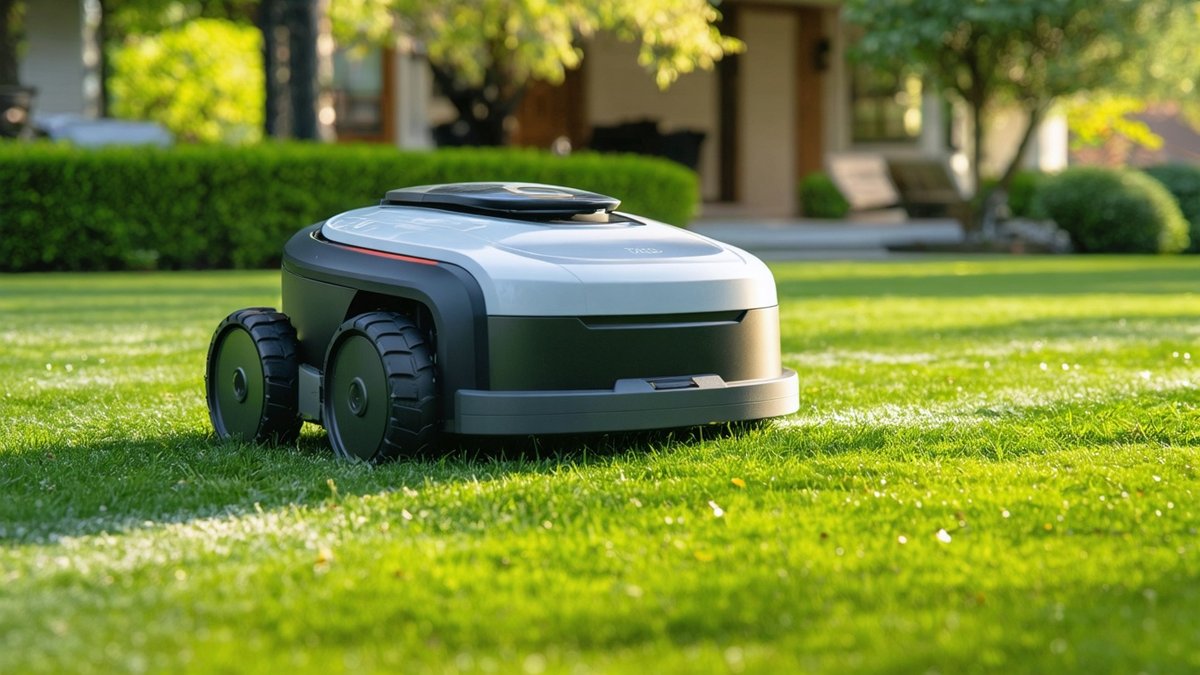
The Federal Communications Commission just gave a Swedish smart‑mower pioneer a rare break, granting the first-ever exemption from a longstanding rule that had kept many autonomous robots off certain radio frequencies. For homeowners and landscaping pros who have been watching the robotic mower market evolve, the decision could mean smoother connectivity, richer features, and a step closer to truly hands‑off lawn care.
In this article we unpack what the FCC’s exemption actually covers, why Husqvarna – the Swedish maker behind the popular Automower line – needed the waiver, and how the move stacks up against rivals like Worx Landroid, Ambrogio, and Robomow. We’ll also highlight the key specifications that stand to benefit and give you a clear “Bottom Line” on what this news means for your next mower purchase or fleet upgrade.
What the FCC Exemption Actually Means
For several years the FCC has maintained a strict interpretation of Part 15 rules that limits the use of certain unlicensed spectrum bands by “robots” – a classification that, until now, has swept in many autonomous lawn‑mowing devices. The concern was primarily about potential interference with critical services such as radar, aviation communications, and public‑safety networks. Under the blanket ban, manufacturers had to keep their robots’ radios operating at very low power or stick to narrowly defined frequency windows, which limited the sophistication of features like real‑time kinematic (RTK) GPS, ultra‑wideband (UWB) positioning, and LTE‑based cloud connectivity.
The recent exemption creates a narrow carve‑out for a single Swedish smart‑mower manufacturer, allowing its devices to operate with higher transmit power and in additional sub‑GHz bands that were previously off‑limits. Importantly, the waiver is not a blanket free‑for‑all; it comes with strict technical conditions, including duty‑cycle limits, geographic restrictions near airports, and mandatory interference‑mitigation protocols. The FCC emphasized that the exemption is experimental and will be reviewed after a set period, but it marks the first time the agency has acknowledged that a well‑engineered robotic mower can coexist safely with existing spectrum users.
For the average homeowner, the practical upshot is that the approved mowers can now maintain a more reliable link to satellite correction services, receive over‑the‑air firmware updates faster, and potentially integrate with smart‑home ecosystems without dropping connection mid‑mow. For commercial fleets, the exemption opens the door to broader LTE‑Cat‑M1 or NB‑IoT modules that can stream usage data, diagnostic logs, and real‑time map adjustments to a central dashboard.
Why Husqvarna Needed the Waiver
Husqvarna, a Swedish company with a heritage dating back to 1689, has long been the flagship brand in the autonomous mower space. Its Automower lineup relies heavily on precise GNSS positioning, often augmented by RTK base stations to achieve centimeter‑level accuracy. To make RTK work seamlessly across large, irregular yards, the mowers need a steady, high‑bandwidth uplink to receive correction data from the base station or a cloud‑based service.
Until the FCC’s exemption, Husqvarna’s radios were constrained to low‑power ISM bands that limited the update rate of correction packets. In practice, this translated to occasional “drift” on uneven terrain, slower recovery after signal loss, and a reliance on more frequent boundary‑wire reinstallation to keep the mower on track. By securing permission to operate with higher power in the 902‑928 MHz and 868‑870 MHz ranges (subject to the FCC’s conditions), Husqvarna can now:
- Transmit RTK correction packets at up to 10 Hz, improving positional stability.
- Maintain a constant LTE‑Cat‑M1 link for cloud‑based fleet management.
- Deploy optional UWB modules for ultra‑precise obstacle detection without fearing interference violations.
- Offer faster over‑the‑air (OTA) updates, reducing the window during which a mower runs outdated software.
The waiver also aligns with Husqvarna’s broader push toward the “Automower Connect” ecosystem, which integrates voice assistants, weather‑based scheduling, and remote diagnostics. By clearing the regulatory hurdle, the company can now market these features as fully compliant with U.S. federal rules, removing a barrier that had previously limited their availability in certain states.
Impact on the Robotic Mower Market
While the exemption applies only to Husqvarna’s current and upcoming models, its ripple effects are likely to be felt across the industry. Competitors such as Worx (with its Landroid series), Ambrogio (known for the Limo and Spike lines), and Robomow (especially the RS series) have all been exploring similar connectivity upgrades. Many of those brands already operate within the existing low‑power limits, but they have expressed interest in pursuing their own exemptions or lobbying for a broader rule change that would accommodate “low‑risk autonomous lawn‑care robots.”
From a market‑share perspective, Husqvarna’s early access to enhanced connectivity could give it a temporary edge in the premium segment, where buyers value features like real‑time map editing, remote start/stop via smartphone apps, and predictive maintenance alerts. However, the exemption’s conditions – particularly the geographic exclusions near airports and the mandatory interference‑mitigation reporting – mean that Husqvarna will still need to invest in compliance engineering. This could level the playing field over time as other manufacturers either secure similar waivers or innovate around the restrictions (for example, by leaning more heavily on wired boundary systems or on‑board AI vision).
Landscaping professionals managing fleets of dozens of mowers will watch closely to see whether the improved data throughput translates into measurable reductions in downtime and service calls. Early adopters have reported that a stable RTK link can cut the need for manual re‑calibration by up to 30 %, a figure that directly impacts labor costs on large estates or municipal contracts.
Key Specs & Takeaways
Below is a concise rundown of the Husqvarna Automower models that are slated to benefit immediately from the FCC exemption, along with the most consequential upgrades they will receive.
- Automower 450X HSA – Flagship model for yards up to 1.25 acres; gains 10 Hz RTK correction stream and LTE‑Cat‑M1 connectivity for fleet‑wide OTA updates.
- Automower 430X AWD – All‑wheel‑drive version for steep terrain; improved UWB‑based obstacle detection enabled by higher‑power bands.
- Automower 315 Mark II – Mid‑range offering for 0.75‑acre lawns; now supports continuous cloud‑based weather‑adjusted scheduling without drop‑outs.
- Automower 305 – Entry‑level model for small yards; benefits from faster firmware patches and reduced reliance on boundary‑wire re‑laying after signal loss.
Takeaway points for consumers and pros:
- Enhanced RTK stability translates to more uniform cutting patterns, especially on lawns with trees, slopes, or irregular edges.
- LTE‑Cat‑M1 links enable real‑time usage analytics, predictive maintenance alerts, and remote diagnostics – valuable for both DIY owners and commercial operators.
- The exemption does not remove the need for boundary wires or guide cables in most current Husqvarna models; it simply improves the wireless backbone that supplements those physical guides.
- Competitors are likely to pursue similar waivers or accelerate alternative technologies (e.g., vision‑based navigation) to avoid being left behind.
What This Means for You
If you’re in the market for a new robotic mower, the FCC’s decision is a clear signal that the technology is maturing beyond the novelty phase. For homeowners with medium‑to‑large yards, the upgraded Husqvarna models now offer a level of reliability that was previously only attainable with more expensive, professionally installed guide‑wire systems. Expect to see smoother mowing patterns, fewer “lost signal” interruptions, and the ability to control your mower from anywhere with a smartphone – all without running afoul of federal radio rules.
For landscaping professionals, the exemption lowers the barrier to scaling a fleet with data‑driven management. The ability to stream diagnostic logs and receive over‑the‑air updates means less downtime for routine maintenance and a faster response to issues like blade wear or battery degradation. While the upfront cost of the premium Husqvarna models remains higher than many entry‑level alternatives, the potential savings in labor and service visits can make the total cost of ownership competitive, especially for contracts that guarantee a pristine lawn year‑round.
Keep an eye on how the FCC’s experimental period unfolds. If the agency finds that the exempted devices cause no harmful interference, we could see a broader rulemaking that opens the same bandwidth to other manufacturers – a development that would accelerate the adoption of features like AI‑driven obstacle avoidance, multi‑zone mapping, and true “set‑and‑forget” smart mowing across the entire robotic mower landscape.
Bottom Line
The FCC’s first‑ever exemption for a Swedish smart‑mower maker is more than a regulatory footnote; it’s a tangible step toward richer, more reliable autonomous lawn care. Homeowners gain stronger connectivity and smarter features, while pros gain fleet‑management tools that can reduce labor costs. Though the waiver is limited to Husqvarna’s current lineup for now, its success could pave the way for industry‑wide changes that bring the promise of fully hands‑off, smart mowing to every lawn.
Frequently Asked Questions
Will the exemption affect my existing Husqvarna Automower?
Only models that are shipped after the exemption takes effect (or those that receive a firmware update enabling the new radio settings) will be able to use the higher‑power bands. Older units will continue to operate under the previous low‑power limits, though Husqvarna may offer optional hardware upgrades for select models.
Are there any geographic restrictions I need to know about?
Yes. The FCC’s waiver includes exclusion zones around airports, military installations, and certain public‑safety radio facilities. If you live within a few miles of such a site, your mower’s radio may automatically reduce power or switch to a fallback band to remain compliant.
How does this compare to what competitors like Worx Landroid or Ambrogio are doing?
Most competitors currently operate within the existing low‑power ISM bands and rely on boundary wires or guide cables for navigation. Some, like Worx, are experimenting with LTE‑Cat‑M1 modules for fleet management but remain constrained by the same spectral limits. Ambrogio has begun testing vision‑based navigation that reduces reliance on radio links altogether. The Husqvarna exemption gives it a temporary advantage in RTK‑dependent precision, but the broader trend is toward sensor fusion that may eventually make the specific band less critical.
Source: Original Article

Author: AI Mow
Ai Mow is the editorial team behind Ai Mower News, dedicated to bringing you the latest news, reviews, and insights on robotic lawn mowers and smart gardening technology.