


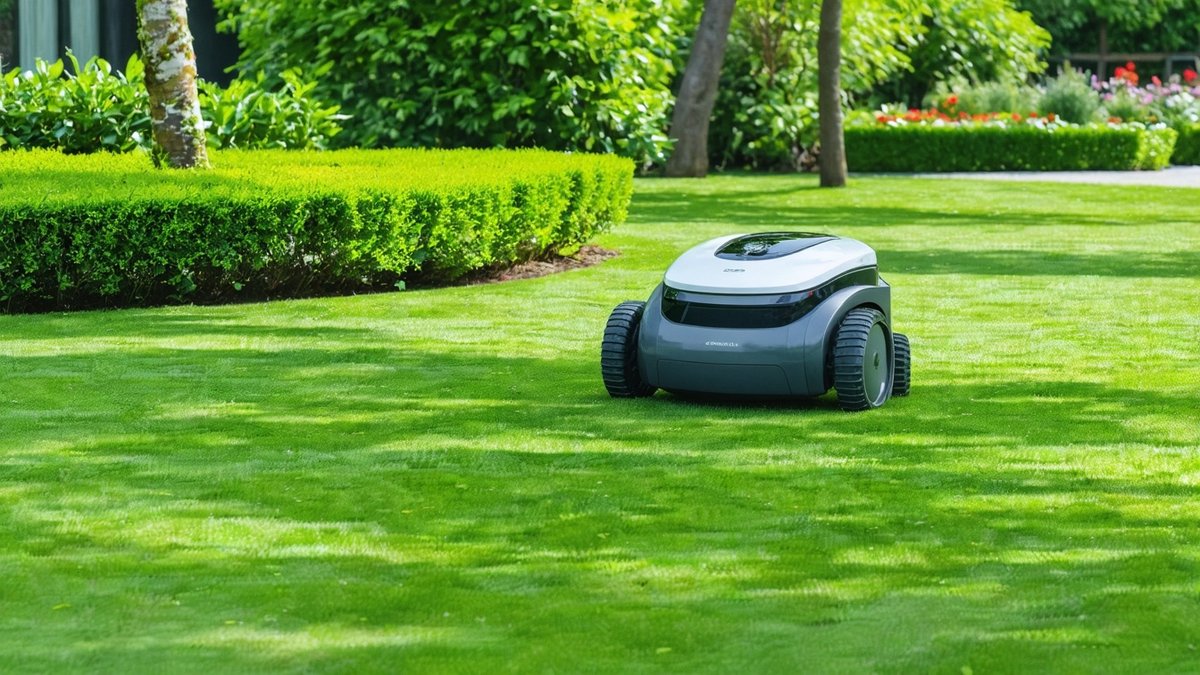
The global market for robotic mower technology is feeling the ripple effects of tighter U.S. trade policies, prompting Chinese manufacturers to redirect their robot lawn mower shipments toward Europe. As import curbs bite, firms that once eyed the American backyard are now tailoring their smart mowing solutions for European gardens, hoping to capture a segment that values quiet operation, precision cutting, and seamless smart‑home integration.
This shift isn’t just a logistical reroute; it’s reshaping product features, pricing strategies, and after‑sales support to meet the continent’s diverse regulatory landscape and consumer expectations. From the manicured lawns of the UK to the sprawling estates of Germany and the compact urban yards of the Netherlands, Chinese brands are betting that their blend of cutting‑edge sensors, AI‑driven navigation, and aggressive price points will win over both homeowners and professional landscapers.
Why US Import Curbs Are Redirecting Chinese Robot Mowers
The recent tightening of U.S. import restrictions on certain electronics and robotics components has created a bottleneck for Chinese firms that relied heavily on American distribution channels. Tariffs, heightened scrutiny of data‑security practices, and longer customs clearance times have made the U.S. market less attractive, especially for mid‑tier autonomous lawn mower models that compete on price rather than brand legacy.
In response, manufacturers such as Xiaomi’s Ecovacs subsidiary, Roborock, and emerging players like Lechuan and Huina are accelerating their European go‑to‑market plans. They are leveraging existing supply chains in Southeast Asia, rerouting shipments through ports like Rotterdam and Hamburg, and establishing local service hubs to ensure quicker response times for warranty claims and firmware updates.
Beyond logistics, the move is strategic: Europe’s stringent environmental regulations—particularly around noise emissions and energy efficiency—align well with the low‑power, brushless‑motor designs many Chinese robotic mower platforms already employ. By positioning themselves as eco‑friendly alternatives to gasoline‑guzzling ride‑ons, these firms can tap into a growing consumer base that prioritizes sustainability without sacrificing convenience.
How Chinese Manufacturers Are Gearing Up for Europe
To succeed in a market dominated by established names like Husqvarna Automower, Worx Landroid, and Bosch Indego, Chinese brands are adopting a three‑pronged approach:
- Localized firmware and language support – Early European launches include multilingual mobile apps (English, German, French, Spanish, Italian) and compliance with GDPR‑style data privacy rules.
- Enhanced safety certifications – Products are undergoing TÜV and CE testing to meet the EU Machinery Directive, ensuring blade stop‑times and obstacle‑detection thresholds satisfy strict safety norms.
- Competitive pricing with value‑added features – By exploiting economies of scale in component sourcing, companies can offer models equipped with GPS‑RTK navigation, multi‑zone mapping, and optional solar‑charging docks at price points 15‑25 % below comparable European alternatives.
Partnerships are also playing a crucial role. Several Chinese OEMs have signed distribution agreements with established European garden‑center chains and online retailers, allowing them to leverage existing showroom space and after‑sales networks while building brand recognition.
Spotlight on Leading Models: Specs and Innovations
Below is a quick‑reference comparison of three Chinese robot lawn mower lines that have already hit European shelves or are slated for launch in Q4 2025.
- Ecovacs GoMow G1
- Cutting width: 22 cm
- Battery: 5.0 Ah Li‑ion, up to 120 min runtime
- Navigation: Vision‑based SLAM + RTK‑enhanced GPS
- Smart features: App‑controlled scheduling, rain sensor, voice‑assistant compatibility (Alexa/Google)
- Price (EU): ≈ €799
- Roborock RTM‑X5
- Cutting width: 18 cm
- Battery: 4.2 Ah Li‑ion, up to 100 min runtime
- Navigation: Lidar‑based mapping with edge‑detect algorithms
- Smart features: Multi‑zone mapping, automatic recharging, anti‑theft alarm
- Price (EU): ≈ €699
- Lechuan L‑Mow 200
- Cutting width: 20 cm
- Battery: 6.0 Ah Li‑ion, up to 150 min runtime
- Navigation: GPS‑RTK + ultrasonic obstacle avoidance
- Smart features: Solar‑dock option, weather‑adaptive mowing, fleet‑management portal for pros
- Price (EU): ≈ €899 (base), €1 199 with solar dock
When stacked against incumbent models, the Chinese entrants often match or exceed battery life and cutting width while undercutting price. Where they still lag is in brand perception and the depth of dealer networks—areas they are actively addressing through warranty extensions (up to 3 years) and localized training programs for service technicians.
European Buyers’ Reaction and Early Adoption Trends
Initial feedback from early adopters in the UK, Germany, and the Netherlands highlights a clear appreciation for the value proposition. Homeowners with modest‑sized lawns (under 500 m²) report that the setup process—largely app‑driven—takes under 30 minutes, a significant improvement over the more involved boundary‑wire installation required by some legacy systems.
Professional landscapers, meanwhile, are piloting the fleet‑management features offered by models like the Lechuan L‑Mow 200. The ability to monitor multiple units via a cloud dashboard, receive real‑time maintenance alerts, and schedule coordinated mowing windows has proven attractive for companies managing municipal parks or large residential complexes.
Concerns remain, however, around long‑term software support and the availability of spare parts. Some users have noted that firmware updates are less frequent than those pushed by Husqvarna or Worx, raising questions about future compatibility with evolving smart‑home ecosystems. Chinese manufacturers are responding by committing to quarterly OTA updates and establishing European‑based parts depots to cut down on lead times.
Overall, adoption rates are climbing steadily, with market research firms predicting a 12 % year‑over‑year increase in Chinese‑branded robotic mower sales across Europe through 2027, driven largely by the price‑sensitive segment and eco‑conscious consumers.
Bottom Line: What This Means for Homeowners and Pros
The surge of Chinese robot lawn mower offerings into Europe is reshaping the competitive landscape in three tangible ways:
- More choice at lower price points – Shoppers can now access GPS‑guided, app‑controlled mowing for under €800, a segment previously dominated by mid‑tier European models priced above €1 000.
- Accelerated innovation cycles – Pressure from new entrants is prompting legacy brands to fast‑track features like solar docking, improved obstacle detection, and tighter smart‑home integration.
- Greater emphasis on service and support – To win trust, Chinese OEMs are investing in local repair centers, multilingual help desks, and longer warranties, which ultimately benefits all consumers.
If you’re in the market for a new autonomous lawn mower, consider test‑driving a Chinese model alongside a Husqvarna or Worx unit. Pay close attention to the ease of boundary setup, the responsiveness of the navigation system in uneven terrain, and the clarity of the mobile app’s reporting tools. For landscaping professionals evaluating fleet options, the built‑in telemetry and multi‑unit management dashboards offered by brands like Lechuan could deliver operational savings that outweigh any lingering concerns about brand familiarity.
In short, the influx of Chinese robotic mower technology is not just a temporary shift caused by trade friction—it’s a catalyst for better products, sharper pricing, and more innovative features across the board. Keeping an eye on these developments will help you make a smarter, more future‑proof investment in your lawn care routine.
FAQ
Are Chinese robotic mowers safe to use around pets and children?
Yes. All models entering the European market must pass CE certification, which includes rigorous testing for blade stop‑time, obstacle detection, and emergency shut‑off. Many units also feature ultrasonic or lidar‑based sensors that pause the blades instantly when an unexpected object—like a pet or a toy—enters the cutting zone.
How does the battery life of these Chinese mowers compare to European alternatives?
Battery performance is generally competitive. For example, the Lechuan L‑Mow 200 offers up to 150 minutes of runtime on a 6.0 Ah pack, surpassing many mid‑range Husqvarna Automower models that hover around 100‑120 minutes. Real‑world endurance will vary with grass height, terrain slope, and ambient temperature, but the spec sheets show Chinese brands often match or exceed the competition in this area.
What kind of after‑sales support can I expect if I buy a Chinese‑made robot mower in Europe?
Manufacturers are establishing local service hubs in key markets such as Germany, the Netherlands, and the UK. Support includes multilingual phone and email assistance, on‑site repair options, and spare‑parts logistics aimed at keeping downtime under 5 business days. Warranty periods typically range from 2 to 3 years, with optional extensions available for an additional fee.
Source: Original Article

Author: AI Mow
Ai Mow is the editorial team behind Ai Mower News, dedicated to bringing you the latest news, reviews, and insights on robotic lawn mowers and smart gardening technology.