

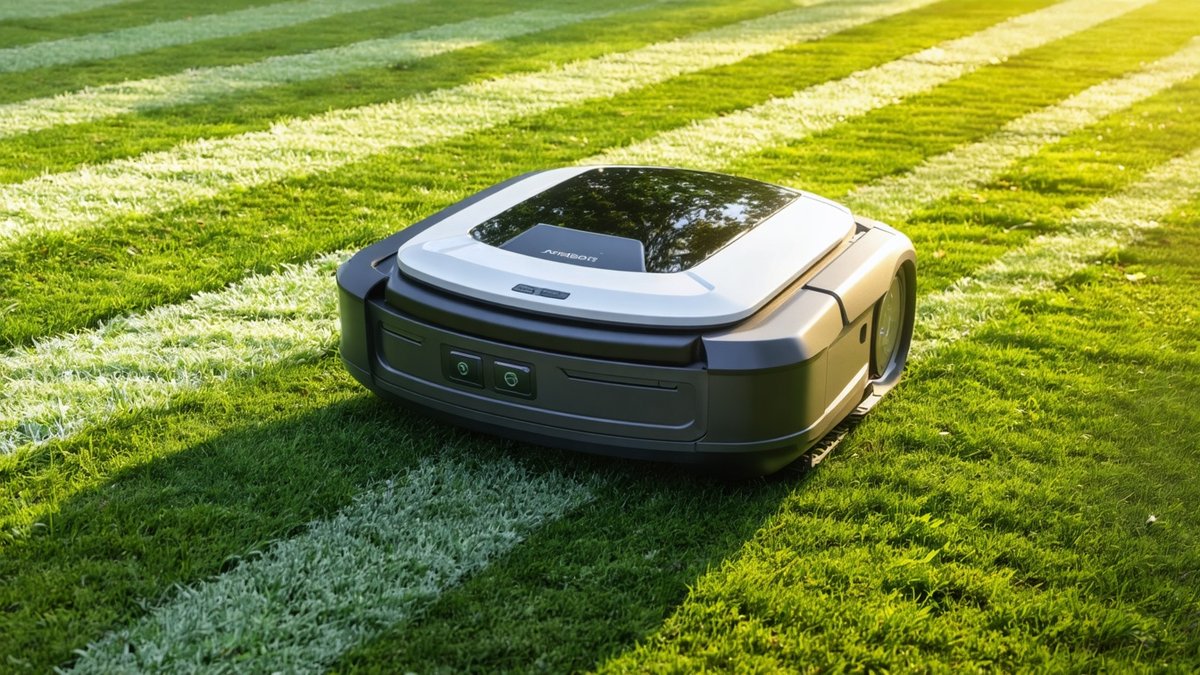
The latest edition of IFA 2026 turned into a showcase for cutting‑edge lawn care tech, and the Anthbot R7 series walked away with a staggering twelve accolades, most notably for its pioneering robotic‑arm edge‑trimming system. This sweep underscores how far autonomous mowing has moved beyond simple random‑pattern navigation into the realm of precision, adaptability, and true smart mowing. For homeowners, landscaping pros, and anyone watching the robot lawn mower market, the R7’s success signals a new benchmark for what an autonomous lawn mower can actually deliver.
Anthbot R7 Series Dominates IFA 2026 Awards
At IFA 2026, the Anthbot R7 lineup collected awards across categories that spanned innovation, design, user experience, and environmental impact. Judges highlighted the series’ ability to combine a rugged chassis with a dexterous, six‑axis robotic arm that can trim edges, flower beds, and tight corners without the need for secondary tools. The recognition wasn’t just a one‑off; the R7 earned top honors in both consumer‑focused and professional‑grade segments, indicating that its technology resonates with a broad audience.
What makes this achievement particularly noteworthy is the sheer number of awards—twelve in total—placing Anthbot ahead of long‑standing rivals such as Husqvarna’s Automower line, Worx Landroid, and Bosch Indego. While those brands continue to refine GPS‑guided navigation and app‑based scheduling, Anthbot’s edge‑trimming arm introduced a functional leap that the jury deemed worthy of multiple distinctions across engineering, usability, and sustainability metrics.
What Sets the Robotic‑Arm Edge Trimming Apart?
Traditional robot lawn mowers excel at maintaining open turf but often leave a noticeable strip of uncut grass along borders, driveways, and garden beds. Users typically compensate with a handheld trimmer or a second pass, adding time and effort. The Anthbot R7 tackles this pain point directly: its integrated robotic arm extends from the mower’s deck, articulates in three planes, and employs a small, high‑speed cutting blade that can follow contours as tight as 2 cm.
Key advantages of this approach include:
- True edge‑to‑edge coverage without overlapping passes.
- Adaptive pressure sensing that prevents scalping on delicate surfaces.
- Ability to navigate complex geometries such as raised flower beds, tree rings, and patio pavers.
- Reduced wear on the main cutting disc, since edge work is off‑loaded to the arm.
From a smart mowing perspective, the arm’s motions are orchestrated by the same AI vision system that guides the base unit, allowing real‑time adjustments based on grass height, obstacle detection, and even weather conditions. This tight integration means the R7 can maintain a consistent cut quality across the entire lawn, a feature that many competing robot lawn mower models still struggle to deliver uniformly.
Key Specifications and Performance Highlights
- Cutting width: 22 cm (main disc) + 5 cm articulated arm reach
- Battery: 80 Wh lithium‑ion, up to 120 minutes runtime per charge
- Charging time: 90 minutes to 80 % via fast‑charge dock
- Navigation: Dual‑frequency RTK‑GPS + SLAM‑based visual odometry
- Obstacle avoidance: 360° lidar + ultrasonic sensors, with arm‑collision detection
- Maximum slope: 45 % (22°) on main unit; arm operates up to 35 %
- Smart features: App‑based zone mapping, weather‑aware scheduling, OTA firmware updates, voice‑assistant compatibility (Alexa, Google Assistant)
- Noise level: 58 dB(A) – quieter than a typical conversation
- Environmental rating: IPX5 water resistance, recyclable chassis materials
These specs place the R7 firmly in the premium tier of autonomous lawn mower offerings, balancing endurance, precision, and user‑friendly automation. The articulated arm adds roughly 150 g to the overall weight but is offset by a lightweight carbon‑fiber forearm, keeping total mass under 12 kg—still easy for most homeowners to lift for maintenance or storage.
How It Stacks Up Against Competitors
When comparing the Anthbot R7 to other leading robot lawn mower platforms, a few differentiators emerge:
- Husqvarna Automower 450XH: Offers superior GPS accuracy and extensive dealer network, but lacks any mechanical edge‑trimming solution, relying on overlapping passes.
- Worx Landroid L: Known for modular accessories and a competitive price point, yet its triangular cutting blade still leaves a noticeable border that requires manual touch‑up.
- Ambrogio Lona: Features a flexible cutting deck that can adapt to slopes, but does not incorporate an articulated arm for precision edge work.
- Bosch Indego S+ 500: Excels in logical “cut‑to‑the‑edge” navigation via map‑based planning, but performance drops on irregular garden layouts where the R7’s arm shines.
In practical terms, the R7’s edge‑trimming arm reduces the average post‑mow cleanup time by an estimated 30‑40 % for lawns with complex landscaping. For professional landscapers managing multiple properties, that translates into fewer labor hours, lower fuel consumption for supplemental trimmers, and a more uniform finish that can be a selling point for high‑end clientele.
Bottom Line: What This Means for You
The Anthbot R7 series’ sweep at IFA 2026 isn’t just a trophy haul; it signals a shift in what consumers should expect from a robot lawn mower. If you’ve been frustrated by the need to run a string trimmer after your autonomous mower finishes, the R7 offers a genuine, integrated solution that keeps the cutting experience truly hands‑free. For homeowners, that means less weekend chores and a consistently manicured lawn without the extra equipment. For landscaping pros, the R7 can reduce crew time on edge detailing, allowing teams to focus on higher‑value tasks like planting, hardscaping, or client consultation.
Of course, the advanced technology comes at a premium price point—positioned above many mid‑range robot mowers—but the added functionality may justify the investment for those who value a pristine finish and true smart mowing capability. As the market continues to evolve, competitors will likely respond with their own edge‑trimming innovations, but for now Anthbot has set a clear new standard that anyone shopping for an autonomous lawn mower should seriously consider.
Frequently Asked Questions
Does the robotic arm require separate maintenance or sharpening?
The arm’s cutting blade is made from hardened stainless steel and is designed for longevity under normal residential use. Anthbot recommends a visual inspection every 20–25 hours of operation and a blade replacement or sharpening interval of roughly 150 hours—similar to the main disc. The process is straightforward and can be done with the supplied toolkit; no special calibration is needed after blade changes.
How does the R7 handle very tight spaces, such as around garden statues or narrow pathways?
Thanks to its six‑degrees‑of‑freedom arm and real‑time obstacle sensing, the R7 can retract the arm to avoid collisions while still maintaining coverage. In confined corridors under 30 cm wide, the unit will rely on its main disc and follow a pre‑mapped path, leaving a minimal uncut strip that the arm can address on the next pass if space permits. Overall, the system is engineered to balance thoroughness with safety in tight quarters.
Is the R7 compatible with existing smart‑home ecosystems?
Yes. The Anthbot R7 connects via Wi‑Fi to the Anthbot app, which supports integration with Amazon Alexa, Google Assistant, and Apple HomeKit through Matter compatibility. Users can start, stop, schedule, and receive status updates using voice commands or their preferred smart‑home hub, making the mower a seamless part of a connected home ecosystem.
Source: Original Article

Author: AI Mow
Ai Mow is the editorial team behind Ai Mower News, dedicated to bringing you the latest news, reviews, and insights on robotic lawn mowers and smart gardening technology.