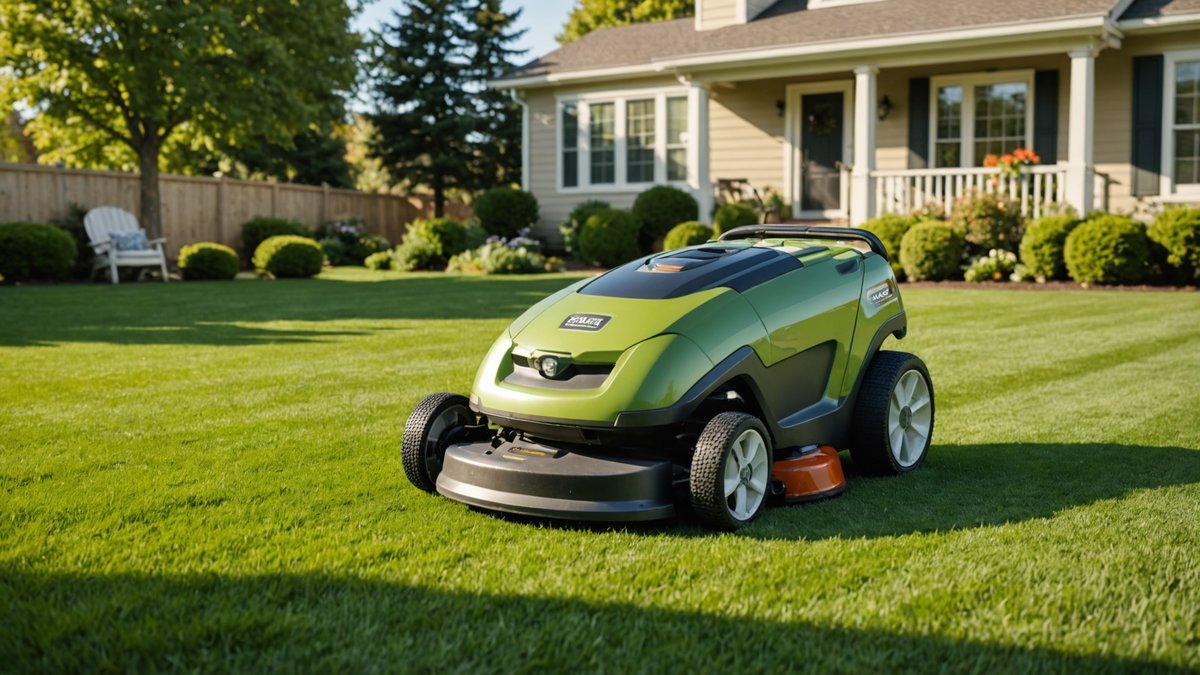
While perfectly striped lawns are the hallmark of any self-respecting homeowner in 2026, the pristine appearance shouldn’t stop at the patio door. Imagine the freedom of robotically maintained floors *and* lawns. Thanks to recent advancements in AI and sensor technology, the possibility of integrating robotic floor cleaning concepts into lawn care is now closer than ever.
The Rise of Multi-Surface Robotics and Lawn Care’s Potential
The robot mop-vacuum market is booming, with manufacturers continuously refining their algorithms and hardware to achieve unparalleled cleaning performance. The New York Times recently highlighted several top performers in this space, showcasing their ability to navigate complex environments, intelligently map floor plans, and deliver sparkling clean results. What if this very same technology could be adapted for outdoor lawn care? Think of it – a robot that not only mows but also tackles weeds, clears debris, and even aerates the soil, all autonomously.
Companies like iRobot (with their Roomba and Braava lines) and SharkNinja (with their Shark IQ Robot series) are already masters of indoor navigation and cleaning. Could their expertise translate to designing robust, all-weather robots capable of handling the unique challenges of lawn maintenance? The challenges are significant. Outdoor environments are far more unpredictable than indoor spaces. Uneven terrain, varying grass heights, unpredictable weather conditions, and the presence of obstacles like rocks, roots, and garden ornaments all pose considerable hurdles.
Obstacles and Opportunities: From Tile to Turf
Adapting robot mop-vac technology for lawn care requires more than just waterproofing and beefing up the motor. Here are some key areas of development:
- Navigation: Indoor robot vacuums rely heavily on LiDAR and visual sensors. Outdoor robots would need to incorporate additional sensors like GPS, inertial measurement units (IMUs), and potentially even subsurface radar to navigate accurately and avoid obstacles.
- Surface Adaptation: Mop-vacs are designed for hard floors and low-pile carpets. A lawn care robot needs to handle varying grass types, thicknesses, and moisture levels. This might require adjustable cutting heights, specialized blades, and the ability to switch between mowing, trimming, and edging modes.
- Debris Management: While a mop-vac primarily deals with dust and small particles, a lawn care robot needs to handle grass clippings, leaves, twigs, and other garden debris. A larger collection bin and a more powerful suction system would be necessary.
- Power and Durability: Outdoor robots need to be significantly more rugged and weather-resistant than their indoor counterparts. They also need longer battery life to cover larger areas. Expect to see innovations in battery technology and charging solutions to address this challenge.
Current high-end robot mops, such as the Ecovacs Deebot Omni X2, retail for around $1500. A similarly sophisticated lawn care robot, capable of mowing, weeding, and debris removal, could easily command a price of $2500 or more. However, the convenience and time savings could justify the investment for many homeowners.
Potential Designs: Merging Mowing with Cleaning
We envision several possible design approaches for a robot mop-vac-mower hybrid. One approach could involve a modular design, where different attachments can be swapped out depending on the task. For example, a mowing attachment could be replaced with a weeding attachment or a leaf blower attachment. Another approach could involve a more integrated design, where all the necessary tools are built into a single robot. This would require a more complex mechanical system but could potentially offer greater efficiency and versatility. A third path could explore robotic arms attached to the lawnmower, enabling the device to not only mow but also gather debris.
Imagine a robot that can meticulously mow your lawn, then switch to a leaf-blowing mode to clear away any remaining debris. Or picture a robot that uses AI to identify and target weeds, precisely applying herbicide only where needed. The possibilities are endless, and the potential benefits are significant.
The Future of Lawn Care: Beyond Mowing
While the idea of a robot mop-vac-mower may seem futuristic, the underlying technology is already available. As AI, robotics, and sensor technology continue to advance, we expect to see more sophisticated and versatile lawn care robots emerge in the coming years. These robots will not only automate the task of mowing but also perform a wide range of other lawn care tasks, such as weeding, fertilizing, and even disease detection. The lawn will be clean from indoor and outdoor debris.
The convergence of robot mop-vac technology and autonomous lawn mowing is not just a possibility; it’s an inevitability. In the next few years, we predict that we’ll see companies experimenting with new designs and technologies, bringing us closer to a future where lawn care is truly effortless and automated.
Stay tuned to AI Mower News for the latest in autonomous lawn care technology.

Author: AI Mow
AI Mow is the AI-assisted news desk of AI Mower News. It monitors manufacturer announcements, trade shows and industry sources, and drafts stories in our editorial voice. Every article is checked against its original source before publication — our fact gate holds anything that claims testing we did not do or specs the source does not support — and is published under this byline for transparency. How we work: https://aimowernews.com/editorial-guidelines/ · The people behind it: https://aimowernews.com/our-team/