


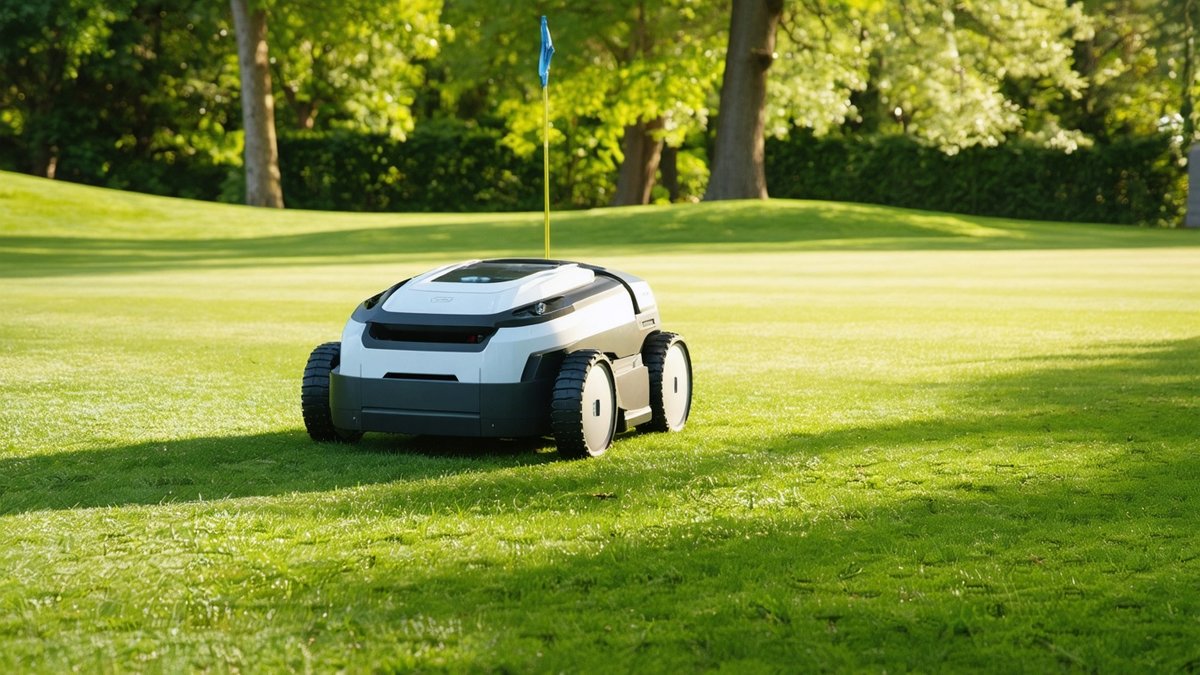
The roar of traditional fairway mowers is fading as golf courses across Ireland and beyond turn to silent, precision‑driven robots to keep their greens immaculate. Husqvarna’s latest push into autonomous turf care promises to give superintendents a cutting‑edge tool that blends GPS guidance, all‑weather durability, and smart‑mowing intelligence.
Husqvarna’s Golf‑Course Focused Autonomous Mower
Building on the success of its consumer‑grade Automower line, Husqvarna has unveiled a purpose‑built robotic mower designed specifically for the demands of golf course maintenance. The new model, often referred to in industry circles as the Husqvarna CEORA GC, combines high‑precision RTK GPS with rugged, all‑terrain wheels to navigate undulating fairways, bunkers, and rough without human intervention. Unlike conventional reel mowers that require frequent blade changes and operator fatigue, this autonomous lawn mower operates on a set schedule, returning to its charging station when power runs low and resuming work exactly where it left off.
At the heart of the system is Husqvarna’s SmartMowing software suite, which creates a virtual map of the course after an initial boundary walk. Superintendents can define cutting heights, no‑go zones (such as flower beds or water hazards), and even prioritize high‑traffic areas for more frequent passes. The mower’s onboard sensors detect obstacles in real time, adjusting its path to avoid colliding with flagsticks, irrigation heads, or golfers enjoying a round.
How It Works on the Fairways
Deploying the Husqvarna autonomous mower begins with a simple setup phase: a technician walks the perimeter with a GPS rover, laying down a digital fence that the robot will respect. Once the map is stored in the mower’s memory, the device can be scheduled to work overnight or during low‑play periods, ensuring the course is ready for morning tee times without disruption. The mower’s electric drivetrain delivers quiet operation—typically under 60 dB—making it ideal for courses that sit near residential neighborhoods or wildlife preserves.
Maintenance is streamlined as well. The mower’s modular cutter deck allows quick blade swaps, and the sealed design protects critical components from grass clippings, moisture, and dust. Husqvarna claims up to 60 % reduction in labor hours for routine fairway mowing, freeing staff to focus on bunker raking, tee‑box preparation, and pest management—tasks that still benefit from a human touch.
Key Specs & Takeaways
- Cutting Width: 22 in (56 cm) – optimized for fairway efficiency
- Navigation: RTK‑GPS + GLONASS + inertial measurement unit (IMU)
- Battery: Lithium‑ion, 5 kWh, up to 4 hours continuous operation
- Charging Time: 2 hours to 80 % via fast‑charge dock
- Operating Temp: –10 °C to 45 °C (14 °F to 113 °F)
- Weather Rating: IPX5 – resistant to rain and sprinkler spray
- Connectivity: LTE‑Cat‑M1 for OTA updates and remote fleet management
- Safety: Ultrasonic bump sensors, tilt sensor, emergency stop via app
Comparing Husqvarna to the Competition
While Husqvarna’s entry into golf‑course robotics is notable, it joins a growing field of manufacturers vying for the same turf‑care dollar. Here’s how the CEORA GC stacks up against some of the leading alternatives:
- John Deere Tango E5 Series – Deere’s offering relies on a combination of boundary wire and RTK‑GPS, delivering similar autonomy but with a larger cutter deck (up to 30 in) suited for wider fairways. Deere’s strength lies in its extensive dealer network and integration with the Operations Center fleet‑management platform.
- Toro Greensmaster eTriFlex – Toro’s electric walk‑behind mower has been adapted for autonomous use via a third‑party retrofit kit. It provides excellent reel‑cut quality but requires more frequent blade sharpening and lacks the all‑weather sealing of Husqvarna’s design.
- Kubota Robotic Mower (KR series) – Kubota’s entry focuses on ruggedness and low‑speed operation, making it a solid choice for hilly terrain. However, its navigation system leans more on perimeter wire than pure GPS, which can increase setup time on expansive courses.
- Honda Miimo HRM 3000 – Primarily aimed at large residential estates, the Miimo offers quiet operation and smartphone control, but its smaller battery limits continuous run time to about 2 hours, making it less ideal for uninterrupted fairway coverage.
Overall, Husqvarna’s blend of RTK‑guided precision, modular durability, and integrated smart‑mowing software gives it a compelling edge for superintendents seeking a truly hands‑off solution that can scale from small practice greens to championship‑length courses.
What This Means for You
For homeowners and landscaping professionals, the ripple effects of Husqvarna’s golf‑course push are worth noting. The same RTK‑GPS and SmartMowing technology that powers the CEORA GC is trickling down to the residential Automower line, meaning future consumer models will likely feature tighter boundary accuracy, better handling of slopes, and enhanced obstacle avoidance—features that directly translate to fewer missed strips and less manual edging.
If you manage a commercial property or a fleet of mowers for a landscaping business, Husqvarna’s fleet‑management portal offers real‑time diagnostics, usage analytics, and over‑the‑air updates—tools that can reduce downtime and improve ROI. Moreover, as more golf courses adopt autonomous mowing, the market for used robotic units may expand, offering cost‑effective entry points for smaller operators looking to test the technology before committing to a full‑scale purchase.
In short, Husqvarna’s move into autonomous golf‑course maintenance signals a maturing of the robotic mower ecosystem—one where the benefits of precision, sustainability, and labor savings are no longer confined to suburban lawns but are now reshaping the very standards of elite turf care.
FAQ
Do I need to install boundary wire for the Husqvarna CEORA GC?
No. The CEORA GC relies on RTK‑GPS and an initial perimeter walk to create a virtual fence, eliminating the need for buried wire. This makes installation faster and reduces long‑term maintenance compared with traditional wired robotic mowers.
How does the mower handle heavy rain or sprinkler cycles?
The unit carries an IPX5 weather rating, meaning it can withstand rain jets and sprinkler spray without damage. Its sealed electronics and corrosion‑resistant chassis allow it to continue operating in wet conditions, though superintendents may schedule pauses during intense storms to preserve battery life.
Can I manage multiple Husqvarna autonomous mowers from a single dashboard?
Yes. Husqvarna’s cloud‑based fleet platform lets you monitor battery status, locate each mower on a live map, receive maintenance alerts, and push firmware updates across all units—ideal for golf courses with several fairways or for landscaping companies managing multiple client sites.
Source: Original Article

Author: AI Mow
Ai Mow is the editorial team behind Ai Mower News, dedicated to bringing you the latest news, reviews, and insights on robotic lawn mowers and smart gardening technology.