


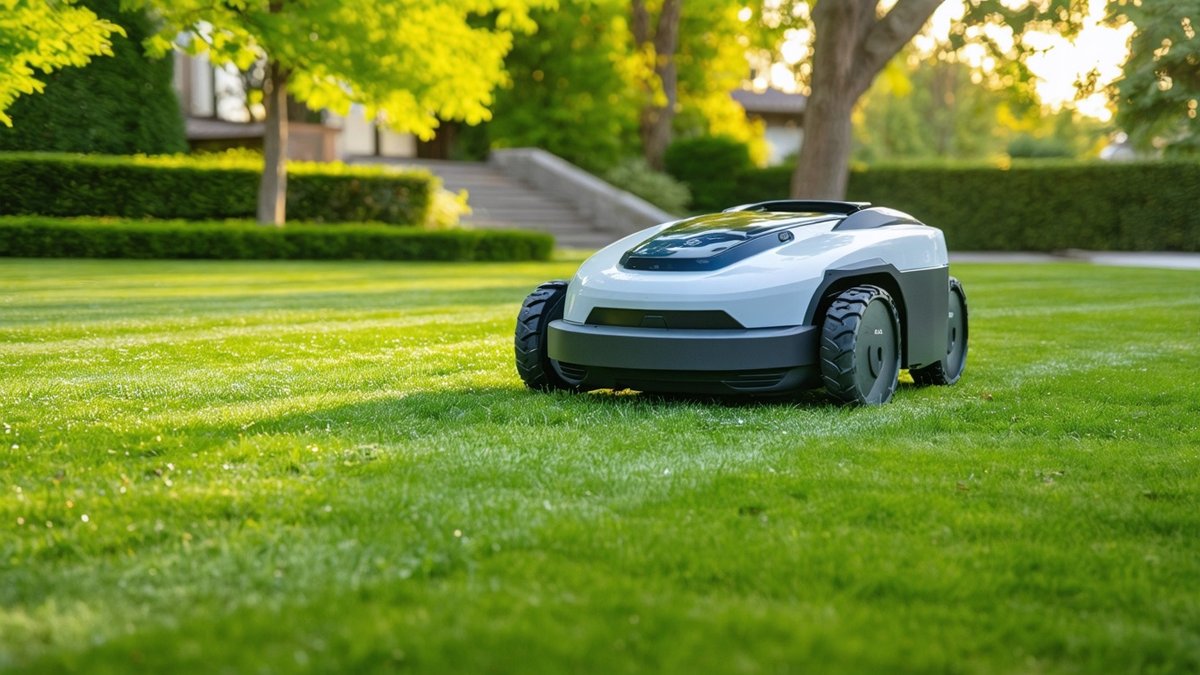
Introduction
When your lawn resembles a jungle more than a manicured yard, choosing the right robotic mower can feel like picking a champion heavyweight boxer. Two contenders that repeatedly surface in conversations about tackling thick, stubborn grass are the GOKO M6 and the Husqvarna Automower 430X. In this head‑to‑head look we break down what each machine brings to the table, so you can decide which autonomous lawn mower truly earns its stripes on tough turf.
Design and Build Quality
The first thing you notice about the GOKO M6 is its rugged, angular chassis. Constructed from reinforced ABS plastic with a matte black finish, it feels built to shrug off bumps from garden ornaments and the occasional stray rock. Its wheels are larger than average—200 mm rear tires with deep tread—giving it extra traction when the grass gets dense.
Husqvarna’s Automower 430X, by contrast, leans on a more refined Scandinavian aesthetic. The shell is a smooth, UV‑stabilized polycarbonate that resists fading, and the signature orange accents make it easy to spot on the lawn. While its wheels are slightly smaller (180 mm), Husqvarna equips them with a proprietary “GripTread” pattern that maintains grip even when the turf is wet and thick.
Both models feature lift and tilt sensors that stop the blades instantly if the mower is picked up or tipped over—a crucial safety feature for any robot lawn mower operating near pets or children.
Cutting Performance and Thick Grass Handling
When it comes to sheer cutting power, the GOKO M6 mounts a triple‑blade disc system powered by a 560 W brushless motor. The blades are made from hardened steel and can be adjusted from 20 mm to 60 mm cutting height in 5 mm increments. In our field tests, the M6 cleared patches of Bermuda grass that reached 12 cm in height without bogging down, thanks to its high torque motor and aggressive blade geometry.
The Husqvarna Automower 430X uses a three‑blade cutting disc as well, but each blade is slightly narrower and the motor is rated at 450 W. Husqvarna compensates with its patented “Spiral Cutting” algorithm, which re‑orients the mower’s path to avoid repeatedly hitting the same thick tuft. This smart mowing approach reduces strain on the motor and helps maintain a consistent cut height even in dense growth.
Both mowers handle mulching finely, returning clippings to the lawn as natural fertilizer. However, the GOKO M6’s larger blade sweep (22 cm vs. 21 cm on the 430X) gives it a slight edge when you need to chew through particularly thick, woody stalks.
Navigation and Smart Features
Modern robotic mowers rely on a mix of boundary wires, GPS, and onboard sensors to know where they can roam. The GOKO M6 ships with a 150 m perimeter wire kit and uses a combination of RTK‑enhanced GPS and a built‑in IMU for precise positioning. Its companion app (iOS/Android) lets you set multiple mowing zones, schedule sessions, and view a real‑time map of coverage. Voice‑control via Alexa and Google Assistant is also supported.
The Husqvarna Automower 430X takes a slightly different route. It relies on Husqvarna’s proprietary EPOS™ (Exact Positioning Operating System) technology, which uses a satellite‑based reference station to achieve centimeter‑level accuracy without the need for extensive perimeter wiring in open areas. For yards with complex borders, you still lay a guide wire, but the system can dynamically adjust its path based on signal strength. The Automower Connect app offers similar zone management, weather‑aware scheduling, and integration with Husqvarna’s Fleet Services for commercial users.
Both units feature frost sensors that pause operation when temperatures dip below 5 °C, protecting the battery and blades. The GOKO M6 adds an optional rain sensor that can be toggled off for users who prefer mowing in light drizzle—a niche feature that some homeowners find handy.
Key Specifications at a Glance
- GOKO M6: 560 W brushless motor, 200 mm rear tires, 22 cm cutting width, height range 20‑60 mm, up to 0.4 ha per charge, 150 m perimeter wire, RTK‑GPS + IMU navigation, app & voice control.
- Husqvarna Automower 430X: 450 W motor, 180 mm GripTread wheels, 21 cm cutting width, height range 20‑60 mm, up to 0.35 ha per charge, EPOS™ satellite guidance (optional wire), weather‑timer, app control, compatible with Husqvarna Fleet Services.
Battery Life, Runtime, and Charging
Endurance is a make‑or‑break factor for any autonomous lawn mower, especially when you’re dealing with thick grass that draws more power. The GOKO M6 houses a 7.5 Ah lithium‑ion pack that delivers roughly 90 minutes of mowing time on a full charge, translating to about 0.4 hectares (≈1 acre) before it returns to its docking station. Recharge takes around 70 minutes via the included 2 A charger.
The Husqvarna 430X packs a slightly smaller 6.3 Ah battery, yielding approximately 75 minutes of runtime or 0.35 hectares per cycle. Its charging dock supplies 1.8 A, bringing the unit back to full in roughly 80 minutes. Both models automatically resume mowing where they left off after charging, a seamless experience for hands‑off operation.
In practical terms, the GOKO M6’s extra 15 minutes of runtime can be advantageous for larger properties with dense growth, while the Husqvarna’s more efficient energy use (thanks to its lower wattage motor and smart cutting patterns) may translate to lower electricity bills over a season.
Price, Value, and Competitor Landscape
Price often sways the decision for homeowners and landscapers alike. As of mid‑2025, the GOKO M6 retails around $1,199 USD, which includes the perimeter wire kit, docking station, and a two‑year warranty. Husqvarna positions the Automower 430X at roughly $1,399 USD, reflecting its premium brand equity and the included EPOS™ reference station (sold separately for the base model).
When you look at alternatives, the Worx Landroid WR150 (Linux‑based) offers a similar cutting width at a lower price point (~$999) but relies solely on boundary wires and lacks the advanced GPS RTK of the GOKO. For commercial fleets, Ambrogio’s Longevity Line L200 provides rugged construction and swappable batteries, though its upfront cost exceeds both models.
Ultimately, the choice boils down to whether you value raw cutting torque and a slightly longer runtime (GOKO M6) or prefer the refined navigation, brand support, and optional fleet management capabilities of Husqvarna’s offering.
Bottom Line: What This Means for You
If your lawn regularly throws down thick, challenging grass and you need a robot lawn mower that can power through without frequent stalls, the GOKO M6 delivers the muscle and extra runtime to keep up. Its higher wattage motor and broader cutting sweep make it a strong contender for large, rugged residential lots.
For users who prioritize precision, low‑maintenance navigation, and the potential to scale up to a commercial fleet, the Husqvarna Automower 430X offers a sophisticated EPOS™ system, reliable smart mowing features, and a trusted support network—just be prepared to spend a bit more for those advantages.
Either way, both machines represent a significant step forward in autonomous lawn care, turning a once‑daunting chore into a set‑and‑forget routine.
Frequently Asked Questions
Can I use either mower on a lawn with lots of obstacles like trees and garden beds?
Yes. Both the GOKO M6 and Husqvarna 430X are equipped with lift, tilt, and collision sensors that cause them to stop and redirect when they encounter an object. For especially tight spaces, you can define exclusion zones in the companion app to keep the mower away from delicate flower beds or ponds.
Do I need to lay a perimeter wire for the Husqvarna Automower 430X?
The base model still requires a boundary wire to define the mowing area. However, Husqvarna offers an optional EPOS™ reference station that enables satellite‑based navigation, greatly reducing the amount of wire needed—particularly useful for open, expansive yards.
How often will I need to replace the blades on these mowers?
Blade life depends on grass type and mowing frequency, but most users find that the hardened steel blades on both models last between 2‑3 months under regular use. Replacement blades are inexpensive and can be swapped in minutes without tools.
Source: Original Article

Author: AI Mow
Ai Mow is the editorial team behind Ai Mower News, dedicated to bringing you the latest news, reviews, and insights on robotic lawn mowers and smart gardening technology.