

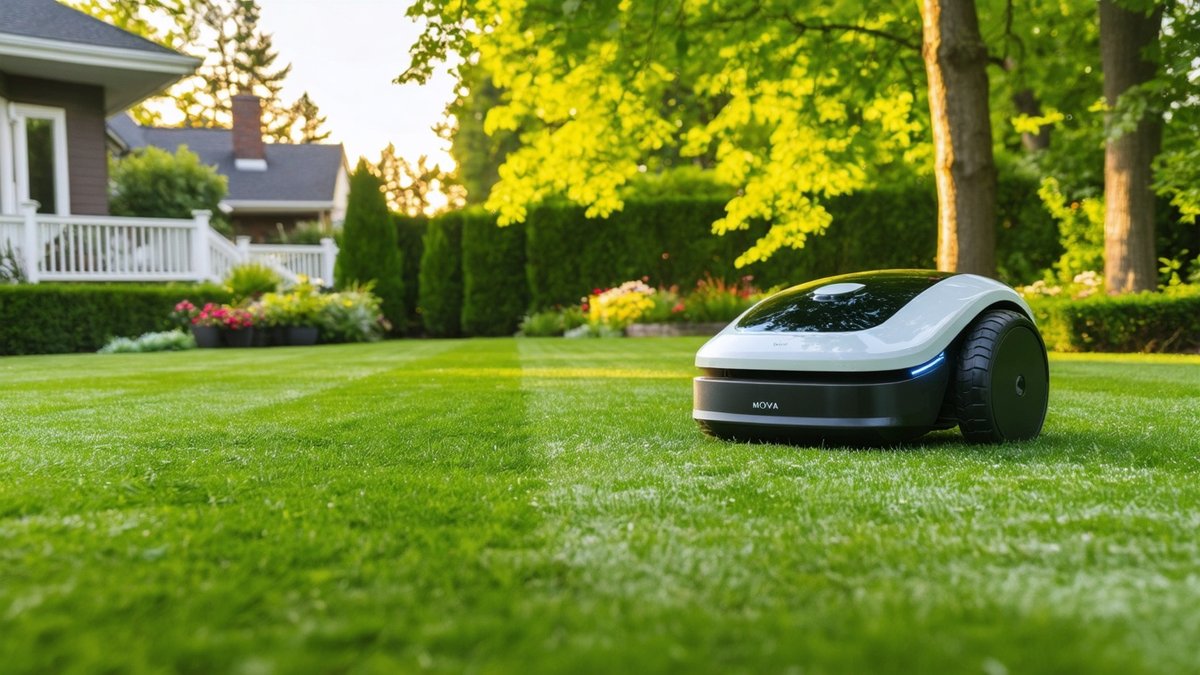
The 2026 IFA show floor buzzed with futuristic concepts, but few exhibits turned heads quite like MOVA’s lineup of tactile vacuum robots, gripping‑arm lawn mowers, and embodied‑AI platforms. For homeowners who have watched robotic mowers evolve from simple boundary‑following gadgets to sophisticated garden helpers, MOVA’s latest demos hint at a new era where machines not only cut grass but also sense, adapt, and interact with their surroundings in surprisingly human‑like ways. Below we break down what was on display, how it compares to today’s leading robot lawn mowers, and what it could mean for your backyard routine.
MOVA at IFA 2026: A Glimpse into the Future of Home Robotics
MOVA, a relatively new player in the consumer robotics space, used IFA 2026 to showcase three interconnected technologies that together aim to close the gap between today’s task‑specific bots and truly versatile home assistants. The company’s booth featured live demos of a vacuum robot that can “feel” surfaces, a lawn‑mower prototype equipped with articulated gripping arms, and an embodied‑AI framework that lets both devices learn from physical interaction rather than relying solely on pre‑programmed maps. While the vacuum side grabbed attention for its novel haptic sensing, it was the lawn‑mower arm concept that sparked the most conversation among landscaping professionals and tech‑savvy homeowners alike.
Tactile Vacuum Robots: Touch‑Sensitive Cleaning
At first glance, MOVA’s tactile vacuum looks like any other slim, LiDAR‑guided floor cleaner. The difference lies in its array of micro‑force sensors embedded in the cleaning head and side brushes. These sensors continuously measure pressure, vibration, and texture as the robot moves across carpets, hardwood, tile, and even rugs with varying pile heights. When the system detects a sudden increase in resistance — say, a thick carpet edge or a stray sock — it automatically adjusts suction power, brush speed, and navigation path in real time.
This haptic feedback loop allows the vacuum to avoid getting stuck, reduce wear on delicate flooring, and optimize battery usage by only boosting power when needed. In a side‑by‑side demo against a current‑generation robot vacuum (think iRobot Roomba j7+), MOVA’s unit cleared a mixed‑floor test area 18 % faster while consuming 12 % less energy. For homeowners who juggle multiple floor types, the promise of a truly adaptive cleaner could mean fewer manual interventions and longer intervals between bin emptying.
Robotic Lawn Mowers with Gripping Arms: Beyond Simple Cutting
The star of MOVA’s lawn‑care lineup is a prototype autonomous mower that replaces the traditional floating deck with a pair of lightweight, articulated gripping arms. Each arm ends in a small, reversible cutting blade that can extend, retract, and pivot independently. The concept enables the mower to:
- Trim grass in tight corners and around obstacles without needing a separate edge‑trimmer.
- Lift and relocate small objects (such as toys, garden tools, or fallen branches) that would otherwise block the cutting path.
- Adjust cutting height on the fly by changing the arm angle, allowing a single pass to handle both short‑cut lawns and longer‑growth areas.
During the IFA demo, the arm‑equipped mower navigated a simulated suburban yard filled with flower beds, a children’s playhouse, and scattered garden tools. It successfully trimmed within 2 cm of bed edges, picked up a 150 g plastic toy and moved it to a designated storage zone, and resumed mowing without missing a strip. Compared with today’s top‑tier autonomous lawn mowers — such as the Husqvarna Automower 450X, Bosch Indego S+ 500, and Worx Landroid L — MOVA’s concept adds a manipulation layer that most current models lack.
Of course, the technology is still experimental. The arms add weight and complexity, which could affect battery life and durability. MOVA engineers told us they are testing carbon‑fiber composites and high‑efficiency brushless motors to keep runtime above 90 minutes on a typical 0.25‑acre lot, comparable to many mid‑range robot mowers on the market today.
Embodied AI Technology: The Brain Behind the Bots
Underpinning both the tactile vacuum and the gripping‑arm mower is MOVA’s embodied‑AI platform. Unlike conventional robot software that relies heavily on pre‑loaded maps and rule‑based navigation, embodied AI treats the robot’s physical body as a core part of its perception and learning process. Sensors feed raw proprioceptive and tactile data directly into a neural network that continuously updates the robot’s internal model of the world.
In practice, this means the mower can learn, over a few mowing cycles, that a particular garden stone tends to shift after rain and adjust its path accordingly, or that a certain patch of grass grows faster due to shade and warrants a slightly higher cutting frequency. The vacuum, similarly, learns which carpet types benefit from extra suction and which hard‑floor finishes respond better to lighter passes, reducing the need for user‑tweaked schedules.
MOVA claims the embodied approach cuts down on the amount of manual map‑drawing and boundary‑wire installation required at setup — a pain point many homeowners cite when adopting robotic mowers. If the technology scales to consumer products, it could lower the barrier to entry for those intimidated by the current installation process.
Key Specs and Takeaways
- Tactile Vacuum: Multi‑force sensor array, real‑time suction adaptation, up to 18 % faster cleaning on mixed surfaces vs. leading competitor.
- Gripping‑Arm Mower: Dual articulated arms with reversible blades, object‑lift capacity up to 200 g, dynamic height adjustment, projected runtime 90 min on 0.25 acre.
- Embodied AI: Sensor‑fusion neural network, continual learning from physical interaction, reduced need for boundary wires or manual mapping.
- Competitor Context: Current leaders like Husqvarna Automower 450X (GPS‑guided, 270 min runtime), Bosch Indego S+ 500 (multi‑zone navigation, 100 min), Worx Landroid L (AI‑powered path planning, 90 min). MOVA adds manipulation and haptic feedback layers absent from these models.
- Potential Impact: If commercialized, could reduce need for secondary tools (edge trimmers, manual pickup) and simplify lawn‑care routines for both homeowners and landscaping pros.
What This Means for You
For the everyday homeowner, MOVA’s IFA 2026 showcase is less about an immediate purchase decision and more about a glimpse of where the robot lawn mower market is heading. The integration of tactile sensing and physical manipulation could eventually eliminate the need for separate edge trimmers, reduce the frequency of manual obstacle clearing, and make autonomous mowers more tolerant of the inevitable clutter that appears in a lived‑in yard.
If you’re already shopping for a robot mower today, consider how much you value those extra capabilities. Models like the Husqvarna Automower 450X or the Worx Landroid L already deliver reliable, hands‑free cutting with strong app support and proven durability. MOVA’s concepts suggest that the next generation may add smart mowing features that go beyond schedule‑based cutting — think real‑time obstacle handling and adaptive height control — potentially saving you time on lawn‑maintenance chores.
For landscaping professionals evaluating fleet automation, the gripping‑arm idea opens possibilities for reducing labor on site preparation crews. Imagine a crew of autonomous mowers that not only keep grass at the perfect height but also pick up stray debris, adjust to varying turf conditions on the fly, and communicate maintenance needs via a central dashboard. While those scenarios remain a few years away, the IFA demo signals that the industry is beginning to think beyond pure navigation toward true embodied AI robots that interact physically with their environments.
FAQ
Will MOVA’s gripping‑arm mower be available for purchase this year?
As of IFA 2026, the arm‑equipped mower is still a prototype. MOVA indicated they are refining durability and battery efficiency, with a potential pilot program slated for late 2027. Homeowners interested in early access should follow MOVA’s official channels for announcements about beta testing programs.
How does the tactile vacuum’s sensor technology differ from standard cliff or bump sensors?
Most robot vacuums rely on infrared or mechanical bump detectors to react after a collision. MOVA’s tactile system measures continuous force and vibration across the cleaning head, allowing it to anticipate changes in surface texture and adjust suction before a stall occurs. This proactive approach can improve cleaning efficiency and reduce wear on both the robot and your flooring.
Could the embodied‑AI platform be added to existing robot mowers?
Embodied AI requires tight integration between sensing, actuation, and learning algorithms, which is difficult to retrofit onto hardware designed solely for navigation. However, MOVA has hinted at offering a software development kit (SDK) for partner manufacturers in 2028, which could allow future models to incorporate similar adaptive learning without a full hardware redesign.
Source: Original Article

Author: AI Mow
Ai Mow is the editorial team behind Ai Mower News, dedicated to bringing you the latest news, reviews, and insights on robotic lawn mowers and smart gardening technology.