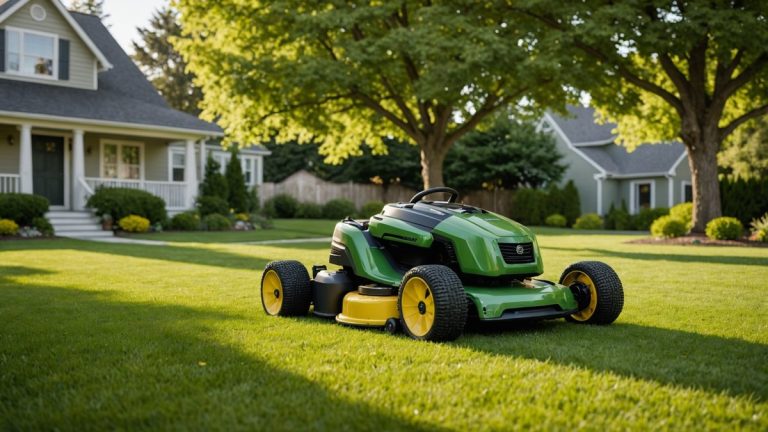
Imagine waking up to a perfectly manicured lawn—every single day—without lifting a finger. That’s the promise of the latest wave of robotic mowers, and after putting nine models through their paces, it’s clear that these autonomous lawn mowers are no longer just a luxury for tech enthusiasts. They’re a game-changer for homeowners and pros alike, blending smart mowing technology with real-world practicality. But not all robot lawn mowers are created equal. Here’s what you need to know to pick the best one for your yard.
Why Robotic Mowers Are Worth the Investment
The days of pushing a heavy mower under the blazing sun are fading fast. Today’s robotic mowers handle the work for you, using GPS, sensors, and AI to navigate complex lawns, avoid obstacles, and even adjust cutting patterns based on grass growth. For homeowners, that means more free time and a consistently neat lawn. For landscaping professionals, it’s an opportunity to automate routine maintenance and focus on higher-value tasks.
What’s more, these machines are smarter than ever. Many now integrate with smart home systems, allowing you to control them via apps, set mowing schedules, or even monitor their progress remotely. Some models, like those from Husqvarna and Worx, even offer voice control through Alexa or Google Assistant. And with battery life improving across the board, you can expect longer runtimes and quicker recharging—critical for larger properties.
Top 5 Robotic Mowers That Stood Out in Testing
After evaluating nine of the latest models, five rose to the top based on performance, ease of use, and value. Here’s a quick look at the standouts:
- Husqvarna Automower 430XH – The premium pick for large lawns (up to 0.8 acres). Features GPS-assisted navigation, all-wheel drive, and a weather-resistant design. Ideal for complex yards with slopes up to 45%.
- Worx Landroid M WR155 – A budget-friendly robot lawn mower that punches above its weight. Handles yards up to 0.5 acres, offers app control, and includes a rain sensor to pause mowing in wet conditions.
- Gardena Sileno Life – Perfect for medium-sized lawns (up to 0.4 acres). Quiet operation, precise edge cutting, and a user-friendly app make it a favorite for suburban homeowners.
- Robomow RS630 – A heavy-duty option for professional landscapers or large residential properties. Covers up to 1.25 acres, with a robust build and advanced obstacle detection.
- Ecovacs Goat G1 – A newer entrant with AI-powered navigation and a focus on eco-friendliness. Great for tech-savvy users who want a smart mowing experience with minimal environmental impact.
Key Features to Compare Before Buying
Not all autonomous lawn mowers are built the same, so it’s important to match the model to your specific needs. Here are the critical factors to weigh:
- Lawn Size Capacity – Measured in acres or square feet. Smaller models (like the Worx Landroid) max out at 0.5 acres, while pro-grade machines (like the Robomow RS630) tackle 1+ acres.
- Navigation Technology – Basic models use random patterns, while advanced robotic mowers (e.g., Husqvarna 430XH) use GPS or AI for systematic, efficient coverage.
- Battery Life & Charging – Look for lithium-ion batteries with 60-90 minutes of runtime. Some models return to their docking stations automatically to recharge.
- Terrain Handling – If your yard has steep slopes (over 20%), opt for a model with all-wheel drive and high-traction wheels.
- Smart Features – App control, voice assistant compatibility, and rain sensors add convenience. Some even integrate with smart home ecosystems like HomeKit or SmartThings.
- Installation & Boundary Setup – Most robot lawn mowers require a boundary wire, but newer models (like the Ecovacs Goat G1) use virtual boundaries for easier setup.
How Robotic Mowers Stack Up Against Traditional Options
If you’re on the fence about switching from a traditional mower, here’s how autonomous lawn mowers compare:
Pros:
- Time-Saving – Set it and forget it. No more weekly mowing chores.
- Consistency – Frequent, small cuts promote healthier grass and a manicured look.
- Eco-Friendly – Electric models produce zero emissions and use less energy than gas mowers.
- Quiet Operation – Most run at 50-60 decibels, making them neighborhood-friendly.
Cons:
- Upfront Cost – Quality robotic mowers range from $800 to $3,500, though they pay for themselves in time and fuel savings over time.
- Initial Setup – Installing boundary wires or mapping your lawn can be labor-intensive.
- Limited for Rough Terrain – While improving, most struggle with very uneven or rocky yards.
For comparison, traditional gas mowers are cheaper upfront but require ongoing maintenance (oil changes, spark plugs) and fuel costs. Ride-on mowers are great for large properties but demand significant storage space and manual effort.
What This Means for You
So, is a robotic mower right for you? If you value convenience, consistency, and long-term savings, the answer is likely yes. Homeowners with small to medium lawns can find excellent options under $1,500, like the Worx Landroid or Gardena Sileno Life. For larger properties or professional use, investing in a high-end model like the Husqvarna Automower or Robomow RS630 will deliver the best results.
Pro tip: Start by measuring your lawn’s size and noting any obstacles (trees, flower beds, slopes). This will help you narrow down models that fit your needs. Also, check local dealer support—some brands, like Husqvarna and STIHL, have extensive service networks for repairs and maintenance.
Finally, don’t overlook the smart mowing features. If you’re already invested in a smart home ecosystem, prioritize models that integrate seamlessly with your existing setup.
FAQ
Are robotic mowers safe for pets and kids?
Yes! Most autonomous lawn mowers are designed with safety in mind. They feature lift sensors (which stop the blades if the mower is tilted) and collision sensors to avoid obstacles. However, it’s still wise to supervise pets and children until they’re accustomed to the mower’s operation. Some models, like the Husqvarna Automower, even have PIN-code locks to prevent unauthorized use.
How often do robotic mowers need maintenance?
Less than traditional mowers, but some upkeep is required. Typically, you’ll need to:
- Clean the blades and undercarriage after each use (or weekly, depending on debris).
- Replace blades every 2-3 months (or as needed based on wear).
- Check and clean the wheels and sensors periodically.
- Replace the battery every 2-4 years, depending on usage.
Most brands offer maintenance kits and guides to simplify the process.
Can a robotic mower handle multiple zones or separate lawn areas?
It depends on the model. Basic robot lawn mowers are designed for a single, continuous lawn area defined by a boundary wire. However, advanced models like the Husqvarna Automower 430XH or Ecovacs Goat G1 support multi-zone mowing. These allow you to set up separate areas (e.g., front yard and back yard) and program the mower to tackle them sequentially or on a schedule. Some even use GPS to switch between zones without boundary wires.
Source: Original Article

Author: AI Mow
Ai Mow is the editorial team behind Ai Mower News, dedicated to bringing you the latest news, reviews, and insights on robotic lawn mowers and smart gardening technology.