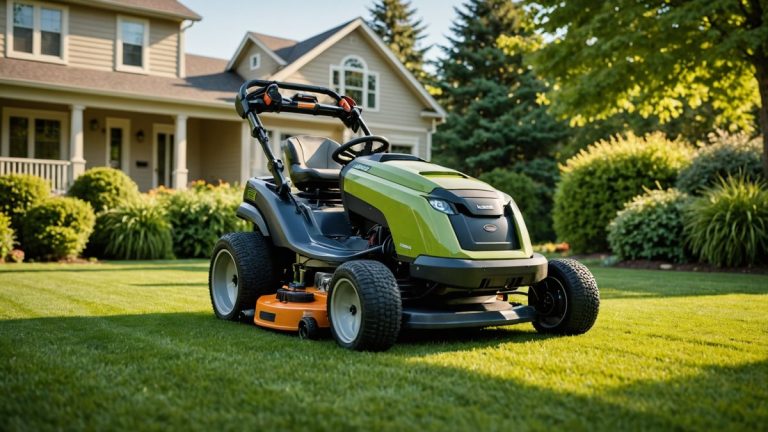
Imagine waking up to a perfectly manicured lawn—every single day—without lifting a finger. That’s the promise of today’s robotic mowers, but not all models deliver the same level of convenience, efficiency, or smart features. After hands-on testing of nine top contenders, we’ve narrowed it down to the five autonomous lawn mowers that truly stand out in 2024, balancing cutting performance, smart connectivity, and real-world reliability. Whether you’re a homeowner tired of weekend chores or a landscaping pro exploring fleet automation, this guide cuts through the noise to help you find the best robot lawn mower for your needs.
Why Robotic Mowers Are a Game-Changer for Homeowners and Pros
The shift from traditional mowers to autonomous lawn care isn’t just about saving time—it’s about redefining how we think about yard maintenance. Modern robotic mowers leverage GPS, AI-driven navigation, and weather-adaptive scheduling to keep lawns looking sharp with minimal human intervention. For homeowners, that means reclaiming weekends. For commercial landscapers, it’s a way to scale services without adding labor costs. Models like the Husqvarna Automower NERA and Worx Landroid Vision even use cameras and machine learning to avoid obstacles, a leap forward from the bump-and-turn approach of earlier generations.
What’s more, today’s best robot lawn mowers integrate seamlessly with smart home ecosystems. Voice control via Alexa or Google Assistant, app-based zone management, and automatic firmware updates are now standard in premium models. Even mid-range options from brands like Gardena and Ecovacs offer impressive automation, making smart mowing accessible to a broader audience.
The Top 5 Robotic Mowers of 2024: Key Standouts
Our testing focused on five critical areas: cutting performance, battery life, navigation intelligence, ease of setup, and smart features. Here are the models that rose to the top:
1. Husqvarna Automower NERA S500
The Husqvarna Automower NERA S500 is the most advanced autonomous lawn mower we’ve tested, thanks to its NVIDIA-powered vision system and 360-degree obstacle detection. Unlike older models that rely solely on perimeter wires, the NERA uses virtual boundaries, making installation a breeze. Its battery life is impressive, covering up to 0.5 acres on a single charge, and the cutting height adjusts automatically based on grass growth. For pros, the fleet management app allows monitoring multiple units at once—a major advantage for commercial robotic mower deployments.
2. Worx Landroid Vision WR205
If you want a robot lawn mower with a focus on affordability and smart features, the Worx Landroid Vision WR205 is a standout. Its dual-blade cutting system delivers a clean, mulched finish, and the vision-based navigation avoids pet toys, gardening tools, and even small animals. The companion app is one of the most user-friendly we’ve seen, with customizable mowing schedules and real-time tracking. At around $1,300, it’s a fraction of the cost of the NERA but still packs a punch for small to medium yards (up to 0.25 acres).
3. Gardena Smart Sileno Life
The Gardena Smart Sileno Life excels in quiet operation and eco-friendliness. This model is ideal for noise-sensitive neighborhoods, as it operates at just 57 dB—quieter than a normal conversation. It’s also one of the few robotic mowers with a built-in rain sensor, pausing operations during downpours to protect your lawn and the mower’s electronics. The Sileno Life is perfect for smaller lawns (up to 0.125 acres) and integrates with Gardena’s Smart Irrigation system for a fully automated yard.
4. Ecovacs Goat G1
For larger properties, the Ecovacs Goat G1 is a beast. This autonomous lawn mower can handle up to 1.2 acres and features a modular battery system, allowing you to swap in fresh batteries for extended runtime. The Goat G1 also boasts a robust all-wheel-drive system, making it one of the best options for hilly or uneven terrain. Its AI-powered navigation learns your yard over time, optimizing mowing patterns for efficiency. While it’s pricier (around $2,500), the Goat G1 is a workhorse for homeowners with expansive lawns or pros managing multiple properties.
5. Mammotion LUBA 2 AWD
Rounding out our list is the Mammotion LUBA 2 AWD, a versatile robotic mower that punches above its weight. Its all-wheel-drive system and high-torque motors tackle steep slopes (up to 35 degrees) with ease, and the 3D obstacle avoidance is among the best in its class. The LUBA 2 also supports virtual boundaries, eliminating the need for perimeter wires. With a cutting width of 9.4 inches and a runtime of up to 3 hours, it’s a great mid-range option for yards up to 0.5 acres.
Robotic Mower Comparison: Key Specs at a Glance
To help you compare, here’s a quick rundown of the standout features for each model:
- Husqvarna Automower NERA S500: Virtual boundaries, NVIDIA vision system, 0.5-acre coverage, fleet management app.
- Worx Landroid Vision WR205: Dual-blade cutting, vision-based navigation, 0.25-acre coverage, $1,300 price point.
- Gardena Smart Sileno Life: 57 dB operation, rain sensor, 0.125-acre coverage, smart irrigation integration.
- Ecovacs Goat G1: 1.2-acre coverage, modular batteries, all-wheel drive, AI-powered navigation.
- Mammotion LUBA 2 AWD: All-wheel drive, 35-degree slope capability, virtual boundaries, 0.5-acre coverage.
What to Consider Before Buying a Robotic Mower
While the idea of a robot lawn mower handling all the work is appealing, there are a few factors to weigh before making a purchase:
- Yard Size and Layout: Most autonomous lawn mowers have a maximum coverage area. If your lawn exceeds 0.5 acres, look for models like the Ecovacs Goat G1 or Husqvarna NERA S500. Also, consider obstacles like trees, flower beds, or steep slopes—some mowers handle these better than others.
- Installation: Traditional perimeter wire setups can be labor-intensive. If you prefer a wire-free experience, opt for models with virtual boundaries (e.g., Husqvarna NERA or Mammotion LUBA 2).
- Smart Features: Do you want voice control, app-based scheduling, or integration with other smart home devices? Premium models offer these, but they come at a higher cost.
- Budget: Entry-level robotic mowers start around $800, while high-end models can exceed $3,000. Determine which features are must-haves and where you can compromise.
- Maintenance: Even the best robot lawn mowers require occasional blade sharpening, battery replacements, and cleaning. Check the manufacturer’s recommendations for upkeep.
If you’re still unsure, consider starting with a mid-range model like the Worx Landroid or Gardena Sileno Life to test the waters before investing in a premium option.
Bottom Line: What This Means for You
The robotic mower market has never been more competitive, and 2024’s top models offer unprecedented levels of automation, intelligence, and convenience. For homeowners, the choice comes down to yard size, budget, and desired features. The Husqvarna NERA S500 and Ecovacs Goat G1 are ideal for large or complex lawns, while the Worx Landroid Vision and Gardena Sileno Life are perfect for smaller, simpler yards. Pros looking to automate fleet management should prioritize models with multi-unit tracking and robust navigation, like the NERA S500.
No matter which model you choose, the shift to smart mowing is a game-changer. These machines don’t just save time—they deliver consistent, high-quality results that manual mowing can’t match. As the technology continues to evolve, we can expect even smarter, more efficient autonomous lawn mowers in the years to come.
FAQ
Are robotic mowers worth the investment?
For most homeowners, yes—especially if you value your time and want a consistently well-maintained lawn. While the upfront cost is higher than a traditional mower, the long-term savings in labor (and potential landscaping services) often justify the expense. Plus, many robot lawn mowers pay for themselves within a few years by reducing the need for professional lawn care.
Can a robotic mower handle complex yards with obstacles?
It depends on the model. Older robotic mowers struggled with obstacles, but newer models like the Husqvarna NERA S500 and Mammotion LUBA 2 AWD use advanced sensors and AI to navigate around trees, flower beds, and even small objects. If your yard has lots of obstacles, prioritize models with 3D obstacle avoidance or vision-based navigation.
Do robotic mowers work in the rain?
Most autonomous lawn mowers can operate in light rain, but heavy downpours can damage the electronics or create muddy conditions that hinder performance. Some models, like the Gardena Smart Sileno Life, have built-in rain sensors that pause mowing during heavy rain and resume once it’s safe. Always check the manufacturer’s guidelines for weather-related usage.
Source: Original Article

Author: AI Mow
Ai Mow is the editorial team behind Ai Mower News, dedicated to bringing you the latest news, reviews, and insights on robotic lawn mowers and smart gardening technology.