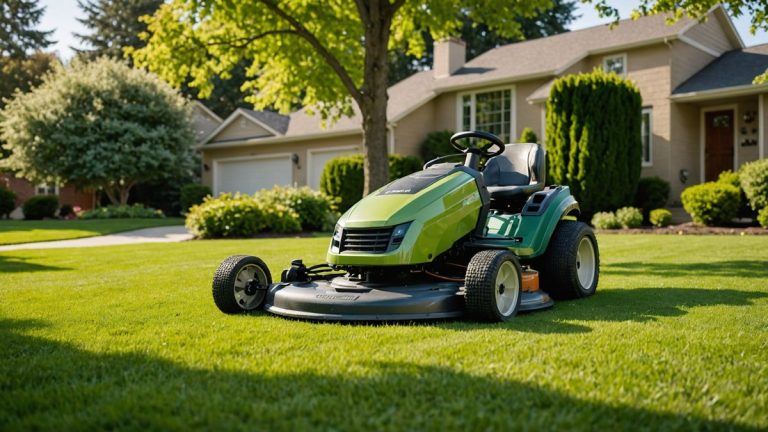
Imagine waking up to a perfectly manicured lawn—without lifting a finger. That’s the promise of robotic mowers, but do they actually deliver? We took several top models for a spin to separate the hype from the reality. From navigating tricky terrain to handling rain delays, we tested how these autonomous lawn mowers perform in real-world conditions. Here’s what we found.
Why Robotic Mowers Are Gaining Traction
The robot lawn mower market has exploded in recent years, driven by advancements in smart mowing technology and a growing demand for time-saving yard care solutions. Homeowners are tired of spending weekends pushing heavy mowers, while landscaping pros see automation as a way to scale their services. Brands like Husqvarna, Worx, and Gardena have led the charge, but newer players like Mammotion and EcoFlow are pushing boundaries with AI-driven features and longer battery life.
At their core, these machines are designed to maintain your lawn autonomously—cutting a little every day (or on a schedule) to keep grass at an ideal height without the stress of weekly mowing sessions. But not all models are created equal, and their performance can vary dramatically based on yard size, terrain, and even grass type.
How We Tested: Real-World Challenges for Robot Mowers
To evaluate these autonomous lawn mowers, we put them through a gauntlet of real-world scenarios:
- Obstacle Navigation: We set up courses with garden hoses, toys, and uneven terrain to see how well they avoided collisions or got stuck.
- Slope Performance: Tested on inclines up to 35 degrees to check traction and stability—critical for hilly yards.
- Rain and Wet Grass: Some models shut down in rain, while others power through. We measured how they handled slick surfaces and mud.
- Battery Life and Coverage: Tracked how long each could run on a single charge and whether they efficiently covered large or complex-shaped lawns.
- Setup and Smart Features: Evaluated ease of installation, app connectivity, and customization options like zoning and no-go areas.
Spoiler: The best robotic mowers aren’t just set-and-forget gadgets—they require some initial setup and occasional maintenance, but the payoff in time saved is substantial.
Standout Performers (and Where They Excel)
While we won’t crown a single “best” model (your yard’s needs are unique), a few robot lawn mowers stood out in our tests:
- Husqvarna Automower 450X: The gold standard for large yards (up to 1.25 acres). Its GPS-assisted navigation and all-wheel drive tackled steep slopes effortlessly. The companion app lets you adjust mowing schedules remotely, and its weather timer avoids mowing in rain. Downside: Premium pricing and a complex installation process.
- Worx Landroid M 20V: A budget-friendly option that punches above its weight. It handled medium-sized lawns (up to 0.5 acres) with ease, and its modular battery system works with other Worx tools. The AI-driven “Cut to Edge” feature ensures clean lines along borders. Downside: Struggles with very steep hills.
- Gardena Smart Sileno Life: Ideal for smaller, urban lawns (up to 0.25 acres). It’s whisper-quiet (just 57 dB) and excels in tight spaces. The smart mowing system adapts cutting frequency based on grass growth. Downside: Limited to flatter terrain.
- Mammotion Luba AWD 5000: A newer entrant with all-wheel drive and a whopping 5,000 mAh battery, covering up to 1.2 acres. Its obstacle-avoidance tech is impressive, but the app interface feels less polished than Husqvarna’s.
For comparison, traditional gas mowers or even ride-ons can’t match the convenience of these autonomous lawn mowers, but they do require a boundary wire installation (except for newer wire-free models like the Mammotion Luba 2 AWD, which uses RTK GPS).
Common Pitfalls to Avoid
Not every robotic mower is a perfect fit for every yard. Here are the biggest challenges we encountered—and how to sidestep them:
- Boundary Wire Woes: Most models rely on a perimeter wire to define the mowing area. Burying or stapling this wire is a must to prevent tripping hazards or accidental cuts. Skipping this step can lead to a mower that wanders into flower beds or misses patches of grass.
- Uneven Terrain: If your yard has deep ruts, tree roots, or abrupt drops, opt for a model with large, treaded wheels (like the Husqvarna 450X) or all-wheel drive. Smaller mowers may get stuck or scalped grass in dips.
- Pet and Kid Safety: All robot lawn mowers have safety features like lift sensors and emergency stop buttons, but they’re not foolproof. Keep pets and children indoors during the first few mowing cycles to observe how the machine behaves.
- Maintenance Neglect: These are low-maintenance compared to gas mowers, but they still need regular blade sharpening, undercarriage cleaning, and battery checks. Neglecting this can reduce cutting efficiency and lifespan.
What This Means for You
So, are robotic mowers worth it? For most homeowners with lawns under an acre, the answer is a resounding yes—if you’re willing to invest in the right model for your yard. The upfront cost (typically $800–$3,500) is offset by the time you’ll save and the long-term reduction in fuel, oil, and maintenance expenses associated with traditional mowers.
For landscaping pros, these machines can be a game-changer for maintaining multiple properties efficiently. Models like the Husqvarna Automower NERA (a commercial-grade autonomous lawn mower) can handle up to 2.5 acres on a single charge, making them ideal for fleet automation.
That said, they’re not a magic bullet. If your yard is heavily wooded, has extreme slopes, or features numerous obstacles, you may need to supplement with a traditional mower for tricky areas. But for the average suburban lawn, a robot lawn mower can deliver a golf-course-worthy finish with minimal effort.
Final Verdict: The Future of Lawn Care Is Here
The robotic mower revolution is in full swing, and the technology has matured to the point where it’s a viable alternative to traditional mowing for most homeowners. While no model is perfect, the best autonomous lawn mowers offer a compelling blend of convenience, efficiency, and smart features that justify their cost. As battery life improves and AI navigation becomes more sophisticated, we expect these machines to become even more capable in the coming years.
If you’re on the fence, consider starting with a mid-range model like the Worx Landroid or Gardena Sileno to test the waters. For larger properties or professional use, the Husqvarna Automower series remains the benchmark. Whichever you choose, you’re investing in more free time—and who can put a price on that?
FAQ
How long do robotic mowers last?
With proper maintenance, a high-quality robotic mower can last 8–10 years or more. The lithium-ion batteries typically degrade after 3–5 years, but they’re often replaceable. Blade life varies but usually requires replacement or sharpening every 1–2 months, depending on usage.
Can a robotic mower handle multiple zones or separate lawn areas?
Yes, but it depends on the model. Advanced robot lawn mowers like the Husqvarna Automower 450X or Mammotion Luba allow you to define multiple zones using the boundary wire or GPS. Some even support “island” areas (e.g., a front yard and back yard separated by a driveway) with the help of a guide wire or additional base stations.
Do robotic mowers work in the rain?
Most autonomous lawn mowers have rain sensors and will return to their charging stations when precipitation is detected. However, some budget models may not handle wet grass well, leading to clumping or uneven cuts. If your area gets frequent rain, look for a model with robust weatherproofing and traction, like the Husqvarna Automower or EcoFlow Blade.
Source: Original Article

Author: AI Mow
Ai Mow is the editorial team behind Ai Mower News, dedicated to bringing you the latest news, reviews, and insights on robotic lawn mowers and smart gardening technology.