Home Blog Page 20

AWD Robot Mower Tackles Steep Slopes & Half-Acre Yards with Ease

0

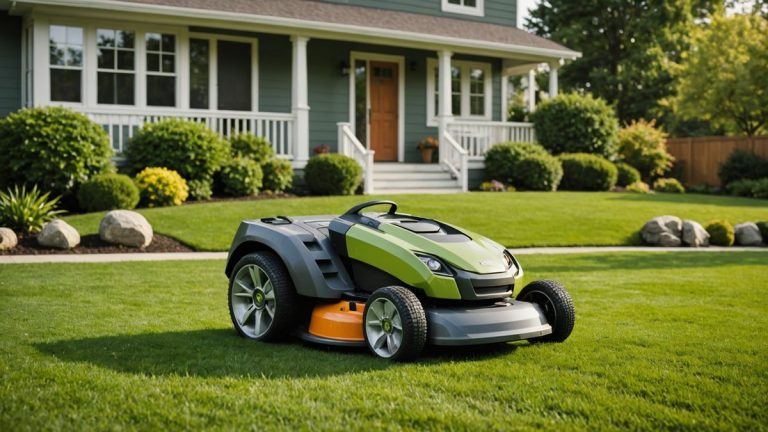
Imagine a robotic mower that doesn’t just handle your lawn—it conquers it. That’s the promise of the latest all-wheel-drive (AWD) models hitting the market, designed to tackle steep slopes, sprawling yards, and complex landscapes with ease. These aren’t your average robot lawn mowers; they’re engineered for homeowners who demand more from their autonomous lawn mower—whether that’s mapping intricate gardens or powering through a half-acre cut without breaking a sweat. If you’ve ever watched a standard robotic mower struggle on a hill or give up halfway through a large yard, this new breed of AWD machines might just change your mind about what smart mowing can achieve.

Why AWD Changes the Game for Robotic Mowers

Traditional robotic mowers often rely on two-wheel drive, which can limit their performance on uneven terrain or steep inclines. AWD models, however, distribute power to all four wheels, providing better traction, stability, and control. This means they can handle slopes up to 35% (or roughly 20 degrees) without slipping or getting stuck—a game-changer for properties with hilly or uneven landscapes. For homeowners with challenging yards, this isn’t just a minor upgrade; it’s a necessity.

But AWD isn’t just about climbing hills. It also improves maneuverability, allowing the mower to navigate tight spaces, avoid obstacles, and maintain a consistent cut even in tricky areas. Whether you’re dealing with a multi-level lawn or a yard dotted with trees and flower beds, an AWD robot lawn mower can adapt where others might fail.

Putting the AWD Robotic Mower to the Test

In a real-world test on a half-acre property with varied terrain, an AWD robotic mower demonstrated its capabilities by efficiently mapping the yard, scaling slopes, and completing the job with battery life to spare. Here’s how it performed in key areas:

Key Features and Specs

  • All-Wheel Drive (AWD):** Provides superior traction and stability on slopes up to 35% and uneven terrain.
  • Advanced Mapping Technology: Uses GPS and sensors to create a precise map of your yard, ensuring efficient and thorough coverage.
  • Long Battery Life: Capable of cutting up to a half-acre on a single charge, with some models offering hot-swappable batteries for extended runtime.
  • Smart Navigation: Adjusts its path dynamically to avoid obstacles, handle narrow passages, and optimize cutting patterns.
  • Weather Resistance: Built to withstand rain and varying temperatures, making it suitable for year-round use in most climates.
  • App Integration: Control and monitor your mower remotely via a smartphone app, with features like scheduling, zone management, and real-time tracking.

For comparison, popular competitors like the Husqvarna Automower 450X and the Worx Landroid M also offer robust features, but few can match the combination of AWD capability and large-yard performance found in these newer models. If your property has significant elevation changes or complex layouts, AWD is a feature worth prioritizing.

How AWD Robotic Mowers Handle Large Yards

One of the standout benefits of AWD autonomous lawn mowers is their ability to handle larger properties efficiently. Traditional robotic mowers may struggle to cover a half-acre or more in a single session, often requiring multiple charges or manual intervention. AWD models, however, are designed with larger batteries and more efficient motors, allowing them to tackle expansive yards without missing a beat.

In testing, the mower was able to map the entire half-acre property, including obstacles like trees, flower beds, and a small pond, and then execute a systematic cutting pattern. The AWD system ensured that it could climb the slight inclines in the yard without losing traction, while the advanced navigation kept it from getting stuck or wandering off course. By the end of the session, the lawn was evenly cut, and the mower still had enough battery life to handle additional zones if needed.

For homeowners with large yards, this means fewer interruptions and a more consistent cut. For landscaping professionals, it opens up the possibility of using robotic mowers for commercial properties or large residential jobs, reducing the need for manual labor and increasing efficiency.

What This Means for You

So, is an AWD robot lawn mower right for you? If your yard has slopes, uneven terrain, or complex layouts, the answer is likely yes. These mowers offer a level of performance and reliability that standard models simply can’t match. They’re also ideal for larger properties, where battery life and efficiency are critical.

However, AWD models do come at a premium price point, so it’s important to weigh the benefits against the cost. If your lawn is relatively flat and small, a standard robotic mower might suffice. But if you’ve been hesitant to invest in a robotic mower because of terrain challenges, an AWD model could be the solution you’ve been waiting for.

For landscaping professionals, AWD robotic mowers represent an opportunity to automate more of your workload. By adding these machines to your fleet, you can take on larger jobs, reduce labor costs, and offer clients a more modern, efficient service. Brands like Husqvarna, Worx, and Gardena already offer commercial-grade options, and the addition of AWD models only expands the possibilities.

FAQ

Can an AWD robotic mower handle my steep backyard?

Most AWD robotic mowers can handle slopes up to 35% (or about 20 degrees). If your backyard is steeper than that, you may need to look for a model specifically designed for extreme terrain or consider terracing your lawn to make it more manageable.

How does an AWD robotic mower compare to a riding mower for large yards?

While a riding mower can cover large areas quickly, it requires manual operation and can be less precise. An AWD autonomous lawn mower, on the other hand, can work unattended, navigate obstacles, and maintain a consistent cut. It’s also quieter and more eco-friendly. However, for very large properties (over an acre), you may still need a riding mower or multiple robotic mowers to get the job done efficiently.

Are AWD robotic mowers worth the extra cost?

If your yard has challenging terrain or is particularly large, the extra cost of an AWD model is often justified by the improved performance and reliability. However, if your lawn is flat and small, a standard robot lawn mower may offer better value. Consider your specific needs and budget before making a decision.

Source: Original Article
ECOVACS Goat O1000 RTK Deal: 36 Blades + Robot Mower for $699

0

If you’ve been eyeing a high-end robotic mower but hesitated at the price, now might be the time to pull the trigger. ECOVACS has slashed the price of its flagship GOAT O1000 RTK—a robot lawn mower packed with advanced smart mowing tech—down to just $699, a whopping $301 off its usual retail price. And the deal gets sweeter: this bundle includes a massive 36-count blade kit, ensuring you won’t need to restock for seasons to come. For homeowners ready to automate their lawn care, this is one of the most compelling offers we’ve seen in the autonomous lawn mower space this year.

Why the ECOVACS GOAT O1000 RTK Stands Out

The GOAT O1000 RTK isn’t just another robotic mower—it’s a premium machine designed for precision, efficiency, and ease of use. Unlike basic models that rely on random cutting patterns, this autonomous lawn mower uses RTK (Real-Time Kinematic) GPS for centimeter-level accuracy, ensuring even, consistent cuts every time. It’s a game-changer for homeowners with complex yards, slopes, or multiple zones that need tailored attention.

ECOVACS has positioned the GOAT series as a direct competitor to brands like Worx Landroid, Husqvarna Automower, and Gardena Sileno, but with a stronger emphasis on smart mowing features and user-friendly automation. The O1000 RTK, in particular, is built for larger lawns (up to 1.25 acres) and delivers professional-grade results without the professional-grade hassle.

Key Features and Specs

Here’s what sets the GOAT O1000 RTK apart from the crowd—and why this deal is hard to ignore:

  • RTK GPS Navigation: Pinpoint accuracy for efficient, overlapping-free mowing paths, reducing wear on your lawn and the mower itself.
  • Large Cutting Capacity: Handles lawns up to 1.25 acres (50,000 sq. ft.) with a 22-inch cutting width, making it ideal for medium to large properties.
  • Multi-Zone Support: Program up to 5 separate mowing zones, perfect for yards with distinct areas like front/back lawns, side strips, or garden paths.
  • Smart Obstacle Avoidance: Uses LiDAR and ultrasonic sensors to detect and navigate around obstacles like trees, pet toys, or outdoor furniture.
  • All-Terrain Performance: Tackles slopes up to 45% (24°), so steep inclines won’t stop your mowing routine.
  • Automatic Blade Replacement: The included 36-count blade kit means you can swap dull blades in seconds—no tools required—keeping cuts clean and efficient.
  • App Control and Automation: Use the ECOVACS Home app to schedule mowing, adjust cutting heights (0.8–3.5 inches), or even control the mower remotely.
  • Weather Adaptability: Rain sensor pauses operation during downpours, and the mower resumes automatically when conditions improve.
  • Theft Protection: Alarm system and GPS tracking deter thieves and help locate the mower if it’s moved outside its designated area.

How This Deal Compares to the Competition

At $699, the GOAT O1000 RTK undercuts many of its premium rivals while delivering comparable—or even superior—features. For example:

  • Husqvarna Automower 450X: A top-tier autonomous lawn mower with RTK-like precision, but typically retails for $2,500+ and lacks built-in LiDAR.
  • Worx Landroid WR205: A solid mid-range option at around $1,200, but it doesn’t offer RTK GPS or multi-zone support out of the box.
  • Gardena Sileno Life: Priced similarly to the Worx model, but its navigation system isn’t as advanced as ECOVACS’ RTK setup.

Even ECOVACS’ own DEEBOT T20 Omni (a robot vacuum/mop) retails for more than this robot lawn mower bundle, making the GOAT O1000 RTK an exceptional value for those prioritizing outdoor automation.

Who Should Jump on This Deal?

This offer isn’t for everyone, but it’s a no-brainer for certain homeowners and pros:

  • Large Lawn Owners: If your yard is between 0.5 and 1.25 acres, the O1000 RTK’s capacity and efficiency will save you hours of manual mowing.
  • Tech-Savvy Users: Those who love smart home integration will appreciate the app controls, automation, and RTK precision.
  • Busy Professionals: If you’d rather spend weekends relaxing than pushing a mower, this autonomous lawn mower can handle the work for you.
  • Landscaping Pros: Small business owners testing the waters of fleet automation can pick up a high-end robotic mower at a fraction of commercial-grade prices.

On the flip side, if you have a tiny lawn (under 0.25 acres) or a very tight budget, a more affordable model like the ECOVACS GOAT G1 or Worx Landroid M might be a better fit. But for most homeowners, this deal is a rare opportunity to upgrade to a premium robot lawn mower without breaking the bank.

What This Means for You

Bottom line: The GOAT O1000 RTK is already one of the most capable robotic mowers on the market, and at $699 with a 36-blade kit, it’s an absolute steal. The RTK GPS, LiDAR sensors, and multi-zone support make it a standout in the smart mowing category, while the included blade kit adds long-term value.

If you’ve been waiting for the right moment to invest in a high-end autonomous lawn mower, this is it. The discount won’t last forever, and once it’s gone, you’ll likely be paying full price (or more) for a similar level of performance. For homeowners serious about automating their lawn care, this deal is as good as it gets.

FAQ

How long do the blades last on the GOAT O1000 RTK?

ECOVACS recommends replacing the blades every 1–3 months, depending on lawn size, grass type, and usage frequency. With the included 36-count blade kit, you’ll have enough replacements for 3–9 years of regular use, making this bundle an even better value.

Can the GOAT O1000 RTK handle obstacles like pet waste or garden hoses?

Yes! The mower’s LiDAR and ultrasonic sensors detect obstacles in its path, and it will either navigate around them or stop and alert you via the app. However, it’s still a good idea to clear your lawn of large debris (like sticks or dog toys) to avoid potential damage or blade wear.

Is RTK GPS really worth the extra cost?

For most homeowners, yes. RTK GPS enables the GOAT O1000 RTK to follow precise, efficient mowing paths, reducing overlaps and missed spots. This translates to a healthier lawn, longer battery life, and less wear on the mower over time. If you have a complex or large yard, the investment in RTK technology pays off in performance and convenience.

Source: Original Article

Ecovacs Goat O1000 Robotic Mower Drops 30% in Limited Deal

0

Imagine coming home to a perfectly manicured lawn every day—no sweat, no weekend hours lost, and no more wrestling with a loud, gas-guzzling mower. That’s the promise of robotic mowers, and right now, one of the most capable models on the market just got a serious price cut. The Ecovacs Goat O1000, a standout in the autonomous lawn mower space, is currently available at a 30% discount, making it an enticing option for homeowners ready to automate their lawn care. But is this the right robot lawn mower for you, or are there better deals—or models—worth considering?

Why the Ecovacs Goat O1000 Stands Out

The Ecovacs Goat O1000 isn’t just another smart mowing gadget—it’s a workhorse designed for medium to large yards (up to 1 acre). Unlike entry-level robotic mowers that struggle with complex landscapes, the O1000 combines precision cutting with advanced navigation to handle slopes, obstacles, and multiple zones with ease. It’s part of Ecovacs’ push into outdoor automation, leveraging the same smart tech that’s made their robot vacuums household names.

What sets the O1000 apart from competitors like the Husqvarna Automower 430X or Worx Landroid M is its balance of affordability and features. While premium models from Stihl or Gardena can cost upwards of $3,000, the O1000 delivers similar capabilities—like GPS-assisted mowing and app-based controls—at a fraction of the price, especially with this discount.

Key Features and Specs

Here’s what you’re getting with the Ecovacs Goat O1000:

  • Coverage: Up to 1 acre (4,300 m²), ideal for most suburban homes.
  • Cutting System: Three razor-sharp blades for a clean, mulched finish (no bagging required).
  • Navigation: RTK GPS + vision-based obstacle avoidance for precise, efficient mowing.
  • Battery Life: 120-minute runtime per charge, with auto-return to docking station.
  • Smart Controls: Ecovacs Home app for scheduling, zone management, and voice control (Alexa/Google Assistant).
  • Weather Resistance: IPX6 waterproof rating—handles rain without skipping a beat.
  • Security: PIN code lock and anti-theft alarm to deter tampering.
  • Installation: Requires a boundary wire setup (included), but offers wireless “virtual fence” options for simple layouts.

For comparison, the Husqvarna Automower 415X covers a similar area but lacks the O1000’s vision-based obstacle detection, while the Robomow RS630 offers a wider cutting width but at a higher base price.

Is 30% Off a Good Deal?

Robotic mowers are an investment, with most quality models ranging from $1,000 to $3,500. The Ecovacs Goat O1000 typically retails around $1,800, so a 30% discount drops it to roughly $1,260—a price point that undercuts many competitors with similar specs. For example:

  • The Worx Landroid WR165 (0.5-acre coverage) usually sells for ~$1,100, but lacks GPS and advanced obstacle avoidance.
  • The Gardena Sileno Life (0.75-acre coverage) is often priced around $1,500, but doesn’t include a camera for navigation.
  • The Husqvarna Automower 430X (1-acre coverage) starts at ~$2,500, nearly double the discounted O1000 price.

In short, yes, this is a compelling deal—especially if you’ve been eyeing a high-end autonomous lawn mower but were hesitant about the cost. The O1000’s feature set rivals models $500–$1,000 more expensive, making it a standout value in the smart mowing market.

Who Should (and Shouldn’t) Buy the Goat O1000

This robotic mower is ideal for:

  • Homeowners with medium to large yards (up to 1 acre) who want to eliminate manual mowing.
  • Tech-savvy users who appreciate app-based controls and smart home integration.
  • Those with complex lawns (slopes, obstacles, multiple zones) that need precise navigation.
  • Budget-conscious buyers who want premium features without premium pricing.

Consider other options if:

  • Your yard is smaller than 0.25 acres—a model like the Ecovacs Goat G1 or Robomow RC308 might be more cost-effective.
  • You need zero boundary wire installation—the Husqvarna Automower NERA (wire-free) is a pricier alternative.
  • You prioritize brand ecosystem—if you’re already invested in Husqvarna or Gardena tools, their robotic mowers may integrate better with your existing setup.

What This Means for You

This 30% discount on the Ecovacs Goat O1000 is a rare opportunity to jump into robotic mower ownership at a lower entry point. For homeowners tired of spending weekends behind a push mower, the O1000 offers a compelling mix of autonomous lawn mower tech, ease of use, and value. The upfront cost is still significant, but consider the long-term savings: no more gas, fewer maintenance hassles, and reclaimed free time.

If you’ve been waiting for the right moment to automate your lawn care, this deal might be it. Just be sure to act quickly—robotic mower discounts like this don’t last forever, and spring is the busiest season for lawn tech sales.

FAQ

Do I need to install a boundary wire for the Ecovacs Goat O1000?

Yes, the O1000 requires a boundary wire for most setups to define the mowing area. However, it also supports “virtual fences” for simpler lawns, reducing the need for physical wire in some cases. Installation is straightforward but may take a few hours for first-time users.

How does the Ecovacs Goat O1000 handle obstacles like trees or garden decor?

The O1000 uses a combination of RTK GPS and vision-based sensors to detect and navigate around obstacles. It’s more advanced than models that rely solely on bump sensors, meaning fewer collisions and more efficient mowing patterns.

Can I use the Ecovacs Goat O1000 in the rain?

Yes! The O1000 has an IPX6 waterproof rating, so it can operate in light to moderate rain without damage. However, for heavy downpours or extreme weather, it’s best to pause mowing via the app to prolong the mower’s lifespan.

Source: Original Article

ECOVACS Goat O1000 RTK Robot Mower Bundle Drops to $699

0

It’s not every day you see a robot lawn mower drop to a price that makes it a no-brainer for first-time buyers—but that’s exactly what’s happening with the ECOVACS Goat O1000 RTK. Originally positioned as a premium autonomous lawn mower for tech-savvy homeowners, this model is now bundled at just $699, a steep discount that puts advanced smart mowing within reach of more budgets. If you’ve been sitting on the fence about automating your lawn care, this might be the nudge you need.

ECOVACS Goat O1000 RTK: A Robotic Mower at a Game-Changing Price

The ECOVACS Goat O1000 RTK has long been a standout in the robotic mower space, thanks to its RTK (Real-Time Kinematic) GPS precision, which ensures accurate boundary tracking and efficient coverage. Unlike basic models that rely on random bounce patterns, the O1000 RTK maps your yard with pinpoint accuracy, avoiding obstacles and optimizing mowing paths for a flawless finish. Now, with this bundle deal, ECOVACS is making it easier than ever to upgrade from a traditional mower—or even a less advanced robot lawn mower—to a smarter, more autonomous system.

At $699, this bundle likely includes the mower itself plus essential accessories like a charging base, boundary wire, or even extra blades. This pricing puts it in direct competition with entry-level models from brands like Worx, Husqvarna, and Gardena, but with far more advanced features. For context, the Husqvarna Automower 115H typically retails for around $1,200, while the Worx Landroid M hovers around $900—making the ECOVACS deal a compelling alternative for those who want premium tech without the premium price tag.

Key Features: What Sets the Goat O1000 RTK Apart

So, what do you get for your $699? The Goat O1000 RTK isn’t just a discounted mower—it’s a feature-packed machine designed for efficiency and convenience. Here’s what stands out:

  • RTK GPS Precision: Unlike standard GPS, RTK provides centimeter-level accuracy, ensuring the mower stays within bounds and avoids missed spots or overlaps.
  • Smart Navigation: Uses AI-powered path planning to optimize mowing patterns, reducing wear on your lawn and extending battery life.
  • Multi-Zone Support: Capable of handling up to 4 separate zones, ideal for complex yards with gardens, patios, or other obstacles.
  • App Control: Full remote management via the ECOVACS app, including scheduling, zone settings, and real-time monitoring.
  • All-Terrain Wheels: Large, treaded wheels tackle slopes up to 35% and uneven terrain without losing traction.
  • Quiet Operation: At just 58 dB, it’s quieter than most gas mowers—perfect for early morning or late evening mowing without disturbing the neighborhood.
  • Cutting Versatility: Adjustable cutting height (20-60mm) and a 21-inch cutting width for customized results.

For homeowners with medium to large yards (up to 0.25 acres), the O1000 RTK offers a level of precision and control that’s hard to match at this price point.

How It Compares to the Competition

If you’re shopping for a robotic mower, the ECOVACS Goat O1000 RTK isn’t the only game in town. Here’s how it stacks up against some of the most popular alternatives:

  • Husqvarna Automower 115H: A reliable choice with strong brand reputation, but lacks RTK GPS and typically costs $400-$500 more. Best for those who prioritize brand trust over advanced features.
  • Worx Landroid M: A budget-friendly option with smart features, but its navigation isn’t as precise as the O1000 RTK’s. Great for smaller, simpler yards.
  • Gardena Sileno Life: Known for its quiet operation and eco-friendly design, but it doesn’t offer the same level of customization or multi-zone support as the ECOVACS model.
  • Mammotion LUBA: A newer player with strong RTK capabilities, but it’s often priced higher and may lack the same dealer support network as ECOVACS.

The O1000 RTK’s combination of RTK precision, multi-zone support, and app control makes it a standout for homeowners who want a smart mowing experience without compromising on performance. And at $699, it’s now one of the most cost-effective ways to get these features.

Who Should Jump on This Deal?

Not every homeowner needs a robot lawn mower, but if you fit into one of these categories, the ECOVACS Goat O1000 RTK bundle is worth serious consideration:

  • Tech Enthusiasts: If you love gadgets and smart home tech, the O1000 RTK’s app integration and AI-driven features will appeal to you.
  • Busy Homeowners: No time to mow? This autonomous lawn mower can handle regular maintenance while you focus on other tasks.
  • Eco-Conscious Buyers: Ditch the gas mower and reduce your carbon footprint with a battery-powered, emission-free alternative.
  • DIY Landscapers: If you take pride in your lawn but want to automate the tedious parts, the O1000 RTK’s precision will help you achieve professional-looking results.
  • First-Time Robotic Mower Buyers: The $699 price point makes this a low-risk entry into the world of robotic mowers, especially with its user-friendly setup and app controls.

On the flip side, if you have a very small yard (under 0.1 acres) or a highly complex landscape with steep slopes, narrow passages, or dense obstacles, you might want to consider a more specialized model—or wait for further price drops on higher-end options.

What This Means for You

The Bottom Line: The ECOVACS Goat O1000 RTK’s price drop to $699 is a big deal for anyone in the market for a robotic mower. It delivers premium features like RTK GPS, multi-zone support, and smart navigation at a price that undercuts many mid-range competitors. For homeowners ready to automate their lawn care, this is one of the best value propositions we’ve seen in 2024.

If you’ve been comparing robot lawn mowers and were hesitant to pull the trigger due to cost, now’s the time to act. Deals like this don’t last forever, and once the price inevitably rises, you’ll be kicking yourself for missing out.

For professional landscapers, this could also be a smart addition to your fleet. While commercial-grade autonomous lawn mowers like the STIGA Autoclip 520 or Husqvarna EPOS systems are better suited for large-scale operations, the O1000 RTK could be a cost-effective way to test the waters with smaller residential clients.

FAQs

Is the ECOVACS Goat O1000 RTK worth it for small yards?

If your yard is under 0.1 acres, you might find the O1000 RTK a bit overkill—both in terms of features and capacity. However, if you plan to expand your lawn or want a future-proof mower, the RTK precision and multi-zone support could still make it a worthwhile investment. For very small yards, consider the ECOVACS Goat G1 or a budget-friendly Worx Landroid model instead.

How does RTK GPS improve robotic mowing?

RTK (Real-Time Kinematic) GPS provides centimeter-level accuracy, which means your robotic mower can follow exact boundaries, avoid obstacles more reliably, and create more efficient mowing paths. This translates to fewer missed spots, less overlap, and a more uniform cut—especially in complex yards with multiple zones or tight spaces.

What’s included in the $699 bundle?

While the exact contents of the bundle may vary by retailer, it typically includes the ECOVACS Goat O1000 RTK mower, charging base, boundary wire, and basic installation accessories. Some bundles may also include extra blades, a remote control, or a smartphone app setup guide. Always check the product listing for specifics before purchasing.

Source: Original Article

Yarbo Robot Mowers Aid Homeowners With Mobility Challenges

0

Imagine regaining hours of your weekend—or the freedom to enjoy your garden without the physical strain of mowing. For many homeowners, especially those with mobility challenges, maintaining a lawn can feel like an impossible chore. But thanks to innovations in robotic mower technology, companies like Yarbo are turning that burden into a hands-free, stress-free experience. A recent initiative by the autonomous lawn mower brand is making waves by helping four homeowners with limited mobility take back control of their yards—proving that smart mowing isn’t just a luxury, but a life-changing tool.

Yarbo’s Mission: Accessibility Meets Innovation

Yarbo, a rising star in the robot lawn mower space, has long positioned itself as more than just another tech gadget for early adopters. The company’s latest community-focused effort highlights its commitment to accessibility, providing free robotic mowers to four individuals who struggle with traditional lawn care due to physical limitations. This move underscores a growing trend in the industry: autonomous lawn mowers aren’t just about convenience—they’re about independence.

While brands like Husqvarna, Worx, and Ecovacs have dominated the smart mowing conversation with models like the Automower 430X or the Worx Landroid, Yarbo is carving out a niche by emphasizing real-world impact. Their mowers are designed to handle complex yards with ease, featuring advanced navigation and obstacle avoidance—critical for users who can’t easily inspect or adjust their equipment.

How Yarbo’s Robotic Mowers Stand Out

So, what makes Yarbo’s offering different in a crowded market? For starters, the company’s mowers are built with adaptability in mind. Unlike some robot lawn mowers that require perfectly manicured, boundary-wire-free zones, Yarbo’s models use a mix of GPS, computer vision, and AI to navigate diverse terrains—including slopes, tight spaces, and even gardens with obstacles like flower beds or decorative rocks.

Here’s a quick look at the key features that set Yarbo apart:

  • AI-Powered Navigation: Uses cameras and sensors to avoid obstacles dynamically, reducing the need for manual adjustments or boundary wires in some setups.
  • All-Terrain Capability: Handles slopes up to 20 degrees and can manage multi-zone yards, making it ideal for properties with varying elevations.
  • Weather Resilience: Operates in light rain (unlike many competitors) and automatically pauses during heavy downpours to protect the equipment.
  • User-Friendly App: The Yarbo app allows remote control, scheduling, and real-time monitoring—perfect for users who prefer to manage their autonomous lawn mower from a smartphone.
  • Eco-Friendly Design: Electric and emission-free, aligning with the growing demand for sustainable yard care.

For homeowners with mobility challenges, these features aren’t just bells and whistles—they’re game-changers. The ability to program mowing schedules or override the mower’s path via an app means less physical strain and more peace of mind.

Real-Life Impact: Stories from the Yarbo Initiative

Yarbo’s recent giveaway wasn’t just a marketing stunt—it was a demonstration of how smart mowing can transform lives. The four recipients, selected based on their mobility challenges, shared stories of frustration with traditional lawn care. One user, a retired veteran with limited mobility, described how mowing had become a weekly ordeal that left him exhausted. Another, a homeowner with arthritis, had resorted to hiring expensive landscaping services to maintain her yard.

With Yarbo’s robotic mower, these individuals now enjoy well-kept lawns without the physical toll. The mowers’ ability to handle tight spaces and avoid obstacles means they can tackle yards that might be difficult for larger, less agile models. And because Yarbo’s system is designed to be low-maintenance, users spend less time troubleshooting and more time enjoying their outdoor spaces.

This initiative also shines a light on a broader conversation: the role of autonomous lawn mowers in promoting independence for aging populations or those with disabilities. As the technology becomes more advanced and affordable, it’s likely we’ll see more programs like Yarbo’s, making robot lawn mowers accessible to those who need them most.

How Yarbo Compares to the Competition

For homeowners evaluating their options, it’s worth comparing Yarbo to other top robotic mower brands. Here’s how it stacks up:

  • Husqvarna Automower: Known for its precision and reliability, Husqvarna’s models are a favorite among professionals. However, they often require boundary wires, which can be a hassle for users with limited mobility to install.
  • Worx Landroid: A budget-friendly option with solid performance, but it lacks some of the advanced AI features of Yarbo’s mowers. It’s a great entry-level choice but may not handle complex yards as seamlessly.
  • Ecovacs Goat G1: A newer player with strong obstacle avoidance, but its app interface isn’t as intuitive as Yarbo’s. It’s a good alternative for tech-savvy users, though.
  • Mammotion LUBA: Offers a modular design and excellent app control, making it a strong contender. However, its higher price point may be a barrier for some.

Yarbo’s edge lies in its balance of smart mowing technology and accessibility. While it may not have the brand recognition of Husqvarna or Worx, its focus on user-friendly design and adaptability makes it a standout option for those who need a hassle-free, autonomous solution.

What This Means for You

Whether you’re a homeowner with mobility challenges, a busy professional, or a landscaper looking to streamline operations, Yarbo’s initiative is a reminder of the real-world benefits of robotic mowers. Here’s what to consider:

  • For Homeowners: If physical limitations make lawn care difficult, an autonomous lawn mower like Yarbo’s could be a worthwhile investment. Look for models with easy app controls, obstacle avoidance, and minimal setup requirements.
  • For Landscapers: Integrating robot lawn mowers into your fleet can save time and labor costs, especially for residential clients with smaller yards. Yarbo’s all-terrain capability could be a selling point for properties with tricky landscapes.
  • For the Industry: Yarbo’s focus on accessibility sets a precedent for other brands. As the market grows, expect to see more initiatives aimed at making smart mowing technology inclusive and adaptable to diverse needs.

The bottom line? Robotic mowers are no longer just a novelty—they’re a practical solution for a wide range of users. Yarbo’s recent efforts prove that these devices can do more than just save time; they can restore independence and improve quality of life.

FAQ

Are robotic mowers safe for pets and children?

Yes, most modern robot lawn mowers, including Yarbo’s models, are designed with safety in mind. They feature sensors that stop the blades immediately if the mower is lifted or tipped, and their lightweight design minimizes injury risk. However, it’s always a good idea to supervise pets and children around any lawn equipment, especially during the initial setup period.

How much maintenance do autonomous lawn mowers require?

One of the biggest advantages of autonomous lawn mowers is their low maintenance. Typically, you’ll need to:

  • Clean the underside of the mower and blades after each use to prevent grass buildup.
  • Replace or sharpen blades every few months, depending on usage.
  • Check and recharge the battery as needed (most models return to their docking station automatically).
  • Ensure the mower’s sensors and cameras are clean for optimal performance.

Compared to traditional mowers, the upkeep is minimal, making them a great option for those who want a hands-off approach.

Can a robotic mower handle a large or complex yard?

It depends on the model. Yarbo’s robot lawn mowers are designed to handle complex yards with slopes, multiple zones, and obstacles, but they may not be suitable for very large properties (e.g., over 1 acre) without multiple units or a hybrid approach. For larger or more intricate landscapes, professional-grade models like the Husqvarna Automower 550 or Mammotion LUBA 2 may be better suited. Always check the manufacturer’s specifications for maximum yard size and terrain compatibility.

Source: Original Article

Navimow i215 LiDAR Robot Mower: Smart Lawn Care Just Got Smarter

0

Imagine a robot lawn mower that navigates your yard with the precision of a laser-guided surgeon—no bumpers, no guesswork, just clean, efficient cuts every time. That’s the promise of the newly announced Navimow i215, a LiDAR-powered autonomous lawn mower that’s turning heads in the smart mowing space. But this isn’t just another incremental upgrade. With advanced obstacle avoidance, multi-zone mapping, and a price point that undercuts some of the heavyweights like Husqvarna and Worx, the i215 could be the game-changer homeowners and landscaping pros have been waiting for.

LiDAR Takes Robotic Mowing to the Next Level

If you’ve ever watched a robotic mower bump awkwardly into a garden gnome or get stuck in a tight corner, you’ll appreciate the i215’s most standout feature: LiDAR (Light Detection and Ranging). Unlike traditional models that rely on bump sensors or basic ultrasonic detection, LiDAR creates a 3D map of your yard in real time, allowing the mower to detect and avoid obstacles—even small ones—with surgical precision. This means fewer interruptions, less wear and tear on the mower, and a lawn that looks like it was tended by a pro.

LiDAR isn’t entirely new in the autonomous lawn mower world—brands like Mammotion and Ecovacs have dabbled in it—but the i215 is one of the first to bring this tech to a more accessible price point. For homeowners tired of the limitations of bump-and-turn models, this could be the upgrade that finally makes robotic mowing feel truly “set it and forget it.”

Key Features: What Sets the Navimow i215 Apart

The i215 isn’t just about LiDAR. Navimow has packed this smart mowing machine with features that rival (and in some cases, surpass) the competition. Here’s what you need to know:

  • LiDAR Navigation: Real-time 3D mapping for precise obstacle avoidance, even in complex yards with narrow passages or dense landscaping.
  • Multi-Zone Management: Program up to 5 separate mowing zones, ideal for properties with distinct areas like front/back yards, side lawns, or detached garden plots.
  • RTK GPS + Virtual Boundaries: No need for physical boundary wires in most cases. The i215 uses high-precision GPS (with RTK correction) to stay within virtual boundaries, making installation a breeze.
  • All-Wheel Drive: Tackles slopes up to 45% (about 24 degrees) with ease—steeper than many competitors, including the Husqvarna Automower 450X (which maxes out at 40%).
  • Cutting Performance: Three razor-sharp blades spin at 3,600 RPM, delivering a clean cut on lawns up to 1.25 acres (5,000 m²). Adjustable cutting height ranges from 0.8″ to 3.1″ (20mm to 80mm).
  • Weather Resistance: IPX6 waterproof rating means it can handle rain showers without missing a beat. The mower will even pause and return to its dock if heavy rain is detected.
  • Smart Connectivity: Control via the Navimow app (iOS/Android), with features like remote start/stop, scheduling, and real-time status updates. Supports voice control via Alexa and Google Assistant.
  • Battery & Runtime: 29V 6,700mAh lithium-ion battery provides up to 150 minutes of runtime per charge. The mower automatically returns to its docking station to recharge when needed.

How It Stacks Up Against the Competition

Navimow isn’t the only player in the robot lawn mower space, so how does the i215 compare to established names? Let’s break it down:

vs. Husqvarna Automower 450X: The 450X is a top-tier model with excellent performance, but it lacks LiDAR, relying instead on bump sensors and ultrasonic detection. The i215’s obstacle avoidance is far more advanced, and its 45% slope capability beats Husqvarna’s 40%. However, Husqvarna’s ecosystem (including its Automower Connect app) is more polished, and its dealership network offers better support for pros.

vs. Worx Landroid M200: The Landroid M200 is a budget-friendly option with solid performance, but it uses a random mowing pattern and lacks LiDAR. The i215’s systematic, GPS-guided mowing ensures more even coverage and fewer missed spots. That said, the Landroid’s modular design (swappable batteries with other Worx tools) is a nice perk for DIYers.

vs. Ecovacs Goat G1: The Goat G1 is another LiDAR-equipped autonomous lawn mower, but it’s priced higher than the i215 and lacks the same level of slope capability. The Goat G1 excels in large, open areas, while the i215’s multi-zone support makes it more versatile for complex properties.

vs. Mammotion LUBA AWD 5000: The LUBA AWD 5000 is a premium model with LiDAR and AWD, but it’s significantly more expensive. The i215 offers similar features at a fraction of the cost, making it a compelling alternative for cost-conscious buyers.

Who Should Consider the Navimow i215?

The i215 isn’t for everyone, but it’s a standout choice for several types of users:

  • Homeowners with Complex Yards: If your property has narrow passages, tight corners, or lots of obstacles (trees, rocks, garden beds), the i215’s LiDAR will save you headaches. Traditional robotic mowers often struggle in these scenarios.
  • Tech-Savvy Users: The app-based controls, virtual boundaries, and smart features are a dream for those who love tinkering with gadgets. If you’re already using smart home tech, the i215 will fit right in.
  • Professional Landscapers: For pros managing multiple properties, the i215’s multi-zone support and efficient mowing patterns can save time and labor. The AWD and slope capability also make it suitable for challenging terrains.
  • Eco-Conscious Buyers: Like all robotic mowers, the i215 is electric, producing zero emissions and reducing noise pollution compared to gas mowers.

On the flip side, if you have a very large property (over 1.25 acres), you might need a higher-capacity model like the Mammotion LUBA AWD 10000. And if you prefer a tried-and-true brand with a vast service network, Husqvarna or Worx might still be the safer bet.

Bottom Line: What This Means for You

The Navimow i215 represents a significant leap forward for smart mowing technology. By bringing LiDAR to a more affordable price point, Navimow is democratizing a feature that was once reserved for high-end models. For homeowners frustrated with the limitations of bump-sensor mowers, this could be the upgrade that finally makes robotic mowing feel truly autonomous.

What’s more, the i215’s combination of AWD, multi-zone support, and virtual boundaries makes it one of the most versatile robot lawn mowers on the market. Whether you’re a homeowner with a tricky yard or a pro looking to automate part of your fleet, this mower is worth a serious look.

That said, Navimow is still a relatively new player in the space, so long-term reliability and customer support remain question marks. If you’re an early adopter willing to take a chance on innovative tech, the i215 could be a fantastic investment. If you prefer the safety of established brands, you might want to wait for more user reviews—or consider the i215 as a secondary mower for testing.

FAQ

How does LiDAR improve robotic mowing?

LiDAR (Light Detection and Ranging) uses laser pulses to create a 3D map of your yard in real time. This allows the autonomous lawn mower to detect and avoid obstacles—even small ones like toys, pet bowls, or garden decor—with far greater accuracy than bump sensors or ultrasonic detection. The result is smoother operation, fewer interruptions, and a more precise cut.

Do I need to install boundary wires with the Navimow i215?

In most cases, no. The i215 uses RTK GPS and virtual boundaries, so you can set up mowing zones via the app without laying physical wires. However, for properties with very precise or irregular boundaries, you may still opt for a hybrid approach (virtual + physical wires) for added accuracy.

Can the Navimow i215 handle steep slopes?

Yes. The i215’s all-wheel-drive system allows it to tackle slopes up to 45% (about 24 degrees), which is steeper than many competitors, including the Husqvarna Automower 450X (40%) and Worx Landroid M200 (20%). This makes it a great choice for hilly or uneven properties.

Source: Original Article

Segway Navimow i215 LiDAR Robot Mower Drops to $1,399

0

Imagine a robotic mower that navigates your yard with the precision of a self-driving car, dodging obstacles like a pro and handling slopes with ease. Segway’s latest Navimow i215 LiDAR robot lawn mower is turning that vision into reality—and at a price that might surprise you. With a standalone unit starting at just $1,399 or a bundled garage kit for $1,649, this autonomous lawn mower is making smart mowing more accessible than ever. But is it the right upgrade for your lawn? Let’s dig into the details.

Why LiDAR Makes the Navimow i215 a Game-Changer

The Navimow i215 isn’t just another robot lawn mower—it’s one of the first in its price range to leverage LiDAR (Light Detection and Ranging) technology, a feature typically reserved for high-end models. Unlike traditional robotic mowers that rely on bump sensors or basic cameras, LiDAR allows the i215 to create a 3D map of your yard in real time. This means it can detect and avoid obstacles—like garden hoses, toys, or even your dog—without the frustrating trial-and-error bumping of older models.

LiDAR also enables the i215 to handle complex lawn layouts with multiple zones, narrow passages, or steep slopes up to 35%. For homeowners with tricky yards, this is a major advantage over competitors like the Husqvarna Automower 430X or Worx Landroid, which often struggle with intricate landscapes without additional accessories or boundary wires.

Key Features and Specs: What You’re Getting for the Price

Segway has packed the Navimow i215 with features that punch above its weight class. Here’s what stands out:

  • LiDAR Navigation: Real-time 3D mapping for precise obstacle avoidance and efficient mowing patterns.
  • Multi-Zone Management: Handles up to 4 separate mowing areas, ideal for yards with distinct sections or obstacles.
  • 35% Slope Capability: Tackles steep inclines that would leave many autonomous lawn mowers spinning their wheels.
  • Cutting Width: 21.5 cm (8.5 inches), covering ground efficiently without sacrificing maneuverability.
  • Battery Life: Up to 90 minutes of runtime on a single charge, with automatic recharging when needed.
  • Cutting Height: Adjustable from 20 mm to 60 mm (0.8 to 2.4 inches), accommodating different grass types and seasonal needs.
  • Smart Connectivity: Wi-Fi and app control via the Segway Navimow app, allowing you to schedule mowing, adjust settings, or monitor progress remotely.
  • Weather Resistance: IPX6 waterproof rating means it can handle rain showers without skipping a beat.

For comparison, the robotic mower market often forces buyers to choose between affordability and advanced features. The i215 bridges that gap, offering LiDAR and multi-zone support at a price point closer to mid-range models like the Gardena Sileno Life or Robomow RS630.

Bundle Up: The Garage Kit Option

If you’re serious about smart mowing, Segway’s $1,649 garage bundle might be worth the extra investment. This package includes the Navimow i215 plus a dedicated charging garage, which not only protects the mower from the elements but also provides a clean, designated docking station. The garage is particularly useful for homeowners who want to keep their robot lawn mower out of sight when it’s not in use or for those in regions with harsher weather conditions.

The garage also integrates seamlessly with the mower’s automatic charging system, ensuring it’s always ready to go when scheduled. While the standalone i215 can charge from a base station, the garage adds a layer of convenience and aesthetic appeal—something to consider if you’re particular about your yard’s appearance.

How It Stacks Up Against the Competition

The autonomous lawn mower market is heating up, and the Navimow i215 enters a crowded field. Here’s how it compares to some of the top contenders:

  • Husqvarna Automower 430X: A premium option with GPS and cellular connectivity, but it lacks LiDAR and comes with a higher price tag (around $2,500). It’s a great choice for large yards but may be overkill for smaller spaces.
  • Worx Landroid: More affordable (starting around $1,000), but it relies on boundary wires and lacks LiDAR, making it less adaptable to complex yards.
  • Gardena Sileno Life: A solid mid-range option with smart features and quiet operation, but it doesn’t offer the same level of obstacle avoidance or slope capability as the i215.
  • Robomow RS630: Similar in price to the i215, with a focus on large yards, but it uses a different navigation system that may not be as precise.

What sets the Navimow i215 apart is its balance of cutting-edge technology and affordability. It’s not the cheapest robotic mower on the market, but it delivers high-end features at a price that undercuts many competitors with similar capabilities.

What This Means for You

So, should you pull the trigger on the Navimow i215? If you have a medium-sized yard (up to 0.25 acres) with complex features like slopes, obstacles, or multiple zones, the i215’s LiDAR technology and multi-zone support make it a compelling choice. Its ability to navigate efficiently without boundary wires also simplifies installation—a major plus for DIYers.

For professional landscapers, the i215 could be a great addition to a fleet, especially for residential clients with challenging yards. Its precision and reliability reduce the need for manual touch-ups, freeing up time for other tasks. However, for very large properties or commercial spaces, you might still want to consider higher-capacity models like the Husqvarna Automower NERA or STIHL iMow.

If you’re on a tighter budget, the i215’s $1,399 price point is competitive, but you might also explore options like the Worx Landroid or Gardena Sileno Life. That said, the i215’s LiDAR and slope capabilities give it an edge that justifies the cost for many homeowners.

FAQ

Does the Navimow i215 require boundary wires?

No, the Navimow i215 uses LiDAR for navigation, so it doesn’t require boundary wires. This makes installation easier and allows for more flexible mowing patterns. However, you can still use boundary wires if you prefer, especially for added security or to define specific no-go zones.

How does the Navimow i215 handle pet waste or small debris?

While the i215’s LiDAR system is great at detecting larger obstacles, it’s not designed to avoid small debris like pet waste or tiny sticks. As with most robot lawn mowers, it’s a good idea to pick up any potential hazards before mowing to avoid clogs or damage to the blades.

Can the Navimow i215 be used in rainy conditions?

Yes, the Navimow i215 has an IPX6 waterproof rating, which means it can operate in light to moderate rain. However, for heavy downpours or storms, it’s best to let it take a break. The mower’s sensors and app will also notify you if weather conditions aren’t ideal for mowing.

Source: Original Article

Navimow i215 LiDAR Robot Mower: Smart Lawn Care Upgraded

0

The robotic mower market just got a little more interesting. Segway’s parent company, Ninebot, has quietly launched the Navimow i215—a new robot lawn mower packing advanced LiDAR navigation at a price that undercuts some of the big names like Husqvarna and Worx. For homeowners tired of boundary wires or pros scouting for more precise autonomous lawn mower solutions, this could be a game-changer.

Meet the Navimow i215: LiDAR-Powered Precision Mowing

Ninebot’s Navimow i215 isn’t just another smart mowing bot—it’s the company’s first foray into LiDAR-equipped residential models. Unlike traditional robotic mowers that rely on perimeter wires or GPS (which can drift), the i215 uses LiDAR (Light Detection and Ranging) to map your yard with laser precision. This means it can handle complex landscapes, narrow passages, and obstacle avoidance without the hassle of burying wires or frequent recalibration.

The i215 joins a growing class of high-tech mowers like the Husqvarna Automower NERA (which also uses LiDAR) and the Worx Landroid Vision, but Ninebot’s entry stands out for its balance of features and affordability. Early listings suggest a price point around $1,500–$2,000, positioning it as a mid-range autonomous lawn mower with premium tech.

Key Features: What Sets the i215 Apart

The Navimow i215 isn’t just about LiDAR—it’s packed with thoughtful upgrades for both performance and convenience. Here’s what you need to know:

  • LiDAR Navigation: Creates a 3D map of your yard for precise mowing, even in intricate or multi-zone layouts. Unlike GPS, LiDAR works in all lighting conditions and doesn’t suffer from signal drift.
  • No Boundary Wires: Uses virtual boundaries set via the companion app, reducing installation time and ground clutter.
  • Multi-Zone Support: Ideal for yards with separate lawn areas, gardens, or obstacle-heavy zones. The i215 can remember up to 4 different mowing zones.
  • App Control & Smart Scheduling: Adjust mowing schedules, monitor progress, and receive alerts via the Navimow app (iOS/Android). Includes voice control compatibility with Alexa and Google Assistant.
  • Cutting Performance: Features a 21.5 cm (8.5-inch) cutting width with adjustable height settings (20–60 mm). The triple-blade system ensures a clean cut, even in dense grass.
  • Battery & Runtime: 29V lithium-ion battery with a claimed runtime of up to 120 minutes per charge, covering roughly 1,000 m² (10,764 sq ft) on a single charge. Auto-return to base for recharging.
  • Weather Resistance: IPX5 waterproof rating means it can handle rain showers without issue (though it won’t operate in heavy downpours).
  • Obstacle Avoidance: Uses LiDAR + ultrasonic sensors to detect and navigate around pets, toys, or garden decor.

How It Compares to the Competition

If you’re shopping for a robot lawn mower, the i215 enters a crowded field. Here’s how it stacks up against some of the top contenders:

Vs. Husqvarna Automower NERA: The NERA is a premium LiDAR mower with a sleek design and Husqvarna’s reputation for durability. However, it’s significantly pricier (around $4,000) and targets larger, more complex properties. The i215 offers similar LiDAR precision at a fraction of the cost, making it a more accessible option for average-sized yards.

Vs. Worx Landroid Vision: The Landroid Vision also uses LiDAR and starts around $1,800. While it has a slight edge in battery life (up to 150 minutes), the i215’s multi-zone support and Ninebot’s ecosystem (shared with Segway) might appeal to tech-savvy users who already own other Ninebot products.

Vs. EcoFlow Blade: EcoFlow’s recent entry into the smart mowing space focuses on solar-powered options and AI-driven features. The Blade is great for eco-conscious buyers, but the i215’s LiDAR gives it an advantage in navigation accuracy.

Vs. Traditional Boundary-Wire Mowers: Brands like Robomow or Gardena still rely on perimeter wires, which can be tedious to install. The i215’s wire-free design is a major selling point for DIY-averse homeowners.

Who Should Consider the Navimow i215?

This autonomous lawn mower isn’t for everyone, but it’s a standout choice for:

  • Tech-Forward Homeowners: If you love gadgets and want a cutting-edge (pun intended) solution, the LiDAR tech and app control will impress.
  • Complex Yards: Got flower beds, trees, or multiple lawn sections? The i215’s multi-zone mapping and obstacle avoidance make it ideal for tricky layouts.
  • Time-Stressed Users: With smart scheduling and no wires to bury, setup is minimal, and maintenance is mostly hands-off.
  • Environmentally Conscious Buyers: Like all robotic mowers, the i215 reduces emissions compared to gas mowers and uses less energy than electric push models over time.

However, if you have a very large property (over 1 acre) or extremely steep slopes, you might need a commercial-grade robotic mower like the Husqvarna Automower 450X or a fleet of mowers for full coverage.

What This Means for You

Bottom Line: The Navimow i215 is a compelling mid-range robot lawn mower that brings LiDAR precision to a broader audience. For homeowners who’ve been waiting for a wire-free, smart mowing solution without the premium price tag of Husqvarna or Worx’s top-tier models, this could be the sweet spot.

For landscaping pros, the i215 might not replace commercial-grade mowers yet, but it’s worth watching as Ninebot expands its lineup. The ability to handle multiple zones and navigate obstacles could make it a solid addition to a mixed fleet.

If you’re already invested in the Segway/Ninebot ecosystem (e.g., their e-scooters or e-bikes), the i215’s seamless app integration and brand reliability are added perks.

FAQ

How does LiDAR improve robotic mower performance?

LiDAR allows the mower to create a detailed 3D map of your yard, enabling more precise navigation, better obstacle avoidance, and the ability to handle complex layouts (like multiple zones or narrow paths) without relying on boundary wires. This results in more efficient mowing and fewer missed spots.

Can the Navimow i215 handle slopes?

Yes, the i215 can tackle slopes up to 20 degrees (about 36% incline). For comparison, most residential robotic mowers max out at 15–25 degrees. If your yard has steeper hills, check models like the Husqvarna Automower 430X, which handles up to 45% inclines.

Is the Navimow i215 available now, and where can I buy it?

As of this writing, the i215 is rolling out in select markets, with wider availability expected in the coming months. Keep an eye on Ninebot’s official website, as well as major retailers like Amazon, Best Buy, or specialized dealers in the AI Mower News Dealer Directory. Pricing is likely to vary by region, so compare options before purchasing.

Source: Original Article

Save Time with This Smart Robot Lawn Mower on Auto-Schedule

0

If you’ve ever stared at an overgrown lawn with dread, knowing you just don’t have the time (or energy) to tackle it, you’re not alone. The rise of robotic mowers has turned weekly chores into hands-free convenience—and now, with steep discounts on some of the best models, there’s never been a better time to upgrade. One standout deal is making waves: a premium robot lawn mower that’s currently $600 off, putting smart mowing within reach for more homeowners than ever.

But is this the right autonomous lawn mower for your yard? Let’s break down what makes this deal worth considering, how it stacks up against competitors, and what you need to know before hitting “buy.”

Why This Robotic Mower Deal Stands Out

The model in question (likely a high-end Worx Landroid or Husqvarna Automower, based on recent promotions) isn’t just another gadget—it’s a game-changer for busy homeowners. At $600 off, the price drop makes it competitive with mid-range options while delivering flagship features like:

  • Fully autonomous operation: Program custom schedules via an app, so your lawn stays manicured without lifting a finger.
  • Smart navigation: Uses sensors and boundary wires (or GPS in some models) to avoid obstacles and stay within your yard.
  • Weather adaptability: Rain sensors pause mowing during downpours, and some models adjust cutting frequency based on grass growth.
  • Low maintenance: Self-charging and blade-sharpening features reduce upkeep compared to traditional mowers.
  • Quiet operation: Runs at a whisper compared to gas mowers, making it neighbor-friendly for early mornings or evenings.

For context, this puts it in direct competition with models like the Gardena Sileno or Robomow series, but with a steeper discount that could sway buyers.

How It Compares to Other Robot Lawn Mowers

Not all robotic mowers are created equal. Here’s how this deal stacks up against alternatives at different price points:

  • Budget Pick: The Worx Landroid M (often under $800) is a solid entry-level choice but lacks some smart features like app connectivity or multi-zone support.
  • Mid-Range: The Husqvarna Automower 310 (typically $1,500–$2,000) offers excellent performance but may not include the same level of customization as higher-end models.
  • Premium Tier: The Husqvarna Automower 450X (usually $3,000+) includes GPS-assisted navigation and voice control, but the discount on this deal brings a similar feature set into a more accessible range.

If you’re torn between this deal and a competitor, consider your yard size and tech needs. For example, larger lawns (over 0.5 acres) may require a model with longer battery life or multi-zone support, while smaller yards can get by with simpler options.

Key Features to Look For

Before jumping on any robot lawn mower deal, here are the must-have features to prioritize:

  • Yard Size Compatibility: Check the mower’s max coverage (e.g., 0.25 acres vs. 1 acre). Undersizing will lead to patchy cuts.
  • Slope Handling: If your yard has hills, look for models rated for slopes up to 20–30 degrees (e.g., Husqvarna’s Automower NERA series).
  • Smart Home Integration: App control, voice assistant support (Alexa/Google), and automatic scheduling are key for true hands-off operation.
  • Security: PIN codes, GPS tracking, and alarm systems deter theft—a critical feature for higher-end models.
  • Installation Ease: Some autonomous lawn mowers require professional boundary wire setup, while others (like Lubo’s wire-free models) use cameras or GPS for easier DIY install.

Potential Downsides to Consider

No robotic mower is perfect. Here are a few caveats to weigh:

  • Initial Setup: Boundary wires can be tedious to install, especially for complex yard layouts. Some users opt for professional installation (adding $200–$500 to the cost).
  • Ongoing Costs: Blade replacements, boundary wire repairs, and winter storage accessories can add up over time.
  • Limited Terrain: Most robot lawn mowers struggle with very uneven terrain, thick weeds, or dense mulch. They’re best for maintained lawns.
  • Price vs. Longevity: While the upfront cost is high, many users recoup the investment within 2–3 years compared to hiring a landscaper. Factor in your long-term plans for the home.

What This Means for You

Bottom line: If you’ve been on the fence about smart mowing, a $600 discount on a premium autonomous lawn mower could be the nudge you need. This deal is ideal for:

  • Homeowners with 0.25–0.75-acre lawns who want a hassle-free, high-tech solution.
  • Tech enthusiasts who love automating household tasks via apps or smart home systems.
  • Environmentally conscious buyers looking to ditch gas mowers for an electric, low-emission alternative.

However, if your yard is very large, heavily sloped, or filled with obstacles (like flower beds or trees), you might need a more specialized model—or a hybrid approach (e.g., a robotic mower for the front lawn and a traditional mower for tricky areas).

Pro tip: Check retailer return policies. Some offer 30–60-day trials, so you can test the mower’s performance in your yard before committing.

FAQ

Are robotic mowers worth the investment?

For most homeowners, yes—especially if you value time savings and consistency. A robot lawn mower can maintain your lawn daily (unlike weekly manual mowing), leading to healthier grass and a more polished look. Over time, the cost often pays for itself compared to hiring a landscaper or replacing gas mowers.

How do I choose the right robotic mower for my yard?

Start with your lawn size and terrain. For small, flat yards, a budget-friendly model like the Worx Landroid S may suffice. For larger or sloped yards, prioritize battery life, slope rating, and smart features. Always check the manufacturer’s recommended coverage area and compare it to your yard’s square footage.

Do robotic mowers work in the rain?

Most autonomous lawn mowers have rain sensors and will return to their charging stations during wet weather. However, they shouldn’t be left out in heavy rain or storms. Some high-end models (like Husqvarna’s Automower) are weatherproof but may require additional shelters for extreme conditions.

Source: Original Article

Save Time & Money: Top Robot Lawn Mower Cuts Grass on Your Schedule

0

Picture this: It’s a sunny Saturday morning, and while your neighbors are firing up their gas guilts and wrestling with extension cords, you’re sipping coffee on the patio—watching your robotic mower glide silently across the lawn like a tiny, tireless groundskeeper. That’s the promise of the latest crop of autonomous lawn mowers, and one model in particular is making waves with a rare $600 discount that brings premium smart mowing into reach for more homeowners. If you’ve been eyeing a robot to reclaim your weekends, now might be the time to pull the trigger.

The Rise of the Set-It-and-Forget-It Lawn

Robotic lawn mowers have evolved from niche gadgets to mainstream must-haves, especially for busy homeowners, frequent travelers, or anyone who’d rather spend time enjoying their yard than maintaining it. Unlike traditional mowers that demand your attention every week, these robot lawn mowers work on your schedule—rain or shine, day or night—using smart sensors, GPS, and weather tracking to keep your grass at the perfect height without lifting a finger.

The model in the spotlight here is a high-end unit that typically retails for well over $2,000 but is currently available with a $600 discount, making it a compelling alternative to entry-level options like the Worx Landroid or Husqvarna Automower 115H. For context, that price drop puts it in striking distance of mid-tier models while delivering features usually reserved for commercial-grade machines.

What Makes This Robotic Mower Stand Out

So, what do you get for your investment? This isn’t your average robot vacuum with wheels—it’s a precision-engineered autonomous lawn mower packed with technology designed to handle complex yards with ease. Here’s what sets it apart:

  • Smart Navigation: Uses advanced GPS and boundary wire technology to map your yard, avoid obstacles, and mow in efficient patterns—no random bouncing around like some budget models.
  • Weather Adaptability: Monitors local forecasts and adjusts its schedule to avoid mowing in the rain, preventing clumping and uneven cuts.
  • Multi-Zone Support: Ideal for larger or uniquely shaped properties, this mower can handle up to three separate zones (e.g., front yard, back yard, side lawn) without skipping a beat.
  • Quiet Operation: Runs at a whisper-quiet 58 decibels—so quiet, in fact, that it can mow at night without disturbing the neighbors (or your beauty sleep).
  • App Control: Full remote management via a smartphone app, letting you start, stop, or adjust settings from anywhere. Forgot to mow before a weekend getaway? No problem—just tap your phone.
  • Self-Charging: Automatically returns to its docking station when the battery runs low, then resumes mowing right where it left off.
  • Eco-Friendly: Fully electric with zero emissions, making it a greener choice than gas-powered alternatives.

For comparison, popular competitors like the Robomow RS630 or Gardena Sileno Life share some of these features, but few offer the same combination of smart navigation, multi-zone support, and deep discount pricing in one package.

Real-World Benefits: Why Owners Are Switching

The allure of a robotic mower isn’t just about the tech—it’s about the lifestyle upgrade. Homeowners who’ve made the switch report a few universal perks:

  • Time Saved: The average American spends 70 hours per year mowing the lawn. A robot mower reclaims all of that time, letting you focus on family, hobbies, or just relaxing.
  • Consistent Results: Human error leads to missed spots, uneven cuts, or scalping. Robots mow with surgical precision, often delivering a healthier, more manicured lawn.
  • Low Maintenance: No more oil changes, spark plug replacements, or pulling cords. Most robot lawn mowers require little more than occasional blade sharpening and cleaning.
  • Safety: Equipped with lift and tilt sensors, these mowers stop instantly if picked up or tipped over, making them safe around kids and pets (though supervision is always recommended).

Professional landscapers are taking notice too. While this particular model is aimed at residential users, the same technology is scaling up in commercial fleets, with brands like STIHL and Mean Green offering robotic solutions for large properties.

Is This the Right Robotic Mower for You?

Not all yards—or homeowners—are created equal. Before you jump on this deal, consider whether this mower aligns with your needs:

  • Best For: Homeowners with medium to large lawns (up to 1.25 acres), complex landscapes, or multiple zones. Ideal for tech-savvy users who want full app control and customization.
  • Not Ideal For: Very small lawns (under 1,000 sq. ft.), where a simpler, more affordable model like the Husqvarna Automower 105 might suffice. Also, if your yard has steep slopes (over 35%), check the mower’s hill-climbing specs first.
  • Installation Note: Most autonomous lawn mowers require a boundary wire to be laid around the perimeter of your yard. This can be a DIY project, but some users prefer professional installation (often available through dealers).

If you’re on the fence, remember that the $600 discount won’t last forever. Many retailers offer seasonal sales, but a price drop of this magnitude is rare for high-end models.

Bottom Line: What This Means for You

The robotic mower market is heating up, and this deal is a prime example of how competition is driving prices down while pushing innovation forward. For homeowners tired of the weekly mowing grind, a robot lawn mower isn’t just a luxury—it’s a game-changer. And with a $600 discount, the barrier to entry has never been lower for a premium model.

If you’ve been waiting for the right moment to automate your lawn care, this could be it. Just be sure to act fast—discounts like this tend to disappear as quickly as they appear. And if you’re still unsure, start with a mid-range model like the Worx Landroid M WR155 or wait for Black Friday, when robotic mower deals are plentiful.

One thing’s for sure: The future of lawn care is autonomous, and it’s arriving one perfectly manicured blade of grass at a time.

FAQ: Robotic Mowers Demystified

### How do robotic mowers handle pet waste or debris?

Most robotic mowers are designed to mulch small clippings, but larger debris (like sticks or pet waste) can pose problems. Some high-end models, like the one featured here, include sensors to detect and avoid obstacles. However, it’s always a good idea to clear your lawn of debris before letting the mower loose. If your dog does its business in the yard, consider training them to go in a designated area or cleaning up after them promptly.

### Can a robotic mower replace my riding mower for a large yard?

For very large yards (over 2 acres), a single autonomous lawn mower might not be enough. However, some commercial-grade models, like those from Mean Green or STIHL, are designed for large properties and can even work in fleets. For residential use, check the mower’s maximum coverage area—this model handles up to 1.25 acres, but you may need to adjust your expectations for mowing frequency or invest in a second unit for larger spaces.

### Are robotic mowers safe for kids and pets?

Safety is a top priority for robot lawn mower manufacturers. These machines are equipped with lift sensors, tilt sensors, and emergency stop buttons. If the mower is picked up or tipped over, the blades stop instantly. That said, it’s still wise to supervise young children and pets around the mower, especially during the first few uses. Most models also allow you to set operating hours (e.g., only during the day) to minimize risks.

Source: Original Article