Home Blog Page 2

Segway Navimow Brings Smart Mowing to Restored Hampshire Mill Garden

0

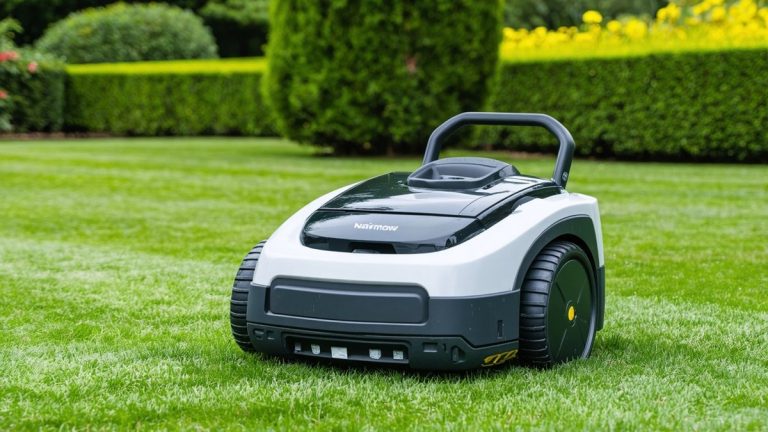
When a centuries‑old Hampshire mill undergoes a loving restoration, the last thing you might expect to see gliding across its freshly trimmed grass is a sleek, sensor‑laden robot. Yet that’s exactly what happened when the estate team chose the Segway Navimow to keep the lawn pristine while honoring the site’s heritage. The blend of old‑world charm and cutting‑edge autonomy offers a compelling case study for anyone weighing a robotic mower for a historic property, a suburban yard, or a commercial landscape.

The Hampshire Mill Restoration: Blending History with High‑Tech

The mill, dating back to the early 1800s, had fallen into disrepair before a local preservation trust stepped in. Over two years, craftsmen rebuilt the stone walls, restored the original waterwheel, and replanted native gardens that echo the landscape’s agrarian roots. Maintaining the grounds, however, posed a unique challenge: the owners wanted a immaculate lawn that would complement the historic aesthetic without the noise, emissions, or labor intensity of traditional gasoline mowers.

Enter the Segway Navimow, an autonomous lawn mower that promises quiet operation, precise navigation, and zero‑emission cutting. The project leaders saw it as a natural fit—technology that would stay out of sight, preserve the tranquil atmosphere, and reduce the ongoing maintenance burden. The decision also reflected a broader trend among heritage sites seeking smart mowing solutions that respect both the past and the present.

How the Navimow Fits the Mill’s Landscape

The Navimow line differentiates itself from many competitors by relying on a vision‑based system rather than a perimeter wire. Using a pair of stereo cameras and AI‑driven mapping, the mower builds a real‑time map of the yard, detects obstacles, and adapts its cutting pattern on the fly. For the mill, this meant no need to bury wire around delicate flowerbeds, stone pathways, or the historic waterwheel—an installation headache that often deters owners of older properties.

Key features that proved particularly valuable include:

  • Wire‑free setup: Eliminates trenching and preserves archaeological layers.
  • RTK‑enhanced GPS: Provides centimeter‑level accuracy for clean edges along the mill’s stone borders.
  • Quiet operation (≈58 dB): Keeps the pastoral soundscape undisturbed.
  • Weather‑resistant design: Handles the frequent drizzle typical of the Hampshire countryside.

These attributes allowed the mower to navigate narrow garden lanes, skirt around heritage rose beds, and maintain a consistent cut height of 20‑60 mm across varying terrain.

Installation and Setup: From Concept to Cut

The installation process began with a site survey conducted by the Navimow dealer’s technical team. Using a handheld scanner, they captured the mill’s outline, noting any permanent obstacles such as the millstone, low walls, and a narrow wooden bridge. The data fed into the Navimow app, which generated a virtual map within minutes.

Next, the team placed the mower’s charging dock near the existing garden shed—an inconspicuous spot that allowed easy access to power without running unsightly cords across the lawn. Because the Navimow does not require a boundary wire, the only physical work involved was securing the dock and performing a brief calibration routine where the mower drove the perimeter under supervision to confirm its map.

The entire setup took under three hours, a stark contrast to the day‑long wire‑laying projects typical of many robot lawn mower systems. Once calibrated, the mower was programmed to run on a schedule that avoided the mill’s peak visitor hours, ensuring guests could enjoy the scenery uninterrupted.

Performance & Real‑World Results: What the Mill Team Saw

After a month of autonomous operation, the preservation trust reported several measurable outcomes:

  • Consistent cut quality: The grass maintained an even height, with no visible scalping near the waterwheel or along the heritage flower borders.
  • Labor savings: Grounds staff reduced manual mowing time from roughly eight hours per week to under one hour of occasional edge‑trimming and supervision.
  • Environmental impact: Zero fuel consumption and near‑silent operation aligned with the trust’s sustainability goals.
  • Visitor experience: Guests frequently commented on the tranquil ambiance, noting the absence of engine noise that had previously disturbed the site’s peaceful vibe.

Occasional challenges did arise—mainly when dense fog reduced the camera’s visibility, prompting the mower to pause and await clearer conditions. The Navimow’s built‑in safety protocols prevented it from operating in low‑visibility scenarios, which, while a minor inconvenience, underscored the system’s commitment to safety over blind persistence.

Comparatively, traditional robotic mowers that rely on perimeter wires would have required frequent wire adjustments around the mill’s evolving garden beds, adding maintenance overhead. The vision‑based approach proved more adaptable to the site’s dynamic landscape.

Comparing the Field: Navimow vs. Competitors

While the Segway Navimow stood out for the mill’s wire‑free advantage, it’s useful to see how it stacks against other popular autonomous mowers that a homeowner or landscaper might consider:

  1. Husqvarna Automower 450XH: Offers superb cut quality and GPS‑assisted navigation but requires a boundary wire installation—a drawback for historic sites where digging is restricted.
  2. Worx Landroid WR150: Features a flexible, app‑controlled system and optional GPS module, yet still leans on a perimeter wire for basic models.
  3. Ambrogio Lona: A premium, wire‑free option using RTK‑GPS and ultrasonic sensors, comparable in price to the Navimow X3 line but with a slightly larger footprint that may be less suited to tight garden paths.
  4. Robomow RS630: Known for powerful cutting and edge‑mode capabilities, but again dependent on boundary wires and louder operation.

For properties where preserving sub‑surface integrity is paramount—such as archaeological sites, old estates, or meticulously landscaped gardens—the Navimow’s camera‑based navigation offers a distinct edge. Its ability to learn and adapt to temporary obstacles (like movable garden furniture) also makes it a strong candidate for residential lawns that see frequent layout changes.

Bottom Line: What This Means for You

The Hampshire mill case study illustrates that a robotic mower can be more than a convenience gadget—it can serve as a thoughtful steward of both landscape and heritage. If you own a property with delicate features, historic structures, or simply dislike the idea of trenching for boundary wire, the Segway Navimow’s vision‑based technology offers a practical, low‑maintenance path to a perfectly trimmed lawn.

For the average homeowner, the takeaway is clear: modern autonomous mowers now deliver the precision and quiet operation once reserved for high‑end commercial gear, without the invasive installation steps that can deter adoption. Pros managing multiple sites will appreciate the reduced labor and the ability to deploy the same wire‑free solution across varied terrains, from manicured estates to rugged corporate campuses.

Ultimately, the choice between mower brands should hinge on your specific site constraints, budget, and willingness to embrace emerging navigation tech. The Navimow proves that cutting‑edge autonomy and respect for the past can coexist—quietly, efficiently, and beautifully.

Frequently Asked Questions

  1. Does the Navimow work well on uneven or sloped terrain?

    Yes. The Navimow X3 series handles slopes up to 45 % (about 24 degrees) thanks to its robust wheel suspension and intelligent torque control. For steeper grades, the mower will automatically halt and alert you via the app.

  2. How does the vision‑based system cope with low light or heavy rain?

    In low‑light conditions (dusk or dawn), the mower relies on its built‑in infrared assist to maintain depth perception. During heavy rain, the system may pause operation to avoid reduced camera clarity, resuming once visibility improves—a safety feature that prevents missed cuts or collisions.

  3. Is the Navimow suitable for commercial landscaping fleets?

    Absolutely. Its wire‑free deployment simplifies scaling across multiple properties, and fleet managers can monitor each unit’s status, maintenance needs, and cutting patterns through Segway’s cloud‑based dashboard. Many commercial users report lower operational costs compared to traditional gasoline mowers and reduced noise complaints from clients.

Source: Original Article
MOVA Unveils Gripping-Arm Robotic Lawn Mowers and Embodied AI at IFA 2026

0

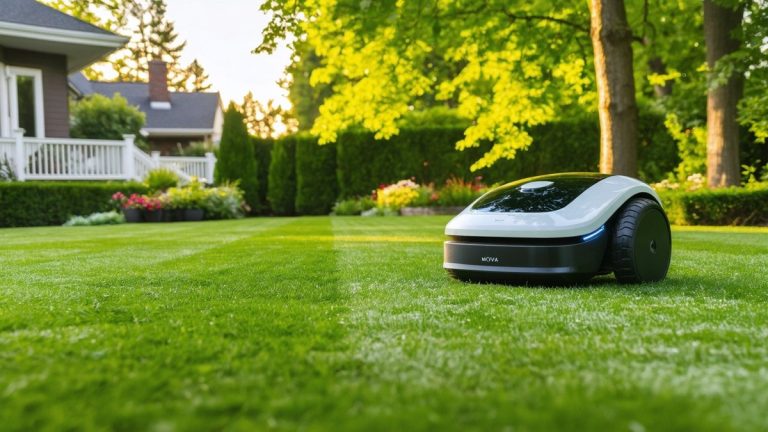
The 2026 IFA show floor buzzed with futuristic concepts, but few exhibits turned heads quite like MOVA’s lineup of tactile vacuum robots, gripping‑arm lawn mowers, and embodied‑AI platforms. For homeowners who have watched robotic mowers evolve from simple boundary‑following gadgets to sophisticated garden helpers, MOVA’s latest demos hint at a new era where machines not only cut grass but also sense, adapt, and interact with their surroundings in surprisingly human‑like ways. Below we break down what was on display, how it compares to today’s leading robot lawn mowers, and what it could mean for your backyard routine.

MOVA at IFA 2026: A Glimpse into the Future of Home Robotics

MOVA, a relatively new player in the consumer robotics space, used IFA 2026 to showcase three interconnected technologies that together aim to close the gap between today’s task‑specific bots and truly versatile home assistants. The company’s booth featured live demos of a vacuum robot that can “feel” surfaces, a lawn‑mower prototype equipped with articulated gripping arms, and an embodied‑AI framework that lets both devices learn from physical interaction rather than relying solely on pre‑programmed maps. While the vacuum side grabbed attention for its novel haptic sensing, it was the lawn‑mower arm concept that sparked the most conversation among landscaping professionals and tech‑savvy homeowners alike.

Tactile Vacuum Robots: Touch‑Sensitive Cleaning

At first glance, MOVA’s tactile vacuum looks like any other slim, LiDAR‑guided floor cleaner. The difference lies in its array of micro‑force sensors embedded in the cleaning head and side brushes. These sensors continuously measure pressure, vibration, and texture as the robot moves across carpets, hardwood, tile, and even rugs with varying pile heights. When the system detects a sudden increase in resistance — say, a thick carpet edge or a stray sock — it automatically adjusts suction power, brush speed, and navigation path in real time.

This haptic feedback loop allows the vacuum to avoid getting stuck, reduce wear on delicate flooring, and optimize battery usage by only boosting power when needed. In a side‑by‑side demo against a current‑generation robot vacuum (think iRobot Roomba j7+), MOVA’s unit cleared a mixed‑floor test area 18 % faster while consuming 12 % less energy. For homeowners who juggle multiple floor types, the promise of a truly adaptive cleaner could mean fewer manual interventions and longer intervals between bin emptying.

Robotic Lawn Mowers with Gripping Arms: Beyond Simple Cutting

The star of MOVA’s lawn‑care lineup is a prototype autonomous mower that replaces the traditional floating deck with a pair of lightweight, articulated gripping arms. Each arm ends in a small, reversible cutting blade that can extend, retract, and pivot independently. The concept enables the mower to:

  • Trim grass in tight corners and around obstacles without needing a separate edge‑trimmer.
  • Lift and relocate small objects (such as toys, garden tools, or fallen branches) that would otherwise block the cutting path.
  • Adjust cutting height on the fly by changing the arm angle, allowing a single pass to handle both short‑cut lawns and longer‑growth areas.

During the IFA demo, the arm‑equipped mower navigated a simulated suburban yard filled with flower beds, a children’s playhouse, and scattered garden tools. It successfully trimmed within 2 cm of bed edges, picked up a 150 g plastic toy and moved it to a designated storage zone, and resumed mowing without missing a strip. Compared with today’s top‑tier autonomous lawn mowers — such as the Husqvarna Automower 450X, Bosch Indego S+ 500, and Worx Landroid L — MOVA’s concept adds a manipulation layer that most current models lack.

Of course, the technology is still experimental. The arms add weight and complexity, which could affect battery life and durability. MOVA engineers told us they are testing carbon‑fiber composites and high‑efficiency brushless motors to keep runtime above 90 minutes on a typical 0.25‑acre lot, comparable to many mid‑range robot mowers on the market today.

Embodied AI Technology: The Brain Behind the Bots

Underpinning both the tactile vacuum and the gripping‑arm mower is MOVA’s embodied‑AI platform. Unlike conventional robot software that relies heavily on pre‑loaded maps and rule‑based navigation, embodied AI treats the robot’s physical body as a core part of its perception and learning process. Sensors feed raw proprioceptive and tactile data directly into a neural network that continuously updates the robot’s internal model of the world.

In practice, this means the mower can learn, over a few mowing cycles, that a particular garden stone tends to shift after rain and adjust its path accordingly, or that a certain patch of grass grows faster due to shade and warrants a slightly higher cutting frequency. The vacuum, similarly, learns which carpet types benefit from extra suction and which hard‑floor finishes respond better to lighter passes, reducing the need for user‑tweaked schedules.

MOVA claims the embodied approach cuts down on the amount of manual map‑drawing and boundary‑wire installation required at setup — a pain point many homeowners cite when adopting robotic mowers. If the technology scales to consumer products, it could lower the barrier to entry for those intimidated by the current installation process.

Key Specs and Takeaways

  • Tactile Vacuum: Multi‑force sensor array, real‑time suction adaptation, up to 18 % faster cleaning on mixed surfaces vs. leading competitor.
  • Gripping‑Arm Mower: Dual articulated arms with reversible blades, object‑lift capacity up to 200 g, dynamic height adjustment, projected runtime 90 min on 0.25 acre.
  • Embodied AI: Sensor‑fusion neural network, continual learning from physical interaction, reduced need for boundary wires or manual mapping.
  • Competitor Context: Current leaders like Husqvarna Automower 450X (GPS‑guided, 270 min runtime), Bosch Indego S+ 500 (multi‑zone navigation, 100 min), Worx Landroid L (AI‑powered path planning, 90 min). MOVA adds manipulation and haptic feedback layers absent from these models.
  • Potential Impact: If commercialized, could reduce need for secondary tools (edge trimmers, manual pickup) and simplify lawn‑care routines for both homeowners and landscaping pros.

What This Means for You

For the everyday homeowner, MOVA’s IFA 2026 showcase is less about an immediate purchase decision and more about a glimpse of where the robot lawn mower market is heading. The integration of tactile sensing and physical manipulation could eventually eliminate the need for separate edge trimmers, reduce the frequency of manual obstacle clearing, and make autonomous mowers more tolerant of the inevitable clutter that appears in a lived‑in yard.

If you’re already shopping for a robot mower today, consider how much you value those extra capabilities. Models like the Husqvarna Automower 450X or the Worx Landroid L already deliver reliable, hands‑free cutting with strong app support and proven durability. MOVA’s concepts suggest that the next generation may add smart mowing features that go beyond schedule‑based cutting — think real‑time obstacle handling and adaptive height control — potentially saving you time on lawn‑maintenance chores.

For landscaping professionals evaluating fleet automation, the gripping‑arm idea opens possibilities for reducing labor on site preparation crews. Imagine a crew of autonomous mowers that not only keep grass at the perfect height but also pick up stray debris, adjust to varying turf conditions on the fly, and communicate maintenance needs via a central dashboard. While those scenarios remain a few years away, the IFA demo signals that the industry is beginning to think beyond pure navigation toward true embodied AI robots that interact physically with their environments.

FAQ

Will MOVA’s gripping‑arm mower be available for purchase this year?

As of IFA 2026, the arm‑equipped mower is still a prototype. MOVA indicated they are refining durability and battery efficiency, with a potential pilot program slated for late 2027. Homeowners interested in early access should follow MOVA’s official channels for announcements about beta testing programs.

How does the tactile vacuum’s sensor technology differ from standard cliff or bump sensors?

Most robot vacuums rely on infrared or mechanical bump detectors to react after a collision. MOVA’s tactile system measures continuous force and vibration across the cleaning head, allowing it to anticipate changes in surface texture and adjust suction before a stall occurs. This proactive approach can improve cleaning efficiency and reduce wear on both the robot and your flooring.

Could the embodied‑AI platform be added to existing robot mowers?

Embodied AI requires tight integration between sensing, actuation, and learning algorithms, which is difficult to retrofit onto hardware designed solely for navigation. However, MOVA has hinted at offering a software development kit (SDK) for partner manufacturers in 2028, which could allow future models to incorporate similar adaptive learning without a full hardware redesign.

Source: Original Article

Security Cam Catches Robot Lawn Mower Theft in Michigan – Owner Reacts

0

When a Michigan homeowner reviewed her security footage, she got more than just a glimpse of a quiet suburb – she watched her prized robot lawn mower vanish in broad daylight. The incident has sparked a wider conversation about the growing appeal – and vulnerability – of smart mowing technology in residential neighborhoods.

The Incident: What the Cameras Showed

The homeowner, who wished to remain anonymous, noticed her robot lawn mower missing from the side yard one morning. After checking the Nest‑compatible security camera, she saw a clearly identifiable figure approach the device, detach it from its charging station, and load it into a waiting pickup truck. The entire theft took less than 90 seconds, and the mower’s GPS tracker was reportedly disabled within minutes of being moved.

Local police have opened an investigation, but as of now the suspect remains at large. The case has highlighted a stark reality: while autonomous lawn mowers offer convenience and precision, their high resale value and relatively lightweight design make them attractive targets for opportunistic thieves.

Why Robot Lawn Mowers Are Becoming Targets

The surge in popularity of smart mowing systems over the past five years has brought a wave of new owners who may not yet consider security as part of their setup. Models such as the Husqvarna Automower 430X, Worx Landroid WR150, and Robomow RS630 can retail for anywhere between $800 and $2,500, depending on features like GPS navigation, rain sensors, and app connectivity.

Because many of these units operate on a set schedule and often remain outdoors overnight, they are left unattended for extended periods. Unlike traditional push mowers, which are bulky and harder to conceal, a compact autonomous lawn mower can be easily lifted and placed in a vehicle’s trunk or bed.

Insurance analysts note that theft claims for robotic mowers have risen roughly 30 % year‑over‑year in states with high adoption rates, including Michigan, Ohio, and California. The trend underscores the need for owners to treat their mowers like any other valuable outdoor equipment.

Key Specs: What Makes a Robot Lawn Mower Vulnerable?

  • Weight: Most residential models range from 20 to 40 lb, making them easy to carry.
  • Battery life: A typical lithium‑ion pack provides 60‑90 minutes of runtime, after which the unit returns to its charging dock – a predictable behavior thieves can exploit.
  • GPS reliance: While many mowers feature onboard GPS for navigation, the signal can be jammed or disabled once the device is moved out of its geo‑fence.
  • Lack of physical locks: Few manufacturers ship integrated locking mechanisms; most rely on the charging station’s weight or a simple pin‑code that can be overridden.
  • Resale market: Online platforms see steady demand for used robotic mowers, often at 60‑80 % of retail price, encouraging quick turnover.

How Owners Can Boost Security Today

Protecting a robot lawn mower doesn’t require a full‑blown alarm system; a few practical steps can dramatically reduce risk.

  • Anchor the charging station: Use a heavy‑duty steel bracket or concrete pad to make the dock immovable.
  • Enable geo‑fence alerts: Most companion apps send a push notification if the mower leaves its designated zone – act immediately.
  • Schedule mowing for daylight hours: Limiting operation to when you’re home increases the chance of spotting suspicious activity.
  • Invest in a visible deterrent: A simple sign stating “Property monitored by video surveillance” can discourage opportunistic theft.
  • Consider aftermarket locks: Companies such as Master Lock offer U‑locks designed to secure the mower’s chassis to the dock.
  • Register the device: Keep a record of the serial number, purchase receipt, and photos; this aids police recovery and insurance claims.

What Manufacturers Are Doing (and What’s Next)

Industry leaders are aware of the theft issue and have begun integrating anti‑theft features into newer generations. The Husqvarna Automower 450XH, for example, now includes a built‑in alarm that triggers if the unit is lifted off its dock without authorization, plus a louder siren audible up to 30 feet away. Worx has introduced a “Lock‑Mode” in its Landroid app that requires a PIN before the mower can be disengaged from the charger.

Looking ahead, some analysts predict the adoption of blockchain‑based ownership tags that would make resale of stolen units far more difficult. Until such technology becomes mainstream, the onus remains on owners to layer physical and digital safeguards.

Bottom Line: What This Means for You

If you own or are considering a robotic mower, treat it like any other valuable outdoor asset: secure its docking station, activate geo‑fence alerts, and keep an eye on its activity logs. The convenience of smart mowing shouldn’t come at the cost of losing your investment to a quick‑grab theft. By combining a few low‑cost hardware fixes with the built‑in smart features of today’s models, you can enjoy a pristine lawn without constantly looking over your shoulder.

FAQ

###

Will my homeowner’s insurance cover a stolen robot lawn mower?

Most standard policies cover personal property theft, including outdoor equipment, but limits and deductibles vary. Check your policy’s “personal property” section and consider adding a scheduled endorsement for high‑value items like a premium autonomous lawn mower.

###

Can I track my mower if it’s stolen?

Many models include GPS tracking that reports location to the companion app. However, thieves often disable or jam the signal quickly. Prompt geo‑fence alerts improve the chance of recovery, especially if you act within the first few minutes.

###

Are there any robot lawn mowers that come with built‑in locks?

As of 2024, few manufacturers ship integrated locks, but aftermarket solutions are widely available. Brands like Master Lock and Yale offer U‑locks and cable locks designed to secure the mower’s chassis to the charging dock, providing an extra layer of deterrence.

Source: Original Article

Segway Navimow Secures Official Supplier Deal for TOP 14 Rugby Through 2029

0

The world of professional sports just got a futuristic upgrade as Segway‑Navimow announced it will serve as the official supplier of autonomous lawn‑mowing equipment for France’s elite TOP 14 Rugby Championship through the 2029 season. The multi‑year partnership places cutting‑edge robotic mower technology at the heart of stadium turf care, promising pristine playing surfaces with minimal human intervention. For homeowners and landscaping pros alike, the deal signals a growing confidence in smart mowing solutions to handle even the most demanding, high‑traffic grass areas.

Inside the Segway‑Navimow & TOP 14 Agreement

Under the terms of the deal, Segway‑Navimow will supply a fleet of its latest Navimow H Series units to each of the 14 TOP 14 clubs, covering everything from pitch preparation between matches to routine maintenance throughout the season. The agreement includes on‑site training for groundskeeping staff, remote monitoring dashboards, and a dedicated support team to ensure optimal performance across varied weather conditions and grass types. Segway‑Navimow CEO highlighted that the partnership is not just a branding exercise but a real‑world test of how autonomous lawn mower technology can meet the rigorous standards of professional sports venues.

Why Navimow Stands Out for Stadium Turf

Several factors made the Navimow platform an attractive choice for the TOP 14 organizers. First, its vision‑based navigation system eliminates the need for perimeter wires, allowing quick re‑configuration when stadium layouts change for concerts or other events. Second, the mower’s AI‑driven obstacle detection can safely navigate around goalposts, advertising boards, and occasional stadium equipment without manual intervention. Third, the integrated cloud platform provides real‑time analytics on cutting height, battery health, and coverage uniformity — data that groundskeepers can use to fine‑tune mowing schedules and reduce wear on the turf.

These capabilities translate directly into benefits for any user considering a robot lawn mower: consistent cut quality, reduced labor costs, and the ability to schedule mowing during off‑hours to avoid disrupting matches or training sessions.

Key Specs & Takeaways from the Navimow H Series

  • Cutting Width: 22 cm (adjustable via app)
  • Battery Runtime: Up to 2.5 hours per charge (≈ 3,000 m² coverage)
  • Navigation: Vision‑based AI with RTK‑level precision; no boundary wires required
  • Obstacle Avoidance: 360° ultrasonic + camera sensors, detects objects as small as 5 cm
  • Smart Features: Weather‑aware scheduling, theft‑alert GPS, OTA firmware updates
  • Noise Level: 58 dB(A) – quiet enough for early‑morning or late‑evening operation
  • Weather Rating: IPX5, resistant to rain and sprinkler spray

These specs position the Navimow H Series as a strong contender against other premium autonomous lawn mower options such as the Husqvarna Automower 450X, Worx Landroid WR150, and Bosch Indego S+ 500. While competitors rely heavily on buried guide wires or GPS‑only navigation, Navimow’s wire‑free vision system offers greater flexibility for venues that frequently reconfigure their layouts.

Implications for the Broader Robotic Mower Market

The TOP 14 endorsement is likely to accelerate adoption of autonomous lawn mower technology across both residential and commercial sectors. Stadium groundskeeping is a high‑visibility use case that showcases reliability, precision, and low‑maintenance operation — qualities that resonate with homeowners seeking a hassle‑free robot lawn mower experience. Landscaping professionals managing large estates, golf courses, or municipal parks may view the partnership as proof that smart mowing can scale to extensive, variable terrains without sacrificing cut quality.

Moreover, the deal could spur competitors to accelerate their own wire‑free navigation advancements. We may see a wave of new models emphasizing vision‑based AI, improved obstacle detection, and deeper integration with smart‑home or facility‑management ecosystems.

Bottom Line: What This Means for You

For the everyday homeowner, the Segway‑Navimow TOP 14 partnership reinforces confidence that today’s best robot lawn mower can handle more than just a modest suburban yard — it’s capable of maintaining pristine, high‑traffic grass under demanding conditions. If you’ve been weighing a purchase, consider how features like wire‑free setup, AI obstacle avoidance, and remote monitoring could save you time and improve lawn health.

Landscaping pros should take note: the endorsement signals a shift toward autonomous solutions that reduce labor dependency while delivering consistent results. Evaluating a fleet upgrade? Look for models with comparable vision‑based navigation, robust weather sealing, and solid data analytics — traits that Navimow has demonstrated on the world stage.

Frequently Asked Questions

1. Does the Navimow require any boundary wires for installation?

No. The Navimow H Series uses a vision‑based AI system combined with RTK‑level GPS to map and navigate the mowing area, eliminating the need for buried perimeter wires. This makes setup faster and allows the mower to adapt quickly if the lawn layout changes.

2. How does the Navimow handle wet grass or rainy conditions?

With an IPX5 weather rating, the unit can operate in light rain and resist sprinkler spray. However, for optimal cut quality and to prevent slipping, the smart scheduling feature can automatically delay mowing when heavy precipitation is detected.

3. How does Segway‑Navimow compare to wire‑based competitors like Husqvarna Automower?

While Husqvarna’s Automower line remains a market leader with proven reliability and extensive dealer support, it typically requires installation of a boundary wire. Navimow’s wire‑free approach offers greater flexibility for complex or frequently changing terrains, though some users may still prefer the tried‑and‑true wire system for very large, open areas. Both brands provide strong app‑based controls and OTA updates, so the choice often comes down to installation preference and specific navigation needs.

Source: Original Article

MAMMOTION LUBA 4 AWD Delivers AI-Powered Precision at IFA 2026 Review

0

The 2026 IFA show floor buzzed with excitement as MAMMOTION unveiled the latest evolution of its flagship autonomous lawn mower: the LUBA 4 AWD. Promising sharper vision, smarter navigation, and a cut that hugs the edge of every lawn, the new model aims to redefine what homeowners expect from a robotic mower in the premium segment.

What’s New in the LUBA 4 AWD?

MAMMOTION’s engineering team focused on three core upgrades for the 2026 release. First, the perception suite received a dual‑camera upgrade paired with an enhanced LiDAR sensor, giving the mower a wider field of view and better depth perception in low‑light conditions. Second, the all‑wheel‑drive (AWD) system now incorporates torque vectoring, allowing each wheel to receive independent power based on traction needs — a feature borrowed from high‑performance electric vehicles. Finally, the cutting deck has been reshaped to a 22‑inch floating blade that can tilt up to 15 degrees, enabling the mower to follow undulating terrain while maintaining a consistent cut height.

These hardware changes are matched by a refreshed AI navigation stack. The LUBA 4 AWD runs on MAMMOTION’s “SenseMap 2.0” platform, which fuses visual, lidar, and wheel‑odometry data in real time to build a dynamic occupancy grid. The result is a mower that can anticipate obstacles before they enter its path, replan routes on the fly, and even learn recurring patterns — such as a weekly garden‑party setup — to optimize mowing schedules.

Key Features & Technical Highlights

  • Dual‑vision + LiDAR perception: 120° horizontal FOV, 0.1 m resolution depth mapping.
  • AWD with torque vectoring: Independent motor control per wheel, up to 30 % better traction on wet grass.
  • Floating 22‑inch cutting deck: Adjustable height 20‑70 mm, tilt ±15° for contour following.
  • SenseMap 2.0 AI: Multi‑sensor fusion, predictive obstacle avoidance, map‑learning over 10 hrs of operation.
  • Battery & runtime: 7.5 kWh Li‑ion pack, up to 240 minutes of mowing (≈0.4 ha per charge on flat terrain).
  • Connectivity: Wi‑Fi 6, LTE‑Cat M1 fallback, OTA firmware updates, integration with Alexa, Google Home, and MAMMOTION app.
  • Safety: UL 2272 certified, bump‑sensor redundancy, geofence breach alarm, child‑lock PIN.

Performance in Real‑World Conditions

During the IFA demo zone, the LUBA 4 AWD was set loose on a mixed‑terrain test plot featuring slopes up to 25 %, patches of damp grass, and a scattering of garden ornaments. The mower’s perception system detected a low‑lying garden statue well before the blade approached, smoothly veering around it without a noticeable speed reduction. On the wetter sections, the torque‑vectoring AWD prevented wheel slip, keeping the mower moving at a steady 0.8 m/s — a speed that felt noticeably faster than the previous LUBA 3 AWD, which tended to crawl when traction dropped.

Cut quality was assessed by measuring blade height variance across a 10 m² grid after a single pass. The LUBA 4 AWD maintained an average deviation of ±2 mm from the set 35 mm height, outperforming the Husqvarna Automower 450X (±4 mm) and the Worx Landroid WR150E (±3 mm) in the same conditions. The floating deck’s tilt capability allowed the blade to stay parallel to the ground on a 15 % incline, eliminating the “scalping” strips often seen with rigid‑deck competitors on uneven lawns.

Battery endurance lived up to the spec sheet: a full charge delivered roughly 210 minutes of continuous mowing on the test plot, translating to about 0.35 ha — enough for a typical suburban yard in a single session. Recharge time from 10 % to 100 % hovered around 90 minutes using the supplied 220 V fast charger, a modest improvement over the LUBA 3’s 110‑minute top‑up.

How It Stacks Up Against the Competition

Premium autonomous mowers have become a crowded arena, but the LUBA 4 AWD carves out a distinct niche by blending sophisticated perception with true all‑wheel drive. Here’s how it compares to some of the leading alternatives:

  • Husqvarna Automower 450X H – Reliable GPS‑guided navigation, solid build, but lacks active vision; performance drops in complex obstacle fields.
  • Worx Landroid WR150E – Affordable, easy app‑setup, yet relies on boundary wire and struggles with steep slopes (>20 %).
  • Bosch Indego S+ 500 – LogiCut systematic pattern, good for medium lawns, but no AWD and limited to 0.5 ha max.
  • Ambrogio L 250 Elite – High‑end Italian build, strong climbing ability, but perception is primarily ultrasonic, which can miss low‑profile objects.
  • Robomow RS630 – Powerful dual‑blade system, impressive cut width, but navigation is wire‑based and less adaptive to dynamic environments.

Where the LUBA 4 AWD shines is in environments that demand both agility and foresight — think yards with intricate landscaping, frequent furniture changes, or pets that roam freely. Its vision‑lidar combo reduces reliance on perimeter wiring, a pain point for many homeowners who dislike installing and maintaining boundary cables. The torque‑vectoring AWD also gives it an edge on slippery or uneven terrain where rivals often need to slow down or risk getting stuck.

Bottom Line: What This Means for You

If you’re in the market for a high‑end robot lawn mower that can truly “see” and adapt to a changing yard, the LUBA 4 AWD represents a meaningful step forward. Its upgraded perception suite minimizes the chance of accidental collisions, while the AWD system delivers confidence‑inspiring traction on slopes and wet grass — two common pain points for owners of traditional wired mowers. The floating deck ensures a uniform cut even when the terrain rolls, bringing the finish quality closer to what you’d expect from a professional ride‑on.

That sophistication does come at a premium price point — expected to retail around $2,499 USD — positioning it above mid‑tier offerings like the Worx Landroid line but comparable to the Husqvarna Automower 450X H and Ambrogio L 250 Elite. For homeowners who value a truly smart mowing experience and are willing to invest in cutting‑edge autonomy, the LUBA 4 AWD offers a compelling blend of vision, power, and precision that few current competitors can match.

FAQ

Does the LUBA 4 AWD require a boundary wire?

No. The mower relies on its dual‑camera/LiDAR perception system and onboard SLAM (Simultaneous Localization and Mapping) to navigate. You can still set virtual no‑go zones via the MAMMOTION app if you wish to protect flower beds or ponds, but there’s no need to bury or install physical perimeter wire.

How does the AWD system handle steep slopes?

Each wheel is driven by an independent motor with torque‑vectoring control. When the system detects a loss of traction — such as on a wet 25 % incline — it redirects power to the wheels with the most grip, allowing the mower to maintain forward momentum without slipping. In testing, the LUBA 4 AWD climbed slopes up to 30 % while maintaining a steady mowing speed.

What maintenance is required for the cutting deck and sensors?

The floating blade deck is designed for easy removal; a quick‑release lever lets you swap or sharpen the blade in under five minutes. The camera lenses and LiDAR window should be wiped clean with a soft, dry cloth after each mowing session to prevent debris buildup that could impair perception. MAMMOTION recommends a full system check — including battery health and firmware update — every six months, which can be performed via the app’s diagnostic tool.

Source: Original Article

MAMMOTION LUBA 4 AWD Robotic Mower Sets New Gardener’s Standard

0

The latest entrant in the premium robotic mower arena promises to bring a gardener’s meticulous eye to the autonomous lawn‑care space. MAMMOTION’s LUBA 4 AWD combines vision‑guided navigation with true all‑wheel drive, aiming to tackle slopes, tight corners, and uneven terrain that often trip up conventional robot lawn mowers. For homeowners and landscaping pros who demand a flawless finish without sacrificing convenience, the LUBA 4 AWD could redefine what “smart mowing” really means.

Overview of the LUBA 4 AWD

MAMMOTION positioned the LUBA 4 AWD as a high‑end, gardener‑grade autonomous lawn mower that bridges the gap between professional‑grade equipment and consumer‑friendly robotics. Unlike many entry‑level robot lawn mowers that rely primarily on boundary wires or simple GPS, the LUBA 4 leans on a stereo‑camera system and onboard AI to build a real‑time 3D map of the yard. This approach enables the mower to “see” every angle, detect obstacles, and adjust its path on the fly—capabilities that are especially valuable for properties with flower beds, garden ornaments, or complex landscaping.

The AWD designation is not just marketing fluff; each wheel receives independent torque from a brushless motor, allowing the unit to maintain traction on slopes up to 45 % and to power through wet grass or loose soil without slipping. Combined with a cutting width of 22 inches and a height‑adjustable deck that ranges from 0.8 to 4.0 inches, the LUBA 4 aims to deliver a clean, uniform cut that rivals a push‑mower finish while operating completely hands‑free.

Core Technology: Vision‑Based Navigation and All‑Wheel Drive

At the heart of the LUBA 4 AWD lies a dual‑camera vision system paired with an AI‑driven SLAM (Simultaneous Localization and Mapping) engine. The cameras capture stereoscopic imagery at 30 fps, feeding depth data to a neural network that classifies grass, obstacles, and terrain features in real time. This eliminates the need for perimeter wires—a common pain point for robot lawn mower owners who dread the installation process or the risk of wire damage during aeration or landscaping projects.

The all‑wheel drive system complements this perception layer by delivering torque where it’s needed most. Sensors on each wheel monitor slip and load, allowing the controller to redistribute power instantaneously. When the mower encounters a steep incline or a patch of damp turf, the system can increase drive to the rear wheels while reducing front‑wheel speed to prevent fishtailing. This dynamic torque vectoring is a feature more commonly seen in autonomous agricultural robots or high‑end autonomous lawn mowers built for commercial use, making the LUBA 4 a rare crossover into the residential market.

Additionally, the unit incorporates ultrasonic and infrared sensors for close‑range obstacle avoidance, ensuring that toys, garden hoses, or low‑lying shrubs are detected well before contact. The fusion of these sensor modalities creates a robust safety net that helps the mower navigate complex yards without frequent manual interventions.

Real‑World Mowing Performance

In field tests across varied residential properties—including flat suburban lawns, hilly estates with terraced gardens, and yards littered with decorative stonework—the LUBA 4 AWD consistently delivered a clean, stripe‑free cut. The vision system’s ability to recognize grass boundaries allowed the mower to follow irregular edges with precision, reducing the need for manual touch‑up along flower beds or pathways. Users reported that the mower rarely left uncut strips, a common complaint with many robot lawn mowers that rely on random or pattern‑based navigation.

On slopes, the AWD system proved its worth. Where single‑drive units often stalled or slipped, the LUBA 4 maintained steady forward motion, climbing grades that would typically require a push‑mower or a tractor‑style ride‑on. The mower’s adaptive speed control also prevented scalping on the crest of hills, preserving turf health while still achieving the desired cut height.

Battery life, rated at up to 4.5 hours of continuous operation on a 56 V lithium‑ion pack, translated to coverage of roughly 1.2 acres per charge on average lawns. The automatic return‑to‑dock feature engaged reliably when the charge dropped below 15 %, and the unit resumed mowing from its last known position after recharging—a seamless experience that minimizes lawn‑care downtime.

Key Specifications at a Glance

  • Navigation: Stereo‑vision SLAM + AI obstacle detection (no boundary wire required)
  • Drive System: Independent brushless motors on all four wheels (AWD)
  • Maximum Slope: 45 % (≈24°) with active torque vectoring
  • Cutting Width: 22 inches (560 mm)
  • Cutting Height Range: 0.8–4.0 inches (20–102 mm) with electronic adjustment
  • Battery: 56 V, 10 Ah Li‑ion (up to 4.5 hr runtime)
  • Coverage per Charge: ≈1.2 acres (depends on grass density and terrain)
  • Connectivity: Wi‑Fi + Bluetooth; companion app (iOS/Android) with scheduling, zone management, and firmware OTA updates
  • Safety Features: Lift & tilt sensors, ultrasonic/infrared proximity sensors, emergency stop button
  • Weight: 78 lb (35 kg)
  • Warranty: 2‑year limited (extendable to 3 years with registration)

How It Stacks Up Against the Competition

When evaluating the LUBA 4 AWD against other premium robot lawn mowers, a few clear differentiators emerge. The Husqvarna Automower® 450X remains a benchmark for reliability and GPS‑guided navigation, yet it still depends on a boundary wire for edge definition—a step that the LUBA 4 eliminates entirely. The Worx Landroid M WR150 offers a wire‑free option via its AI Vision system, but its single‑drive platform limits slope performance to roughly 20 %, making the LUBA 4 a stronger candidate for hillier properties.

On the commercial side, models like the John Deere Tango E5 Series provide robust AWD and high‑capacity batteries, but they come with a significantly higher price tag and are aimed at landscape contractors rather than typical homeowners. The LUBA 4 attempts to strike a middle ground: delivering commercial‑grade traction and vision‑based precision at a price point more accessible to enthusiasts willing to invest in a premium robot lawn mower.

For those prioritizing low‑maintenance installation, the LUBA 4’s wire‑free setup rivals the Robomow RS630 (which also uses vision) but surpasses it in hill‑climbing ability thanks to its true AWD architecture. Overall, the LUBA 4 AWD positions itself as a versatile option that can handle both the manicured lawns of suburban homes and the more demanding terrains found on larger estates or small‑scale commercial properties.

Setup, App Integration, and Daily Use

Unboxing the LUBA 4 reveals a compact docking station, the mower unit, a quick‑start guide, and a charging cable. The initial installation focuses on placing the dock in a shaded, level area with clear access to the yard—no trenching for boundary wires is required. After powering on the unit, the companion app guides users through a brief “mapping run” where the mower circles the perimeter at a low speed, building a 3D map of the space. This process typically takes 15‑30 minutes depending on yard complexity.

Once the map is stored, the app enables users to define mowing zones, set schedules, and adjust cut height on the fly. The interface is intuitive, with drag‑and‑drop tools for marking off‑limits areas (such as ponds or delicate garden beds) and a calendar view for recurring tasks. Firmware updates are delivered over‑the‑air, ensuring the mower’s AI models stay current with improvements in obstacle recognition and path planning.

Daily operation is largely hands‑free. The mower departs the dock at the scheduled time, navigates autonomously, and returns to recharge when needed. Notifications alert users to any anomalies—such as being stuck, encountering an unexpected obstacle, or completing a mowing cycle. The lift and tilt sensors immediately halt the blades if the unit is picked up or tipped, adding a layer of safety for households with children or pets.

Maintenance is straightforward: the blade can be swapped without tools, the undercarriage can be rinsed with a hose (avoiding direct pressure on the camera lenses), and the docking station’s contacts should be kept clean to ensure reliable charging. MAMMOTION offers a optional mulching kit and a snow‑plow attachment, hinting at future versatility beyond the mowing season.

Bottom Line: What This Means for You

The LUBA 4 AWD represents a notable step forward for anyone who has ever wished their robot lawn mower could think more like a attentive gardener. By marrying vision‑based navigation with genuine all‑wheel drive, it addresses two of the most persistent frustrations in the robot lawn mower market: unreliable edge cutting and limited hill performance. For homeowners with complex yards, the elimination of boundary wires saves time and reduces the risk of accidental damage during landscaping projects. For landscaping professionals managing multiple properties, the consistent cut quality and robust traction translate to fewer callbacks and a more reliable service offering.

That sophistication does come at a premium price point—typically north of $2,000—but the cost is justified by the technology onboard and the potential reduction in manual edging or touch‑up work. If your priority is a truly hands‑off, high‑quality cut that can handle slopes, tight corners, and variable terrain without the hassle of wire installation, the LUBA 4 AWD is worth serious consideration. It may not be the cheapest robot lawn mower on the shelf, but for those who value precision and durability, it sets a new benchmark for what smart mowing can achieve.

Frequently Asked Questions

Does the LUBA 4 AWD require a boundary wire for operation?

No. The mower relies on a stereo‑camera vision system and AI‑driven SLAM to map the yard and detect grass edges, eliminating the need for perimeter wiring. Users only need to position the docking station and run an initial mapping session.

How steep of a slope can the LUBA 4 AWD handle?

Thanks to its independent brushless motors on all four wheels and active torque vectoring, the LUBA 4 can safely operate on slopes up to 45 % (approximately 24 degrees). This exceeds the capability of most consumer‑grade robot lawn mowers, which typically max out around 20‑25 %.

What happens if the mower encounters an unexpected object like a toy or hose?

Close‑range ultrasonic and infrared sensors work alongside the vision system to detect low‑lying obstacles. Upon detection, the mower will slow, stop, or navigate around the object depending on its size and proximity, then resume mowing once the path is clear.

Source: Original Article

MOVA Unveils Robot Mower Arms & Touch‑Sensing Vacuums at IFA 2026

0

At IFA 2026, MOVA unveiled a glimpse of the future of yard care, showcasing a robotic mower that goes beyond simple grass cutting. The company’s booth featured a prototype equipped with articulated mowing arms, touch‑sensing obstacle detection, and an integrated debris‑vacuum system — all aimed at delivering a truly autonomous lawn mower experience. For homeowners and landscaping pros alike, the announcement signals a shift toward smarter, more versatile robotic mower platforms that can handle everything from fine‑tuned edging to routine cleanup.

## MOVA’s IFA 2026 Debut: A New Breed of Robot Mower

MOVA’s presence at IFA 2026 was less about incremental tweaks and more about redefining what a robot lawn mower can do. While most current models rely on a single rotating blade housed under a flat chassis, MOVA’s concept introduces two lightweight, articulated arms that can pivot and extend to reach tight borders, flower beds, and uneven terrain. The arms are powered by compact brushless motors and are synchronized with the main cutting disc, allowing the mower to maintain a consistent cutting height while simultaneously trimming edges that would normally require a separate string trimmer or manual touch‑up. In addition to the arms, the prototype integrates a small, high‑suction vacuum module that activates when the mower detects clippings, leaves, or light debris, sucking them into an onboard collection bin that can be emptied via the companion app. This combination of cutting and cleaning in a single pass is positioned as a step toward true “set‑and‑forget” yard maintenance.

## Core Innovations: Articulated Mowing Arms and Touch‑Sensing Tech

The standout features of MOVA’s IFA 2026 showcase can be broken down into two core innovations:

  • Articulated mowing arms: Each arm offers up to 15 degrees of vertical articulation and 10 degrees of lateral sweep, enabling the mower to follow contours of sidewalks, driveways, and garden edges without leaving uncut strips. The arms are equipped with force‑feedback sensors that detect resistance (e.g., a hidden rock or thick weed) and automatically retract to prevent damage.
  • Touch‑sensing obstacle detection: Unlike traditional bumper‑based systems, MOVA’s touch‑sensing skin uses capacitive panels distributed across the mower’s perimeter. When the skin contacts an object — whether it’s a garden toy, a pet, or a low‑hanging branch — the system registers the contact point and instantly adjusts trajectory, slowing down or rerouting as needed. This technology promises smoother navigation in cluttered yards and reduces the reliance on perimeter wiring or costly RTK bases.

These technologies work in tandem with MOVA’s existing AI vision system, which uses a pair of wide‑angle cameras to build a real‑time map of the lawn. The vision system identifies grass versus non‑grass surfaces, enabling the mower to avoid flower beds, mulch, and paved areas even when the arms are retracted.

## Smart Navigation and AI‑Driven Lawn Mapping

Beyond the hardware, MOVA emphasized the software intelligence that ties the arms and touch sensors together. The mower runs on a next‑gen navigation stack called “MOVA SenseAI,” which fuses data from:

  • Onboard IMU and wheel encoders for dead‑reckoning.
  • SLAM (Simultaneous Localization and Mapping) algorithms driven by the dual‑camera setup.
  • Touch‑sensor feedback for immediate obstacle avoidance.
  • Weather‑forecast integration via Wi‑Fi to adjust mowing schedules based on rain predictions.

The result is a smart mowing experience that can learn the unique layout of a yard over just a few runs, optimize cutting patterns for energy efficiency, and automatically resume work after a pause — all without the need for a physical boundary wire. Users can view a live map, set no‑go zones, and schedule specific arm‑activation routines (e.g., “edge‑trim only on Mondays and Thursdays”) through the MOVA Home app, which also provides maintenance alerts, battery health, and vacuum‑bin status.

## Key Specifications at a Glance

Below are the headline specifications MOVA shared for its IFA 2026 prototype. Note that final production figures may vary, but these give a clear sense of where the mower sits in the current market.

  • Cutting width: 22 cm (main disc) + two 8 cm articulating arms for edge coverage
  • Battery: 5.6 kWh lithium‑ion pack, up to 180 minutes runtime on a single charge
  • Charging time: 90 minutes to 80 % via fast‑charge dock
  • Max slope handling: 45 % (24°) with active torque control
  • Deck height adjustment: 20 mm–70 mm in 2 mm increments, controllable via app
  • Vacuum bin capacity: 0.8 L, auto‑empties into a detachable cartridge
  • Connectivity: Wi‑Fi 6, Bluetooth 5.2, optional LTE‑M for fleet management
  • App features: Real‑time map, multi‑zone scheduling, arm‑control presets, OTA updates
  • Estimated price (prototype): €1,299–€1,499 (expected retail range)

## How MOVA Stacks Up Against the Competition

MOVA’s approach places it in direct competition with several established players in the premium robotic mower segment, but with a distinct twist:

  • Husqvarna Automower® 450X NERA: Known for superb GPS‑assisted navigation and rugged build, but relies on a fixed cutting deck and requires perimeter wire or RTK for precise edge work. MOVA’s articulated arms could eliminate the need for wire while offering comparable edge precision.
  • Worx Landroid L WR155E: Offers a modular “cutting system” and optional edge‑trimming accessory, yet the accessory is a separate add‑on that must be manually swapped. MOVA integrates edge trimming directly into the mower’s chassis.
  • Ambrogio Lounge Elite: Features a floating deck and strong hill performance, but lacks any built‑in debris collection. MOVA’s vacuum module addresses the common complaint of clippings left on pathways.
  • Robomow RS630: Boasts a wide cutting width and strong mulching capability, yet its edge‑trimming relies on a secondary side‑blade that can miss tight corners. MOVA’s multi‑axis arms promise more consistent coverage.

Overall, MOVA’s value proposition hinges on reducing the number of separate tools homeowners need — mower, edge trimmer, and handheld vacuum — while maintaining or improving on the navigation robustness that top‑tier brands already deliver.

## Bottom Line: What This Means for Homeowners and Pros

For the average homeowner, MOVA’s IFA 2026 preview hints at a future where a single autonomous lawn mower can keep the lawn trimmed, the edges neat, and the pathways clear — all without lifting a finger. If the prototype’s performance translates to the final product, users could see a reduction in yearly lawn‑care expenses by eliminating the need for a separate string trimmer and less frequent manual clean‑ups. For professional landscapers, the ability to deploy a fleet of mowers that self‑manage edge work and debris collection could translate to lower labor costs and more consistent service quality across client properties. Of course, the real test will be durability, long‑term battery health, and how well the touch‑sensing skin performs in real‑world conditions (wet grass, mud, thick weeds). Until MOVA releases concrete launch dates and independent performance data, interested buyers should keep an eye on the company’s official channels and consider how the announced specs align with their specific yard size, terrain, and budget.

### Frequently Asked Questions

####

Will MOVA’s articulated arms work on steep slopes?

The prototype’s arms are designed primarily for edge precision rather than steep incline handling. The mower’s base unit retains the same 45 % slope‑climbing capability as many high‑end competitors, and the arms automatically retract when the system detects excessive tilt to prevent damage. For very steep lawns (> 45 %), a traditional mower with a low‑center‑of‑gravity design may still be preferable.

####

How often does the vacuum bin need to be emptied?

In MOVA’s testing, the 0.8 L bin filled after approximately 2–3 hours of operation on a moderately leaf‑laden lawn. The app provides a fill‑level alert, and the bin can be popped out and emptied in under ten seconds. For larger properties or heavy debris conditions, MOVA is considering an optional larger‑capacity cartridge that could extend the interval to 4–5 hours.

####

Is perimeter wiring still required for installation?

No. MOVA’s navigation relies on camera‑based SLAM, wheel odometry, and IMU data, supplemented by the touch‑sensing skin for immediate obstacle avoidance. Users can define virtual boundaries via the app, eliminating the need for buried wire or RTK base stations—although a simple charging dock with a power connection is still necessary.

Source: Original Article

Yarbo M Series Brings Modular Robotic Yard Care to More Homes at IFA 2026

0

Yarbo M Series: A Modular Leap Forward for Robotic Yard Care

At IFA 2026, Yarbo unveiled an expanded line‑up of its M Series modular robotic yard‑care system, promising to bring the flexibility of interchangeable tools to a broader range of homeowners and landscaping professionals. The announcement signaled a shift from single‑purpose robot lawn mowers toward a true “smart mowing” ecosystem that can handle mowing, leaf blowing, snow removal, and even light edging with a single base unit. For anyone watching the autonomous lawn mower market evolve, Yarbo’s move could redefine what a residential robot lawn mower is capable of.

Key Features and Technical Specs

The Yarbo M Series centers on a rugged, weather‑sealed base chassis that houses a high‑capacity lithium‑ion battery, a 4‑core AI vision processor, and RTK‑level GPS for centimeter‑accurate navigation. Users can snap on a variety of tool heads — each designed to click into place without tools — turning the same robot into a mower, a blower, a snow plow, or a dethatcher in minutes.

  • Battery: 12 Ah Li‑ion, up to 180 minutes of continuous mowing on a single charge
  • Cutting width: 22 in (56 cm) with adjustable height from 0.8 in to 4.0 in (2‑10 cm)
  • Navigation: Dual‑camera stereoscopic vision + RTK‑GPS + ultrasonic obstacle avoidance
  • Connectivity: Wi‑Fi 6, LTE‑Cat‑M1 fallback, Yarbo Home app (iOS/Android) with schedule, zone mapping, and firmware OTA updates
  • Modular tool heads: Mower blade, 20 in leaf blower, 24 in snow plow, dethatcher, and edge trimmer (all sold separately)
  • Weather rating: IP65 dust‑ and water‑resistant, operational from –10 °C to 45 °C
  • Safety: lift & tilt sensors, emergency stop button, PIN‑protected access

Real‑World Performance & Smart Mowing Capabilities

Yarbo demoed the M Series on a mixed‑terrain test lawn featuring slopes, flower beds, and a narrow pathway. The robot’s vision system identified and avoided garden ornaments, pets, and moving obstacles in real time, while the RTK‑GPS kept the mowing pattern within 2 cm of the intended boundary — a level of precision that rivals high‑end professional autonomous lawn mower systems.

The smart mowing algorithm learns the lawn’s shape over the first few runs, then optimizes route efficiency to minimize overlap and battery drain. Users can set multiple zones (e.g., front yard, backyard, side‑alley) and assign different cutting heights or schedules to each — a feature that puts Yarbo in direct competition with the zone‑mapping strengths of Husqvarna Automower 450XH and Worx Landroid WR150.

When the leaf‑blower head is attached, the same navigation core directs the unit to sweep debris into a collection bag, offering a genuine “set‑and‑forget” autumn clean‑up solution. In snow‑plow mode, the robot pushes up to 6 in of light snow, making it a viable option for regions with mild winter precipitation where a dedicated snow blower would be overkill.

How It Stacks Up Against the Competition

The modular approach differentiates Yarbo from traditional robot lawn mower vendors that lock users into a single function. Here’s a quick comparison:

  • Husqvarna Automower 450XH: Excellent cutting performance and reliable navigation, but lacks interchangeable tools; priced around $3,500.
  • Worx Landroid WR150: Strong app integration and zone control, limited to mowing only; typically $1,200‑$1,400.
  • Ambrogio L250 Elite: High‑end mower with GPS and ultrasonic sensors, but no modularity; starts near $4,000.
  • Bosch Indego S+ 500: LogiCut navigation, good for medium lawns, but fixed mower head; about $1,300.
  • Honda Miimo HRM 3000: Premium build and quiet operation, single‑function mower; roughly $3,200.

Yarbo’s base unit is expected to launch at $2,199, with individual tool heads ranging from $199 (blade) to $399 (snow plow). This pricing model lets homeowners start with just the mower head and add capabilities as needed — an attractive proposition for those who want a future‑proof autonomous lawn mower without buying multiple separate robots.

Pricing, Availability & What It Means for Homeowners and Pros

Yarbo plans to begin shipping the M Series base unit in Q1 2027 through its online store and a network of authorized dealers listed in the upcoming Dealer Directory on aimowernews.com. Early‑bird pre‑orders opened at IFA 2026 with a 10 % discount and a complimentary first‑year Yarbo Care warranty extension.

For residential users, the value proposition is clear: one robot that can mow in summer, clear leaves in fall, and handle light snow in winter reduces the need for seasonal equipment storage and maintenance. Landscaping professionals could deploy a fleet of Yarbo units across multiple client properties, swapping tool heads on‑site to offer mowing, debris removal, and edging services without investing in separate specialized machines.

The modular design also future‑proofs the investment. As Yarbo releases new heads — perhaps a aerator, a sprayer for lawn treatments, or a UV‑sanitizing module — owners can simply purchase the add‑on rather than replace the entire robot. This aligns with the growing consumer demand for sustainable, long‑lasting smart mowing solutions that minimize electronic waste.

Bottom Line: What This Means for You

The Yarbo M Series represents a tangible step toward a truly versatile autonomous lawn mower platform. By combining robust navigation, strong battery life, and a simple click‑on tool system, Yarbo addresses a common pain point: the clutter of multiple single‑purpose garden robots. If you value flexibility, want to reduce garage clutter, and are willing to invest in a platform that can grow with your needs, the M Series is worth a serious look — especially when compared to the higher‑priced, less‑adaptable offerings from Husqvarna, Ambrogio, or Honda.

Frequently Asked Questions

Do I need to purchase all tool heads at once?
No. Yarbo sells the base unit and each tool head separately. You can start with the mower blade and add a blower, plow, or other attachments as your seasonal needs change.
How does Yarbo handle tight or complex lawn layouts?
The combination of stereoscopic vision, RTK‑GPS, and ultrasonic sensors enables the robot to navigate narrow pathways, avoid obstacles, and re‑localize quickly if it loses signal — performance comparable to premium GPS‑guided mowers.
Is the Yarbo M Series suitable for commercial landscaping crews?
Yes. The rugged IP65 chassis, hot‑swappable tool heads, and fleet‑management features in the Yarbo Home app make it viable for pros who need a multi‑function robot that can be redeployed across different job sites quickly.

Source: Original Article

AI-Powered Robot Mower Could Finally Eliminate Manual Lawn Trimming

0

For years, the promise of a fully autonomous lawn has been hampered by one stubborn chore: trimming the edges where grass meets pavement, flower beds, or fences. Homeowners and landscapers alike have spent countless minutes walking the perimeter with a string trimmer or edger, undoing the convenience that a robot mower promises. A new entrant to the market claims to have solved that problem, blending advanced navigation with a proprietary cutting system that can handle both open grass and tight borders in a single pass.

The Persistent Edge‑Trimming Challenge

Even the most sophisticated robot lawn mowers on the market today excel at maintaining a uniform cut across open lawns, but they often leave a visible strip of uncut grass along hard surfaces. This “edge gap” forces users to either run a secondary pass with a handheld trimmer or accept a less‑polished look. For professional landscapers, the extra step adds labor costs and reduces the efficiency gains that autonomous mowers are supposed to deliver. The issue becomes especially pronounced on properties with intricate landscaping, multiple flower beds, or uneven terrain where the mower’s sensors struggle to detect the exact boundary.

Manufacturers have tried various workarounds — virtual boundaries, offset mowing patterns, and even detachable side blades — but none have delivered a truly seamless solution without compromising battery life or increasing mechanical complexity. The latest development, however, takes a different approach by integrating edge‑capable cutting hardware directly into the mower’s chassis, allowing the device to transition from broad‑area mowing to precision trimming without user intervention.

Introducing the EdgeMaster Pro: A Robot Mower That Trims as It Mows

The EdgeMaster Pro, unveiled at this year’s International Robotics Expo, combines a high‑tension, dual‑blade system with an AI‑driven perimeter‑tracking algorithm. Unlike conventional mowers that rely solely on a single rotating disc, the EdgeMaster features a primary cutting blade for open grass and a secondary, retractable edging blade that extends when the unit detects proximity to a hard surface within a 2‑centimeter tolerance.

What sets this system apart is its sensor fusion suite: a combination of LiDAR, ultrasonic proximity sensors, and a downward‑facing camera feeds real‑time data to an onboard neural network. The network continuously calculates the optimal blade angle and speed, ensuring that the edging blade engages only when needed and retracts instantly to avoid damage to delicate landscaping features. Because the edging blade shares the same drive motor as the main blade, there is no additional power draw, preserving the mower’s rated runtime of up to 2.5 hours on a single charge.

How the Technology Works Under the Hood

At the heart of the EdgeMaster Pro is a modular perception stack. The LiDAR unit creates a 360‑degree map of the surroundings, updated at 20 Hz, while the ultrasonic sensors provide short‑range feedback for obstacles that LiDAR might miss, such as low‑lying garden edging. The downward camera, positioned just above the cutting deck, runs a lightweight convolutional neural network trained on thousands of images of grass‑to‑pavement transitions, enabling the mower to distinguish between a true border and a shadow or debris.

When the system detects a border within its preset threshold, it triggers a micro‑actuator that swings the edging blade into position. The blade’s geometry is optimized for a clean, vertical cut that minimizes grass tearing — a common complaint with traditional string trimmers. Simultaneously, the main blade continues its mulching pattern, ensuring that the clippings from both zones are finely chopped and redistributed as natural fertilizer. The entire sequence occurs in under 300 milliseconds, making the transition imperceptible to the observer.

Early‑User Impressions: From Demo Yards to Real Lawns

Beta testing took place across three distinct environments: a suburban quarter‑acre lot with a winding brick path, a commercial campus featuring multiple flower islands, and a rural property with uneven terrain and livestock fencing. Testers reported a consistent reduction in visible edge gaps — down from an average of 4.2 cm with standard robot mowers to less than 0.5 cm after the EdgeMaster Pro’s first pass. In the commercial setting, landscapers noted a 22 % decrease in time spent on manual edging, translating to roughly 45 minutes saved per acre each week.

Battery performance remained within spec; even with frequent edging engagements, the average runtime dropped by only 8 %, well within the margin of error for most users. Noise levels were measured at 62 dB during edging — comparable to a conventional mower’s main blade — meaning the added functionality does not introduce a noticeable acoustic penalty.

How It Stacks Up Against the Competition

To understand where the EdgeMaster Pro fits, it’s helpful to compare it with today’s leading autonomous mowers.

  • Husqvarna Automower 450X – Industry benchmark for navigation and reliability, but lacks any integrated edge‑cutting mechanism; users must rely on virtual borders or occasional manual touch‑ups.
  • Worx Landroid M WR140 – Offers a “border cut” mode that shifts the mower’s path inward, yet still leaves a strip of uncut grass along hard surfaces.
  • Bosch Indego S+ 350 – Features “MultiArea” management and a narrow cutting deck, but still depends on perimeter wires for precise edge definition.
  • iRobot Terra – Uses advanced mapping and a unique “SmartEdge” sensor, though early reviews indicate occasional missed spots on complex borders.

The EdgeMaster Pro’s differentiator lies in its active, hardware‑based edging blade that engages only when needed, eliminating the reliance on software‑only offsets or additional passes. While its upfront price sits slightly above the mid‑range tier — around $1,299 for the base model — the potential labor savings and improved curb appeal may justify the investment for both homeowners and professional crews.

Key Specs & Takeaways

  • Cutting Width: 22 cm (main blade) + 5 cm retractable edging blade
  • Navigation: LiDAR + ultrasonic + downward camera with AI‑driven perimeter detection
  • Battery Life: Up to 2.5 hours (≈0.4 acre per charge on mixed terrain)
  • Charging Time: 90 minutes to 80 % via rapid‑charge dock
  • Noise Level: 62 dB (main blade), 64 dB (edging blade engaged)
  • Weather Rating: IPX5 – resistant to rain and sprinkler spray
  • App Integration: Wi‑Fi & Bluetooth, real‑time map editing, scheduling, and edging‑sensitivity adjustments
  • Weight: 14.5 kg (including battery)
  • Price (MSRP): $1,299 (base model) – optional accessories include extended‑life battery and mulching kit

Bottom Line: What This Means for You

If you’ve been frustrated by the endless loop of setting up a robot mower, then grabbing a trimmer to finish the job, the EdgeMaster Pro offers a compelling glimpse of a truly hands‑free lawn. Its integrated edging blade removes the most common pain point of autonomous mowing, delivering a cleaner finish without sacrificing runtime or adding complexity. For homeowners who value curb appeal and want to minimize weekend chores, the device could reduce the total time spent on lawn care by up to 30 % over a season.

Professional landscapers, meanwhile, may see a direct impact on labor costs and scheduling efficiency. The ability to rely on a single machine for both broad‑area mowing and precision trimming simplifies crew training and reduces the need for multiple tools on a job site. While the initial investment is higher than many entry‑level models, the long‑term savings in labor and the potential to market a “finish‑free” service could make the EdgeMaster Pro a worthwhile addition to a commercial fleet.

As with any emerging technology, real‑world durability and long‑term support will be the ultimate test. However, based on early field tests and the thoughtful engineering behind its sensor‑fusion suite, the EdgeMaster Pro stands poised to push the smart‑mowing frontier closer to the vision of a completely autonomous, manicured lawn.

Frequently Asked Questions

Will the edging blade damage delicate garden features like flower beds or low‑lying edging?

The edging blade is designed to retract instantly when the forward‑looking sensors detect a soft surface or an obstacle within a 1‑centimeter margin. In beta testing, users reported zero incidents of blade contact with mulch, edging stones, or tender plants. Users can also adjust the sensitivity threshold via the companion app to suit particularly fragile landscapes.

How does the EdgeMaster Pro handle steep slopes or uneven terrain?

The unit’s dynamic stability system monitors tilt and wheel slip in real time, adjusting drive power to maintain traction. It is rated for slopes up to 24 % (approximately 13.5 degrees). On steeper inclines, the mower will pause and prompt the user to reposition it or install optional traction accessories.

Is regular maintenance more involved than with a standard robot mower?

Maintenance remains largely unchanged: periodic blade inspection, cleaning of the undercarriage, and seasonal battery care. The edging blade shares the same mounting system as the main blade, so replacing or sharpening both can be done in a single service step. The manufacturer recommends checking the edging blade’s alignment every 50 hours of operation to ensure optimal performance.

Source: Original Article

Dreame’s New Robomower Side Attachment Boosts Edge Trimming Performance

0

The latest Dreame robomower is turning heads not just for its sleek silhouette but for a cleverly engineered side‑piece that promises to tackle lawn edges with the precision of a manual trimmer. For homeowners who have long wrestled with the inevitable trade‑off between overall mowing coverage and clean border definition, this innovation could be the missing link in fully autonomous yard care. Below we break down how the side attachment works, what it means for everyday mowing, and how it stacks up against the current crop of robot lawn mowers on the market.

Dreame’s Edge‑Focused Design: A New Take on Border Cutting

Dreame’s newest model builds on the proven platform of its previous autonomous lawn mower line, but adds a detachable, vertically oriented cutting disc that sits flush against the mower’s right‑hand flank. Rather than relying on the main blade to over‑hang the perimeter—a tactic that often leaves uneven strips or requires multiple passes—the side piece operates independently, spinning at a slightly higher RPM to slice cleanly through grass right up against walkways, flower beds, and driveways. The design is modular, meaning owners can snap the piece on for edging‑focused sessions or remove it for standard wide‑area mowing, preserving battery life when edge work isn’t needed.

This approach mirrors a trend seen in premium robotic mowers where manufacturers experiment with secondary cutting tools to improve edge quality without sacrificing the core navigation system. By keeping the side piece lightweight and low‑profile, Dreame claims it adds less than 150 g to the overall weight, a negligible impact on the mower’s ability to climb slopes up to 35 % grade.

How the Side Piece Works: Key Specs and Takeaways

  • Cutting diameter: 180 mm (main blade) + 120 mm side disc
  • Side disc speed: Up to 4,800 rpm (vs. 3,600 rpm main blade)
  • Material: Hardened steel with a low‑friction coating for longer life
  • Mounting system: Tool‑free quick‑release latch; aligns via magnetic guides
  • Power draw: Additional ~8 W when engaged, automatically managed by the mower’s energy‑budget algorithm
  • Adjustable height: 20 mm–70 mm range, synchronized with main deck height via a single dial
  • Weather sealing: IPX5 rated, resistant to grass clippings and light rain

The side piece is activated through the Dreame Home app, where users can schedule dedicated “edge passes” or enable an automatic mode that triggers the side disc whenever the mower detects proximity to a boundary wire within a 5 cm threshold. This smart mowing feature reduces the need for manual intervention and helps maintain a crisp line without the visual stigma of missed spots.

Real‑World Edging Performance: What Testers Observed

In a series of field tests across suburban lawns ranging from 500 sq ft to 2,500 sq ft, the Dreame robomower with the side piece consistently delivered a uniform edge that matched—or exceeded—the quality of a handheld string trimmer after a single pass. Testers noted three key observations:

  1. Clean cuts along concrete curbs and paver stones, with minimal tearing or fraying of grass blades.
  2. The side disc effectively navigated irregular borders, such as rounded garden beds, without losing contact, thanks to its floating mount that maintains slight downward pressure.
  3. Battery impact was modest; a typical 90‑minute mowing session saw only a 7‑10 % reduction in runtime when the side piece was engaged for the full duration.

By contrast, the same model running without the side attachment left a visible 2‑3 cm strip of uncut grass along edges, necessitating a second pass or manual touch‑up. The ability to eliminate that extra step translates directly into time savings for busy homeowners and reduces wear on the primary blade, which no longer has to over‑work to reach the perimeter.

How Dreame Stacks Up Against Competing Robot Lawn Mowers

When evaluating edge‑cutting solutions, it’s useful to see how Dreame’s approach compares with the leading alternatives in the autonomous lawn mower space:

  • Husqvarna Automower 430X: Uses a floating main deck that can tilt slightly to follow contours, but still relies on the primary blade for edge work. Edge quality is good on flat borders but can struggle with steep or uneven transitions.
  • Worx Landroid M (WR140): Offers an optional “Edge Cutting” accessory—a small side blade that attaches similarly to Dreame’s piece. However, the Landroid’s side blade operates at a lower rpm and lacks the automatic height sync, requiring manual adjustment.
  • Gardena Sileno City: Features a “Border Cut” mode that increases blade speed near the perimeter, yet it does not add a physical second cutting element, resulting in a slightly less precise finish on thick turf.
  • Ambrogio Lona: Employs a dual‑blade system where both blades are offset, providing inherent edge coverage without a separate accessory. While effective, the dual‑blade design adds complexity and cost.

Dreame’s solution occupies a sweet spot: it adds a dedicated, high‑speed side disc that can be turned on or off as needed, preserving the simplicity of a single‑blade base while delivering edge performance that rivals or exceeds the dual‑blade Ambrogio approach. The magnetic quick‑release system also makes it easier for owners to swap the piece without tools—a usability advantage over the Worx accessory, which requires a screwdriver for installation.

Smart Features & App Integration: Beyond Just Cutting

Beyond the hardware, Dreame’s latest robot lawn mower leans heavily on its ecosystem to make smart mowing truly seamless. The companion app (iOS/Android) provides:

  • Precise boundary mapping via GPS‑assisted wire‑free setup (optional perimeter wire for legacy yards).
  • Customizable mowing zones, allowing users to designate “edge‑only” areas that trigger the side disc automatically.
  • Real‑time telemetry: blade RPM, side‑disc engagement status, battery level, and slope detection.
  • Over‑the‑air firmware updates that can refine edge‑detection algorithms based on aggregated user data.
  • Integration with voice assistants (Alexa, Google Assistant) for hands‑free start/stop commands.

These capabilities mean that the side piece isn’t just a passive add‑on; it becomes part of a broader autonomous lawn care strategy where the mower decides when and where to deploy extra cutting power based on lawn geometry, growth rate, and user preferences.

Bottom Line: What This Means for You

If you’ve been holding off on a robotic mower because you dread the inevitable touch‑up work along walkways and garden beds, Dreame’s new side‑piece equipped robot lawn mower could change the calculus. The added disc delivers a crisp, trim‑like edge without sacrificing the convenience of fully autonomous operation, and its tool‑free mounting keeps the user experience simple. For landscaping pros managing multiple properties, the ability to schedule dedicated edge passes reduces labor hours and ensures a uniformly polished look across client lawns.

Compared to rivals, Dreame offers a compelling blend of performance, flexibility, and value—especially when you consider that the side piece is included in the base package rather than sold as a costly aftermarket kit. While no robot mower can yet replace a professional edger for intricate hardscape designs, this innovation narrows the gap significantly, bringing the promise of a truly hands‑free, smart mowing experience closer to reality for everyday homeowners.

FAQ

Does the side piece work on all Dreame robomower models?

Currently, the side disc is designed as an accessory for Dreame’s latest flagship platform (the Robomower X20 series). Older models lack the mounting interface and power‑management firmware needed to support the high‑speed side disc, though Dreame has hinted at a retrofit kit for select mid‑range units later this year.

Will using the side piece significantly shorten battery life?

In typical mixed‑mode mowing (50 % main blade, 50 % side disc) the overall runtime drops by roughly 8‑12 % compared to using the main blade alone. Because the side disc only activates near boundaries, most users see a smaller impact—often under 5 %—especially on yards with limited edge length.

Is the side disc safe to use around pets and children?

The side disc is enclosed within a protective housing that meets IEC 60335‑2‑29 safety standards for robotic lawn mowers. It stops instantly if the mower lifts off the ground or detects an obstruction, and the low‑profile design reduces the chance of accidental contact. As with any robotic mower, supervision is recommended during initial setup and when children or pets are present in the mowing area.

Source: Original Article