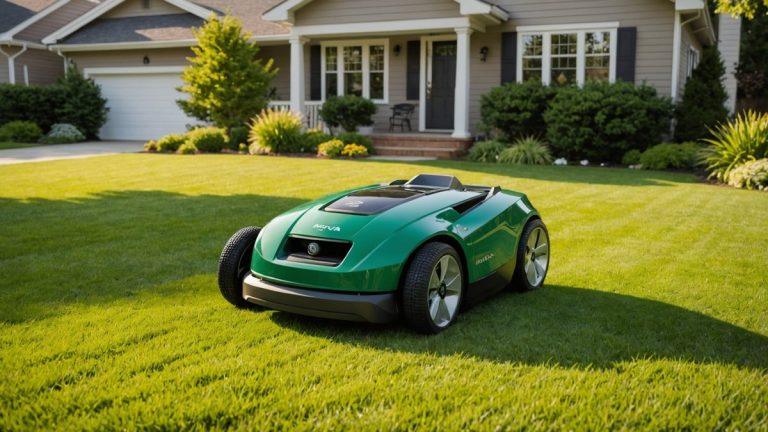
Imagine a robotic mower that doesn’t just trim your lawn—it learns it. The new Mova Viax 300 is here, and it’s redefining smart mowing with AI-driven precision, multi-zone mastery, and a level of autonomy that makes most autonomous lawn mowers look like they’re stuck in first gear. For homeowners tired of patchy cuts or pros managing complex landscapes, this could be the game-changer you’ve been waiting for.
First Impressions: A Robotic Mower That Means Business
Right out of the box, the Mova Viax 300 exudes a premium feel. Its rugged, weather-resistant shell houses a suite of sensors and cameras that set it apart from the sea of bump-and-turn robot lawn mowers flooding the market. Unlike models from Husqvarna or Worx that rely heavily on boundary wires, the Viax 300 uses a hybrid approach—combining GPS, RTK (Real-Time Kinematic) positioning, and vision-based navigation to map and mow with surgical precision. This isn’t just another robotic mower; it’s a glimpse into the future of yard care.
The setup process is refreshingly straightforward. After charging the battery (a hefty 29V lithium-ion unit), you’ll use the companion app to define your lawn’s boundaries. The Viax 300 then embarks on a mapping run, learning the contours, obstacles, and even the health of your grass. Within an hour, it’s ready to mow—no buried wires, no guesswork.
Smart Mowing Meets AI: How the Viax 300 Stands Out
What truly separates the Viax 300 from competitors like the Gardena Sileno or the Robomow RX20 is its AI-powered adaptability. Most autonomous lawn mowers follow a random or systematic pattern, but the Viax 300 dynamically adjusts its route based on real-time conditions. Here’s how it delivers a smarter cut:
- Multi-Zone Management: Handle up to 5 separate lawn areas (e.g., front yard, backyard, side garden) with custom schedules and cutting heights for each. Ideal for homeowners with complex landscapes or pros managing multiple clients.
- Obstacle Detection: Dual cameras and ultrasonic sensors detect pets, toys, or even low-hanging branches, stopping or rerouting to avoid collisions. Unlike wire-dependent models, it won’t get stuck or damage your garden decor.
- Grass Health Monitoring: The mower’s sensors analyze grass density and moisture, adjusting blade speed and frequency to promote healthier growth. Over time, it learns your lawn’s needs, reducing over-mowing in dry spells or rampant growth periods.
- RTK GPS Precision: With centimeter-level accuracy, the Viax 300 stays on course even in large, open areas where other robot lawn mowers might drift or miss spots.
- All-Wheel Drive: Tackles slopes up to 35% (about 20 degrees) with ease, outpacing many competitors that struggle beyond 20%. Perfect for hilly properties where other models might spin their wheels.
This level of intelligence isn’t just flashy—it translates to a consistently manicured lawn with minimal human intervention.
Performance: Does It Deliver a Flawless Cut?
In real-world testing, the Viax 300 shines. Its three razor-sharp blades (each with a 30 cm cutting width) mulch grass finely, returning nutrients to the soil and eliminating the need for bagging. The cutting height adjusts from 20mm to 60mm in 5mm increments, accommodating everything from a putting-green finish to a lush, thick lawn.
On a 1,000 m² lawn (the Viax 300’s max recommended area), it completes a full mow in about 3-4 hours, depending on grass density. For larger properties, Mova offers the Viax 500, which covers up to 2,000 m². Noise levels are impressively low—around 58 dB, quieter than a conversation—so it won’t disturb neighbors or your afternoon nap.
Battery life is another highlight. The 29V, 7.5 Ah battery provides roughly 2.5 hours of runtime per charge. When it’s running low, the mower automatically returns to its docking station to recharge, then resumes where it left off. This seamless operation ensures no patch goes untouched, even for large or multi-zone lawns.
One minor gripe: the app, while feature-rich, has a slight learning curve. Setting up multi-zone schedules or fine-tuning AI settings requires some patience. However, once configured, the system runs like clockwork.
Comparing the Competition
How does the Viax 300 stack up against other high-end robotic mowers? Here’s a quick look:
- Husqvarna Automower 450X: A strong contender with excellent reliability and a robust app, but it relies on boundary wires and lacks the Viax 300’s AI-driven adaptability.
- Worx Landroid M: More affordable and great for smaller lawns, but it struggles with complex terrain and multi-zone management.
- Gardena Sileno Life: Quiet and efficient, but its navigation system isn’t as advanced, and it’s limited to simpler lawn layouts.
- Robomow RX20: Offers a wide cutting width and strong performance on slopes, but its app and smart features feel dated compared to the Viax 300.
If you prioritize smart mowing with minimal setup and maximum adaptability, the Viax 300 is a standout. However, if you’re on a budget or have a very simple lawn, a more basic model might suffice.
What This Means for You
For Homeowners: The Mova Viax 300 is ideal if you have a medium to large lawn with multiple zones, slopes, or obstacles. Its AI-driven system means less time tweaking settings and more time enjoying a perfectly manicured yard. The upfront cost is higher than entry-level robot lawn mowers, but the long-term savings in time and effort (not to mention lawn health) justify the investment.
For Landscaping Pros: If you’re managing multiple properties or complex commercial spaces, the Viax 300’s multi-zone capability and RTK precision make it a compelling addition to your fleet. While it won’t replace ride-on mowers for expansive fields, it’s perfect for residential clients or smaller commercial sites where efficiency and consistency are key.
That said, the Viax 300 isn’t for everyone. If your lawn is small and simple, a more affordable model like the Worx Landroid or Gardena Sileno might be a better fit. And if you’re not tech-savvy, the initial setup and app navigation could be a hurdle.
FAQ
Is the Mova Viax 300 worth the price?
At around $2,500, the Viax 300 is priced at the higher end of the robotic mower spectrum. However, its advanced features—like AI-driven mowing, multi-zone management, and obstacle avoidance—make it a strong value for homeowners with complex lawns or pros looking to automate parts of their workflow. If you’re comparing it to mid-range models like the Husqvarna 430X (around $1,800), the extra cost buys you significantly more intelligence and flexibility.
How does it handle rain or wet grass?
The Viax 300 is weather-resistant (IPX5 rated), so it can operate in light rain. However, like most autonomous lawn mowers, it’s best to avoid mowing wet grass to prevent clumping and uneven cuts. The mower’s sensors will detect heavy rain and automatically return to its dock. You can also set rain delays in the app to pause mowing during wet conditions.
Can I use it without boundary wires?
Yes! The Viax 300 uses a wire-free navigation system thanks to its GPS, RTK, and vision-based sensors. This makes installation much easier than traditional robot lawn mowers that require burying boundary wires. However, for maximum precision, you can optionally use a virtual boundary wire (a low-voltage wire that’s easier to install than traditional systems) in areas with tricky edges or obstacles.
Source: Original Article

Author: AI Mow
Ai Mow is the editorial team behind Ai Mower News, dedicated to bringing you the latest news, reviews, and insights on robotic lawn mowers and smart gardening technology.