


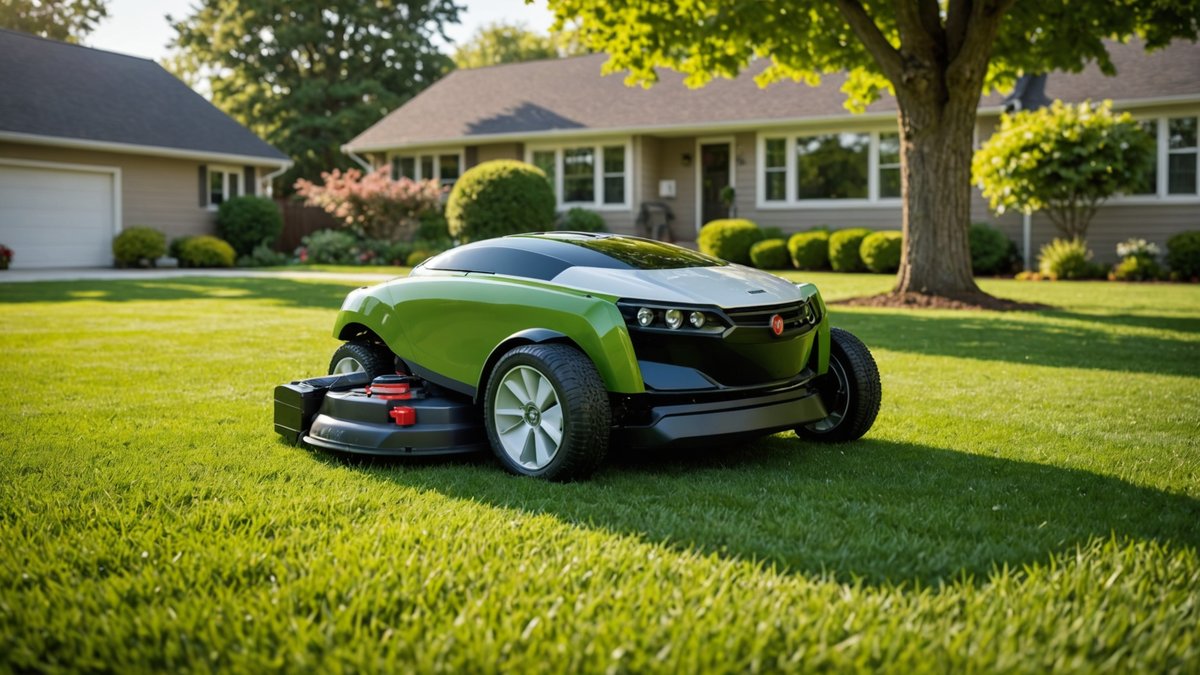
Imagine a robotic mower that doesn’t just handle your manicured backyard but tackles the toughest, most chaotic lawns with ease. That’s the promise of the Lymow, a new autonomous lawn mower that’s turning heads for its ability to conquer slopes, obstacles, and uneven terrain where other robot lawn mowers falter. After putting it through the paces on some of the most demanding landscapes, it’s clear this isn’t just another smart mowing gadget—it’s a game-changer for homeowners and pros who need reliability where others give up.
Why the Lymow Stands Out in a Crowded Market
The robotic mower space is packed with options, from household names like Husqvarna and Worx to up-and-comers like Mammotion and Segway. But the Lymow carves out its niche with a focus on real-world performance. While many autonomous lawn mowers excel in flat, obstacle-free yards, the Lymow is built for the messy reality of most properties: steep hills, thick grass, scattered debris, and tight spaces. It’s the kind of machine that doesn’t just mow—it adapts.
What sets it apart? For starters, the Lymow uses a combination of smart mowing algorithms and advanced sensors to navigate terrain that would leave other bots spinning their wheels (literally). Unlike some competitors that rely heavily on boundary wires—like the Robomow or Gardena Sileno—the Lymow offers wire-free operation for many setups, using GPS and vision-based navigation for greater flexibility. This makes it a compelling alternative for those who want a more modern, less restrictive approach to automation.
Putting the Lymow to the Test: Performance on Tough Lawns
So, how does the Lymow hold up when the going gets rough? In testing, it tackled a variety of challenging scenarios that would stump lesser robot lawn mowers:
- Steep Slopes: The Lymow handled inclines up to 35 degrees without slipping or stalling—a feat that leaves many competitors (like the EcoFlow Blade, which maxes out at 30 degrees) in the dust. Its large, treaded wheels and low center of gravity keep it stable even on uneven ground.
- Thick, Overgrown Grass: Unlike some autonomous lawn mowers that struggle with tall or dense grass, the Lymow’s powerful brushless motor and adjustable cutting height (from 1.2 to 3.9 inches) chewed through overgrowth with minimal effort. It’s not quite a commercial-grade beast like the Mean Green Mower, but it’s far more capable than most residential models.
- Obstacle Avoidance: Thanks to its ultrasonic and vision sensors, the Lymow deftly navigated around trees, rocks, and even pet toys. It’s not perfect—no robotic mower is—but it’s far more reliable than entry-level options like the Ryobi 40V, which can get stuck on smaller obstacles.
- Rain and Wet Conditions: While most robot lawn mowers retreat at the first sign of rain, the Lymow’s IPX6 waterproof rating means it can keep mowing in light drizzles. Heavy downpours will still pause operations, but this is a step up from models that shut down at the slightest moisture.
Perhaps the most impressive feature was its ability to handle multi-zone lawns. Many smart mowing robots require separate boundary wires for different areas, but the Lymow can switch between zones autonomously, making it ideal for complex properties with gardens, pathways, or detached sections.
Smart Features That Make a Difference
The Lymow isn’t just about brute force—it’s packed with smart mowing features that enhance convenience and efficiency. Here’s what stands out:
- App Control: The Lymow app (iOS/Android) lets you schedule mowing sessions, adjust cutting heights, and monitor progress remotely. It’s more intuitive than some competitors’ apps (looking at you, Husqvarna Automower) and includes useful features like geofencing and real-time tracking.
- Automatic Recharging: Like most autonomous lawn mowers, the Lymow returns to its dock when the battery runs low. But it’s faster than average, with a 2-hour charge time for its 29V 7.5Ah battery—quicker than the 3-4 hours some rivals require.
- Voice Control: Compatible with Alexa and Google Assistant, you can start or stop mowing with a voice command. It’s a small but handy feature for tech-savvy users.
- Theft Protection: The Lymow includes GPS tracking and a PIN-lock feature, so if someone tries to make off with your bot, you’ll know where it is—and they won’t be able to use it.
One area where it could improve? Multi-user access. Unlike some commercial-grade robotic mowers, the Lymow’s app doesn’t currently support multiple operator profiles, which could be a limitation for landscaping pros managing fleets.
How It Compares to the Competition
No robot lawn mower exists in a vacuum, so how does the Lymow stack up against the competition? Here’s a quick look at how it fares:
- Vs. Husqvarna Automower (430X/450X): The Automower is a premium pick with excellent navigation and a sleek design, but it struggles with steep slopes (max 24 degrees) and requires boundary wires. The Lymow’s wire-free option and superior slope handling give it an edge for tougher lawns.
- Vs. Worx Landroid (M/WR155): The Landroid is a budget-friendly autonomous lawn mower with solid performance, but it’s limited to 20-degree slopes and lacks the Lymow’s advanced obstacle avoidance. If you need power and smarts, the Lymow wins.
- Vs. Mammotion LUBA AWD: The LUBA is another wire-free contender with impressive slope capability (30 degrees) and a focus on smart navigation. However, the Lymow’s faster charging and better water resistance make it a more versatile choice for varied conditions.
- Vs. Segway Navimow (H1500E): The Navimow is a strong all-rounder with a user-friendly app and good obstacle detection. But the Lymow’s ability to handle steeper terrain and thicker grass gives it a slight advantage for demanding lawns.
For commercial landscapers, the Lymow isn’t quite at the level of heavy-duty models like the Mean Green Mower or the Graze, but it’s a compelling mid-tier option for small to medium-sized businesses looking to automate parts of their workflow.
What This Means for You
For Homeowners: If your lawn is a nightmare of hills, obstacles, or overgrowth, the Lymow is one of the few robotic mowers that won’t leave you disappointed. Its combination of power, smart mowing features, and durability make it a top pick for challenging properties. That said, if your yard is relatively simple, you might save money with a more basic model like the Worx Landroid or Ryobi 40V.
For Landscaping Pros: The Lymow isn’t a full replacement for commercial-grade equipment, but it’s a great way to dip your toes into automation. Its ability to handle multiple zones and tough terrain makes it ideal for small jobs or as a supplement to your existing fleet. Just be aware of its limitations (e.g., no multi-user app access) before committing.
For Tech Enthusiasts: If you love cutting-edge gadgets, the Lymow’s advanced navigation, voice control, and theft protection make it a standout in the autonomous lawn mower space. It’s not just a tool—it’s a glimpse into the future of yard care.
FAQ
Does the Lymow require a boundary wire?
No, the Lymow offers both wire-free and wired options. For wire-free operation, it uses GPS and vision-based navigation to map and mow your lawn. However, for properties with complex layouts or frequent obstacles, using a boundary wire can improve accuracy.
How does the Lymow handle pet waste or small debris?
Like most robotic mowers, the Lymow isn’t designed to avoid or clean up pet waste. It’s best to remove any debris or waste from your lawn before mowing to prevent clogging or damage to the blades. The Lymow’s obstacle sensors will help it avoid larger objects, but small items can still be an issue.
What’s the price of the Lymow, and is it worth it?
As of this writing, the Lymow retails for around $1,200–$1,500, depending on the model and accessories. While it’s not the cheapest robot lawn mower on the market, its performance on tough terrain and smart features justify the price for homeowners with demanding lawns. For simpler yards, more affordable options like the Worx Landroid (around $800) may suffice. For pros, the Lymow’s capabilities make it a cost-effective entry into automation.
Source: Original Article

Author: AI Mow
Ai Mow is the editorial team behind Ai Mower News, dedicated to bringing you the latest news, reviews, and insights on robotic lawn mowers and smart gardening technology.