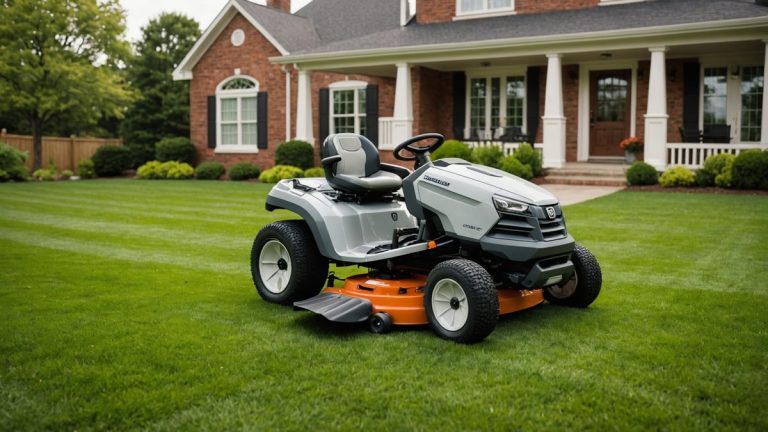
Picture this: a perfectly manicured pitch, ready for world-class athletes, all maintained without a single human hand on the mower. That’s exactly what Husqvarna’s autonomous lawn mower technology delivered for Liverpool Football Club during their U.S. preseason tour. This partnership isn’t just a win for the Reds—it’s a game-changer for the future of smart mowing in sports turf management and beyond.
As robotic mowers continue to evolve from backyard conveniences to professional-grade tools, Husqvarna’s collaboration with one of the most iconic football clubs in the world signals a new era for autonomous lawn care. For homeowners and landscaping pros alike, this is a clear sign that the technology is ready for prime time—on and off the field.
Husqvarna and Liverpool FC: A Partnership Built on Precision
Husqvarna, a leader in outdoor power equipment, stepped up to support Liverpool FC’s U.S. preseason tour by deploying their fleet of robot lawn mowers to maintain training pitches and stadium turf. The goal? To ensure the players had a consistent, high-quality surface to train and perform on, no matter where they were stateside.
This isn’t just about keeping grass short. In professional sports, turf quality directly impacts player performance and injury prevention. Uneven or poorly maintained grass can lead to slips, trips, and subpar play. By leveraging autonomous mowing technology, Husqvarna demonstrated that robotic solutions can meet the rigorous standards of elite sports—where every blade of grass matters.
For Husqvarna, this partnership is also a strategic move to showcase the scalability of their technology. If their robotic mowers can handle the demands of a Premier League club, they can certainly handle your backyard or a commercial landscape.
How Autonomous Mowers Are Changing the Game
The use of autonomous lawn mowers in professional sports isn’t entirely new, but Husqvarna’s high-profile collaboration with Liverpool FC brings it into the spotlight. So, how exactly do these machines work, and why are they a big deal for turf management?
Robotic mowers like Husqvarna’s use a combination of GPS, sensors, and smart software to navigate and mow large areas with precision. They can be programmed to maintain specific grass heights, adjust cutting patterns, and even avoid obstacles—all while operating quietly and efficiently. For sports fields, this means:
- Consistency: The mowers ensure uniform grass height across the entire pitch, reducing the risk of uneven patches that could affect gameplay.
- Efficiency: Autonomous mowers can operate around the clock, including overnight, without the need for human supervision. This maximizes uptime and ensures the turf is always in top condition.
- Reduced Labor Costs: For grounds crews, robotic mowers free up time to focus on other critical tasks, like fertilization, irrigation, and pest control.
- Sustainability: Many robot lawn mowers are electric, reducing emissions and noise pollution compared to traditional gas-powered equipment.
Competitors like Worx Landroid, Robomow, and STIHL iMow also offer robotic solutions for residential and commercial use, but Husqvarna’s deployment in a high-stakes environment like professional sports sets a new benchmark for the industry.
The Tech Behind the Turf
Husqvarna’s autonomous mowers are packed with advanced features designed for professional-grade performance. While the exact models used for Liverpool FC’s tour weren’t disclosed, their commercial line—such as the Husqvarna CEORA—offers a glimpse into the technology at play.
Here’s a breakdown of the key specs and capabilities that make these machines stand out:
- GPS and RTK Navigation: High-precision GPS, often paired with Real-Time Kinematic (RTK) technology, allows the mowers to navigate complex areas with centimeter-level accuracy. This is critical for maintaining the intricate patterns and boundaries of a sports field.
- Smart Scheduling: Users can program mowing schedules based on grass growth rates, weather conditions, and upcoming events. The mowers can even adjust their cutting height automatically to adapt to changing conditions.
- Obstacle Detection: Advanced sensors detect and avoid obstacles, from goalposts to sprinkler heads, ensuring safe and uninterrupted operation.
- Multi-Zone Management: For large or segmented areas, the mowers can be configured to handle multiple zones independently, each with its own mowing parameters.
- Remote Monitoring: Grounds crews can monitor and control the mowers via a smartphone app, receiving alerts for maintenance, battery levels, or any issues that arise.
These features aren’t just for the pros. Many of the same technologies are trickling down into consumer models, making smart mowing more accessible for homeowners who want a pristine lawn without the hassle.
What This Means for Homeowners and Pros
So, why should you care about Husqvarna’s work with Liverpool FC? Because it’s a real-world demonstration of what autonomous lawn mowers can achieve—and it’s only the beginning.
For Homeowners: If you’ve been on the fence about investing in a robotic mower, this partnership is a vote of confidence in the technology. If it’s good enough for a Premier League club, it’s more than capable of handling your lawn. Look for models with features like GPS navigation, app control, and mulching capabilities (e.g., Husqvarna’s Automower 450X or Gardena SILENO). These mowers can save you time, reduce lawn care costs, and even improve the health of your grass by mulching clippings back into the soil.
For Landscaping Pros: The message is clear: autonomous mowing is the future of fleet management. By integrating robotic mowers into your services, you can take on larger contracts, reduce labor costs, and offer clients a level of precision and consistency that’s hard to match with traditional equipment. Companies like STIHL and John Deere are also expanding their robotic offerings, so now’s the time to explore how these tools can scale your business.
Of course, there are still hurdles to overcome. High upfront costs, the need for boundary wires (in some models), and the learning curve for new users can be barriers. But as the technology matures and becomes more widespread, these challenges are likely to diminish.
Bottom Line: The Future of Lawn Care Is Here
Husqvarna’s support of Liverpool FC’s U.S. preseason tour with autonomous turf care is more than just a marketing stunt—it’s a proof of concept. The technology has arrived, and it’s ready to transform how we think about lawn maintenance, whether for a backyard, a local park, or a professional sports stadium.
For homeowners, this means more options than ever to automate one of the most time-consuming chores. For landscaping professionals, it’s an opportunity to innovate and stay ahead of the competition. And for the industry as a whole, it’s a sign that robotic mowers are no longer a novelty—they’re a necessity.
If you’re in the market for a robot lawn mower, now’s the time to start researching. Compare models, read reviews, and consider how much time and effort you’re willing to invest in traditional mowing. The future is autonomous—and it’s greener than ever.
FAQ
Are robotic mowers suitable for all lawn sizes?
Most autonomous lawn mowers are designed for small to medium-sized lawns (up to 1 acre), but commercial models like Husqvarna’s CEORA can handle much larger areas, including sports fields. Always check the manufacturer’s specs to ensure the mower can handle your lawn size.
Do robotic mowers require a lot of maintenance?
Compared to traditional mowers, robotic mowers require minimal maintenance. Most need occasional blade sharpening or replacement, battery checks, and cleaning. However, they don’t require oil changes, spark plug replacements, or other tasks associated with gas-powered mowers.
Can robotic mowers handle slopes and uneven terrain?
Many robot lawn mowers are designed to handle slopes up to 20-25 degrees (about a 45% grade). Models like the Husqvarna Automower 430X or Worx Landroid M are particularly good at navigating uneven terrain. However, extremely steep or rocky areas may require additional solutions, such as terracing or manual mowing.
Source: Original Article

Author: AI Mow
Ai Mow is the editorial team behind Ai Mower News, dedicated to bringing you the latest news, reviews, and insights on robotic lawn mowers and smart gardening technology.