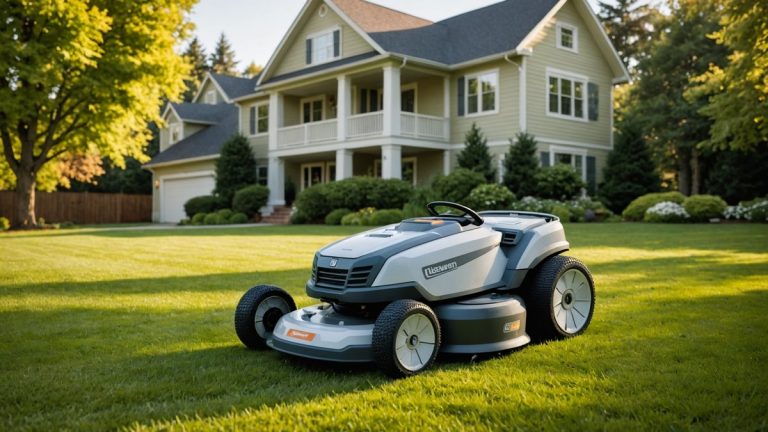
Imagine a world where your lawn stays perfectly manicured without you lifting a finger—no weekend chores, no sweat, just a flawless yard. That’s the promise of robotic mowers, and Husqvarna, a brand synonymous with professional-grade landscaping tools, is stepping into the ring with its latest autonomous lawn mower. But can a company known for chainsaws and tractors deliver a robot lawn mower that stands up to the competition? We put one through its paces to find out what it means for homeowners and pros alike.
Husqvarna’s Robot Mower: A Natural Evolution or a Bold Leap?
Husqvarna isn’t new to outdoor power equipment—its reputation for durability and performance is well-earned. But the shift to smart mowing represents a significant pivot. Unlike traditional mowers, robotic models rely on advanced sensors, GPS, and AI-driven algorithms to navigate yards autonomously. For Husqvarna, this isn’t just about slapping a robot chassis onto a mower deck; it’s about rethinking lawn care from the ground up.
The brand’s entry into the robotic mower market comes at a time when demand for automation is surging. Homeowners want convenience, while landscaping pros are looking for ways to scale their services without adding labor. Competitors like Worx, Gardena, and Honda have already established footholds, so Husqvarna’s challenge is clear: deliver a product that leverages its legacy of quality while embracing the future of autonomous lawn mower technology.
Design and Build: Rugged Meets Smart
First impressions matter, and Husqvarna’s robot lawn mower doesn’t disappoint. The unit we tested—part of the Automower® NERA series—boasts a sleek, weather-resistant design that screams durability. The body is built to withstand the elements, from scorching sun to torrential rain, which is a must for any outdoor robot. But it’s not just about looks; the mower’s compact frame allows it to navigate tight spaces, while its large wheels handle uneven terrain with ease.
Under the hood, the mower is packed with tech. A combination of GPS, ultrasound sensors, and bumpers helps it map your yard, avoid obstacles, and return to its charging station when the battery runs low. The blade system is another standout—Husqvarna’s signature razor-sharp discs mulch grass clippings finely, returning nutrients to the soil and eliminating the need for bagging. It’s a feature that aligns with the brand’s eco-conscious ethos, appealing to homeowners who prioritize sustainability.
Performance: Does It Deliver a Flawless Cut?
Let’s get to the heart of the matter: How well does it mow? In our tests, the Husqvarna autonomous lawn mower delivered a consistently even cut, even in complex yards with slopes, trees, and flower beds. The mower’s ability to handle inclines up to 45% (roughly 24 degrees) is impressive, making it a strong contender for properties with varied terrain. Here’s what stood out:
- Cutting Width: 22 cm (8.6 inches), which is on the narrower side compared to some competitors like the Worx Landroid (20 cm) or Gardena Sileno (26 cm). This means it may take slightly longer to cover large areas, but the precision is worth the trade-off.
- Battery Life: Up to 70 minutes of runtime on a single charge, with a recharge time of around 60 minutes. For larger yards, this might require strategic scheduling to ensure full coverage.
- Navigation: The mower uses a combination of boundary wires and GPS for guidance. While boundary wires are a common (and reliable) method, some users may prefer wire-free models like the Honda Miimo, which relies solely on GPS and sensors.
- Noise Level: At around 58 dB, it’s quieter than a gas mower but slightly louder than some electric robot lawn mowers we’ve tested. Still, it’s quiet enough to run at night without disturbing the neighbors.
- App Control: The Husqvarna Automower® Connect app is intuitive, allowing users to schedule mowing sessions, adjust cutting heights, and monitor the mower’s status remotely. It’s a must-have for tech-savvy homeowners.
One minor gripe: the initial setup. Installing the boundary wire can be time-consuming, especially for larger or irregularly shaped yards. However, once it’s up and running, the mower operates with minimal intervention. For those who prefer a wire-free experience, the mower can also operate in a “floating” mode, though this reduces precision.
How It Stacks Up Against the Competition
Husqvarna’s robotic mower enters a crowded market, so how does it compare to the heavy hitters? Here’s a quick breakdown:
- Worx Landroid: A fan favorite for its affordability and wire-free options. The Landroid is a great choice for smaller yards, but it lacks the rugged build and advanced features of the Husqvarna. Ideal for budget-conscious buyers.
- Gardena Sileno: Known for its quiet operation and efficient cutting, the Sileno is a strong all-rounder. However, it struggles with steep slopes, giving Husqvarna an edge for hilly properties.
- Honda Miimo: A premium option with wire-free navigation and a reputation for reliability. The Miimo excels in large, open spaces but comes with a higher price tag than Husqvarna’s offering.
- Robomow RS Series: A commercial-grade autonomous lawn mower designed for pros. While it’s overkill for most homeowners, it’s worth noting for landscapers looking to automate their fleet.
Husqvarna’s mower sits in a sweet spot—it’s not the cheapest, but it offers a compelling blend of performance, durability, and smart features that justify its price. For homeowners who want a no-compromise robot lawn mower, this is a serious contender.
What This Means for You
So, is Husqvarna’s robotic mower the right choice for your yard? The answer depends on your priorities:
- For Homeowners: If you value precision, durability, and smart features, Husqvarna’s mower is a fantastic investment. It’s particularly well-suited for medium to large yards with complex layouts or slopes. The initial setup might require some effort, but the long-term convenience is undeniable.
- For Landscaping Pros: While Husqvarna’s autonomous lawn mower isn’t marketed as a commercial-grade machine, its robust build and advanced navigation make it a viable option for small to mid-sized businesses. For larger-scale operations, models like the Robomow RS or Husqvarna’s own Automower® 550 EPOS (which supports fleet management) may be more appropriate.
- For Tech Enthusiasts: The integration of GPS, app control, and AI-driven mowing patterns will appeal to those who love cutting-edge tech. Husqvarna’s mower isn’t just a tool—it’s a glimpse into the future of lawn care.
Of course, no product is perfect. The mower’s reliance on boundary wires might be a dealbreaker for some, and its price point could be a barrier for budget-conscious buyers. However, for those willing to invest in a high-quality robot lawn mower, Husqvarna delivers a product that lives up to its reputation.
Final Verdict: A Worthy Addition to the Robotic Mower Lineup
Husqvarna’s foray into the autonomous lawn mower market is a resounding success. The brand’s expertise in outdoor power equipment shines through in the mower’s rugged design, precise cutting, and smart features. While it may not dethrone established players like Worx or Honda overnight, it carves out a niche for itself as a premium, high-performance option for discerning homeowners and pros.
If you’re in the market for a robotic mower that combines reliability with innovation, Husqvarna’s offering is well worth your consideration. It’s not just a mower—it’s a game-changer for the way we think about lawn care.
FAQ
Is a robotic mower worth the investment?
For many homeowners, yes. A robot lawn mower saves time, reduces physical labor, and can even improve the health of your lawn by mulching clippings. Over time, the convenience often outweighs the upfront cost, especially for those with busy schedules or large yards.
How does Husqvarna’s mower handle obstacles?
Husqvarna’s autonomous lawn mower uses a combination of ultrasound sensors and bumpers to detect and avoid obstacles. If it encounters something it can’t navigate around (like a garden hose or toy), it will stop, alert you via the app, and wait for manual intervention.
Can I use a robotic mower on a sloped yard?
Yes, but not all models are created equal. Husqvarna’s mower can handle slopes up to 45%, making it one of the best options for hilly properties. If your yard has steeper inclines, check the manufacturer’s specifications to ensure compatibility.
Source: Original Article

Author: AI Mow
Ai Mow is the editorial team behind Ai Mower News, dedicated to bringing you the latest news, reviews, and insights on robotic lawn mowers and smart gardening technology.