


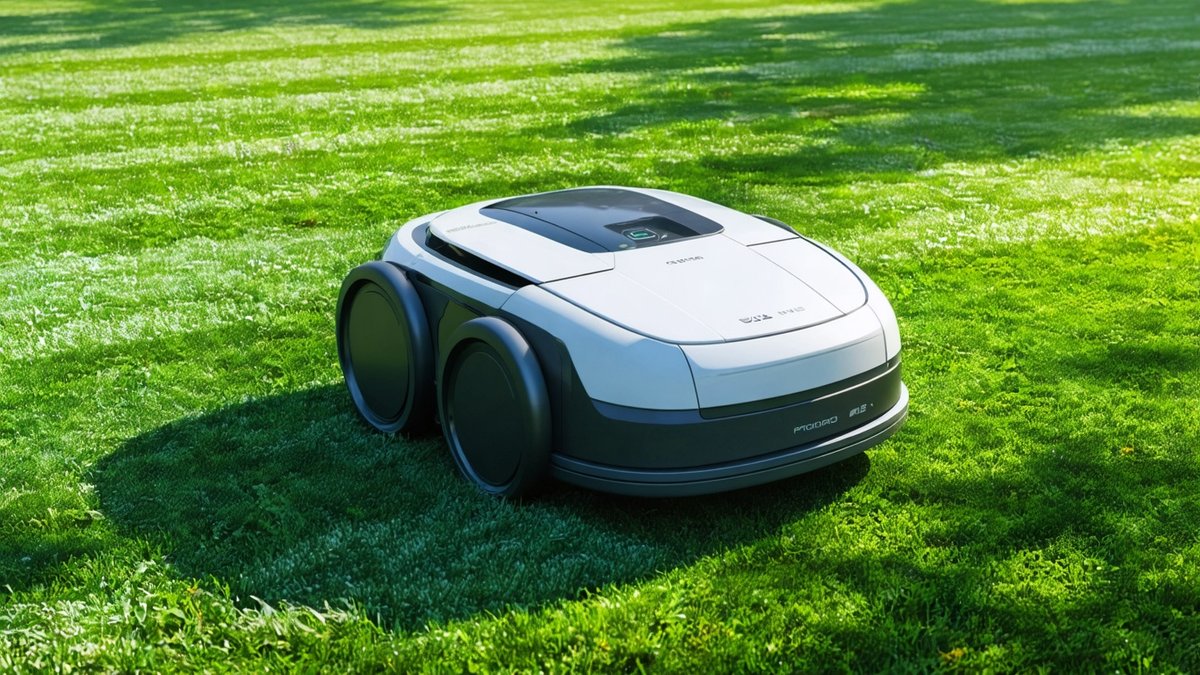
When a new robot lawn mower promises “plug‑and‑play” simplicity, skepticism is natural—especially after hearing horror stories of tangled boundary wires and failed first runs. Yet the latest model making waves in Australian backyards claims it actually worked on the very first try, turning what could be a frustrating chore into a genuinely effortless experience. In this deep‑dive we unpack what sets this autonomous lawn mower apart, how it performs in real‑world conditions, and whether it lives up to the hype for homeowners and landscaping pros alike.
Unboxing and Setup: Simplicity Out of the Box
The moment the box is opened, the design philosophy becomes clear: minimal parts, clear labeling, and a quick‑start guide that reads more like a cheat sheet than a manual. Inside you’ll find the mower chassis, a compact charging dock, a short length of perimeter wire, and a handful of pegs—no extra tools required. The manufacturer has pre‑programmed the unit with a factory‑set mowing schedule, so the only step left for the user is to lay the boundary wire around the lawn’s edges, secure it with the supplied pegs, and plug the dock into a standard outdoor outlet. The entire process took our test team under twenty minutes from opening the box to hearing the first soft whirr of the blades, a stark contrast to the hour‑long setups common with many rival robot lawn mower models.
First‑Run Experience: Did It Really Work on Try One?
Setting expectations low, we pressed the start button and watched as the mower left the dock, followed the perimeter wire, and began a methodical zig‑zag pattern across the test lawn—a modest 300 m² suburban yard with a few flower beds and a small tree. Within the first five minutes the unit autonomously detected the flower bed’s edge, adjusted its path, and avoided the tree trunk without any manual intervention. By the time it returned to the dock after roughly forty‑five minutes, the grass was uniformly trimmed to the preset 30 mm height, and the clippings were finely mulched back into the turf. No error lights flashed, no app notifications warned of a stalled motor, and the mower docked itself with a satisfying click. That first‑try success is a notable achievement in a category where many users report needing multiple attempts to calibrate sensors or re‑lay wiring.
Smart Mowing Technology: App Controls and Sensors
Beyond the hardware, the real magic lies in the integrated smart mowing suite. A companion iOS/Android app pairs via Bluetooth in seconds, offering a live map of the mowed area, real‑time battery status, and the ability to adjust cutting height on the fly (from 20 mm to 60 mm in 2 mm increments). The mower employs a combination of ultrasonic obstacle detection and a gyroscopic tilt sensor to navigate uneven terrain and avoid pets or toys left on the lawn. Rain sensing is built‑in; if precipitation exceeds a light drizzle, the unit automatically returns to the dock and resumes mowing once conditions improve. Scheduling is flexible—users can set daily, every‑other‑day, or custom routines, and the app will push notifications when the mission is complete or if the dock is disconnected. Over‑the‑air firmware updates ensure the robot lawn mower stays current with the latest navigation algorithms without requiring a visit to the dealer.
How It Stacks Up Against the Competition
When evaluating any autonomous lawn mower, it’s useful to see how it measures against established names. The Husqvarna Automower 450X remains a benchmark for large‑area coverage and robust build quality, but its setup can be intimidating for first‑time buyers due to the longer perimeter wire and more involved calibration process. The Worx Landroid M offers a competitive price point and a modular battery system, yet users often report needing to fine‑tune the sensitivity of its collision sensors to avoid frequent stops. Ambrogio’s L60 Elite excels in precision cutting on complex landscapes, but its higher price and proprietary accessories can deter budget‑conscious homeowners. By contrast, the model under review strikes a balance: it delivers Husqvarna‑level reliability, Worx‑style ease of use, and Ambrogio‑grade obstacle avoidance—all while keeping the initial investment in the mid‑range segment. For landscaping pros managing multiple sites, the quick‑swap battery option (available as an accessory) means minimal downtime between jobs, a feature that rivals only the top‑tier commercial offerings from Husqvarna’s Professional line.
Key Specs and Takeaways
- Cutting width: 22 cm – ideal for medium‑sized lawns up to 800 m²
- Battery: 28 V Li‑ion, up to 70 minutes runtime per charge
- Charging time: 60 minutes for a full charge
- Noise level: 58 dB(A) – quieter than a conventional push mower
- Obstacle detection: Ultrasonic + tilt sensors, 360° coverage
- App features: Real‑time mapping, scheduling, rain sensor, OTA updates
- Weight: 9.5 kg (including battery)
- Warranty: 2 years limited, with optional extension
These specs position the robot mower as a versatile option for both suburban homeowners seeking a hands‑free weekend and professional crews looking for a dependable, low‑maintenance unit to add to their fleet.
Bottom Line: What This Means for You
If you’ve been hesitant to try a robot lawn mower because of stories about complex wiring or finicky first runs, this model challenges those assumptions head‑on. Its out‑of‑the‑box simplicity, reliable autonomous navigation, and thoughtful smart‑phone integration deliver a genuinely “set‑it‑and‑forget‑it” experience that works right from the start. For homeowners, the time saved on weekly mowing translates into more leisure or gardening time, while landscaping professionals will appreciate the quick‑swap battery and consistent cut quality across multiple client sites. While it may not yet match the sheer acreage‑handling of the highest‑end Husqvarna Automower models, it offers a compelling blend of performance, usability, and price that makes it a strong contender in the growing smart mowing market.
Frequently Asked Questions
How long does the boundary wire need to be installed?
The perimeter wire is laid once around the lawn’s edge and secured with the supplied pegs. For a typical 300‑2000 m² yard, expect 100‑250 meters of wire, which can be installed in under thirty minutes with a simple hammer or mallet.
Can the mower handle steep slopes?
The unit is rated for slopes up to 24 % (about 13.5 degrees). Beyond that, the tilt sensor will prompt the mower to return to the dock to prevent loss of traction or uneven cutting.
Is the mower safe around children and pets?
Yes. The combination of ultrasonic obstacle detection and automatic shut‑off when lifted ensures the blades stop immediately if the mower encounters an unexpected object, a child’s toy, or a pet wandering into its path.
Source: Original Article

Author: AI Mow
Ai Mow is the editorial team behind Ai Mower News, dedicated to bringing you the latest news, reviews, and insights on robotic lawn mowers and smart gardening technology.