


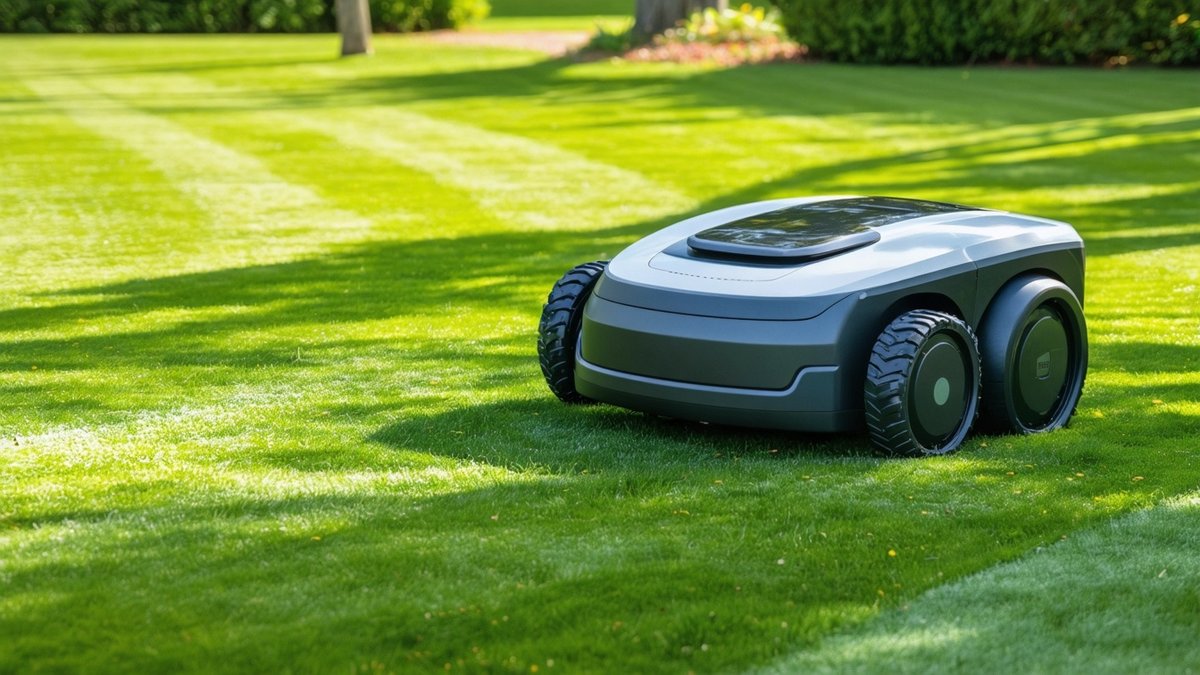
The bustling halls of IFA 2026 in Berlin proved once again that the future of yard care is rolling silently on wheels, with a slate of new robotic mower announcements that stole the spotlight from smartphones and smart fridges. From sleek redesigns to breakthrough AI navigation, manufacturers showed how the next generation of robotic mower technology is poised to make smart mowing effortless for homeowners and landscaping pros alike. If you’ve been watching the market for a robot lawn mower that can truly think for itself, the innovations unveiled this year give plenty of reasons to take a closer look.
IFA 2026: A Showcase of Autonomous Lawn Mower Innovation
This year’s IFA floor was dominated by dedicated zones for outdoor power equipment, and the autonomous lawn mower segment attracted a steady stream of visitors eager to see live demos. Unlike previous editions where robotic mowers were tucked into a corner, 2026 featured full‑scale test lawns, allowing attendees to watch machines navigate complex terrains, avoid obstacles, and even communicate with companion apps in real time. The atmosphere buzzed with excitement as engineers explained how advances in sensor fusion, battery chemistry, and cloud‑based learning are converging to create mowers that require almost zero user intervention.
Industry analysts present at the show noted that the pace of innovation has accelerated dramatically over the past 12 months, with several manufacturers announcing that their 2027 line‑ups will already incorporate features that were still concept‑stage just a year ago. For consumers, that means the decision to invest in a robot lawn mower is becoming less about futuristic promise and more about tangible, immediate benefits—such as reduced mowing time, lower energy consumption, and quieter operation.
Top Models Unveiled: What Stood Out
Among the dozens of new entries, a handful of models emerged as clear frontrunners, each bringing a unique twist to the autonomous mowing equation.
1. Husqvarna Automower® 460X‑AI
Husqvarna doubled down on its AI‑driven navigation suite, introducing a dual‑camera vision system that works in tandem with its existing GPS‑RTK module. The result is a mower that can recognize and avoid garden toys, hoses, and even small animals without needing a physical boundary wire. The 460X‑AI also boasts a 20 % increase in battery capacity, delivering up to 2.5 hours of continuous runtime on a single charge.
2. Worx Landroid M‑Vision Pro
Worx answered the call for modularity with a snap‑on sensor pod that adds LiDAR‑based obstacle detection to its popular Landroid line. The pod can be swapped out for a mulching kit or a snow‑blade attachment, turning the mower into a year‑round yard‑care tool. Worx highlighted its improved cloud‑analytics platform, which now offers predictive maintenance alerts based on motor vibration patterns.
3. Bosch Indego S+ 500
Bosch’s entry focused on seamless smart‑home integration. The Indego S+ 500 can be controlled via voice assistants, Apple HomeKit, and Samsung SmartThings, and it automatically adjusts its mowing schedule based on local weather forecasts pulled from the Bosch Weather Service. A new “quiet mode” reduces operational noise to under 58 dB, making it suitable for early‑morning or late‑evening runs in noise‑sensitive neighborhoods.
4. Ambrogio L‑250 Elite
From the Italian specialist Ambrogio, the L‑250 Elite showcased a radical new cutting deck design that uses three independently powered blades arranged in a triangular pattern. This configuration promises a more uniform cut on uneven terrain while reducing blade wear. Ambrogio also announced a partnership with a major solar panel manufacturer to offer an optional rooftop solar charging dock, aiming for off‑grid operation in sunny climates.
Technology Trends Shaping the Next Generation
Beyond the individual product launches, several overarching themes emerged that signal where the robotic mower market is headed.
- AI‑Powered Vision and Sensor Fusion: Multiple brands showcased systems that combine cameras, ultrasonic sensors, and LiDAR to build a real‑time 3D map of the lawn. This reduces reliance on perimeter wires and enables dynamic re‑routing when obstacles appear.
- Extended Battery Life and Fast Charging: Advances in lithium‑silicon chemistry and improved thermal management are pushing runtime past the two‑hour mark for mid‑size models, with some premium units promising 3+ hours. Quick‑charge docks that can replenish 80 % capacity in under 30 minutes are becoming standard.
- Ecosystem Connectivity: Manufacturers are treating the mower as a node in a broader smart‑home or smart‑city network. Integration with weather services, irrigation controllers, and even smart lighting allows for coordinated yard care—think mower pausing when sprinklers activate or lights flashing when the mower needs attention.
- Modular Attachments: The trend toward interchangeable pods (snow blades, leaf collectors, aerators) is turning a single robotic platform into a multi‑season tool, increasing the total cost of ownership justification for homeowners and landscaping professionals.
- Quiet Operation: Noise reduction continues to be a key selling point, especially in urban and suburban markets where bylaws limit equipment sound levels. New brushless motor designs and acoustic shielding are pushing average operating noise below 60 dB.
Market Impact: How the New Line‑up Stacks Up Against Competitors
With so many fresh entries, it’s useful to see how the IFA 2026 offerings compare to established players and emerging alternatives.
Husqvarna remains the benchmark for reliability and dealer support, but its premium pricing is being challenged by Worx and Bosch, which deliver comparable navigation performance at a lower entry cost. Worx’s modular approach particularly appeals to DIY‑inclined users who want flexibility without buying multiple machines.
Bosch**’s strength lies in its smart‑home ecosystem; homeowners already invested in Apple HomeKit or Samsung SmartThings may find the Indego line the most seamless fit. However, Bosch’s dealer network in North America is still expanding, which could affect service availability compared to Husqvarna’s well‑established footprint.
Ambrogio’s niche focus on cutting‑deck innovation and solar charging options makes it a compelling choice for eco‑conscious consumers and professionals operating in regions with high solar irradiance. While its market share is smaller, the brand’s dedication to engineering excellence often translates into longer product lifespans.
Emerging challengers such as Segway Navimow and Yardroid also displayed prototypes at IFA, emphasizing ultra‑lightweight designs and AI‑driven path planning that rely solely on visual navigation—no wires, no RTK base stations. Though still in early stages, these alternatives hint at a future where installation could be as simple as placing the mower on the lawn and letting it learn the boundaries.
Overall, the competitive landscape is shifting from a race based purely on battery size to a multidimensional contest that values intelligence, adaptability, and ecosystem integration. For buyers, this means more choice, but also a need to evaluate which features align best with their specific yard size, layout, and smart‑home preferences.
Bottom Line: What This Means for You
The flurry of announcements at IFA 2026 confirms that the robotic mower market has moved beyond novelty into a mature, technology‑driven category capable of delivering real‑world convenience and efficiency. If you’ve been waiting for a robot lawn mower that can truly operate autonomously—navigating complex gardens, adjusting to weather, and integrating with your smart home—2026’s crop of models makes that vision attainable today.
For homeowners, the key takeaway is to prioritize smart mowing features that reduce ongoing effort: look for vision‑based navigation, strong app controls, and quiet operation if noise is a concern. Landscaping professionals should consider modular platforms that can swap attachments for year‑round use, as well as fleet‑management capabilities offered by newer cloud‑analytics suites.
Finally, keep an eye on total cost of ownership. While upfront prices for AI‑enhanced models are higher, savings in time, energy, and potential labor costs can quickly offset the premium—especially when paired with efficient battery systems and smart scheduling that avoids unnecessary runs.
FAQ
Do I still need to lay boundary wire for the latest robotic mowers?
Many of the 2026 models, such as the Husqvarna Automower® 460X‑AI and Worx Landroid M‑Vision Pro, offer wire‑free operation using camera‑LiDAR fusion or RTK‑GPS. However, for the most reliable performance on very large or intricately shaped lawns, a hybrid approach (wire plus sensors) may still be recommended. Always check the specific model’s navigation requirements before purchase.
How noisy are these new robotic mowers compared to traditional gas mowers?
Modern electric robotic mowers typically operate between 55‑60 dB, which is roughly the sound level of a normal conversation or a refrigerator humming. This is substantially quieter than a gas-powered push mower, which often exceeds 85 dB. Many 2026 models also include a “quiet mode” that further reduces noise for early‑morning or late‑evening mowing.
Can I use a robotic mower on a lawn with steep slopes?
Most consumer‑grade robotic mowers handle slopes up to 20‑25 degrees (about 36‑47 % grade). Some professional‑oriented models, like certain Ambrogio and Husqvarna variants, are rated for up to 35‑degrees. If your yard has steeper areas, look for models with enhanced traction control and verify the manufacturer’s slope rating before buying.
Source: Original Article

Author: AI Mow
Ai Mow is the editorial team behind Ai Mower News, dedicated to bringing you the latest news, reviews, and insights on robotic lawn mowers and smart gardening technology.