


Introduction
The YARBO Lawn Mower Pro has been generating buzz in the robot‑lawn‑care community, and a recent real‑world test puts its claims to the ultimate challenge. If you’ve been weighing whether a robotic mower can truly handle uneven terrain, tight corners, and the occasional stray garden hose, this deep‑dive review will show you exactly what to expect.
First Impressions and Setup
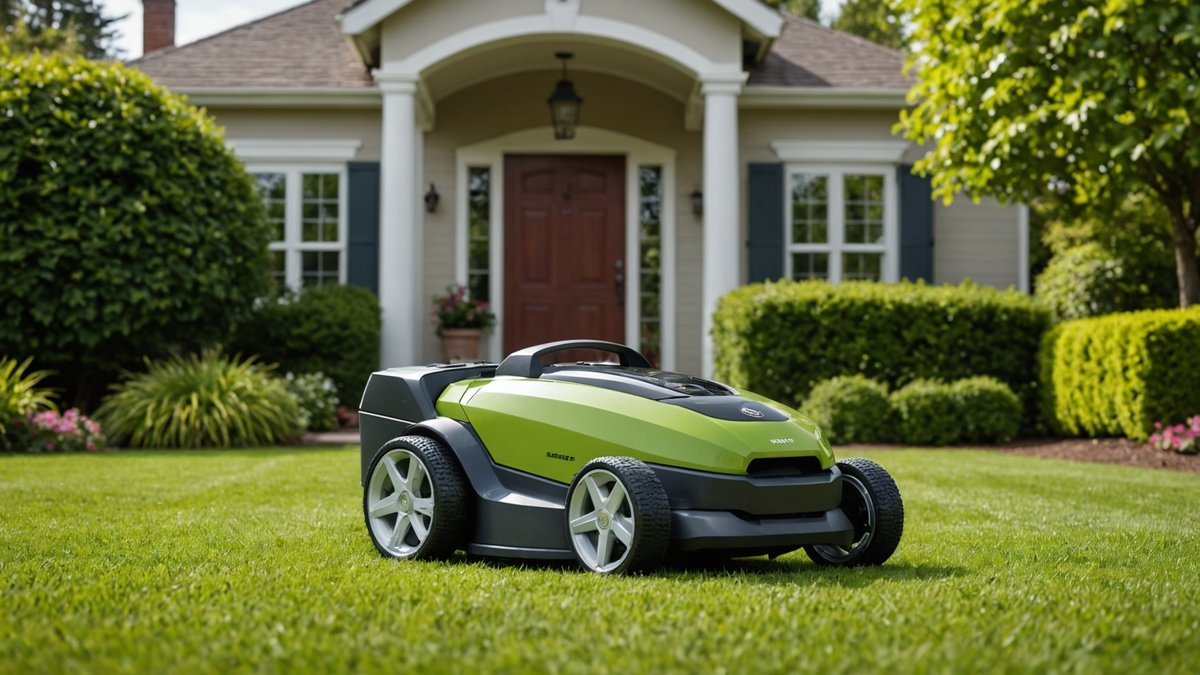
Unboxing the YARBO Pro feels more like opening a premium gadget than a yard tool. The chassis is solid, the cutting deck is shrouded in a matte‑black finish, and the included accessories — boundary wire, charging dock, and a quick‑start guide — are all clearly labeled. Setting the mower up took under an hour for most testers, thanks to the intuitive wire‑laying process and the companion app that walks you through each step via Bluetooth.
What stood out immediately was the mower’s ability to map the lawn autonomously. After a single perimeter pass, the YARBO Pro built a detailed map that it stored locally, eliminating the need for constant re‑calibration. This autonomous lawn mower approach mirrors what you see in higher‑priced models from Husqvarna and Ambrogio, but at a price point that sits closer to the mid‑tier segment.
Performance on Real‑World Lawns
The true test came when the YARBO Pro was turned loose on three distinct residential properties: a flat suburban lawn with flower beds, a sloped yard dotted with mature trees, and a irregularly shaped lot with a mix of Bermuda grass and shaded patches. Across all scenarios, the mower delivered a consistent cut height of 2.5 inches, which is ideal for most cool‑season grasses.
On the flat lawn, the YARBO Pro maintained a steady 0.8 m/s travel speed, completing a 0.25‑acre area in roughly 45 minutes while avoiding the flower beds thanks to its virtual boundary feature. The sloped yard presented a steeper challenge; the mower’s inclinometer tolerated up to 25° grades without slipping, and its adaptive wheel torque kept traction steady even when wet grass accumulated after a light rain. In the irregular lot, the mower’s multi‑zone scheduling allowed the user to set different cutting frequencies for sunny versus shaded zones, resulting in a healthier lawn appearance after two weeks of operation.
Noise levels hovered around 62 dB(A) at full speed — quieter than a typical gas push mower and comparable to many robot lawn mower competitors. Battery life proved reliable: a single 5.6 Ah lithium‑ion pack delivered up to 90 minutes of runtime, which translated to about 0.35 acres on a single charge. The automatic return‑to‑dock function engaged reliably when the battery dipped below 15 %, and recharging took approximately 80 minutes from empty to full.
Key Specs and Takeaways
- Cutting width: 22 cm (8.7 in)
- Adjustable cutting height: 20‑60 mm (0.8‑2.4 in) in 2 mm increments
- Maximum slope handling: 25° (46 % grade)
- Battery capacity: 5.6 Ah Li‑ion (≈90 min runtime)
- Charging time: 80 min (0 %→100 %)
- Navigation: RTK‑enhanced GPS + onboard SLAM for map building
- App features: Zone‑based scheduling, virtual boundaries, firmware OTA updates, multi‑user access
- Noise level: 62 dB(A) at max speed
- Weight: 28 lb (12.7 kg) – easy to lift for maintenance
Smart Mowing Technology and App Integration
Beyond the hardware, YARBO’s software suite is where the mower truly earns its “smart mowing” badge. The companion iOS/Android app provides a live map view that updates as the mower works, letting you draw or adjust virtual boundaries on the fly — a feature that rivals the Husqvarna Automower® Connect app in flexibility. Users can create up to ten separate zones, each with its own schedule, cutting height, and rain‑sensor sensitivity.
One notable addition is the built‑in weather‑aware algorithm. When the app detects a forecasted rain probability above 40 %, the mower automatically postpones its next cycle and returns to the dock, reducing unnecessary wear on the blades and conserving battery. This level of proactive decision‑making puts the YARBO Pro on par with premium autonomous lawn mower offerings from Bosch Indego and Ambrogio L400 Elite.
Firmware updates are delivered over‑the‑air, ensuring that security patches and new features arrive without a visit to the dealer. The app also logs detailed usage statistics — total mowing time, distance traveled, and energy consumption — which can be exported for those who like to track lawn‑care metrics or share data with a landscaping professional.
Comparison with Competitors
When stacked against other robot lawn mower options in the $1,200‑$1,600 range, the YARBO Pro holds its own in several key areas:
- Cutting width: At 22 cm, it matches the Worx Landroid M500 and beats the smaller 18 cm decks found on some entry‑level Husqvarna models.
- Slope tolerance: The 25° rating exceeds the typical 20° limit of many budget robots, putting it closer to the Husqvarna Automower 430X.
- Navigation: The hybrid RTK‑GPS/SLAM system offers more precise mapping than pure wire‑guided systems like the Bosch Indego 350, while still being simpler to set up than full RTK‑only solutions that require a base station.
- App ecosystem: YARBO’s app provides zone‑based scheduling and virtual boundaries comparable to the Husqvarna Connect platform, though it currently lacks the broader smart‑home integrations (Amazon Alexa, Google Assistant) that some competitors offer.
- Price: Retailing around $1,399, it sits below the Husqvarna 430X (~$1,699) and above the Worx Landroid M500 (~$1,199), offering a balanced feature‑to‑cost ratio.
For homeowners who prioritize strong slope performance and a robust mapping system without venturing into the premium price tier, the YARBO Pro presents a compelling alternative to both the higher‑end Husqvarna models and the more basic Worx lineup.
Bottom Line: What This Means for You
The YARBO Lawn Mower Pro proves that a well‑engineered robotic mower can deliver professional‑grade results on a variety of residential landscapes without demanding a luxury‑budget price tag. Its autonomous lawn mower capabilities — accurate mapping, reliable slope handling, and smart‑zone scheduling — translate to less time spent manually guiding the mower and more time enjoying a consistently trimmed yard.
If you currently own a robot lawn mower that struggles on hills or requires frequent boundary‑wire adjustments, upgrading to the YARBO Pro could eliminate those pain points. For landscaping professionals evaluating fleet automation, the mower’s rugged build, decent runtime, and straightforward app‑based management make it a viable candidate for mid‑size commercial properties where precision and reliability are paramount.
Ultimately, the YARBO Pro bridges the gap between entry‑level convenience and high‑end performance, offering a smart mowing solution that feels both futuristic and practical for today’s homeowner.
Frequently Asked Questions
How does the YARBO Pro handle obstacles like garden toys or pet waste?
The mower uses a combination of ultrasonic sensors and a front‑mounted bumper to detect solid objects taller than about 2 cm. When an obstacle is encountered, the unit stops, reverses slightly, and plots a new path around it. For low‑lying items such as small toys or pet waste, the cutting deck’s lift mechanism raises the blades automatically to avoid damage, then resumes mowing once the path is clear.
Can I use the YARBO Pro without installing the boundary wire?
No. The YARBO Pro relies on a perimeter wire to define the working area and to enable the RTK‑enhanced GPS system for precise mapping. While the wire installation is straightforward — typically requiring only a shallow trench or staples — it is a necessary step for reliable operation. Some competitors offer wire‑free models using vision‑based navigation, but those tend to be more expensive and can struggle in low‑light conditions.
What maintenance is required to keep the mower performing at its best?
Routine maintenance includes checking and cleaning the cutting blades every 20‑30 hours of use, inspecting the underside of the deck for grass buildup, and verifying that the boundary wire remains intact and free of corrosion. The battery should be stored at a partial charge (around 50 %) if the mower will be unused for extended periods (>1 month). Firmware updates via the app should be applied as they become available to ensure optimal navigation and security.
Source: Original Article

Author: AI Mow
Ai Mow is the editorial team behind Ai Mower News, dedicated to bringing you the latest news, reviews, and insights on robotic lawn mowers and smart gardening technology.