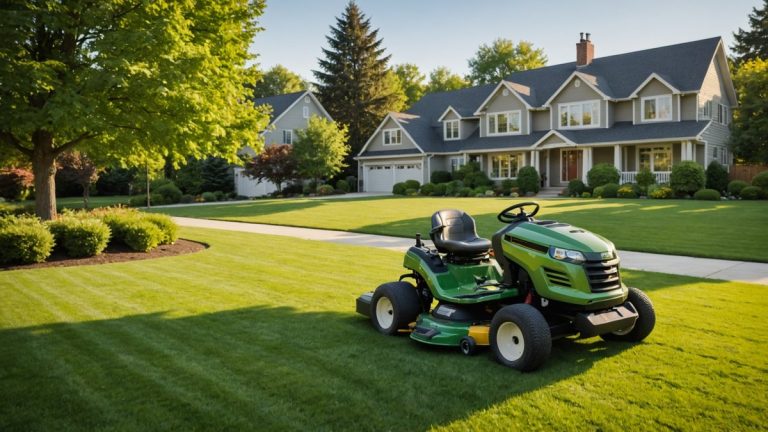
What if the secret to the next big leap in robotic mower innovation isn’t a breakthrough in AI or battery tech—it’s simply our collective desire to spend less time pushing a lawnmower and more time enjoying our backyards? That’s the refreshing perspective shared by a leading executive in the autonomous lawn mower industry, who argues that the rising demand for convenience is the real catalyst propelling robot lawn mowers into the mainstream. As smart home technology continues to evolve, these hardworking bots are no longer just a novelty—they’re becoming an essential tool for homeowners and landscaping pros alike.
But what exactly is driving this shift, and how are manufacturers responding? We dug into the trends, tech advancements, and real-world implications to bring you the inside scoop on where smart mowing is headed—and what it means for your lawn care routine.
The Rise of the “Lazy” Revolution in Lawn Care
The idea that laziness could be a driving force for innovation might sound tongue-in-cheek, but there’s truth behind it. As the executive pointed out, the average homeowner spends dozens of hours each year mowing their lawn—a task that’s repetitive, time-consuming, and often dreaded. Enter the robotic mower, a device designed to take that chore off your plate entirely. Unlike traditional mowers, these autonomous machines handle the work for you, operating on a schedule you set and returning to their docking stations to recharge.
What’s fascinating is how this demand for convenience is reshaping the industry. Manufacturers are no longer just selling a product; they’re selling freedom. The ability to relax on a Saturday morning while your robot lawn mower quietly tends to the grass is a compelling value proposition. And as more people experience this hands-off approach, the technology is gaining traction faster than ever before.
Key Innovations Pushing Robotic Mowers Forward
The autonomous lawn mower market isn’t standing still. Several technological advancements are making these devices smarter, more efficient, and more accessible. Here’s a look at the innovations that are setting the stage for the next generation of smart mowing:
- Improved Navigation Systems: Early robotic mowers relied on simple boundary wires to define their mowing zones. Today’s models use a mix of GPS, sensors, and AI to navigate complex lawns, avoid obstacles, and even handle multiple zones. Brands like Husqvarna and Worx are leading the charge with models that can map your yard and optimize mowing patterns for efficiency.
- Longer Battery Life and Fast Charging: Battery technology has come a long way. Modern robotic mowers can now handle larger lawns on a single charge, with some models offering runtime of up to 3 hours or more. Fast-charging capabilities mean less downtime and more consistent mowing, even for sprawling properties.
- Smart Home Integration: Today’s robot lawn mowers aren’t just standalone devices—they’re part of a larger smart home ecosystem. Many models now integrate with apps, voice assistants like Alexa or Google Home, and even smart irrigation systems. This allows you to control your mower remotely, adjust schedules on the fly, and receive alerts if something goes wrong.
- AI and Machine Learning: Some of the latest models are incorporating AI to learn your lawn’s unique layout and adapt their mowing patterns over time. This means better coverage, fewer missed spots, and a more tailored approach to lawn care. Companies like Robomow and Mammotion are pushing the boundaries of what these machines can achieve with machine learning.
- Eco-Friendly Design: As sustainability becomes a priority for many homeowners, manufacturers are focusing on eco-friendly features. Robotic mowers are inherently greener than gas-powered alternatives, but new models are taking it further with solar-assisted charging, biodegradable parts, and energy-efficient motors.
How Robotic Mowers Stack Up Against the Competition
Of course, robotic mowers aren’t the only option for those looking to automate their lawn care. Traditional riding mowers, zero-turn models, and even manual push mowers still have their place. But how do autonomous lawn mowers compare? Here’s a quick breakdown:
- Robotic Mowers: Best for homeowners with small to medium-sized lawns (up to 2 acres for high-end models) who want a hands-off, time-saving solution. They’re ideal for those who prioritize convenience and don’t mind the initial investment (typically $800–$3,500 depending on features).
- Riding Mowers: Suited for larger properties (1 acre or more) where speed and power are priorities. They require manual operation but can handle tough terrain and heavy-duty tasks like mulching or bagging.
- Zero-Turn Mowers: A favorite among landscaping pros, these offer precision and speed but come with a higher price tag and require skill to operate. They’re overkill for most residential lawns.
- Manual Push Mowers: The most affordable option, but they demand the most effort. They’re best for very small lawns or eco-conscious users who prefer a low-tech, low-impact approach.
For homeowners, the choice often comes down to lawn size, budget, and how much time they’re willing to invest. For landscaping professionals, robotic mowers are increasingly being tested as part of fleet automation, particularly for maintenance contracts where consistency and efficiency are key.
Overcoming the Barriers to Adoption
Despite their growing popularity, robot lawn mowers still face a few hurdles on the path to mainstream adoption. Here are the most common concerns—and how the industry is addressing them:
- Upfront Cost: The initial price tag can be a turnoff for some homeowners. However, when you factor in the time saved and the long-term reduction in maintenance costs (no gas, fewer repairs), the investment often pays for itself over a few years. Some brands also offer financing or leasing options to make the purchase more manageable.
- Installation Complexity: Setting up boundary wires or configuring smart zones can seem daunting. Many newer models, however, are simplifying the process with wireless boundary markers or app-guided setup. Companies like Gardena and Ambush are making installation more user-friendly.
- Performance on Complex Lawns: Robotic mowers have historically struggled with steep slopes, uneven terrain, or yards with lots of obstacles. But advancements in traction, sensor technology, and AI-driven navigation are improving their capabilities. Some models, like the Husqvarna Automower 450X, can handle slopes up to 45 degrees and navigate around trees, flower beds, and other obstacles with ease.
- Theft and Security: Leaving a high-value device outside unattended can be a concern. Many autonomous lawn mowers now come with GPS tracking, PIN-code locks, and alarm systems to deter theft. Some even send notifications to your phone if the mower is moved outside its designated area.
What This Means for You
So, what does all this mean for the average homeowner or landscaping pro? In short: the future of lawn care is here, and it’s only getting better. If you’ve been on the fence about investing in a robotic mower, now might be the perfect time to take the plunge. Here’s why:
- Time Savings: Imagine reclaiming hours each month that you’d otherwise spend mowing. With a robot lawn mower, you can set it and forget it, freeing up time for hobbies, family, or just relaxing.
- Consistency: Robotic mowers keep your lawn looking its best by maintaining a regular mowing schedule, even when you’re busy or away from home. This leads to healthier grass and a more polished appearance.
- Cost-Effective in the Long Run: While the upfront cost may seem steep, the long-term savings on gas, maintenance, and even potential landscaping services can make a robotic mower a smart financial decision.
- Eco-Friendly: By switching to a battery-powered autonomous lawn mower, you’re reducing your carbon footprint and minimizing noise pollution—a win for both you and the environment.
For landscaping professionals, the rise of smart mowing presents an opportunity to streamline operations. By incorporating robotic mowers into your fleet, you can reduce labor costs, improve efficiency, and offer clients a high-tech solution that sets your business apart. Brands like Mean Green Mowers and Belrobotics are already catering to the commercial market with heavy-duty, autonomous models designed for large-scale use.
That said, it’s important to do your research. Not all robotic mowers are created equal, and the best model for you will depend on your lawn size, terrain, budget, and specific needs. Be sure to read reviews, compare specs, and consider testing a few models if possible. Our Mower Review section is a great place to start!
FAQs About Robotic Mowers
Are robotic mowers worth the investment?
For many homeowners, yes. If you value your time and want a consistently well-maintained lawn without the hassle, a robotic mower can be a game-changer. The upfront cost is often offset by long-term savings on gas, maintenance, and even professional lawn care services. Plus, the convenience factor is hard to beat.
Can robotic mowers handle large or complex lawns?
It depends on the model. Entry-level robot lawn mowers are typically best suited for small to medium-sized lawns (up to 0.5 acres). However, high-end models like the Husqvarna Automower NERA or Mammotion Luba can handle larger areas (up to 2 acres or more) and complex terrains with slopes, obstacles, and multiple zones. Always check the manufacturer’s specs to ensure the mower can handle your lawn’s unique challenges.
How do I choose the right robotic mower for my needs?
Start by assessing your lawn size, terrain, and any specific features you need (e.g., slope handling, smart home integration, or eco-friendly design). Then, compare models based on battery life, navigation capabilities, and ease of use. Reading reviews and watching demo videos can also help you make an informed decision. If you’re still unsure, consider reaching out to a local dealer for expert advice.
Source: Original Article

Author: AI Mow
Ai Mow is the editorial team behind Ai Mower News, dedicated to bringing you the latest news, reviews, and insights on robotic lawn mowers and smart gardening technology.