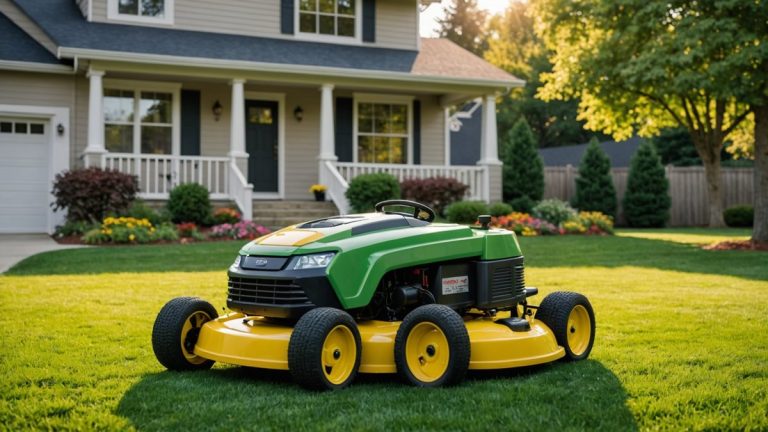
Picture this: a perfectly manicured lawn, not after hours of back-breaking labor, but while you sip iced tea on the patio. That’s the promise of the robotic mower—and for the most part, it delivers. But as I learned during my first hands-on experience with an autonomous lawn mower, there’s a catch most new users overlook until it’s too late. The technology is impressive, the convenience undeniable, but one critical detail can make or break your smart mowing experience. Here’s what I wish I’d known before rolling one of these high-tech helpers into my yard.
First Impressions: A Robot That Actually Works
Stepping into the world of robot lawn mowers feels like entering the future. The unit I tested—a mid-range model from a well-known brand—arrived sleek, compact, and surprisingly quiet. Setup was straightforward: unbox, charge the battery, and follow the app’s guided installation. Within an hour, my new robotic assistant was ready to tackle its first mission. Unlike traditional mowers that demand your time and energy, this one simply… worked. It navigated obstacles, adjusted to terrain changes, and even returned to its docking station when the battery ran low. For a tech enthusiast, it was love at first sight.
But here’s the thing: as seamless as the operation was, I quickly realized that success with a robotic mower hinges on more than just plug-and-play. The real magic—and the potential pitfalls—lie in the preparation.
The Hidden Challenge: Yard Preparation
The one thing I wish I’d known? Your yard isn’t ready for a robot lawn mower until you’ve prepped it like a pro. These machines are smart, but they’re not miracle workers. If your lawn is littered with debris, uneven terrain, or unmarked boundaries, your autonomous lawn mower will struggle. And by struggle, I mean it might get stuck, miss patches, or—worst of all—venture into your neighbor’s prized rose garden.
Here’s what you need to do before your robotic mower takes over:
- Clear the lawn: Remove sticks, rocks, toys, and any other obstacles that could jam the blades or trip up the sensors.
- Define boundaries: Most models use a boundary wire or GPS to stay within your property lines. Install this carefully—it’s your first line of defense against rogue mowing.
- Level the playing field: Robotic mowers handle gentle slopes, but steep hills or deep ruts can be problematic. Fill in low spots and trim high ones for an even cut.
- Check your grass type: Some robot lawn mowers struggle with thick or tall grass. If your lawn resembles a meadow, give it a traditional mow first to set your robotic helper up for success.
- Secure the perimeter: If you have open edges (like a driveway or sidewalk), ensure the boundary wire or sensors are placed to prevent the mower from taking an unplanned adventure.
I learned this the hard way. My initial test run ended with the mower caught on a hidden tree root, its blades spinning helplessly in the air. A little prep work would’ve saved me the hassle.
Performance: How It Stacks Up
Once the yard was prepped, the robotic mower performed like a champ. Here’s a quick rundown of its standout features and how they compare to competitors like Husqvarna, Worx, or Gardena:
- Cutting efficiency: The mower used a mulching system, finely chopping grass clippings and returning them to the soil as natural fertilizer. This is a common feature in high-end models and a major selling point for eco-conscious homeowners.
- Navigation: Equipped with collision sensors and a boundary wire, it handled my moderately complex yard with ease. More advanced models, like those with RTK GPS, offer even better precision for large or irregularly shaped lawns.
- Battery life: On a full charge, it covered about 0.5 acres—perfect for my suburban yard. For larger properties, you might need a model with a longer runtime or a secondary charging dock.
- Noise level: At around 60 decibels, it was quieter than my old gas mower. This is a game-changer for early morning or late evening mowing sessions without disturbing the neighbors.
- Smart features: The companion app allowed me to schedule mowing times, adjust cutting heights, and receive alerts if the mower encountered an issue. Some premium models even integrate with smart home systems like Alexa or Google Home.
Compared to its rivals, this mower held its own, though it lacked some of the advanced features of higher-end autonomous lawn mowers, like multi-zone support or automatic weather adjustments. Still, for the price, it was a solid performer.
Maintenance: Less Work, But Not No Work
One of the biggest selling points of a robot lawn mower is the promise of hands-off maintenance. And while it’s true that these machines require far less effort than traditional mowers, they’re not entirely maintenance-free. Here’s what to expect:
- Blade care: The mulching blades need regular cleaning to prevent grass buildup, which can reduce cutting efficiency. Some models have self-cleaning features, but a quick manual wipe-down every few weeks is still recommended.
- Battery maintenance: Lithium-ion batteries degrade over time. To maximize lifespan, avoid leaving the mower docked for extended periods without use, and store it in a cool, dry place during the off-season.
- Sensor checks: Dirt or debris can block the mower’s sensors, leading to navigation errors. A quick inspection and cleaning of the sensors every month can prevent issues.
- Winter storage: If you live in a climate with cold winters, you’ll need to store your mower properly. This usually involves fully charging the battery, cleaning the unit, and storing it in a temperature-controlled space.
Compared to the upkeep of a gas mower—oil changes, spark plug replacements, air filter cleanings—a robotic mower is a breeze. But ignoring these small tasks can lead to bigger problems down the line.
What This Means for You
So, is a robot lawn mower worth the investment? For most homeowners, the answer is a resounding yes—if you’re willing to put in the initial effort. Here’s the bottom line:
- Pros: Time-saving, eco-friendly (no gas emissions), quiet, and consistently precise cuts. Ideal for busy homeowners, tech enthusiasts, or anyone tired of the weekly mowing chore.
- Cons: High upfront cost (typically $800–$3,000), requires yard preparation, and may struggle with complex or very large lawns without additional setup.
If you’re considering joining the smart mowing revolution, start by evaluating your yard. Is it relatively obstacle-free? Can you install a boundary wire or use GPS-based models? If so, a robotic mower could be a game-changer. For those with very large properties or intricate landscapes, you might need a more advanced (and expensive) model or even a fleet of mowers.
As for me? After my trial run, I’m sold. The convenience and results far outweigh the initial setup hassle. Just remember: the key to success with a robot lawn mower is preparation. Do the prep work upfront, and you’ll be rewarded with a lush, perfectly trimmed lawn—without lifting a finger.
FAQ
How do robotic mowers handle pet waste or other small obstacles?
Most robotic mowers are designed to avoid larger obstacles, but small items like pet waste can be tricky. The blades are sharp and can spread waste across your lawn, which is both unsanitary and unpleasant. To avoid this, always pick up pet waste and other small debris before letting your mower loose. Some high-end models have additional sensors to detect and avoid such hazards, but it’s still best to clear the yard beforehand.
Can a robotic mower handle steep slopes?
It depends on the model. Many autonomous lawn mowers can handle slopes up to 20–25 degrees, but steeper inclines may be a challenge. If your yard has significant elevation changes, look for a model specifically designed for hilly terrain, like the Husqvarna Automower 450X or the Worx Landroid WR165. These often feature larger wheels, stronger motors, and advanced traction systems to tackle tough slopes.
Are robotic mowers safe for kids and pets?
Robot lawn mowers are generally safe, thanks to built-in safety features like lift sensors (which stop the blades if the mower is picked up) and collision detection. However, it’s still important to supervise children and pets around the mower, especially during the first few runs. Most manufacturers recommend keeping kids and animals at a safe distance while the mower is operating. Additionally, some models allow you to set “no-go zones” via the app, which can help keep the mower away from play areas or pet zones.
Source: Original Article

Author: AI Mow
Ai Mow is the editorial team behind Ai Mower News, dedicated to bringing you the latest news, reviews, and insights on robotic lawn mowers and smart gardening technology.