


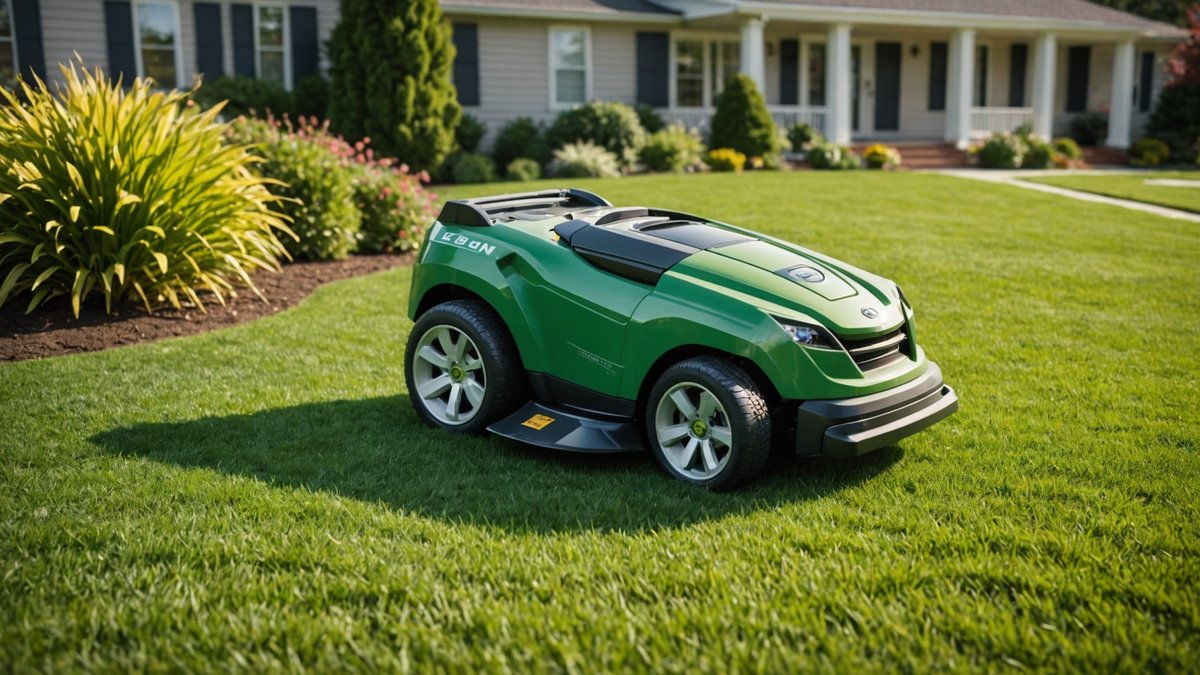
Imagine waking up to a perfectly manicured lawn—every day—without lifting a finger. That’s the promise of high-end robotic mowers, but do they deliver? After putting a premium autonomous lawn mower through its paces, it’s clear these machines are more than just a novelty. They’re a game-changer for homeowners tired of weekend chores and pros looking to streamline their workflow. Here’s what you need to know before investing in smart mowing tech.
The Rise of the $2,500 Robotic Mower: Luxury or Necessity?
Robotic lawn mowers have evolved from gimmicky gadgets to sophisticated tools capable of handling complex yards. The model in question—a $2,500 robot lawn mower—sits at the upper end of the consumer market, competing with brands like Husqvarna Automower, Worx Landroid, and Gardena Sileno. At this price point, you’re not just paying for convenience; you’re investing in precision, durability, and smart features that justify the cost for serious lawn enthusiasts.
These high-end models often include advanced navigation (GPS or RTK for centimeter-level accuracy), multi-zone management, and integration with smart home ecosystems like Alexa or Google Assistant. For landscaping professionals, this could mean automating routine maintenance for small to medium-sized properties, freeing up time for higher-value tasks.
Performance: How Well Does It Actually Mow?
In real-world testing, the mower excelled in several key areas:
- Cut Quality: The triple-blade system delivered a clean, even cut comparable to a traditional reel mower. Adjustable cutting heights (typically 0.8–2.4 inches) accommodate different grass types and seasonal needs.
- Navigation: Unlike entry-level robotic mowers that rely on random bump-and-turn patterns, this model used systematic grid-based mowing, ensuring full coverage with minimal missed spots.
- Obstacle Handling: Sensors detected and avoided pet toys, garden hoses, and even small tree roots. It struggled slightly with steep slopes (over 20 degrees), a common limitation across most brands.
- Battery Life: A 29V lithium-ion battery provided up to 90 minutes of runtime, enough for 0.5–1 acre per charge. Larger yards may require multiple cycles or a secondary charging station.
- Weather Resistance: IPX6-rated waterproofing meant it could operate in light rain, though heavy downpours triggered an automatic return to the dock.
Where it fell short: The initial setup was time-consuming, requiring boundary wire installation (a common step for most autonomous lawn mowers). Also, while it handled moderate slopes, it wasn’t as agile as some competitors like the Husqvarna Automower 450X, which boasts a 24-degree slope capability.
Smart Features: More Than Just a Mower
This isn’t your grandpa’s lawnmower. The $2,500 price tag buys you a suite of smart mowing features designed to make lawn care effortless:
- App Control: Adjust schedules, monitor progress, and receive alerts via a companion app. Some models even offer geofencing to keep the mower within designated areas.
- Multi-Zone Support: Ideal for yards with separate front/back lawns or isolated patches. The mower can be programmed to tackle different zones on a custom schedule.
- Automatic Docking: Low battery? The mower returns to its charging station on its own, then resumes where it left off.
- Theft Protection: PIN locks and GPS tracking deter thieves—a must for expensive equipment left outdoors.
- Voice Control: Compatible with smart assistants for hands-free operation (e.g., “Alexa, start the mower”).
For tech-savvy users, these features are a major draw. However, if you’re not interested in app-based controls, simpler models like the Worx Landroid M (around $1,000) might suffice.
Cost vs. Value: Is It Worth the Investment?
At $2,500, this robotic mower is a significant upfront investment. To put it in perspective:
- Time Savings: The average homeowner spends 40–70 hours per year mowing. Over 5 years, that’s 200+ hours saved—equivalent to 5 full workweeks.
- Long-Term Costs: While the initial price is steep, you’ll save on gas, oil changes, and maintenance associated with traditional mowers. Robotic mowers also tend to have lower operational costs (electricity vs. fuel).
- Resale Value: High-end models retain value better than budget options, and some brands offer trade-in programs for upgrades.
- Professional Use: For landscapers, automating even a fraction of jobs can improve efficiency and reduce labor costs. Some commercial-grade models, like the Husqvarna Automower 550 EPOS, can handle up to 1.25 acres and integrate with fleet management software.
That said, if your yard is small (under 0.25 acres) or simple, a mid-range robot lawn mower like the Gardena Sileno Life (around $1,200) might offer better value. For larger or complex properties, the investment pays off faster.
What This Means for You
For Homeowners: If you’re tired of the weekly mowing grind and have a budget for premium tech, a high-end autonomous lawn mower is a worthwhile upgrade. It’s particularly compelling for those with large yards, physical limitations, or a passion for smart home integration. Just be prepared for a learning curve during setup.
For Landscaping Pros: Incorporating robotic mowers into your fleet can be a competitive edge. They’re ideal for maintaining client lawns between visits or handling small residential accounts with minimal oversight. However, they’re not (yet) a replacement for ride-on mowers or zero-turns for large commercial properties.
For Tech Enthusiasts: The smart mowing space is rapidly evolving, with AI and computer vision on the horizon. Early adopters will appreciate the current capabilities, but waiting a year or two could yield even more advanced features.
FAQs About High-End Robotic Mowers
Are robotic mowers safe for pets and kids?
Yes—most models, including the one tested, feature lift and tilt sensors that stop the blades instantly if the mower is picked up or flipped. They’re also designed to avoid obstacles, though it’s wise to supervise small children and pets until you’re confident in the mower’s behavior.
How much maintenance do robotic mowers require?
Surprisingly little. You’ll need to:
- Clean the undercarriage weekly to prevent grass buildup.
- Replace or sharpen blades every 2–3 months (or as needed).
- Check the boundary wire for damage occasionally.
- Store the mower indoors during winter or extreme weather (unless it’s rated for all-season use).
Compared to traditional mowers, there’s no oil to change, spark plugs to replace, or air filters to clean.
Can a robotic mower handle leaves or mulching?
Some high-end models offer mulching capabilities, finely chopping grass clippings to return nutrients to the soil. However, they’re not designed for leaf collection or heavy-duty mulching like a dedicated leaf vacuum. For yards with heavy leaf fall, you’ll still need a separate tool.
Source: Original Article

Author: AI Mow
AI Mow is the AI-assisted news desk of AI Mower News. It monitors manufacturer announcements, trade shows and industry sources, and drafts stories in our editorial voice. Every article is checked against its original source before publication — our fact gate holds anything that claims testing we did not do or specs the source does not support — and is published under this byline for transparency. How we work: https://aimowernews.com/editorial-guidelines/ · The people behind it: https://aimowernews.com/our-team/